
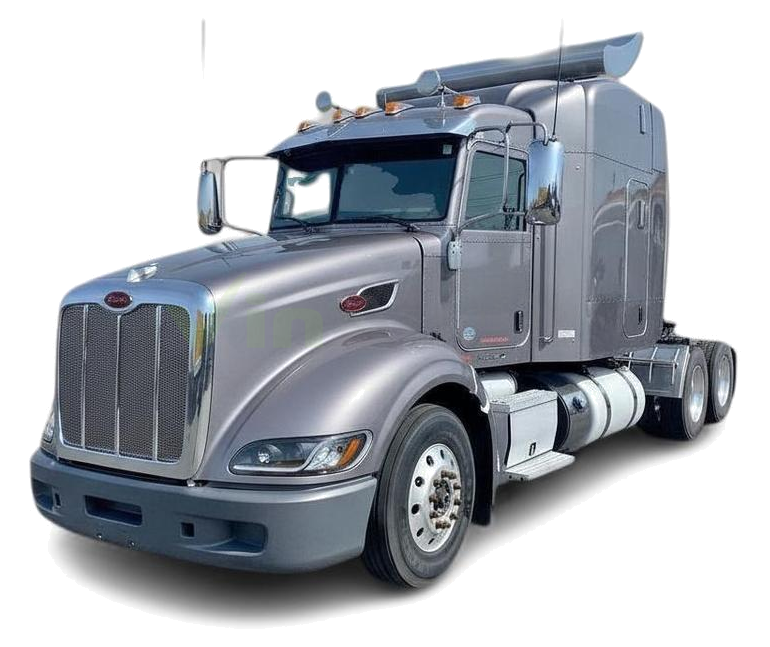
The 2012 Peterbilt 386 is a Class 8 truck renowned for its distinctive aerodynamic design and driver-centric features. Produced from 2006 to 2015, this model offered various configurations, including conventional day cabs and sleepers. It was particularly popular for its blend of fuel efficiency, driver comfort, and Peterbilt's signature build quality, often commanding premium pricing when new and maintaining strong resale value.
The Good
The 2012 Peterbilt 386 excels in fuel efficiency and driver comfort, offering a premium cabin experience. Its robust construction and reliable powertrain appeal to practical buyers, while its iconic, aerodynamic styling and refined ride satisfy emotional desires for a prestigious and capable truck.
The Bad
Potential buyers of the 2012 Peterbilt 386 should be aware of possible issues with the diesel particulate filter (DPF) system, especially if driven primarily in stop-and-go conditions. Electrical gremlins and wear on interior components in high-mileage units are also points to scrutinize.
2012 Peterbilt 386: Quick Overview
- Engine Options: The 2012 Peterbilt 386 typically came equipped with PACCAR PX-8 and PX-9 engines, as well as Cummins ISX engines.
- Horsepower: Engine options generally ranged from 335 horsepower to over 550 horsepower, depending on the specific engine chosen and vocational application.
- Fuel Economy: Precise EPA ratings are not typically provided for Class 8 trucks. However, the 386 was designed with aerodynamics and efficient powertrains to maximize fuel economy, with real-world MPG varying significantly based on load, terrain, driving style, and engine configuration. Owners often report figures in the range of 5-8 MPG.
- 0-60 Times: 0-60 mph times are not a standard metric for heavy-duty trucks as they are designed for sustained hauling rather than rapid acceleration.
- Towing Capacity: The towing capacity is highly dependent on the truck's configuration, axle ratings, and chassis specifications. As a Class 8 truck, the Peterbilt 386 is built for heavy-duty hauling, with typical Gross Combination Weight Ratings (GCWR) often exceeding 80,000 pounds and capable of much more in specialized applications, easily handling tractor-trailer loads.
- Trim-Level Features: While not having traditional "trims" like passenger cars, the 386 offered various configurations and options focused on vocational use and driver comfort. Key features included:
- Aerodynamic hood and chassis design for improved fuel efficiency.
- Multiple sleeper configurations (e.g., 48-inch, 63-inch, 72-inch) offering living space for long-haul drivers.
- High-quality interior materials with options for premium seating, enhanced insulation for noise reduction, and advanced climate control.
- Advanced diagnostics and customizable instrumentation.
- Optional features could include premium sound systems, refrigerators, auxiliary heaters, and various power take-off (PTO) options for vocational applications.
- Various axle and suspension configurations to suit different hauling needs.
2012 Peterbilt 386 Specifications
Vehicle Information
| Year | 2012 |
| Make | Peterbilt |
| Model | 386 |
| Trim | - |
| Style | - |
| Type | Truck |
| Category | Medium Truck |
Manufacturing Details
| Made In | United States |
| Manufacturing City | DENTON |
Dimensions
| Doors | - |
| Curb Weight | - |
| Gross Vehicle Weight Rating | 52000 pounds |
| Overall Height | - |
| Overall Length | - |
| Overall Width | - |
| Wheelbase Length | - |
| Standard Seating | - |
Engine & Performance
| Engine | 14.9L I6 |
| Engine Size | 14.9L |
| Engine Cylinders | 6 |
| Transmission | Manual 10-speed |
| Transmission Type | Manual |
| Transmission Speeds | 10-Speed |
| Drivetrain | 6x4 |
Additional Features
| Anti-Brake System | - |
| Steering Type | - |
Pricing
| Manufacturer Suggested Retail Price (MSRP) | - |
| Invoice Price | - |
| Delivery Charges | - |
Vehicle History Report
Vehicle
Specifications
Specifications
Ownership
History
History
All History
Events
Events
NMVTIS Title
History Check
History Check
Salvage/Rebuilt
Check
Check
Accident
Check
Check
Theft
Check
Check
Open Lien
Check
Check
Past Sale
Listings
Listings
Safety
Recalls
Recalls
Odometer
Check
Check
Market Price
Analysis
Analysis
What Problems Does the 2012 Peterbilt 386 Have?
The 2012 Peterbilt 386, like many heavy-duty trucks of its era, generally exhibits strong long-term reliability, a hallmark of the Peterbilt brand. However, common concerns that may arise with age and mileage often center around its emissions control systems. The Diesel Particulate Filter (DPF) system, mandated for emissions compliance, can be a source of concern. If not maintained properly or if the truck is used primarily for short-haul or stop-and-go driving, the DPF can become clogged, leading to reduced performance and costly regeneration cycles or replacement.
Another area to watch for can be the complex electrical systems. While generally robust, issues with sensors, wiring harnesses, or control modules can surface over time, potentially leading to intermittent faults or warning lights. For the 2012 model year specifically, there were occasional recalls issued by Peterbilt and its component suppliers. These often related to braking system components, steering linkages, or certain electrical connectors, designed to address potential safety concerns. It's crucial for prospective buyers to review the vehicle's service history and any recall notices that may have been issued for that specific VIN.
Furthermore, as with any heavy-duty truck that sees extensive use, wear and tear on drivetrain components (engine, transmission, differential) is to be expected. The longevity of these major components is heavily influenced by the quality of maintenance performed. Regular fluid changes, filter replacements, and adherence to the manufacturer's service intervals are paramount for mitigating long-term reliability concerns. While specific widespread issues tied exclusively to the 2012 model year are not heavily documented beyond general emissions system considerations, proactive inspection of these key areas is recommended.
Another area to watch for can be the complex electrical systems. While generally robust, issues with sensors, wiring harnesses, or control modules can surface over time, potentially leading to intermittent faults or warning lights. For the 2012 model year specifically, there were occasional recalls issued by Peterbilt and its component suppliers. These often related to braking system components, steering linkages, or certain electrical connectors, designed to address potential safety concerns. It's crucial for prospective buyers to review the vehicle's service history and any recall notices that may have been issued for that specific VIN.
Furthermore, as with any heavy-duty truck that sees extensive use, wear and tear on drivetrain components (engine, transmission, differential) is to be expected. The longevity of these major components is heavily influenced by the quality of maintenance performed. Regular fluid changes, filter replacements, and adherence to the manufacturer's service intervals are paramount for mitigating long-term reliability concerns. While specific widespread issues tied exclusively to the 2012 model year are not heavily documented beyond general emissions system considerations, proactive inspection of these key areas is recommended.
How long will the 2012 Peterbilt 386 last?
The 2012 Peterbilt 386 is built for longevity, and with proper maintenance, it's not uncommon to see these trucks surpass 1 million miles. Owner data and maintenance habits significantly dictate this. Trucks used for long-haul operations with consistent highway driving and regular servicing can easily last 10-15 years or more. However, trucks subjected to vocational use with frequent idling, heavy loads in demanding terrain, or neglected maintenance may see a shorter service life, potentially showing significant wear after 7-10 years or 700,000 miles. The primary weaknesses over time often relate to the emissions systems (DPF) and potential electrical component degradation, but the core chassis and powertrain are known for enduring extensive mileage.
What Technology & Safety Features are Included?
The 2012 Peterbilt 386, while primarily focused on functionality and driver comfort for long hauls, incorporated a range of technologies and safety features, with many advanced options available. Standard on most models was a robust digital gauge cluster providing clear diagnostics and performance data. For entertainment, a standard AM/FM/CD player was common, with premium sound systems, satellite radio capabilities, and Bluetooth connectivity often available as upgrades. The driver's cabin was designed with ergonomics in mind, featuring comfortable air-ride seats, tilt-and-telescoping steering wheels, and intuitive controls within easy reach.
Driver-assistance features were less sophisticated than modern passenger vehicles but included essential systems for heavy-duty operation. Anti-lock Braking Systems (ABS) were standard for enhanced stability during braking. Advanced features could include various auxiliary lighting packages for improved visibility in adverse conditions, and depending on the specific configuration, some trucks might have been equipped with electronic stability control systems, though these were not as universally prevalent as they are today.
Safety was paramount in the 386's design, with a reinforced cab structure built to withstand significant impact. High-visibility lighting, durable exterior mirrors, and robust door latches were standard. While formal crash-test ratings like those from NHTSA are not typically published for heavy-duty commercial trucks in the same way as passenger cars, Peterbilt vehicles are engineered to meet or exceed stringent federal safety standards for commercial vehicles. Optional safety upgrades could have included lane departure warning systems on some later production models or specific vocational safety enhancements depending on the intended use of the truck.
Driver-assistance features were less sophisticated than modern passenger vehicles but included essential systems for heavy-duty operation. Anti-lock Braking Systems (ABS) were standard for enhanced stability during braking. Advanced features could include various auxiliary lighting packages for improved visibility in adverse conditions, and depending on the specific configuration, some trucks might have been equipped with electronic stability control systems, though these were not as universally prevalent as they are today.
Safety was paramount in the 386's design, with a reinforced cab structure built to withstand significant impact. High-visibility lighting, durable exterior mirrors, and robust door latches were standard. While formal crash-test ratings like those from NHTSA are not typically published for heavy-duty commercial trucks in the same way as passenger cars, Peterbilt vehicles are engineered to meet or exceed stringent federal safety standards for commercial vehicles. Optional safety upgrades could have included lane departure warning systems on some later production models or specific vocational safety enhancements depending on the intended use of the truck.
What Colors Options are Available?
2012 Peterbilt 386 Prices and Market Value
When new, the 2012 Peterbilt 386 carried a substantial price tag, typically ranging from $120,000 to over $200,000 depending on engine specifications, chassis configuration, and sleeper options. Its strong brand reputation and premium build quality meant it held its value exceptionally well compared to many competitors.
Currently, the used market prices for a 2012 Peterbilt 386 vary widely based on mileage, condition, engine, and maintenance history. You can expect to find them from around $40,000 to $90,000+. Depreciation is relatively slow for these trucks, especially for well-maintained units with desirable configurations. Factors like remaining engine life, transmission condition, tire wear, and overall cosmetic appearance significantly impact resale value. Trucks with lower mileage and comprehensive service records will always command a premium.
2012 Peterbilt 386 Cost of Ownership
Owning a 2012 Peterbilt 386 involves significant costs. Fuel is a major expense, with consumption highly dependent on usage, but expect it to be a thirsty vehicle. Insurance premiums for Class 8 trucks are substantial and vary based on coverage, driver record, and operating radius. Maintenance is ongoing and crucial; regular oil changes, filter replacements, and DPF cleaning are essential, adding to the cost. Repairs on heavy-duty components can be expensive, with parts and labor for engines, transmissions, and suspension systems being high. While not economical in the traditional sense, its long-term durability and fuel efficiency relative to its class can offer good value over its extensive lifespan, making it a worthwhile investment for commercial operators.
2012 Peterbilt 386 Fuel Efficiency
Fuel Type
Diesel
Fuel Capacity
-
City Mileage
-
Highway Mileage
-
2012 Peterbilt 386 Recalls & Defects
Fuel System, Other:storage:tank Assembly
Recall date
2011-02-23
Recall no.
11v127000
Source
NHTSA
Summary
Paccar IS Recalling Certain Model Year 2008-2012 Kenworth T2000, T660, T700, T800, and W900, AS Well AS Model Year 2009-2012 Peterbilt 365, 367, 384, 386, 387, 388, 389, and 587 Trucks Equipped With Paccar MX Engines. THE OIL Module Centrifugal Spinner Filter CAP IN THE Paccar MX Engine MAY Become Loose, Possibly Allowing THE CAP TO Come OFF and Engine OIL TO Partially Discharge From THE OIL Module Onto Exhaust Components.
Consequence
THE Discharge OF Engine OIL Onto Exhaust Components Which ARE Hot, Such AS When THE Engine IS Under Significant Load, MAY Cause A Fire.
Remedy
Dealers Will Re-Torque THE OIL Module Filter CAP and Install A Secondary Retention Device ON THE Secondary Centrifugal Spinner Filter Cap. This Service Will BE Performed Free OF Charge. THE Safety Recall IS Expected TO Begin During March 2011. Owners MAY Contact Kenworth AT 1-425-828-5440 and Peterbilt AT 1-940-591-4196.
Notes
Owners MAY Also Contact THE National Highway Traffic Safety Administration's Vehicle Safety Hotline AT 1-888-327-4236 (Tty 1-800-424-9153), or GO TO <A Href=http://Www.safercar.gov>http://www.safercar.gov</a> .
Service Brakes, Air:supply:check Valve
Recall date
2012-01-30
Recall no.
12v026000
Source
NHTSA
Summary
Paccar IS Recalling Certain Model Year 2012-2013 Kenworth T170, T270, T370, T440, T470, T660, T700, T800, W900, and Peterbilt 320, 330, 337, 348, 365, 367, 382, 384, 386, 388, 389, and 587 Vehicles, Manufactured From January 31, 2011, Through January 19, 2012, and Equipped With Bendix Atr-6 Antilock Traction Relay Valves. IN Extremely Cold Conditions, These Bendix Relay Valves MAY Potentially Develop Internal Leakage. Internal Leakage CAN Lead TO AIR Pressure Being Delivered TO Affected Primary or Secondary Brake Causing Continuous Brake Application.
Consequence
Unexpected Continuous Brake Application CAN Cause THE Brakes TO Overheat and Lead TO A Fire. Unexpected Continuous Brake Application CAN Cause THE Driver TO Lose Control OF THE Vehicle, Increasing THE Risk OF A Crash. Also, THE Brakes MAY BE Applied Without Illuminating THE Brake Lights, Failing TO Give Proper Warning TO Other Drivers.
Remedy
Paccar Will Notify Owners, and Provide A Temporary Repair Until Bendix Develops A Permanent Remedy. This Service Will BE Performed Free OF Charge. THE Safety Recall Began ON February 10, 2012. Owner MAY Contact Kenworth AT 1-425-828-5440 and Peterbilt AT 1-940-591-4196.
Notes
Kenworth and Peterbilt Recall Numbers 12kwa/0112-A.customers MAY Contact THE National Highway Traffic Safety Administration's Vehicle Safety Hotline AT 1-888-327-4236 (Tty: 1-800-424-9153); or GO TO Http://www.safercar.gov.
Equipment:other:labels
Recall date
2013-11-25
Recall no.
13v593000
Source
NHTSA
Summary
Paccar Incorporated (Paccar) IS Recalling Certain 2004-2013 Peterbilt 379, 357, 378, 367, 388, 365, 389, 385 and 386 Trucks Manufactured From April 3, 2003, Through October 25, 2013 and Equipped With Tri-Drive Rear Axles and A TAG or Pusher Axle. THE Affected Vehicles MAY BE Missing Required Information From THE Certification Label, Specifically THE TAG or Pusher Axle THE Gross Axle Weight Rating, Suitable Tire and RIM Information, and Recommended Tire Pressure Information. Without This Information, THE Vehicles DO NOT Comply With THE Requirements OF 49 C.f.r. Part 567, "certification."
Consequence
AS A Result, THE Axles MAY BE Overloaded or THE Wrong Tires Could BE Installed or THE Tires Could BE Improperly Inflated. All OF These Issues Increase THE Risk OF A Crash.
Remedy
Peterbilt Will Notify Owners and Dealers Will Inspect and Replace THE Certification Labels Missing THE Necessary Information. THE Recall IS Expected TO Begin IN January 2014. Customers CAN Contact Peterbilt AT 1-940-591-4000. Peterbilt's Number FOR This Campaign IS 1113-f.
Notes
Owners MAY Also Contact THE National Highway Traffic Safety Administration Vehicle Safety Hotline AT 1-888-327-4236 (Tty 1-800-424-9153), or GO TO Www.safercar.gov.
Electrical System:alternator/Generator/Regulator
Recall date
2015-07-22
Recall no.
15v456000
Source
NHTSA
Summary
Paccar Incorporated (Paccar) IS Recalling Certain Model Year 2012-2016 Peterbilt 365, 367, 384, 386, 388, 389, 567, 579, and 587 Trucks Manufactured January 13, 2011, TO April 20, 2015. THE Affected Trucks, Equipped With Extended-Body Leece Neville Alternators, Have Alternator Charge Cables That MAY Chafe Against A Formed Metal Freon Discharge Line.
Consequence
IF THE Alternator Cable Rubs Through ITS Insulation, AN Electrical Short MAY Occur, Increasing THE Risk OF A Fire.
Remedy
Peterbilt Will Notify Owners, and Dealers Will Reroute THE Alternator Charge Cable Away From THE Metal Freon Line and Install A Plastic Insulator ON THE Cable End, Free OF Charge. THE Recall Began ON September 23, 2015. Owners MAY Contact Peterbilt Customer Service AT 1-940-591-4000. Peterbilt's Number FOR This Recall IS 715-k.
Notes
Owners MAY Also Contact THE National Highway Traffic Safety Administration Vehicle Safety Hotline AT 1-888-327-4236 (Tty 1-800-424-9153), or GO TO Www.safercar.gov.
Electrical System:alternator/Generator/Regulator
Recall date
2015-05-08
Recall no.
15v270000
Source
NHTSA
Summary
Paccar Incorporated (Paccar) IS Recalling Certain Model Year 2014-2016 Kenworth T660, T680, T880 Trucks Manufactured February 18, 2013, TO April 10, 2015, and 2011-2016 Peterbilt 386, 389, 567, 579, and 587 Trucks Manufactured December 13, 2010, TO April 20, 2015. THE Affected Trucks, Equipped With Paccar Mx-13 Engines and Delco-remy 40si Alternators, Have Alternator Charge Cables That MAY Chafe Against A Formed Metal Freon Discharge Line.
Consequence
IF THE Alternator Cable Rubs Through ITS Insulation, AN Electrical Short MAY Occur, Increasing THE Risk OF A Fire.
Remedy
Paccar Will Notify Owners, and Dealers Will Reroute THE Alternator Charge Cable Away From THE Metal Freon Line, Free OF Charge. Paccar Issued AN Interim Notification TO Owners ON July 10, 2015. THE Recall Began ON September 16, 2015. Owners MAY Contact Kenworth Customer Service AT 1-425-828-5000 or Peterbilt Customer Service AT 1-940-591-4000. Paccar's Numbers FOR This Recall ARE 15kwe and 515-f.
Notes
Owners MAY Also Contact THE National Highway Traffic Safety Administration Vehicle Safety Hotline AT 1-888-327-4236 (Tty 1-800-424-9153), or GO TO Www.safercar.gov.
Tires
Recall date
2015-11-09
Recall no.
15v740000
Source
NHTSA
Summary
Paccar Incorporated (Paccar) IS Recalling Certain Model Year 2009-2010 Peterbilt 340, 2010, 2012, and 2015-2016 Peterbilt 337, 2010 Peterbilt 335, 2011-2016 Peterbilt 348, 2009 and 2011-2016 Peterbilt 365, 2009 and 2012-2013 Peterbilt 386, 2009-2015 Peterbilt 388, 2015-2016 Peterbilt 389, and 2015 Peterbilt 567 Auto Hauler Vehicles. THE Affected Trucks ARE Equipped With Michelin 295/60r22.5 Xza-2 Front Tires That Have A Speed Rating Less Than THE Vehicle IS Governed TO.
Consequence
Higher Vehicle Speeds and Other Factors Such AS Tire Load and Road Temperatures MAY Result IN Premature Tire Failure, Increasing THE Risk OF A Crash.
Remedy
Peterbilt Will Notify Owners, and Dealers Will Reprogram THE Engine's Vehicle Speed Parameters TO Limit THE Maximum Vehicle Speed TO THE Tire Speed Rating, Free OF Charge. THE Recall Began ON January 4, 2016. Owners MAY Contact Peterbilt Customer Service AT 1-940-591-4000. Paccar's Number FOR This Recall IS 1115p.
Notes
Owners MAY Also Contact THE National Highway Traffic Safety Administration Vehicle Safety Hotline AT 1-888-327-4236 (Tty 1-800-424-9153), or GO TO Www.safercar.gov.
Electronic Stability Control (Esc)
Recall date
2020-04-06
Recall no.
20v199000
Source
NHTSA
Summary
Paccar Incorporated (Paccar) IS Recalling Certain 2008-2019 Peterbilt 330, 335, 337, 340, 348, 365, 367, 384, 386, 387, 388, 389, 567, 579 and 587 Vehicles and 2008-2020 Kenworth T170, T270, T370, T660, T680, T800, T880, and W900 Vehicles Equipped With Namux Software. IN THE Event That THE Anti-lock Brake System (Abs) Loses Battery And/Or Ignition Power TO THE Controller, THE Dash Warning Light FOR THE ABS MAY NOT Illuminate TO Warn THE Driver OF THE Loss OF Abs. AS Such, These Vehicles Fail TO Comply With THE Requirements OF Federal Motor Vehicle Safety Standard (fmvss) Number 121, "air Brake Systems," and 136, "electronic Stability Control System ON Heavy Vehicles."
Consequence
IF THE Driver Unknowingly Operates THE Vehicle Without THE ABS Functioning, There Would BE AN Increased Risk OF A Crash.
Remedy
Paccar Will Notify Owners, and Dealers Will Update THE Namux Software Within THE Cab Control Module, Free OF Charge. Paccar Issued Owners AN Interim Notification ON June 4, 2020. THE Recall Began MAY 26, 2020. Owners MAY Contact Kenworth Customer Service AT 1-425-828-5888 or Peterbilt Customer Service AT 1-940-591-4220. Paccar's Number FOR This Recall IS 20pbc and 20kwb.
Notes
Owners MAY Also Contact THE National Highway Traffic Safety Administration Vehicle Safety Hotline AT 1-888-327-4236 (Tty 1-800-424-9153), or GO TO Www.safercar.gov.
Service Brakes, Air:antilock:abs Warning Light
Recall date
2020-04-06
Recall no.
20v199000
Source
NHTSA
Summary
Paccar Incorporated (Paccar) IS Recalling Certain 2008-2019 Peterbilt 330, 335, 337, 340, 348, 365, 367, 384, 386, 387, 388, 389, 567, 579 and 587 Vehicles and 2008-2020 Kenworth T170, T270, T370, T660, T680, T800, T880, and W900 Vehicles Equipped With Namux Software. IN THE Event That THE Anti-lock Brake System (Abs) Loses Battery And/Or Ignition Power TO THE Controller, THE Dash Warning Light FOR THE ABS MAY NOT Illuminate TO Warn THE Driver OF THE Loss OF Abs. AS Such, These Vehicles Fail TO Comply With THE Requirements OF Federal Motor Vehicle Safety Standard (fmvss) Number 121, "air Brake Systems," and 136, "electronic Stability Control System ON Heavy Vehicles."
Consequence
IF THE Driver Unknowingly Operates THE Vehicle Without THE ABS Functioning, There Would BE AN Increased Risk OF A Crash.
Remedy
Paccar Will Notify Owners, and Dealers Will Update THE Namux Software Within THE Cab Control Module, Free OF Charge. Paccar Issued Owners AN Interim Notification ON June 4, 2020. THE Recall Began MAY 26, 2020. Owners MAY Contact Kenworth Customer Service AT 1-425-828-5888 or Peterbilt Customer Service AT 1-940-591-4220. Paccar's Number FOR This Recall IS 20pbc and 20kwb.
Notes
Owners MAY Also Contact THE National Highway Traffic Safety Administration Vehicle Safety Hotline AT 1-888-327-4236 (Tty 1-800-424-9153), or GO TO Www.safercar.gov.
2012 Peterbilt 386 Warranty
Basic
Original warranty
0 months / No data
Estimated remaining
Expired
Powertrain
Original warranty
0 months / No data
Estimated remaining
Expired
Rust
Original warranty
0 months / No data
Estimated remaining
Expired
2012 Peterbilt 386 Insurance
Insurance for a 2012 Peterbilt 386 is moderately priced, reflecting its status as a Truck with strong safety ratings and
reasonable repair costs.
How Does the 2012 Peterbilt 386 Compare to Other Truck?
The 2012 Peterbilt 386 competes in the premium Class 8 conventional truck segment against formidable rivals such as the Kenworth T700, Freightliner Cascadia, and International ProStar.
Performance: The Peterbilt 386, often powered by robust PACCAR or Cummins engines, delivers strong performance comparable to its peers. Its aerodynamic design aids in maintaining highway speeds efficiently, a trait shared with the T700 and Cascadia, which also emphasize fuel economy. The ProStar, while capable, sometimes lagged slightly in overall powertrain refinement and fuel efficiency in this model year.
Features: Peterbilt is renowned for its driver-focused interiors, and the 386 is no exception. It offers a high level of comfort, build quality, and quiet operation, often surpassing competitors in cabin aesthetics and driver ergonomics. The T700 is a close competitor in terms of comfort and design, while the Cascadia and ProStar offer more utilitarian, though still functional, cabins.
Reliability: Peterbilt has a long-standing reputation for robust construction and reliability. While all these trucks can face issues, Peterbilt and Kenworth (which share many components and engineering philosophies) are generally considered top-tier for durability and longevity. Freightliner and International are also reliable but may present slightly more varied long-term ownership experiences depending on specific component choices.
Price: The 2012 Peterbilt 386 typically commanded a premium price when new, reflecting its brand prestige and build quality. Used, it generally holds its value well, often being more expensive than a comparable Freightliner Cascadia or International ProStar, and sometimes even a Kenworth T700, due to its desirability.
Recommendations:
Performance: The Peterbilt 386, often powered by robust PACCAR or Cummins engines, delivers strong performance comparable to its peers. Its aerodynamic design aids in maintaining highway speeds efficiently, a trait shared with the T700 and Cascadia, which also emphasize fuel economy. The ProStar, while capable, sometimes lagged slightly in overall powertrain refinement and fuel efficiency in this model year.
Features: Peterbilt is renowned for its driver-focused interiors, and the 386 is no exception. It offers a high level of comfort, build quality, and quiet operation, often surpassing competitors in cabin aesthetics and driver ergonomics. The T700 is a close competitor in terms of comfort and design, while the Cascadia and ProStar offer more utilitarian, though still functional, cabins.
Reliability: Peterbilt has a long-standing reputation for robust construction and reliability. While all these trucks can face issues, Peterbilt and Kenworth (which share many components and engineering philosophies) are generally considered top-tier for durability and longevity. Freightliner and International are also reliable but may present slightly more varied long-term ownership experiences depending on specific component choices.
Price: The 2012 Peterbilt 386 typically commanded a premium price when new, reflecting its brand prestige and build quality. Used, it generally holds its value well, often being more expensive than a comparable Freightliner Cascadia or International ProStar, and sometimes even a Kenworth T700, due to its desirability.
Recommendations:
- Similar Alternative: The 2012 Kenworth T700 is a very close rival. It shares many PACCAR components and design philosophies, offering comparable performance, comfort, and reliability, often at a slightly more competitive price point in the used market.
- Alternative for Cost-Conscious Buyers: The 2012 Freightliner Cascadia is a strong contender, often providing excellent fuel efficiency and a modern design at a lower acquisition cost, both new and used, though some may find the interior less premium than a Peterbilt.
Final Verdict: Is the 2012 Peterbilt 386 a Good Truck?
The 2012 Peterbilt 386 is an ideal choice for owner-operators and fleet managers who prioritize driver comfort, fuel efficiency, and long-term reliability. It's particularly well-suited for long-haul trucking operations where the premium cabin and aerodynamic design contribute significantly to driver satisfaction and operational economy.
It is absolutely worth buying, especially on the used market, provided it has been well-maintained. Buyers should focus on trucks with comprehensive service records, lower mileage for their age, and a thorough inspection, paying close attention to the DPF system and overall powertrain condition. While originally a premium-priced truck, its strong resale value and enduring build quality make it a sound investment for those seeking a dependable and prestigious Class 8 tractor. Avoid units with extensive vocational use or poor maintenance histories.