
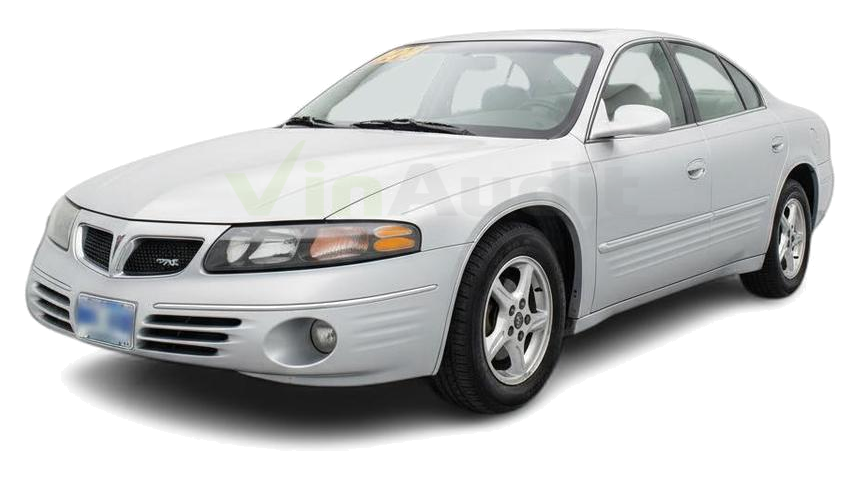
The Good
The 2001 Bonneville offered strong performance, especially with its supercharged option, and a surprisingly comfortable ride for its class. Its bold styling appealed to emotion, while its spacious interior and V6 power provided practical benefits for daily driving and highway cruising.
The Bad
Potential buyers should be aware of issues like premature transmission failures, particularly in earlier models, and potential coolant leaks from intake manifold gaskets. Rusting in the rear quarter panels and suspension component wear are also common concerns to inspect.
2001 Pontiac Bonneville: Quick Overview
- Engine Options: The 2001 Pontiac Bonneville offered two primary engine options:
- A 3.8L naturally aspirated V6 engine.
- A supercharged version of the 3.8L V6 engine.
- Horsepower:
- The standard 3.8L V6 produced approximately 205 horsepower.
- The supercharged 3.8L V6 (found in SSEi trims) delivered around 240 horsepower.
- Fuel Economy: Estimated EPA ratings were generally around 18 MPG city and 28 MPG highway for the naturally aspirated V6, with the supercharged version being slightly less efficient due to its performance focus. Actual mileage varied based on driving conditions and maintenance.
- 0-60 Times:
- The standard V6 model typically achieved 0-60 mph in the mid-8-second range.
- The supercharged SSEi could achieve 0-60 mph in the low 7-second range, offering spirited acceleration.
- Towing Capacity: The Bonneville was not designed as a primary towing vehicle, and official towing capacities were generally not specified or were very limited, typically around 1,000 lbs for light loads.
- Trim-Level Features:
- SE: The base trim often included power windows, locks, mirrors, cruise control, air conditioning, and a standard V6 engine.
- SSE: Stepping up to the SSE often added a sportier suspension, upgraded interior trim, and potentially more standard convenience features over the SE.
- SSEi: This was the top-tier trim, featuring the supercharged V6 engine, leather upholstery, a premium sound system, automatic climate control, and advanced driver aids like traction control and often a heads-up display.
2001 Pontiac Bonneville Specifications
Vehicle Information
| Year | 2001 |
| Make | Pontiac |
| Model | Bonneville |
| Trim | - |
| Style | - |
| Type | Sedan |
| Category | Compact Car |
Manufacturing Details
| Made In | United States |
| Manufacturing City | HAMTRAMCK |
Dimensions
| Doors | 4-Door |
| Curb Weight | - |
| Gross Vehicle Weight Rating | - |
| Overall Height | - |
| Overall Length | - |
| Overall Width | - |
| Wheelbase Length | - |
| Standard Seating | - |
Engine & Performance
| Engine | L67 |
| Engine Size | 4L |
| Engine Cylinders | 8 |
| Transmission | - |
| Transmission Type | - |
| Transmission Speeds | - |
| Drivetrain | Front-Wheel Drive |
Additional Features
| Anti-Brake System | - |
| Steering Type | - |
Pricing
| Manufacturer Suggested Retail Price (MSRP) | - |
| Invoice Price | - |
| Delivery Charges | - |
Vehicle History Report
Specifications
History
Events
History Check
Check
Check
Check
Check
Listings
Recalls
Check
Analysis
What Problems Does the 2001 Pontiac Bonneville Have?
Another common mechanical concern revolves around the intake manifold gaskets. These can degrade over time, leading to coolant leaks. This can result in overheating if not addressed promptly and can lead to more significant engine damage. Another area to watch for is the cooling system in general, with potential for leaks from hoses and the radiator.
Body-wise, rust is a concern, particularly in areas with harsh winters and road salt. The rear quarter panels and rocker panels are common areas where corrosion can set in, especially on higher mileage vehicles. Premature wear of suspension components, such as ball joints and control arm bushings, can also lead to a less comfortable ride and potential handling issues. Electrical gremlins, though less common than mechanical ones, can also crop up, affecting things like power windows, door locks, or dashboard lights.
While there might not be widespread recalls specific to major catastrophic failures for the 2001 model year, it's always advisable to check the National Highway Traffic Safety Administration (NHTSA) website for any open recalls related to this specific VIN. Long-term reliability is often dictated by how well the vehicle has been maintained. A well-cared-for Bonneville can still be a reliable daily driver, but potential buyers should be especially diligent in checking for signs of these common issues.
How long will the 2001 Pontiac Bonneville last?
What Technology & Safety Features are Included?
Driver-assistance features were becoming more prevalent, and the Bonneville offered options like traction control, primarily found on the more performance-oriented SSE and SSEi models, to aid in slippery conditions. Anti-lock brakes (ABS) were also a significant safety feature, helping drivers maintain steering control during emergency braking.
Safety was further addressed with front airbags for the driver and front passenger. Depending on the trim and optional packages, side-impact airbags might have been available, though they were not as universally standard as they are today. The structure of the vehicle was designed to absorb impact energy.
Regarding crash-test ratings, official data from the National Highway Traffic Safety Administration (NHTSA) for the 2001 model year indicates that the Bonneville generally performed reasonably well for its era. Frontal crash tests often resulted in good ratings, with the vehicle offering adequate protection for occupants. Side-impact test results could vary but were typically in the acceptable to good range. It's important to note that crash test methodologies and standards have evolved significantly since 2001, so these ratings should be viewed in the context of the time period. Overall, the 2001 Bonneville provided a solid safety and technology package, with upscale options available for those seeking a more feature-rich experience.
What Colors Options are Available?
2001 Pontiac Bonneville Prices and Market Value
Currently, used market prices for a 2001 Pontiac Bonneville are typically very affordable, often falling in the $1,000 to $4,000 range, heavily dependent on mileage, condition, and trim level. Well-maintained examples with lower mileage, particularly the SSEi, can command slightly higher prices. Factors significantly affecting its resale value include overall condition, presence of rust, transmission health, and maintenance history. Its popularity has waned as newer, more fuel-efficient, and technologically advanced vehicles have become available, making it more of a budget-friendly used car option.
2001 Pontiac Bonneville Cost of Ownership
2001 Pontiac Bonneville Fuel Efficiency
2001 Pontiac Bonneville Safety Rating
NHTSA
2001 Pontiac Bonneville Insurance
reasonable repair costs.
How Does the 2001 Pontiac Bonneville Compare to Other Sedan?
Features were competitive for the era. The Bonneville offered comfortable interiors, available leather, and a decent array of power amenities. However, it generally lagged behind the Toyota Avalon in terms of interior refinement and build quality, and the Avalon also had a strong reputation for reliability. The Ford Crown Victoria was simpler in its interior but robust.
Reliability is where the Bonneville often faced criticism compared to its rivals. While the 3800 V6 engine itself is robust, known issues with its transmission and intake manifold gaskets often put it behind the exceptional reliability of the Toyota Avalon. The Crown Victoria, with its simpler mechanicals, was generally very reliable, though prone to certain age-related issues like suspension wear. The Chevrolet Impala shared some mechanical components with the Bonneville but was often seen as a slightly less refined option.
In terms of price, the 2001 Bonneville was generally priced competitively, often slotting between the more affordable Impala and the slightly more premium Avalon.
Alternatives: For buyers prioritizing exceptional reliability and refinement, the Toyota Avalon is a superior choice. For those seeking a traditional RWD sedan with proven durability, the Ford Crown Victoria is a solid option. The Chevrolet Impala offers similar V6 power and space at a potentially lower price point but might not match the Bonneville's distinct styling or the SSEi's performance edge. The Bonneville stands out for its distinctive styling and the thrilling, albeit potentially problematic, supercharged option.
Final Verdict: Is the 2001 Pontiac Bonneville a Good Sedan?
Buying a used Bonneville is most advisable for individuals comfortable with potential repair costs or those with mechanical inclination. The SSEi trim offers the most engaging driving experience, but the SE and SSE trims are still viable, more affordable options. Thorough pre-purchase inspection is paramount, focusing on the transmission, engine for leaks, and rust. It's a good value for someone who prioritizes bold styling and comfortable cruising over absolute long-term reliability, provided they get a well-maintained example.

Drew B
Drew is a seasoned automotive expert and contributor to VinCheck.info. With nearly 15 years of experience as a former Porsche technician, he brings a wealth of hands-on knowledge to his writing. Born in North Carolina, a region renowned for its deep-rooted NASCAR culture, Drew developed a passion for cars early in life, often building and working on vehicles from a young age. At VINCheck, Drew leverages his extensive technical background to provide in-depth analyses of various vehicles. His articles often focus on engine performance, reliability, and maintenance insights, offering readers practical information grounded in real-world experience. Some of his notable contributions include reviews on the Mazda CX-5's longevity and detailed examinations of engine options for models like the 2011 Toyota Camry and Tacoma