
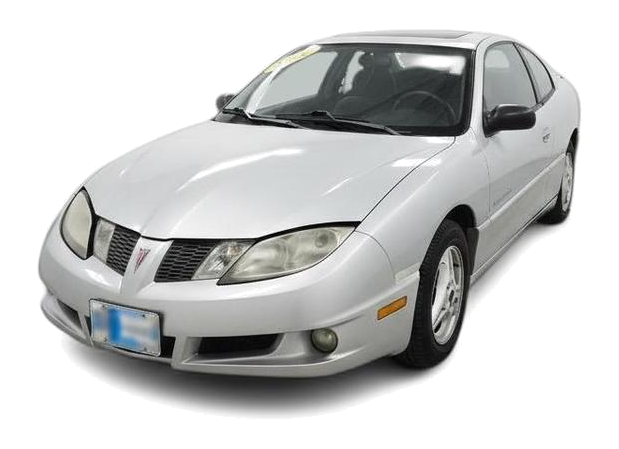
The Good
The 2003 Sunfire offered a compelling blend of sporty design and value. Its agile handling appealed to spirited drivers, while its fuel efficiency and affordable price tag attracted budget-conscious buyers. The youthful styling resonated with those seeking a car with personality.
The Bad
Potential buyers should be aware of common issues such as premature brake wear, minor electrical gremlins, and potential coolant leaks. Some owners also report interior trim durability concerns and a less refined ride compared to some competitors. Regular maintenance is key.
2003 Pontiac Sunfire: Quick Overview
- Engine Options: The 2003 Pontiac Sunfire typically offered two main engine choices:
- A 2.2L Ecotec 4-cylinder engine: This was the standard powerplant.
- A 2.4L Twin Cam 4-cylinder engine (often found in sportier trims like the GT and Z24): This provided more performance.
- Horsepower:
- The 2.2L Ecotec engine generally produced around 140 horsepower.
- The 2.4L Twin Cam engine offered approximately 150 horsepower.
- Fuel Economy: Fuel economy varied slightly depending on the engine and transmission, but generally, the Sunfire was quite efficient for its class. Expect EPA estimates in the range of:
- City: ~24-27 mpg
- Highway: ~34-38 mpg
- 0-60 Times: 0-60 mph times were respectable for a compact car of this era, typically ranging from 8 to 9 seconds for models equipped with the more powerful engine and manual transmission. Models with the base engine and automatic transmission would be a bit slower.
- Towing Capacity: The Pontiac Sunfire was not designed for towing, and therefore, it does not have a specified towing capacity. It is a passenger car and not equipped to handle trailers.
- Trim-Level Features: Key trims and their typical features included:
- Base Model: Offered essential features like air conditioning, power steering, a CD player, and power windows/locks (sometimes optional).
- GT: Often included sportier suspension tuning, upgraded wheels, fog lights, and sometimes a rear spoiler.
- Z24: Positioned as the performance-oriented trim, it typically featured the more powerful 2.4L engine, sport suspension, larger wheels, unique exterior styling cues, and a more driver-focused interior.
- Body Styles: Available in Coupe (2-door) and Convertible (2-door) body styles.
2003 Pontiac Sunfire Specifications
Vehicle Information
| Year | 2003 |
| Make | Pontiac |
| Model | Sunfire |
| Trim | - |
| Style | 4-Speed |
| Type | Coupe |
| Category | Subcompact Car |
Manufacturing Details
| Made In | Mexico |
| Manufacturing City | RAMOS ARIZPE |
Dimensions
| Doors | 2-Door |
| Curb Weight | 2606 pounds |
| Gross Vehicle Weight Rating | - |
| Overall Height | 53.00 inches |
| Overall Length | 182.00 inches |
| Overall Width | 68.40 inches |
| Wheelbase Length | 104.10 inches |
| Standard Seating | 5 |
Engine & Performance
| Engine | 2.2L I4 |
| Engine Size | 2.2L |
| Engine Cylinders | 4 |
| Transmission | 4-Speed Automatic |
| Transmission Type | Automatic |
| Transmission Speeds | 4-Speed |
| Drivetrain | Front-Wheel Drive |
Additional Features
| Anti-Brake System | Non-ABS 4-Wheel ABS |
| Steering Type | Rack & Pinion |
Pricing
| Manufacturer Suggested Retail Price (MSRP) | $14,930 |
| Invoice Price | $13,810 |
| Delivery Charges | $565 |
Vehicle History Report
Specifications
History
Events
History Check
Check
Check
Check
Check
Listings
Recalls
Check
Analysis
What Problems Does the 2003 Pontiac Sunfire Have?
Another area that sometimes causes trouble is the ABS (Anti-lock Braking System). Issues with the ABS module or wheel speed sensors can trigger the ABS warning light and affect braking performance. Premature wear of brake pads and rotors has also been noted by some owners.
Electrical gremlins can be a recurring theme. This can manifest in various ways, such as faulty power windows, door locks, or instrument cluster issues. The fuel pump has also been reported to fail on some models.
The exhaust system can be prone to rust and leaks over time, particularly in areas with harsh weather conditions.
While there aren't widespread, catastrophic mechanical failures consistently reported across all model years of the 2003 Sunfire, maintenance history is crucial. Vehicles that have been poorly maintained are more likely to exhibit these issues. Specifically for the 2003 model year, some owners have reported issues with the torque converter in automatic transmissions, leading to slipping or erratic shifting. Early Ecotec engines (2.2L) sometimes had issues with oil consumption and the timing chain tensioner. However, the 2.4L engine generally proved to be a bit more robust.
Recalls for the 2003 Sunfire were relatively minor and often related to specific components. Owners are advised to check with NHTSA (National Highway Traffic Safety Administration) for any outstanding recalls associated with their specific VIN. Long-term reliability can be decent if routine maintenance is performed diligently, but the quality of interior plastics and suspension components may not hold up as well as in some more premium competitors.
How long will the 2003 Pontiac Sunfire last?
The long-term durability of the Sunfire is decent for its price point, with the core mechanicals (engine and transmission, when properly cared for) proving capable of lasting. However, weaknesses tend to emerge over time, primarily in areas of wear and tear. Suspension components, such as shocks and bushings, may require replacement. Interior plastics can become brittle and show signs of wear. The cooling system components, as mentioned previously, are a common area for leaks and potential failures with age. With consistent, diligent maintenance, the Sunfire can offer many more years of service, but owners should be prepared for these age-related issues.
What Technology & Safety Features are Included?
Entertainment: Standard entertainment typically included an AM/FM stereo with a CD player. An upgraded sound system with more speakers was often available. Cassette players were also still an option in some base models. Steering wheel-mounted audio controls were not common on this trim level.
Tech: Built-in technology was fairly basic. Features like power windows and power door locks were standard on higher trims like the GT and Z24, but often optional on the base model. Air conditioning was also a common option or standard on most trims. Cruise control was generally available. The instrument cluster provided essential information like speed, RPM, fuel level, and temperature.
Driver-Assistance Features: Driver-assistance features were virtually nonexistent in the modern sense for the 2003 Sunfire. There were no advanced systems like lane departure warning, adaptive cruise control, or blind-spot monitoring. The focus was on basic drivability.
Safety Features: Standard safety equipment included front airbags for the driver and passenger. Anti-lock brakes (ABS) were available as an option, particularly on sportier trims, and highly recommended for improved stopping power. Seatbelt pretensioners were also standard. Traction control was generally not available.
Crash-Test Ratings: Crash-test ratings for the 2003 Pontiac Sunfire are available from the National Highway Traffic Safety Administration (NHTSA) and the Insurance Institute for Highway Safety (IIHS). According to NHTSA, the Sunfire typically received four out of five stars for the driver in frontal offset crash tests and four out of five stars for the front passenger. Side impact ratings were less stellar, often receiving lower scores. IIHS ratings were also mixed, with the car performing adequately in some tests but showing areas for improvement in others. These ratings reflect the safety standards of the early 2000s and indicate that while the Sunfire offered basic protection, it lagged behind some competitors in overall safety.
What Colors Options are Available?
2003 Pontiac Sunfire Prices and Market Value
Currently, on the used market, prices for a 2003 Pontiac Sunfire can vary significantly, but generally fall between $1,500 to $4,000. Well-maintained examples with lower mileage and in desirable trims like the Z24 can fetch prices at the upper end, while vehicles with higher mileage or in poorer condition will be at the lower end.
The Sunfire experienced substantial depreciation from its new price, as is typical for most economy and compact cars. Factors affecting its resale value today include its overall condition, mileage, maintenance history, and the presence of any significant mechanical issues. The sporty styling and convertible option can add a small premium to its resale value compared to a base coupe. However, its age and the availability of more modern, fuel-efficient, and safer vehicles limit its overall desirability.
2003 Pontiac Sunfire Cost of Ownership
2003 Pontiac Sunfire Fuel Efficiency
2003 Pontiac Sunfire Safety Rating
NHTSA
IIHS
2003 Pontiac Sunfire Recalls & Defects
Exterior Lighting:turn Signal
Steering
2003 Pontiac Sunfire Warranty
Basic
Powertrain
Rust
2003 Pontiac Sunfire Insurance
reasonable repair costs.
How Does the 2003 Pontiac Sunfire Compare to Other Coupe?
Performance: In terms of performance, the Sunfire, especially in Z24 trim, offered a sportier feel than the more economy-focused Civic and Corolla. Its handling was reasonably engaging, though not as refined as the Civic. The base models were comparable to the entry-level trims of its competitors, offering adequate but not exhilarating acceleration.
Features: Features on the Sunfire were generally on par with its direct competitors for the era. Most offered similar basic amenities like power windows, locks, and CD players. However, rivals like the Civic and Corolla often had a slight edge in interior material quality and a more refined user interface for their infotainment systems. The Sunfire's sporty styling, particularly the Z24 and convertible, was a strong selling point for those seeking visual appeal.
Reliability: This is where the Sunfire often lagged behind Japanese rivals. While the Honda Civic and Toyota Corolla built a reputation for bulletproof reliability, the Sunfire, particularly with its Ecotec engines and common cooling system issues, was generally considered less reliable long-term. The Ford Focus and Dodge Neon also had their own sets of common problems, making the Sunfire's reliability somewhere in the middle of the American and Japanese offerings.
Price: The Sunfire's primary advantage was its aggressive pricing. It was often more affordable than comparable models from Honda and Toyota, making it an attractive option for budget-conscious buyers looking for a bit of sporty flair.
Recommendations:
Similar Alternatives: The Chevrolet Cavalier shared much of its platform and mechanicals with the Sunfire, offering a very similar driving experience and feature set, often at a comparable price. The Ford Focus was another strong contender, offering a good blend of driving dynamics and practicality, though its reliability could also be a concern depending on the model year.
Better Alternatives: For buyers prioritizing long-term reliability and a more refined experience, the Honda Civic and Toyota Corolla are almost always the top recommendations. They offer superior build quality, more dependable powertrains, and better resale value, albeit usually at a slightly higher initial purchase price on the used market. If sporty intent is key and reliability is a concern, a Mazda3 from this era could also be a compelling choice.
Final Verdict: Is the 2003 Pontiac Sunfire a Good Coupe?
Whether it's worth buying depends heavily on the specific vehicle. As a used car, it can be a decent value if found in excellent condition with a thorough maintenance history, especially in the Z24 or convertible trims for those who appreciate its styling. However, buyers must be aware of its potential reliability quirks, particularly concerning the cooling system and electrical components.
New purchases are obviously not an option. When buying used, prioritize lower mileage examples and be prepared for potential maintenance costs. It is not a vehicle for those seeking top-tier reliability or advanced safety features. For the right price and with careful inspection, it can offer affordable transportation with a touch of youthful style.

Simon A
Simon is a contributor to VinCheck, where he provides articles and reviews on various automotive topics. His work focuses on delivering accurate and up-to-date information about used cars, helping readers make informed decisions.