
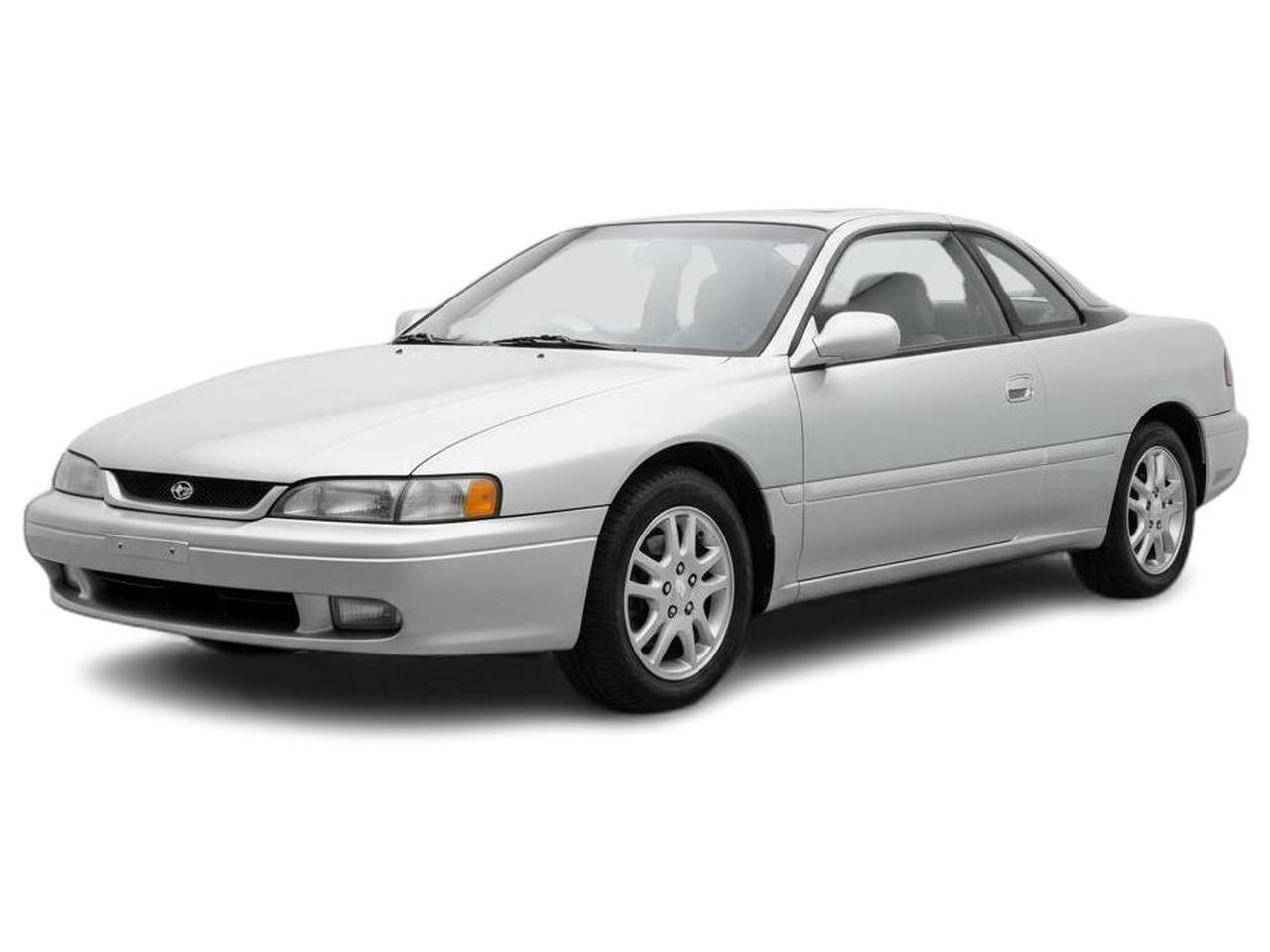
The Good
The 1997 SVX boasts a strong, unique design that turns heads, a potent V6 engine offering spirited performance, and a comfortable, well-appointed interior. Its all-wheel-drive system provides excellent handling in various conditions, appealing to both the desire for distinctive style and practical, confident driving.
The Bad
Potential buyers should be aware of transmission issues, especially in earlier models, and aging electronics. Interior plastics can degrade over time, and finding clean, well-maintained examples can be challenging. Inspecting for rust, particularly around the wheel wells and rocker panels, is crucial.
1997 Subaru SVX: Quick Overview
- Engine Options: The 1997 Subaru SVX featured a single engine option: a 3.3-liter (EG33) naturally aspirated flat-six boxer engine.
- Horsepower: This engine produced approximately 230 horsepower.
- Torque: Peak torque was around 228 lb-ft.
- Transmission: For 1997, only a 4-speed automatic transmission was available in North America. Earlier model years offered a 5-speed manual in some markets, but not for 1997 in the US.
- Drivetrain: All-wheel drive was standard.
- Fuel Economy: EPA estimated fuel economy for the 1997 SVX was around 16 mpg city and 21 mpg highway.
- 0-60 mph Times: While official figures varied, independent tests typically placed the 0-60 mph time in the high 6-second to low 7-second range, depending on conditions and driver.
- Towing Capacity: The SVX was not designed for towing, and towing capacity information is not applicable or officially provided.
- Trim Levels (1997 US Market):
- LS: This was the base trim, featuring standard equipment like leather seats, automatic climate control, power windows and locks, cruise control, a premium sound system, and ABS.
- LSi: The LSi was the higher trim, often including features like a power sunroof, unique badging, and sometimes upgraded wheels. It largely shared the same core mechanicals and most features as the LS.
- Key Trim Features (Common to both LS and LSi):
- Unique glass-to-glass canopy design.
- Full-time all-wheel drive.
- Horizontally opposed 6-cylinder engine.
- Four-wheel disc brakes.
- Driver and passenger airbags.
- Anti-lock braking system (ABS).
- Air conditioning.
- Power-adjustable front seats (standard on LS/LSi).
- Premium audio system.
- Fog lights.
1997 Subaru SVX Specifications
Vehicle Information
| Year | 1997 |
| Make | Subaru |
| Model | SVX |
| Trim | - |
| Style | - |
| Type | - |
| Category | - |
Manufacturing Details
| Made In | - |
| Manufacturing City | - |
Dimensions
| Doors | - |
| Curb Weight | - |
| Gross Vehicle Weight Rating | - |
| Overall Height | - |
| Overall Length | - |
| Overall Width | - |
| Wheelbase Length | - |
| Standard Seating | - |
Engine & Performance
| Engine | - |
| Engine Size | - |
| Engine Cylinders | - |
| Transmission | - |
| Transmission Type | - |
| Transmission Speeds | - |
| Drivetrain | - |
Additional Features
| Anti-Brake System | - |
| Steering Type | - |
Pricing
| Manufacturer Suggested Retail Price (MSRP) | - |
| Invoice Price | - |
| Delivery Charges | - |
Vehicle History Report
Specifications
History
Events
History Check
Check
Check
Check
Check
Listings
Recalls
Check
Analysis
What Problems Does the 1997 Subaru SVX Have?
Another area of concern is the ABS (Anti-lock Braking System) and the associated ABS actuator, which can develop leaks or fail over time, leading to the ABS warning light illuminating on the dashboard. This can be an expensive repair. The HVAC system's blend door actuators can also fail, leading to issues with temperature control.
Electrical gremlins, while not ubiquitous, can plague older vehicles. Issues with power windows, door locks, or the infotainment system can arise due to age and component degradation. The original paint and clear coat, especially on certain colors, could be prone to fading or delamination if not well-cared for.
Fuel injectors could become clogged over time, affecting engine performance and fuel economy. While Subaru's boxer engines are generally reliable, the EG33 V6 engine in the SVX can experience issues with camshaft seals and valve cover gaskets developing leaks, which is a common maintenance item for many horizontally opposed engines.
Regarding recalls, there were a few issued throughout the SVX's production run, but for the 1997 model year specifically, owners should check VIN-specific recall status. However, the primary long-term reliability concerns are more about the age and condition of the components rather than inherent design flaws that would cause widespread failure across all vehicles. The unique glass-to-glass canopy, while striking, also requires careful sealing maintenance to prevent water ingress.
Overall, the 1997 SVX can be a reliable car with diligent maintenance, but buyers must be prepared for potential repairs related to its age and its more complex systems, such as the AWD and the V6 engine.
How long will the 1997 Subaru SVX last?
What Technology & Safety Features are Included?
Standard Technology and Entertainment: The SVX came equipped with a premium audio system, typically a Bose system, featuring multiple speakers designed to fill the cabin. Standard entertainment usually included an AM/FM radio with a cassette player; CD players were becoming more common but might have been optional or part of a higher trim package in some earlier years, though less common in the 1997 US market where cassette was still prevalent. Automatic climate control was standard, allowing for precise temperature regulation. Power windows, power locks, and cruise control were also standard features, enhancing driver convenience. The instrument cluster was digital or had prominent digital readouts for speed and RPM, contributing to a futuristic feel for the era.
Driver-Assistance Features: The most significant driver-assistance feature was the standard full-time all-wheel-drive (AWD) system. This system provided enhanced traction and stability in various driving conditions, from wet roads to light snow. Anti-lock Braking System (ABS) was also standard on all 1997 SVX models, helping drivers maintain steering control during emergency braking. The steering was power-assisted, offering a good balance of feel and ease of use.
Safety Features: In terms of passive safety, the 1997 SVX included driver and passenger front airbags. It also featured three-point seatbelts for all occupants and rear head restraints. The vehicle's chassis was designed with crumple zones to absorb impact energy.
Optional Features: For the 1997 model year, key optional features were relatively limited, as many desirable items were standard on the LS and LSi trims. However, a power sunroof was an option on some models, particularly the LSi trim, adding to the airy feel of the cabin, especially with its unique glass canopy.
Crash-Test Ratings: Official crash-test ratings from organizations like the NHTSA (National Highway Traffic Safety Administration) for the 1997 Subaru SVX are not readily available in comprehensive databases today. However, vehicles from this era generally performed moderately in crash tests compared to modern standards. Subaru's reputation for safety was growing during this period, and the SVX was built with a focus on structural integrity.
What Colors Options are Available?
1997 Subaru SVX Prices and Market Value
Currently, the used market prices for a 1997 Subaru SVX vary significantly based on condition, mileage, maintenance history, and originality. You can find examples ranging from $5,000 for vehicles needing significant work to upwards of $15,000-$20,000 for exceptionally clean, low-mileage, and well-documented examples.
The SVX experienced rapid depreciation in its early years, a common trend for luxury coupes and less mainstream performance cars. However, in recent years, it has developed a cult following, which has stabilized and even slightly increased its resale value for pristine specimens. Factors affecting resale value include the rarity of well-maintained examples, the unique design, the powerful V6 engine, and the all-wheel-drive system. Poor maintenance, high mileage, or significant cosmetic or mechanical issues will drastically reduce its value.
1997 Subaru SVX Cost of Ownership
1997 Subaru SVX Fuel Efficiency
1997 Subaru SVX Insurance
reasonable repair costs.
How Does the 1997 Subaru SVX Compare to Other Vehicle?
Performance: In terms of performance, the SVX's 230 horsepower V6 and standard AWD offered spirited acceleration and excellent all-weather grip. Rivals like the Nissan 300ZX (non-turbo) offered similar V6 power and RWD, while the Toyota Supra (Mk IV non-turbo) also provided a potent inline-six and RWD. Both often offered manual transmissions, which the 1997 SVX lacked in the US. The SVX's AWD gave it an edge in slippery conditions where its RWD competitors would struggle.
Features: The SVX boasted a unique, futuristic design with its glass-to-glass canopy and a well-appointed interior with standard leather and automatic climate control. The 300ZX and Supra were also well-equipped, but perhaps leaned more towards sporty creature comforts than outright luxury in some trims. The Mitsubishi 3000GT offered advanced tech like active aero and AWD (on some trims), often with more aggressive styling.
Reliability: Subaru's AWD system is generally reliable, but the SVX's specific automatic transmission and electronics have been known to be more problematic than the simpler powertrains in some RWD rivals. The 300ZX and Supra, particularly in naturally aspirated form, are known for good long-term reliability if maintained, though they can also be expensive to repair due to complexity and parts availability. The 3000GT had its own share of complex systems that could be costly to fix.
Price: The SVX was competitively priced for its segment when new, but its unique nature means used prices can vary wildly. The 300ZX, Supra, and 3000GT often commanded higher prices on the used market, especially in their turbocharged or manual transmission variants.
Alternatives:
- Similar: The Mitsubishi 3000GT (especially non-turbo AWD models) offers comparable performance, AWD, and a sporty GT feel, though with a more conventional design. The Nissan 300ZX (non-turbo) provides strong V6 performance and a sporty coupe experience, albeit with RWD.
- Better (depending on priorities): If outright driving engagement and manual transmission are paramount, a RWD coupe like a Ford Mustang GT or Chevrolet Camaro Z28 could offer more power for the money and simpler mechanics. For a more reliable and less complex sporty coupe, a Honda Prelude from the same era might be considered, though it sacrifices V6 power and AWD.
The SVX stands out for its avant-garde design and AWD capability, making it a compelling choice for those who prioritize uniqueness and all-weather performance over mainstream appeal or maximum mechanical simplicity.
Final Verdict: Is the 1997 Subaru SVX a Good Vehicle?
Whether it's worth buying depends heavily on the condition and price. A well-maintained, low-mileage example, ideally an LSi for its slightly enhanced features, can be a rewarding purchase for collectors and enthusiasts. However, for a daily driver, buyers should be prepared for higher fuel costs and potential repairs for aging components, especially the transmission and electronics. Buying one requires thorough inspection and a realistic budget for upkeep. It's generally not a car to buy if you're seeking ultimate reliability or minimal running costs. It's a niche purchase for the passionate driver.

Simon A
Simon is a contributor to VinCheck, where he provides articles and reviews on various automotive topics. His work focuses on delivering accurate and up-to-date information about used cars, helping readers make informed decisions.