
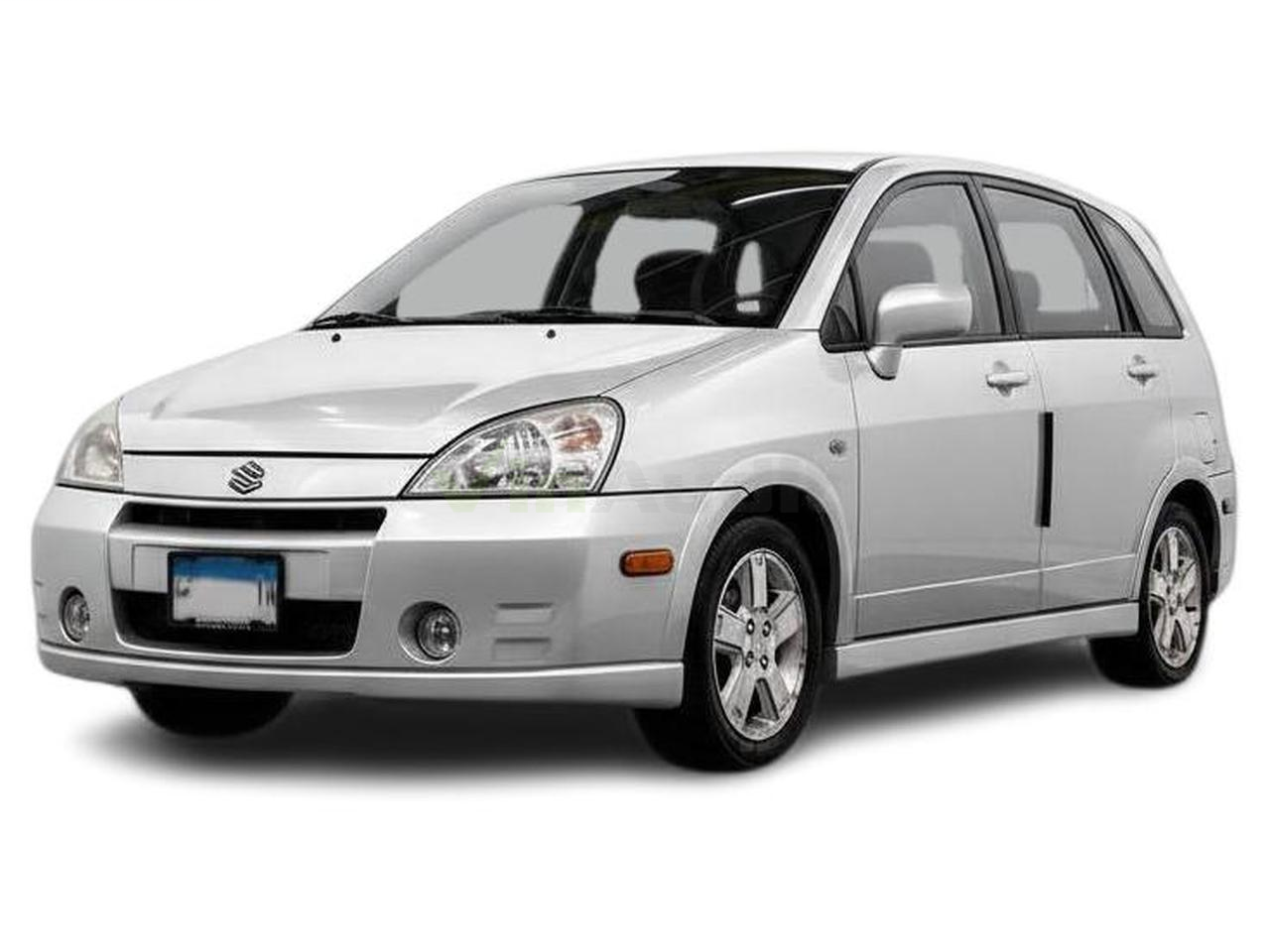
The Good
The 2003 Suzuki Aerio offers surprising performance with its strong standard engine, delivering more zest than many rivals. Its roomy interior provides good comfort, especially headroom, appealing to practical buyers. Emotionally, it's a unique, underdog choice. Excellent value due to low purchase costs, decent fuel efficiency, and available AWD make it a highly practical and economical option.
The Bad
Known weaknesses of the 2003 Suzuki Aerio include a somewhat unrefined ride, noticeable cabin noise at highway speeds, and an interior made of hard plastics. Watch out for potential automatic transmission issues at higher mileages, aging A/C systems, and rust formation in regions exposed to road salt. Suzuki's departure from the US market also affects parts availability and resale value.
2003 Suzuki Aerio: Quick Overview
- Engine Options: The 2003 Aerio primarily featured a 2.0-liter DOHC 16-valve inline-four engine. Later in the 2003 model year, a more potent 2.3-liter DOHC 16-valve inline-four became available, which was carried over to subsequent years.
- Horsepower: The 2.0-liter engine produced 122 horsepower and 122 lb-ft of torque. The upgraded 2.3-liter engine offered a more robust 141 horsepower and 135 lb-ft of torque, providing a more spirited driving experience for its class.
- Fuel Economy: Fuel economy varied based on engine, transmission, and drivetrain. For the 2.0L engine, FWD models typically achieved around 23-25 MPG city / 28-30 MPG highway. The 2.3L engine, especially with AWD, would see slightly lower figures, generally in the range of 21-23 MPG city / 26-28 MPG highway.
- 0-60 MPH Times: With the 2.3-liter engine and manual transmission, 0-60 mph times were competitive for its segment, often estimated in the 8.0 to 9.5-second range. The 2.0-liter or automatic transmission models would be slightly slower.
- Towing Capacity: The 2003 Suzuki Aerio was not designed or typically rated for significant towing. While a very small utility trailer might be possible, it is generally not recommended for towing due to its compact nature and drivetrain limitations.
- Trim-Level Features: The Aerio was offered in several trims, commonly including the S and SX, with both sedan and wagon body styles. AWD was an available option on higher trims.
- Aerio S: Typically the base model, offering standard features like power windows, power door locks, power mirrors, air conditioning, an AM/FM stereo with CD player, and dual front airbags.
- Aerio SX: The more equipped trim, especially popular as the wagon. It often added alloy wheels, fog lights, a rear spoiler (on sedans), a roof rack (on wagons), cruise control, remote keyless entry, sportier cloth upholstery, and sometimes steering wheel-mounted audio controls. Anti-lock Brakes (ABS) and front seat-mounted side airbags were often optional or standard on the SX trim, especially with AWD. Transmission options included a 5-speed manual or a 4-speed automatic.
2003 Suzuki Aerio Specifications
Vehicle Information
| Year | 2003 |
| Make | Suzuki |
| Model | Aerio |
| Trim | - |
| Style | - |
| Type | Sedan |
| Category | Compact Car |
Manufacturing Details
| Made In | Japan |
| Manufacturing City | - |
Dimensions
| Doors | - |
| Curb Weight | - |
| Gross Vehicle Weight Rating | - |
| Overall Height | - |
| Overall Length | - |
| Overall Width | - |
| Wheelbase Length | - |
| Standard Seating | - |
Engine & Performance
| Engine | 2 L 4-Cyl. |
| Engine Size | 2L |
| Engine Cylinders | 4 |
| Transmission | - |
| Transmission Type | - |
| Transmission Speeds | - |
| Drivetrain | Four-Wheel Drive |
Additional Features
| Anti-Brake System | - |
| Steering Type | - |
Pricing
| Manufacturer Suggested Retail Price (MSRP) | - |
| Invoice Price | - |
| Delivery Charges | - |
Vehicle History Report
Specifications
History
Events
History Check
Check
Check
Check
Check
Listings
Recalls
Check
Analysis
What Problems Does the 2003 Suzuki Aerio Have?
Another recurring problem involves ignition coils, which can fail, leading to misfires and rough engine operation. These are typically replaced individually as they fail. Automatic transmissions, particularly on higher-mileage examples, have been noted for developing shifting issues or outright failure, making a pre-purchase inspection of the transmission crucial. Manual transmissions are generally more robust.
The air conditioning system is another area of concern, with reports of compressors failing or leaks developing in the system over time. Power window motors can also weaken or fail, requiring replacement.
Suspension components, such as struts and bushings, are prone to wear, especially in areas with rough roads, leading to a degraded ride quality and potential noise. Electrical gremlins, though usually minor, can manifest as flickering dashboard lights or intermittent sensor readings.
Rust is a significant concern for Aerios, particularly those in regions that use road salt. Owners should inspect body panels, wheel arches, and the undercarriage carefully. In terms of recalls, the 2003 Aerio had a few minor recalls, such as for a potentially faulty fuel pump on certain models or issues with seat belt anchor bolts. Always check the NHTSA website for specific recall information pertaining to the vehicle's VIN. Overall, while the engine and manual gearbox tend to be durable, accessory components and specific electrical systems can present long-term reliability challenges, emphasizing the importance of consistent maintenance.
How long will the 2003 Suzuki Aerio last?
What Technology & Safety Features are Included?
Driver-assistance features were minimal, as expected for this era and class of vehicle. There were no advanced systems like blind-spot monitoring, lane keeping assist, or adaptive cruise control. The focus was on fundamental driving aids.
In terms of safety features, the 2003 Aerio included standard driver and front passenger frontal airbags. Front seat-mounted side airbags were typically an optional feature or standard on higher trims such as the SX. Anti-lock Braking System (ABS) was also an optional extra, often bundled with the side airbags or available on AWD models. Traction control and stability control systems were not offered.
Crash-test ratings provide a good indication of its passive safety. The National Highway Traffic Safety Administration (NHTSA) provided the following ratings:
- Frontal Driver: 4 out of 5 stars
- Frontal Passenger: 4 out of 5 stars
- Side Impact Front Seat (without side airbags): 3 out of 5 stars
- Side Impact Front Seat (with side airbags): 4 out of 5 stars
- Rollover: 4 out of 5 stars
What Colors Options are Available?
2003 Suzuki Aerio Prices and Market Value
2003 Suzuki Aerio Cost of Ownership
2003 Suzuki Aerio Fuel Efficiency
2003 Suzuki Aerio Safety Rating
NHTSA
2003 Suzuki Aerio Recalls & Defects
Visibility:windshield
Power Train:manual Transmission
2003 Suzuki Aerio Insurance
reasonable repair costs.
How Does the 2003 Suzuki Aerio Compare to Other Sedan?
In terms of Performance, the Aerio, especially with its 2.3-liter engine offering 141 horsepower, often outshone base models of the Civic and Corolla, providing a more spirited acceleration. The Protegé also offered a sporty driving feel, while the Elantra was comparable.
For Features, the Aerio was competitively, if not generously, equipped for its price. It often included standard power accessories, a CD player, and air conditioning that might have been optional on base trims of its Japanese competitors. Its most unique selling proposition was the availability of All-Wheel Drive (AWD), a feature virtually unheard of in this compact segment at the time, giving it an edge in snowy climates or for those seeking extra traction.
Reliability is where the Aerio slightly lagged behind the segment leaders. While generally reliable with good maintenance, it typically didn't match the bulletproof long-term reputation of a Toyota Corolla or Honda Civic. Owners often reported more frequent issues with secondary components like A/C systems, power windows, or oxygen sensors compared to its Japanese peers. Parts availability can also be a greater challenge due to Suzuki's departure from the US market.
The Price was arguably the Aerio's strongest point, especially on the used market. New, it was significantly cheaper than a Civic or Corolla, offering more car for the money. Today, its used prices are among the lowest, making it an incredible value proposition for a basic commuter.
Recommended Alternatives:
- Better Overall (Reliability, Resale, Parts Availability): For ultimate peace of mind and long-term value, the Toyota Corolla and Honda Civic remain superior choices, albeit often at a higher purchase price, even used.
- Similar (Value, Features, Driving Dynamics): The Hyundai Elantra offered comparable value and feature sets, while the Mazda Protegé (especially the ES/MP3/Mazdaspeed variants) provided a more engaging driving experience, though without the Aerio's unique AWD option. If AWD is a must-have on a budget, the Aerio stands almost alone.
Final Verdict: Is the 2003 Suzuki Aerio a Good Sedan?
Look for well-maintained examples, preferably with service records, and always insist on a thorough pre-purchase inspection by a trusted mechanic. The SX wagon trim offers excellent utility. While the manual transmission typically offers greater long-term reliability, an automatic is fine if it shifts smoothly. Its low purchase price makes it a very economical car to get into, but be prepared for potential parts sourcing challenges. It serves well as a reliable, second family car or a short-distance daily driver where high resale value isn't a concern.

Drew B
Drew is a seasoned automotive expert and contributor to VinCheck.info. With nearly 15 years of experience as a former Porsche technician, he brings a wealth of hands-on knowledge to his writing. Born in North Carolina, a region renowned for its deep-rooted NASCAR culture, Drew developed a passion for cars early in life, often building and working on vehicles from a young age. At VINCheck, Drew leverages his extensive technical background to provide in-depth analyses of various vehicles. His articles often focus on engine performance, reliability, and maintenance insights, offering readers practical information grounded in real-world experience. Some of his notable contributions include reviews on the Mazda CX-5's longevity and detailed examinations of engine options for models like the 2011 Toyota Camry and Tacoma