Buying a used car can save you money, but that savings can disappear quickly if the vehicle comes with a serious title problem. Two of the most misunderstood title issues are salvage titles and lemon titles.
Both are warning signs, but they do not mean the same thing.
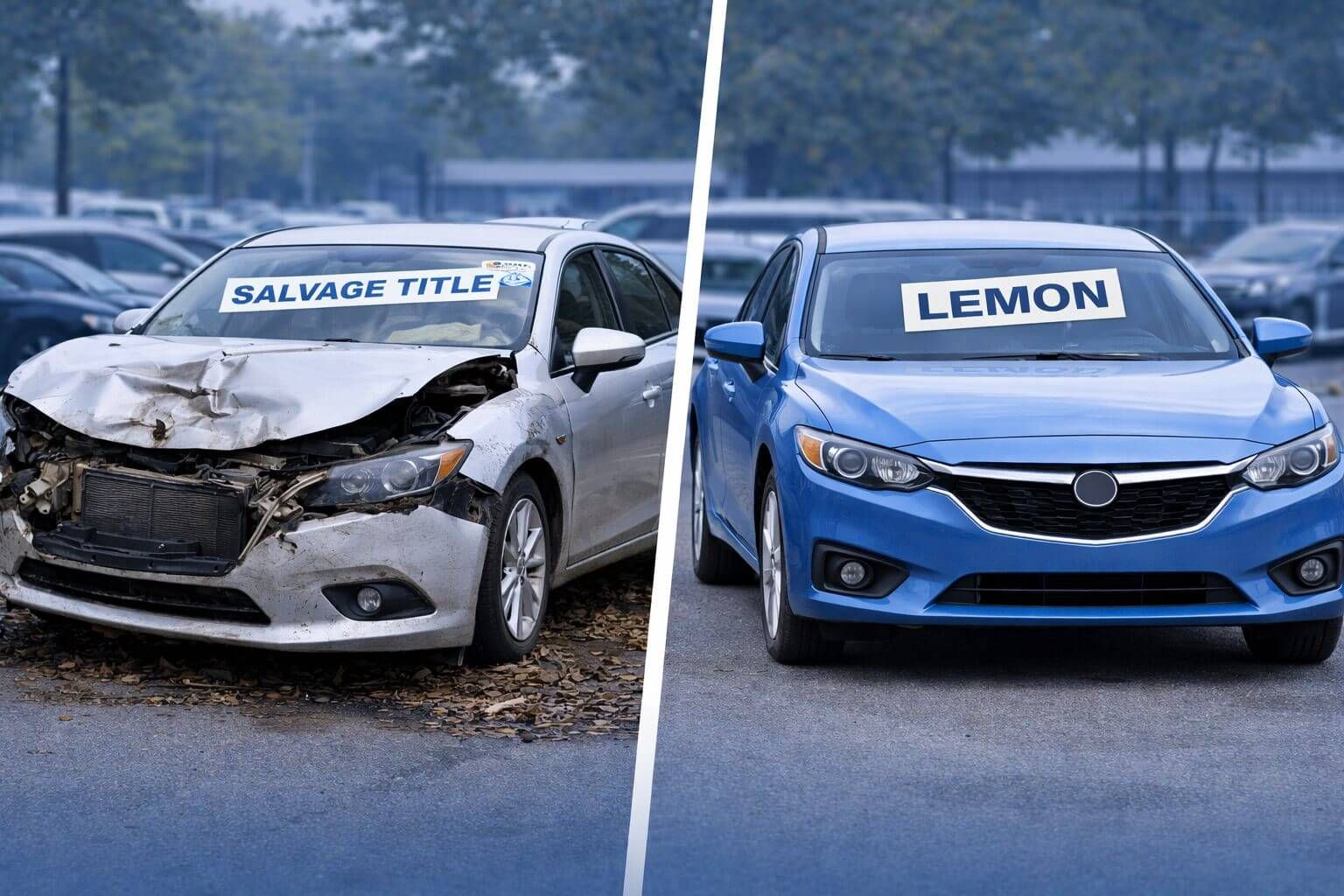
A salvage title usually points to major damage or a total-loss event. A lemon title usually points to repeated defects that led to a manufacturer buyback. If you do not understand the difference, you could overpay, underestimate the risk, or end up with a vehicle that is harder to insure, finance, or resell.
This guide explains the difference between a salvage title and a lemon title, how each one affects buyers, and how to spot these issues before you commit to a used car.
Why Title Brands Matter Before You Buy
A vehicle title is more than a proof-of-ownership document. It also tells part of the car’s legal and damage history.
When a title is branded, it means the vehicle went through a serious event that should matter to future buyers. That event may involve severe damage, repeated defects, insurance total loss status, flood exposure, or a manufacturer buyback.
Why title brands affect used car decisions
A branded title can affect:
- resale value
- financing options
- insurance eligibility
- safety confidence
- long-term reliability
That is why title status should never be treated as a small detail. Before buying, it helps to start with a free title check by VIN so you can confirm whether the vehicle carries a major warning label.
Quick Comparison: Salvage Title vs Lemon Title
| Feature | Salvage Title | Lemon Title |
|---|---|---|
| Main cause | Severe damage or total loss | Manufacturer buyback after repeated defects |
| Typical trigger | Collision, flood, fire, theft recovery, hail | Ongoing safety, drivability, or performance defect |
| Who usually initiates it | Insurance company and state motor vehicle agency | Manufacturer under state lemon law rules |
| Vehicle condition | Often physically damaged | May look normal but had recurring problems |
| Road-use status | Usually must be repaired and inspected before legal road use | Often resold after repairs or disclosure |
| Value impact | Usually much lower than clean title | Often lower than clean title, but usually less severe than salvage |
| Insurance and financing | Often difficult | Varies, but still may affect buyer confidence |
What Is a Salvage Title?
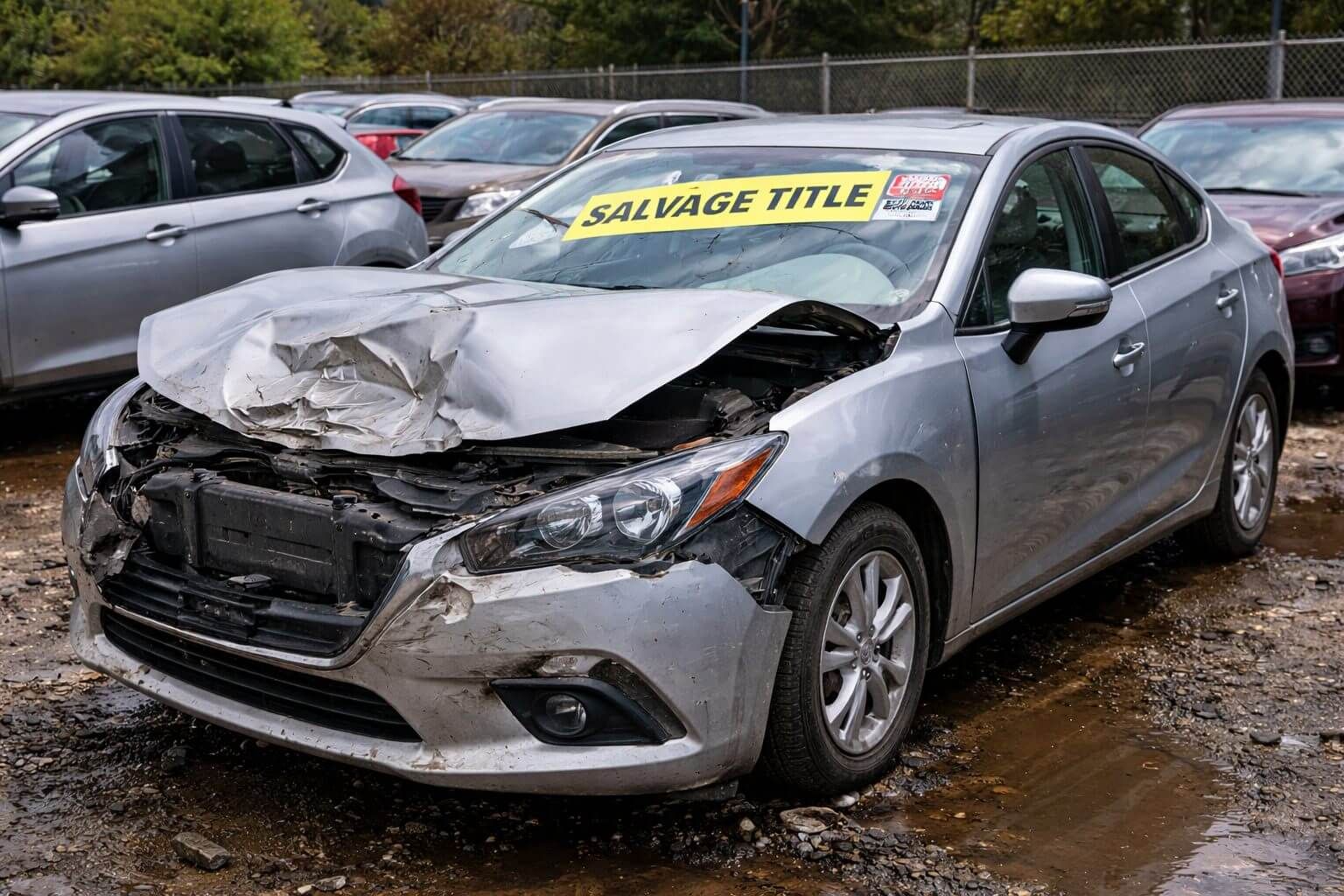
A salvage title usually means the vehicle was declared a total loss by an insurer because the damage was severe enough that repairs were not considered economically reasonable compared with the vehicle’s market value.
Common reasons a car gets a salvage title
- major collision damage
- flood or hurricane damage
- fire damage
- severe hail damage
- theft recovery with major missing or damaged parts
Why salvage-title cars are risky
A salvage vehicle may have hidden structural damage, safety-system problems, electrical issues, or repair shortcuts that are not obvious during a quick inspection.
Even when the car looks presentable, the real problem may be underneath the body panels, inside the wiring, or in the crash-related safety systems.
What happens after salvage status
In many states, a salvage car cannot legally return to normal road use until it is repaired, inspected, and retitled under a rebuilt or reconstructed status. That does not erase the serious damage history. It only means the car was allowed back on the road after repairs.
If flood exposure may have played a role, a flood damage car check can help you understand why those vehicles deserve added caution.
What Is a Lemon Title?
A lemon title usually means the vehicle was repurchased by the manufacturer after repeated defects could not be fixed within the number of attempts or time limits required by the applicable lemon law.
Common examples of lemon-related problems
- recurring engine or transmission failure
- repeated electrical issues
- steering or braking defects
- stalling, overheating, or warning-light problems that keep returning
Why lemon-title cars matter to buyers
A lemon-title vehicle may not have the same kind of physical damage risk as a salvage car, but it still raises major reliability concerns. The central issue is not crash damage. It is the history of repeated defects serious enough to trigger a manufacturer buyback.
Can lemon-title vehicles still be sold?
Yes. In many cases, the manufacturer repairs the issue and resells the vehicle with disclosure. However, that does not mean buyers should ignore the history. The problem may affect resale value and buyer confidence even if the defect was reportedly fixed.
Salvage Title vs Lemon Title: What Is the Real Difference?
The main difference is the reason the title was branded.
Salvage title means damage or total loss
A salvage title usually points to major physical damage, flood exposure, or another event that caused the insurer to treat the vehicle as a total loss.
Lemon title means repeated defects
A lemon title usually points to unresolved or repeated defects that affected use, value, or safety and led to a manufacturer buyback.
Which one is riskier?
For most everyday buyers, a salvage-title vehicle is usually the riskier purchase because it often involves major physical damage and lower long-term confidence in repair quality. A lemon-title vehicle can still be risky, but the nature of the risk is different. It is more about repeated defect history and long-term reliability than crash or flood damage.
How Each Title Type Affects Value, Insurance, and Resale
Title brands affect more than the purchase price.
Salvage-title impact
A salvage-title vehicle usually suffers a major value drop because buyers and insurers see it as a higher-risk vehicle.
Common salvage-title effects
- lower market value
- more difficulty getting full insurance coverage
- reduced lender willingness
- much harder resale later
If value is part of the decision, a car value by VIN check can help you compare the branded-title discount with the vehicle’s broader pricing context.
Lemon-title impact
A lemon-title vehicle also loses value, but the discount is often less severe than with a salvage-title car if the issue was disclosed and reportedly corrected.
Common lemon-title effects
- lower buyer confidence
- moderate resale discount
- insurer and lender reactions may vary
- more questions from future buyers
How to Spot a Salvage or Lemon Vehicle Before You Buy
Do not rely on the seller’s summary alone. Use a process that combines paperwork review, history checks, and inspection.
1. Get the full VIN
Always ask for the full 17-character VIN and compare it across the dashboard, door jamb, title, and registration.
2. Review title history carefully
Look for terms such as salvage, rebuilt, lemon law buyback, or manufacturer buyback.
3. Check for broader background clues
Even when the title wording looks simple, the vehicle’s broader vehicle history may show accident records, total loss events, ownership irregularities, or damage-related concerns that deserve attention.
4. Inspect the vehicle in person
Look for signs of poor repair work, rust, panel mismatch, warning lights, recurring electronic issues, or anything that conflicts with the seller’s story.
5. Get an independent mechanic inspection
This is especially important for salvage-title cars and for any vehicle that seems suspiciously underpriced.
Should You Ever Buy a Salvage or Lemon Title Car?
It depends on your experience, risk tolerance, and the quality of the documentation.
When a salvage-title car may make sense
A salvage-title car may interest a buyer if:
- the discount is substantial
- the repairs are well documented
- an independent inspection supports the quality of the work
- the buyer understands the resale and insurance tradeoffs
When a lemon-title car may be worth considering
A lemon-title car may be worth considering if:
- the manufacturer buyback history is clearly disclosed
- the defect and repair history are documented
- the issue was fixed and verified
- the price reflects the reduced market appeal
When to walk away
Walk away if:
- the seller avoids showing the title
- the VIN or paperwork does not match
- the history is incomplete or suspicious
- the discount is too small for the level of risk
- the seller refuses an inspection
For buyers who want a broader screen before negotiating, a free CARFAX report alternative can help flag title, accident, and damage concerns earlier in the process.
Frequently Asked Questions
Is a salvage title worse than a lemon title?
Usually yes for everyday buyers, because a salvage title often means severe physical damage or total-loss history, while a lemon title usually relates to repeated defects and manufacturer buyback.
Can a lemon-title car still be a good buy?
Sometimes, but only if the defect history is clearly documented, the issue was resolved properly, and the price reflects the risk.
Can a salvage-title car ever be safe to drive?
It can be road-legal after repair and inspection, but buyers should still be cautious because repair quality varies and hidden damage may remain.
Do these title brands affect resale value?
Yes. Both salvage and lemon titles reduce market value, although salvage titles usually have a more severe impact.
Final Thoughts
When comparing salvage title vs lemon title, the biggest difference is the type of risk you are taking on.
A salvage title usually means the car suffered serious damage or a total-loss event. A lemon title usually means the car had repeated defects serious enough to trigger a manufacturer buyback. Both matter, but they raise different concerns for buyers.
Before buying any used car with a branded title, check the VIN, verify the title history, inspect the vehicle carefully, and make sure the discount truly matches the risk. A few extra checks before purchase can save you from a very expensive mistake later.
Author
Claire Holloway
Claire Holloway is a consumer automotive content specialist who covers registration history, title records, DMV-related research, and state-specific vehicle lookup guides. She creates easy-to-follow resources for buyers and sellers who want to verify a vehicle’s legal status, avoid hidden issues, and navigate documentation with more confidence. Her writing blends buyer education with clear, actionable guidance.