The 1999 Land Rover Range Rover, part of the P38A generation (1994-2001), is a full-size luxury SUV renowned for its off-road prowess and opulent interior. Available in HSE and the more basic 4.0 SE trims, it offered a blend of rugged capability and refined comfort. Its iconic boxy design and premium feel made it a status symbol, popular for its go-anywhere attitude coupled with a comfortable ride for its era.
The Good
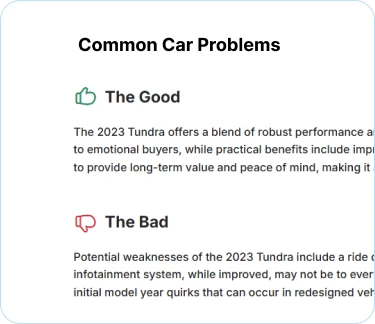
The 1999 Range Rover offers exceptional off-road capability and a commanding presence. Its plush interior provides comfort for long journeys, appealing to those who value luxury and adventure. While not an efficiency leader, its robust build and timeless design offer lasting appeal for practical and emotional buyers seeking capability and prestige.
The Bad
Known weaknesses include potential issues with the electronic air suspension system, head gasket failures, and electrical gremlins. Cooling system problems are also common. Buyers should be wary of deferred maintenance, as repairs can be costly and complex on this sophisticated vehicle.

1999 Land Rover Range Rover: Quick Overview
- Engine Options: The 1999 Range Rover primarily came with two engine options:
- 4.0-liter V8 (for the 4.0 SE trim)
- 4.6-liter V8 (for the HSE trim)
- Horsepower:
- 4.0-liter V8: Approximately 182 hp
- 4.6-liter V8: Approximately 217 hp
- Torque:
- 4.0-liter V8: Approximately 229 lb-ft
- 4.6-liter V8: Approximately 280 lb-ft
- Fuel Economy: (EPA estimates, actual mileage may vary significantly)
- City: Around 11-12 MPG
- Highway: Around 14-16 MPG
- 0-60 Times: (Approximate)
- 4.0 SE: Around 9.8 seconds
- 4.6 HSE: Around 8.7 seconds
- Towing Capacity: Typically rated around 7,700 lbs, depending on specific configuration and trailer brake setup.
- Trim-Level Features:
- 4.0 SE: Standard features included leather upholstery, power-adjustable front seats, dual-zone climate control, a premium sound system, cruise control, power windows and locks, ABS, and permanent four-wheel drive with a locking center differential. The hallmark feature of the P38A generation was its Electronic Air Suspension (EAS).
- HSE (High Specification Equipment): This trim built upon the SE with additional luxury and convenience features. These often included enhanced leather seating (sometimes with memory functions), wood interior trim accents, heated front and rear seats, fog lights, a larger engine (4.6-liter), and often a sunroof. Some HSE models might have also featured upgraded sound systems or other minor cosmetic enhancements.
- Drivetrain: Permanent four-wheel drive with a 2-speed transfer case and electronically locking center differential.
- Transmission: 4-speed automatic transmission.
1999 Land Rover Range Rover Specifications
Vehicle Information
| Year | 1999 |
| Make | Land Rover |
| Model | Range Rover |
| Trim | - |
| Style | - |
| Type | Sport Utility Vehicle Vehicle |
| Category | Standard Sport Utility Vehicle |
Manufacturing Details
| Made In | England |
| Manufacturing City | SOLIHULL |
Dimensions
| Doors | 4-Door |
| Curb Weight | - |
| Gross Vehicle Weight Rating | 7000 pounds |
| Overall Height | - |
| Overall Length | - |
| Overall Width | - |
| Wheelbase Length | - |
| Standard Seating | - |
Engine & Performance
| Engine | 4.6 L V-8 |
| Engine Size | 4.6L |
| Engine Cylinders | 8 |
| Transmission | 4 Automatic |
| Transmission Type | Automatic |
| Transmission Speeds | 4-Speed |
| Drivetrain | Four-Wheel Drive |
Additional Features
| Anti-Brake System | - |
| Steering Type | - |
Pricing
| Manufacturer Suggested Retail Price (MSRP) | - |
| Invoice Price | - |
| Delivery Charges | - |
Vehicle History Report
Vehicle
Specifications
Specifications
Ownership
History
History
All History
Events
Events
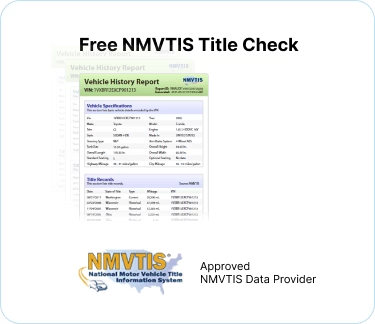
NMVTIS Title
History Check
History Check
Salvage/Rebuilt
Check
Check
Accident
Check
Check
Theft
Check
Check
Open Lien
Check
Check
Past Sale
Listings
Listings
Safety
Recalls
Recalls
Odometer
Check
Check
Market Price
Analysis
Analysis
What Problems Does the 1999 Land Rover Range Rover Have?
The 1999 Land Rover Range Rover, like many vehicles of its era with complex systems, has a reputation for certain recurring issues that impact its long-term reliability and ownership experience. One of the most frequently reported and potentially expensive problems centers around the Electronic Air Suspension (EAS) system. Components like the air springs, compressor, valve blocks, and height sensors can fail over time, leading to a saggy ride height, a harsh ride, or complete failure of the suspension. Repairs can be costly, and some owners opt to convert to coil springs for simplicity, though this sacrifices some of the vehicle's signature ride quality.
Another significant concern is the cooling system. Overheating can lead to more severe engine damage, including head gasket failures. Issues with the radiator, water pump, thermostat, and hoses are not uncommon. Due to the V8 engine's design, a blown head gasket can be an expensive repair.
Electrical issues are also a recurring theme. The P38A Range Rover is known for a complex electrical system where various sensors, modules, and wiring harnesses can develop faults. This can manifest as warning lights, malfunctioning accessories, or even the vehicle refusing to start. Issues with the Body Control Module (BCM) and the BECM (Battery Energy Control Module) are particularly notorious.
The engines themselves, while generally robust in principle, can suffer from issues like oil leaks, particularly from the timing cover and valve cover gaskets. The 4.6-liter HSE engine, in particular, can be prone to oil consumption and, as mentioned, head gasket issues if not properly maintained or if it overheats.
The transmission, a 4-speed automatic, is generally considered reliable if well-maintained, but fluid leaks and eventual wear can lead to shifting problems.
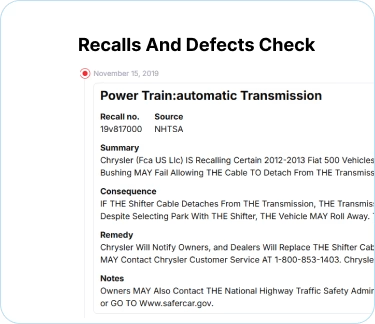
While there haven't been widespread, catastrophic recalls specifically for the 1999 model year that stand out above these common wear-and-tear issues, owners should always check for any outstanding safety recalls with Land Rover. The long-term reliability is heavily dependent on the diligent maintenance history. A well-maintained 1999 Range Rover can still be a capable vehicle, but potential buyers must be prepared for the possibility of significant repair costs due to the inherent complexity and age of the vehicle. Model year specific issues are less pronounced than general P38A generation concerns, with most problems being a result of age and mileage.
Another significant concern is the cooling system. Overheating can lead to more severe engine damage, including head gasket failures. Issues with the radiator, water pump, thermostat, and hoses are not uncommon. Due to the V8 engine's design, a blown head gasket can be an expensive repair.
Electrical issues are also a recurring theme. The P38A Range Rover is known for a complex electrical system where various sensors, modules, and wiring harnesses can develop faults. This can manifest as warning lights, malfunctioning accessories, or even the vehicle refusing to start. Issues with the Body Control Module (BCM) and the BECM (Battery Energy Control Module) are particularly notorious.
The engines themselves, while generally robust in principle, can suffer from issues like oil leaks, particularly from the timing cover and valve cover gaskets. The 4.6-liter HSE engine, in particular, can be prone to oil consumption and, as mentioned, head gasket issues if not properly maintained or if it overheats.
The transmission, a 4-speed automatic, is generally considered reliable if well-maintained, but fluid leaks and eventual wear can lead to shifting problems.
While there haven't been widespread, catastrophic recalls specifically for the 1999 model year that stand out above these common wear-and-tear issues, owners should always check for any outstanding safety recalls with Land Rover. The long-term reliability is heavily dependent on the diligent maintenance history. A well-maintained 1999 Range Rover can still be a capable vehicle, but potential buyers must be prepared for the possibility of significant repair costs due to the inherent complexity and age of the vehicle. Model year specific issues are less pronounced than general P38A generation concerns, with most problems being a result of age and mileage.
How long will the 1999 Land Rover Range Rover last?
Based on owner data, a 1999 Land Rover Range Rover, with consistent and thorough maintenance, can realistically achieve service lives of 150,000 to 200,000 miles. However, without meticulous upkeep, reaching even 100,000 miles without significant repairs can be a challenge. The long-term durability is heavily influenced by the owner's commitment to addressing known weaknesses proactively. The electronic air suspension, cooling system, and electrical components are the primary areas where weaknesses manifest over time, often requiring more frequent attention and potentially costly repairs as mileage increases. Owners who invest in regular fluid changes, hose replacements, and diagnostic checks are more likely to experience fewer major breakdowns. Neglect, unfortunately, leads to a rapid decline in reliability and escalating repair bills.
What Technology & Safety Features are Included?
The 1999 Land Rover Range Rover offered a blend of luxury and technology for its time, though it pales in comparison to modern vehicles. Standard tech and entertainment features included a premium audio system, typically with multiple speakers and a cassette player, and an optional CD player. Climate control was generally dual-zone, allowing for different temperature settings for the driver and front passenger. Power accessories like windows, mirrors, and door locks were standard.
Driver-assistance features were limited by today's standards. The primary safety system was the Anti-lock Braking System (ABS). Permanent four-wheel drive with a locking center differential and a two-speed transfer case were key to its off-road capabilities and also contributed to on-road stability. Cruise control was also a standard convenience feature.
Optional features could include heated seats (front and rear), a power sunroof, and enhanced interior materials like wood trim, especially on the HSE model. Some models might have also offered a premium sound system upgrade. Navigation systems were not commonly integrated into the dashboard at this time, unlike later generations.
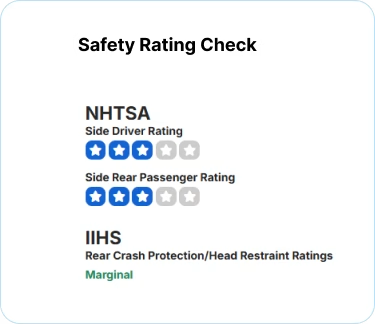
Safety-wise, crash-test ratings for vehicles of this vintage are often not directly comparable to today's rigorous testing protocols. However, the Range Rover was designed with a robust body structure. It featured front airbags for the driver and passenger. Side airbags were not a common or standard feature in 1999 for this model. Due to its size and weight, it offered a degree of passive safety in a collision. However, without modern electronic stability control or advanced crumple zones, its performance in frontal and side-impact tests would likely be considered moderate by current standards. Specific official crash test data from agencies like the NHTSA or IIHS for the 1999 model year is scarce.
Driver-assistance features were limited by today's standards. The primary safety system was the Anti-lock Braking System (ABS). Permanent four-wheel drive with a locking center differential and a two-speed transfer case were key to its off-road capabilities and also contributed to on-road stability. Cruise control was also a standard convenience feature.
Optional features could include heated seats (front and rear), a power sunroof, and enhanced interior materials like wood trim, especially on the HSE model. Some models might have also offered a premium sound system upgrade. Navigation systems were not commonly integrated into the dashboard at this time, unlike later generations.
Safety-wise, crash-test ratings for vehicles of this vintage are often not directly comparable to today's rigorous testing protocols. However, the Range Rover was designed with a robust body structure. It featured front airbags for the driver and passenger. Side airbags were not a common or standard feature in 1999 for this model. Due to its size and weight, it offered a degree of passive safety in a collision. However, without modern electronic stability control or advanced crumple zones, its performance in frontal and side-impact tests would likely be considered moderate by current standards. Specific official crash test data from agencies like the NHTSA or IIHS for the 1999 model year is scarce.
What Colors Options are Available?
1999 Land Rover Range Rover Prices and Market Value
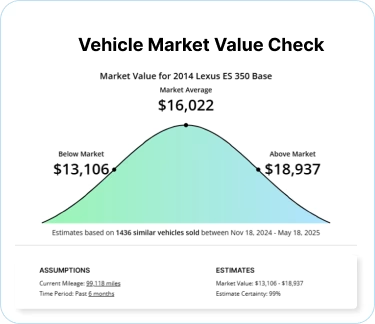
When new, the 1999 Land Rover Range Rover was a premium luxury SUV with prices typically starting in the high $50,000s for the 4.0 SE and extending into the mid-$60,000s for the HSE model. As with most luxury vehicles, it experienced significant depreciation in its initial years. However, its iconic status and off-road capability mean that well-maintained examples have held some residual value, particularly the more desirable HSE trims. Current used market prices for a 1999 Range Rover can range from as low as $3,000-$5,000 for vehicles needing substantial work, up to $10,000-$15,000 or even more for exceptionally clean, low-mileage examples with comprehensive service records. Factors affecting resale value are predominantly maintenance history, overall condition, mileage, and the presence of original documentation and keys.
1999 Land Rover Range Rover Cost of Ownership
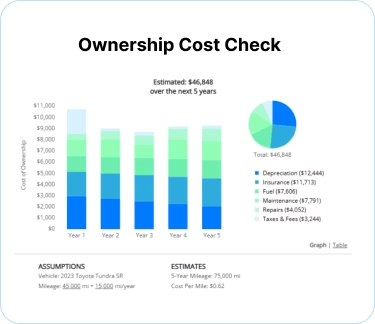
Owning a 1999 Land Rover Range Rover is generally considered costly. Insurance premiums can be higher due to its luxury status and repair costs. Fuel economy is poor, typically averaging 11-16 MPG, making it expensive to run daily. Maintenance requires diligent attention and can be expensive, especially if using specialized mechanics. Repairs are a significant factor; due to its complex systems (like the air suspension) and age, components can fail and are often costly to replace. Specialized parts and labor are often needed. Overall, the 1999 Range Rover is not an economical vehicle to own and is best suited for enthusiasts prepared for potential high expenditure.
1999 Land Rover Range Rover Fuel Efficiency
Fuel Type
Gasoline
Fuel Capacity
-
City Mileage
-
Highway Mileage
-
1999 Land Rover Range Rover Recalls & Defects
Engine and Engine Cooling
Recall date
1999-01-19
Recall no.
99v007000
Source
NHTSA
Summary
Vehicle Description: Sport Utility Vehicles. AS A Result OF Water Ingress and Subsequent ICE Blockage, THE Transmission Breather Tube CAN Become Clogged, Expelling Transmission Fluid From THE Dipstick Tube Onto HOT Engine Components.
Consequence
This Leakage, IN THE Presence OF AN Ignition Source, CAN Result IN AN Underhood Fire.
Remedy
Dealers Will Remove THE Transmission Breather Tube From THE Inner Fender and A Section OF THE Hose Will BE CUT AT AN Angle. This Action Will Remove THE END OF THE Breather Tube From ANY Pooled Water and Will Eliminate Water Droplets From Clinging TO THE END OF THE Tube.
Notes
Owner Notification Began January 11, 1999.owners WHO Take Their Vehicles TO AN Authorized Dealer ON AN Agreed Upon Service Date and DO NOT Receive THE Free Remedy Within A Reasonable Time Should Contact Land Rover AT 1-800-637-6837. Also Contact THE National Highway Traffic Safety Administration's Auto Safety Hotline AT 1-888-dash-2-dot (1-888-327-4236).
Vehicle Speed Control
Recall date
2000-10-16
Recall no.
00v329000
Source
NHTSA
Summary
Vehicle Description: Sport Utility Vehicles. THE Cast Alloy Throttle Body IS Heated BY Fluid Bled From THE Cooling System, TO Prevent Icing IN Extremely Cold Weather Conditions. This Fluid Passes Through A Small Attachment (Plate) TO THE Throttle Body, Which Utilizes A Cork Gasket. THE Cork Gasket HAS Proven TO BE Unreliable IN This Application. Consequently, Coolant Fluid CAN Leak From THE Interface Between THE De-Icer Plate and THE Throttle Body.
Consequence
Should This Coolant Collect ON High Temperature Regions OF THE Engine, THE Coolant Fluid Could Ignite.
Remedy
Dealers Will Replace THE Throttle Body Gasket, De-Icer Attachment, and Securing Hardware.
Notes
Owner Notification Began January 4, 2001. Owners WHO Take Their Vehicles TO AN Authorized Dealer ON AN Agreed Upon Service Date and DO NOT Receive THE Free Remedy Within A Reasonable Time Should Contact Land Rover AT 1-800-637-6837. Also Contact THE National Highway Traffic Safety Administration's Auto Safety Hotline AT 1-888-dash-2-dot (1-888-327-4236).
Electronic Stability Control:automatic (Asc)
Recall date
2000-10-16
Recall no.
00v142001
Source
NHTSA
Summary
Vehicle Description: Sport Utility Vehicles. THE Loading Conditions ON THE Vehicle's Left Side Engine Idler Pulley CAN Exceed THE Maximum Calculated Figure OF THE Original Design Specification. THE Material OF THE Pulley CAN Fracture and Ultimately Fail. Failure OF THE Pulley Material CAN Cause THE Pulley TO Throw OFF THE Serpentine Belt.
Consequence
This Could Result IN A Loss OF Engine Auxiliary Functions (Power Steering, Water Pump, Alternator, AIR Conditioning and Ace).
Remedy
Dealers Will Install AN Improved Idler Pulley.
Notes
Owner Notification Began December 28, 2000.owners WHO Take Their Vehicles TO AN Authorized Dealer ON AN Agreed Upon Service Date and DO NOT Receive THE Free Remedy Within A Reasonable Time Should Contact Land Rover AT 1-800-637-6837.also Contact THE National Highway Traffic Safety Administration's Auto Safety Hotline AT 1-888-dash-2-dot (1-888-327-4236).
Engine and Engine Cooling:cooling System:hoses/Lines/Piping/fittings
Recall date
2000-10-16
Recall no.
00v328000
Source
NHTSA
Summary
Vehicle Description: Sport Utility Vehicles. Coolant System Leaks Have Been Identified IN Areas Where THE Coolant Could BE Subjected TO Elevated Temperatures.
Consequence
Consequently, THE Fluid Could Ignite Causing AN Under-Hood Fire.
Remedy
Dealers Will Make A Series OF Modifications TO Several Underhood Hose Components TO Eliminate THE Release OF Engine Coolant.
Notes
Owner Notification Began January 4, 2001.owners WHO Take Their Vehicles TO AN Authorized Dealer ON AN Agreed Upon Service Date and DO NOT Receive THE Free Remedy Within A Reasonable Time Should Contact Land Rover AT 1-800-637-6837.also Contact THE National Highway Traffic Safety Administration's Auto Safety Hotline AT 1-888-dash-2-dot (1-888-327-4236).
Power Train:automatic Transmission
Recall date
2000-11-16
Recall no.
00v377000
Source
NHTSA
Summary
Vehicle Description: Certain Sport Utility Vehicles Fail TO Comply With THE Requirements OF Fmvss NO. 114, "theft Protection." Water Contamination OF THE Automatic Transmission OIL CAN Lead TO Various Failure Modes OF THE Transmission. ONE OF These Failure Models Results IN Incorrect Operation OF THE Park Lock Function That Could Allow A Vehicle TO Roll Away IF Parked Without THE Handbrake Properly Set.
Consequence
Unintentional Vehicle Movement Could Result IN A Crash or Personal Injury.
Remedy
Dealers Will Check THE Park Lock Function; Reposition THE Automatic Transmission Breather Tube; and Test THE Automatic Transmission Fluid and Flush IF Necessary.
Notes
Owner Notification Began January 4, 2001.owners WHO Take Their Vehicles TO AN Authorized Dealer ON AN Agreed Upon Service Date and DO NOT Receive THE Free Remedy Within A Reasonable Time Should Contact Land Rover AT 1-800-637-6837.also Contact THE National Highway Traffic Safety Administration's Auto Safety Hotline AT 1-888-dash-2-dot (1-888-327-4236).
1999 Land Rover Range Rover Insurance
Insurance for a 1999 Land Rover Range Rover is moderately priced, reflecting its status as a Sport Utility Vehicle Vehicle with strong safety ratings and
reasonable repair costs.
How Does the 1999 Land Rover Range Rover Compare to Other Sport Utility Vehicle Vehicle?
The 1999 Land Rover Range Rover competed in a luxury SUV segment populated by formidable rivals such as the Mercedes-Benz ML320, Lexus LX 470, and the Jeep Grand Cherokee. In terms of performance, the Range Rover's V8 engines provided adequate power, especially the 4.6 HSE, but were outpaced by some competitors in straight-line acceleration. Its true forte was off-road capability, where its sophisticated four-wheel-drive system and air suspension often surpassed rivals.
Features-wise, the Range Rover offered a luxurious interior with leather and wood accents, competing well with the plushness of the Lexus LX 470 and the Mercedes ML320. However, its technology and driver-assistance features were more basic compared to the evolving offerings from German and Japanese manufacturers.
Reliability is where the Range Rover historically struggled compared to its rivals. Both the Lexus LX 470 and Mercedes-Benz ML320 generally offered better long-term reliability and fewer complex issues, particularly concerning the electronic systems and suspension components that plagued the Range Rover. The Jeep Grand Cherokee offered a more affordable entry point but lacked the same level of luxury and refinement.
Price-wise, the Range Rover sat at the premium end of the segment, similar to the LX 470 and ML320. However, its higher maintenance and repair costs often made the total cost of ownership significantly greater.
Alternatives to Consider:
Features-wise, the Range Rover offered a luxurious interior with leather and wood accents, competing well with the plushness of the Lexus LX 470 and the Mercedes ML320. However, its technology and driver-assistance features were more basic compared to the evolving offerings from German and Japanese manufacturers.
Reliability is where the Range Rover historically struggled compared to its rivals. Both the Lexus LX 470 and Mercedes-Benz ML320 generally offered better long-term reliability and fewer complex issues, particularly concerning the electronic systems and suspension components that plagued the Range Rover. The Jeep Grand Cherokee offered a more affordable entry point but lacked the same level of luxury and refinement.
Price-wise, the Range Rover sat at the premium end of the segment, similar to the LX 470 and ML320. However, its higher maintenance and repair costs often made the total cost of ownership significantly greater.
Alternatives to Consider:
- Lexus LX 470 (similar model years): Offers comparable luxury and off-road capability with vastly superior reliability and a more refined powertrain. It's a much more practical choice for long-term ownership.
- Toyota Land Cruiser (similar model years): Shares much with the LX 470 but can sometimes be found at a slightly lower price point, offering a robust and reliable platform for adventure.
- Mercedes-Benz ML320 (similar model years): A more car-like driving experience with a capable V6 engine and luxury appointments. Reliability is generally better than the Range Rover, though still not as bulletproof as Lexus or Toyota.
- Jeep Grand Cherokee (similar model years): A more budget-friendly option offering decent off-road capability and V8 power in higher trims, but with a less luxurious interior and potentially less refined ride.
Final Verdict: Is the 1999 Land Rover Range Rover a Good Sport Utility Vehicle Vehicle?
The 1999 Land Rover Range Rover is ideal for the enthusiast who appreciates its iconic styling, luxurious interior, and exceptional off-road capability, and who is prepared for the potential costs associated with maintaining a complex, aging vehicle. It is **not** recommended for budget-conscious buyers or those seeking trouble-free daily transportation. If buying, it's crucial to purchase a well-maintained example with a comprehensive service history, ideally from a specialist. The HSE trim is generally more desirable due to its enhanced features and larger engine. It is worth buying only if the buyer has realistic expectations about repair costs and is looking for a weekend adventure vehicle or a statement piece, rather than a primary mode of transport. New examples are obviously unavailable; focus strictly on the used market and be prepared for significant potential investment in repairs.