
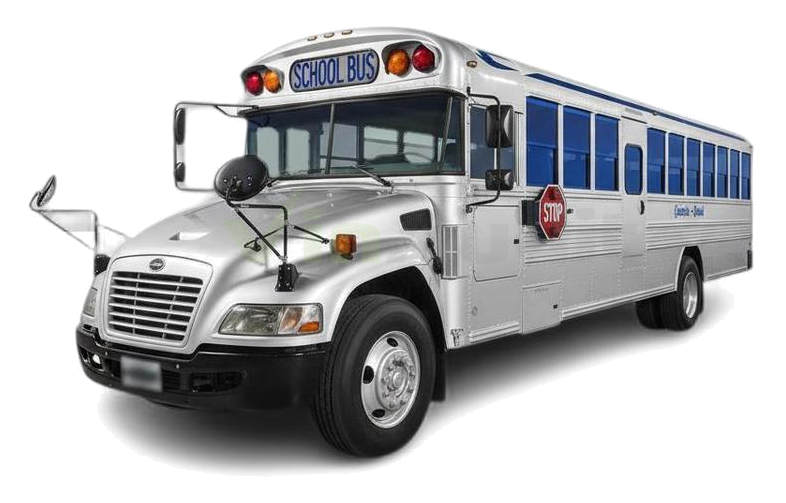
The Good
Key advantages of the 2013 Blue Bird Vision include its exceptional reliability and robust performance tailored for demanding daily routes. Its sturdy design and inherent safety features offer emotional peace of mind for student transport. Practically, its long service life, high passenger capacity, and diverse fuel options (including alternative fuels) deliver strong long-term value and operational efficiency for fleet managers.
The Bad
Potential weaknesses for the 2013 Blue Bird Vision include its inherently low fuel economy, especially with gasoline engines, and emissions system complexities in diesel models (DPF/DEF) that can lead to costly repairs. Interior amenities are basic, and the ride can be firm. Corrosion is a concern in areas with harsh winters, requiring careful inspection of the undercarriage and body panels.
2013 Blue Bird Vision: Quick Overview
- Engine Options:
The 2013 Blue Bird Vision offered a variety of powertrain options to suit different operational needs and fuel preferences. Common engine choices included the Ford 6.8L V10 gasoline engine, known for its widespread parts availability and simpler maintenance, and the Cummins ISB 6.7L diesel engine, favored for its torque and fuel efficiency in heavier applications. Additionally, Blue Bird was a pioneer in alternative fuels, offering versions powered by propane (liquid petroleum gas) and compressed natural gas (CNG), providing cost savings and environmental benefits in regions with supporting infrastructure. - Horsepower:
Horsepower figures varied significantly by engine. The Ford 6.8L V10 gasoline engine typically produced around 320 horsepower and 460 lb-ft of torque. The Cummins ISB 6.7L diesel engine was available in several ratings, often ranging from approximately 200 to 260 horsepower, with robust torque figures (e.g., 520 to 660 lb-ft) crucial for hauling heavy loads and navigating varied terrains. Propane and CNG engines offered comparable power outputs to their gasoline counterparts. - Fuel Economy:
Fuel economy is not a strong suit for a heavy-duty school bus. The 2013 Blue Bird Vision typically achieved mileage in the range of 5-8 miles per gallon (MPG), heavily dependent on engine type, route topography, passenger load, and driving habits. Diesel engines generally offered better MPG than gasoline, while alternative fuels provided per-mile cost savings rather than significantly improved efficiency. - 0-60 Times:
0-60 mph acceleration times are not a relevant performance metric for school buses. These vehicles are designed for durability, safety, and passenger capacity, not rapid acceleration. A 2013 Blue Bird Vision would likely take well over 30 seconds to reach 60 mph, if at all, as its top speed is also limited for safety. - Towing Capacity:
While not equipped with a dedicated towing package like consumer trucks, the Blue Bird Vision's robust chassis and powerful engines mean it has substantial hauling capabilities. Its gross vehicle weight rating (GVWR) can range from 26,000 lbs to over 33,000 lbs, indicating its capacity to carry heavy loads, including passengers and potential equipment. Specific towing capacities are not typically published, as towing is not its primary function. - Trim-Level Features:
The Vision doesn't have traditional "trims" but rather extensive configuration options. Standard features include the iconic conventional body, heavy-duty suspension, air brakes, and compliance with all federal motor vehicle safety standards (FMVSS) for school buses. Optional features greatly expanded its utility: various seating capacities (from smaller configurations to nearly 90 passengers), different seat types (high-back, standard, or with lap/shoulder belts), air conditioning, wheelchair lifts and securement systems, various interior finishes, driver's fan, power and heated mirrors, LED lighting packages, auxiliary heaters, and advanced camera systems for enhanced driver visibility and student monitoring. The choice of engine and fuel type also constituted a major "feature" decision.
2013 Blue Bird Vision Specifications
Vehicle Information
| Year | 2013 |
| Make | Blue Bird |
| Model | Vision |
| Trim | - |
| Style | - |
| Type | Bus |
| Category | Bus |
Manufacturing Details
| Made In | United States |
| Manufacturing City | FORT VALLEY |
Dimensions
| Doors | - |
| Curb Weight | - |
| Gross Vehicle Weight Rating | 33000 pounds |
| Overall Height | - |
| Overall Length | - |
| Overall Width | - |
| Wheelbase Length | - |
| Standard Seating | - |
Engine & Performance
| Engine | 6.7L I6 |
| Engine Size | 6.7L |
| Engine Cylinders | 6 |
| Transmission | - |
| Transmission Type | - |
| Transmission Speeds | - |
| Drivetrain | - |
Additional Features
| Anti-Brake System | - |
| Steering Type | - |
Pricing
| Manufacturer Suggested Retail Price (MSRP) | - |
| Invoice Price | - |
| Delivery Charges | - |
Vehicle History Report
Specifications
History
Events
History Check
Check
Check
Check
Check
Listings
Recalls
Check
Analysis
What Problems Does the 2013 Blue Bird Vision Have?
Electrical system glitches are also somewhat common. These can manifest as issues with exterior lighting, dashboard instrumentation, HVAC controls, or auxiliary equipment like stop arms and door sensors. Wiring harnesses can degrade over time, leading to intermittent problems. Brake system wear, including air brake components and linings, is a constant maintenance item due to the vehicle's weight and frequent stops. Suspension components, such as leaf springs, bushings, and shocks, also experience significant wear due to the heavy loads and varied road conditions.
Body integrity and corrosion are major long-term concerns, particularly in regions that use road salt. Rust can develop on the chassis, frame rails, wheel wells, and lower body panels. Interior wear and tear, including damaged seats, floor coverings, and driver controls, is also expected due to high passenger volume. Regarding recalls, the National Highway Traffic Safety Administration (NHTSA) website is the definitive source. For the 2013 model year, specific recalls for the Blue Bird Vision included issues such as potential problems with certain seat belt anchorages, faulty brake lights that could fail to illuminate, and incorrect tire pressure monitoring system labels. Owners and operators should always check the NHTSA database using their VIN to ensure all applicable recalls have been addressed.
How long will the 2013 Blue Bird Vision last?
What Technology & Safety Features are Included?
Driver-assistance features are also rudimentary by modern passenger vehicle standards. The most significant standard feature is the anti-lock braking system (ABS), crucial for maintaining steering control during emergency stops, especially on slippery surfaces. Traction control might be present on some configurations, assisting with stability in low-traction conditions. More advanced systems like adaptive cruise control, lane-keeping assist, or blind-spot monitoring were not available in 2013. However, optional features commonly included rearview cameras and side-view cameras, significantly enhancing driver visibility around the large vehicle and assisting with maneuvering and student monitoring.
Safety is paramount for the Blue Bird Vision, adhering to stringent Federal Motor Vehicle Safety Standards (FMVSS) for school buses. Key safety features include a robust, steel-cage body construction designed to protect occupants in a crash. High-back, thickly padded seats provide passive occupant protection. Numerous emergency exits (windows and doors) ensure rapid evacuation. Exterior safety features include bright, flashing stop arms that extend when the bus is stopped to load/unload students, and crossing gates that deploy from the front bumper to ensure children maintain a safe distance. Optional safety enhancements include lap belts or three-point seat belts for passengers, which provide additional restraint. Unlike passenger cars, school buses do not undergo conventional crash-test ratings (like NHTSA or IIHS stars). Instead, their design and construction are regulated by specific FMVSS standards (e.g., FMVSS 220 for roll-over protection, FMVSS 221 for body joint strength, FMVSS 222 for occupant protection in school bus crashes) which mandate a high level of structural integrity and occupant protection under various impact scenarios.
What Colors Options are Available?
2013 Blue Bird Vision Prices and Market Value
2013 Blue Bird Vision Cost of Ownership
2013 Blue Bird Vision Fuel Efficiency
2013 Blue Bird Vision Warranty
Basic
Powertrain
Rust
2013 Blue Bird Vision Insurance
reasonable repair costs.
How Does the 2013 Blue Bird Vision Compare to Other Bus?
In terms of performance, all three buses deliver similar driving dynamics. Acceleration is leisurely, braking is heavy-duty and effective, and handling is predictable for large vehicles. The choice of engine (Cummins diesel, Ford gasoline, or alternative fuels) often dictates much of the "performance" feel. The Blue Bird Vision is often lauded for its maneuverability in tight spaces, a crucial advantage in school zones. The Thomas C2, with its unique sloped hood, also boasts excellent forward visibility, while the IC Bus CE Series is known for its strong pulling power, especially with International's own engine offerings.
Regarding features, all competitors meet stringent federal safety standards, offering similar core safety equipment like reinforced body structures, emergency exits, and flashing stop arms. Differences often lie in optional amenities and driver ergonomics. The Thomas C2 sometimes gets a nod for a more modern, car-like dashboard and better driver comfort. The Blue Bird Vision provides extensive customization for seating configurations, wheelchair lifts, and advanced camera systems. The IC Bus CE also offers comprehensive customization and features a driver-friendly cockpit.
Reliability across the major manufacturers is generally high. All are designed for long service lives. Long-term reliability is often more tied to specific engine choices and fleet maintenance practices than the bus brand itself. Blue Bird has a solid reputation for durability. The Thomas C2 is also known for its robust build, and the IC Bus benefits from International's heavy-duty truck heritage. Common reliability concerns like diesel emissions system issues or electrical gremlins are present across all brands for this model year.
In terms of price, new school buses are competitively priced within a relatively narrow range, often becoming a factor of fleet discounts and specific configurations. Used market prices for 2013 models are also comparable, with pricing influenced by condition, mileage, engine type, and optional features. Generally, none stands out as significantly cheaper or more expensive without considering specific deals.
Recommendations: For overall versatility, a wide range of powertrain options, and strong historical reputation for durability, the 2013 Blue Bird Vision remains an excellent choice. If a slightly more modern driver's cockpit and potentially better forward visibility are priorities, the Thomas C2 is a strong alternative. For those valuing a strong dealer network and robust engine options, the IC Bus CE Series is also highly competitive. Ultimately, the "better" alternative often comes down to specific fleet needs, local dealer support, and available maintenance resources.
Final Verdict: Is the 2013 Blue Bird Vision a Good Bus?
For its intended purpose, it is absolutely worth buying, especially as a used vehicle. New purchases are for large fleets, but the used market offers significant value. When considering a used model, prioritize units with comprehensive maintenance records, minimal rust (especially in the chassis), and desirable options like air conditioning or specific engine types (e.g., pre-emissions diesels for simpler maintenance, or propane/CNG if infrastructure supports it). For "skoolie" converters, a well-maintained chassis with a reliable engine, even with high mileage, provides an excellent foundation. While not "economical" in a passenger car sense, its utility and longevity make it a sound investment under the right conditions.

Jovan
Jovan specializes in interpreting vehicle records and making sense of VIN data. With over 10 years of experience in the automotive data industry, his work ensures that every report is clear, accurate, and useful for car buyers.