
The Good
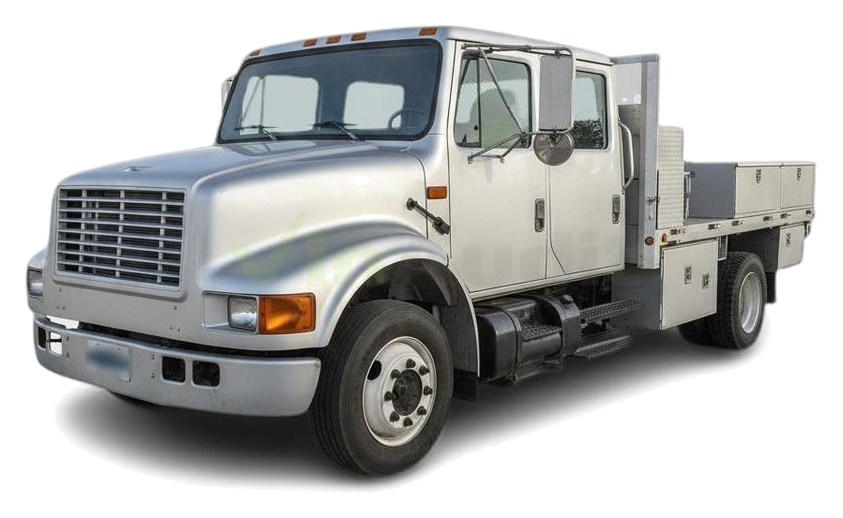
The 2000 International 4700 boasts exceptional reliability and robust performance, thanks to its powerful DT466E engine and heavy-duty chassis, built for demanding tasks. Its straightforward, utilitarian design prioritizes functionality. While not luxurious, its practical cabin often includes air-ride seats for improved comfort. It offers excellent long-term value as a durable, dependable workhorse, appealing emotionally to those who appreciate a reliable tool and practically to businesses seeking low operational costs.
The Bad
For the 2000 International 4700, prospective buyers should watch out for common issues such as rust, particularly on cab corners, rocker panels, and frame rails. Electrical gremlins can arise due to aging wiring. Air system leaks are possible on air brake models, and routine diesel engine wear items like injectors and turbochargers should be inspected. Suspension components like kingpins also require attention.
2000 International 4700: Quick Overview
- Engine Options: The primary engine for the 2000 International 4700 was the renowned International DT466E turbodiesel, known for its mechanical simplicity and durability. A larger International DT530E engine was also available as an option for applications requiring more power.
- Horsepower: For the DT466E, horsepower ratings typically ranged from 175 to 250 hp, with corresponding torque figures in the 460-660 lb-ft range. The DT530E offered higher outputs, often around 275-300 hp and approximately 800-860 lb-ft of torque, providing ample power for heavier loads.
- Fuel Economy: Fuel economy is highly dependent on the vehicle's specific configuration, the type of vocational body installed, the load being carried, and driving conditions. Generally, a 2000 International 4700 could expect to achieve between 8 to 12 miles per gallon (MPG) in typical commercial operation.
- 0-60 Times: 0-60 mph acceleration times are not a relevant performance metric for medium-duty commercial trucks like the International 4700. These vehicles are designed for hauling and towing heavy loads, prioritizing torque and durability over rapid acceleration.
- Towing Capacity: Towing capacity is extremely variable and depends on the specific Gross Vehicle Weight Rating (GVWR) and Gross Combined Weight Rating (GCWR) of the truck. GVWRs for the 4700 typically ranged from 18,000 lbs to 33,000 lbs. With appropriate hitching and braking systems, a 4700 could handle GCWRs often exceeding 26,000 lbs (requiring a CDL) and potentially up to 40,000 lbs or more depending on its chassis specifications.
- Trim-Level Features: 'Trim levels' in the conventional passenger vehicle sense do not apply to the 4700. Instead, configurations varied greatly, including:
- Cab Styles: Standard cab and crew cab options.
- Wheelbases: Numerous wheelbase lengths to accommodate various body types.
- Brakes: Hydraulic disc brakes were standard on lighter GVWRs, while air brakes were common on heavier configurations. Anti-lock Braking Systems (ABS) were often available, especially with air brakes.
- Transmissions: Options included various manual transmissions (e.g., Eaton Fuller) and automatic transmissions, with the Allison AT and MD series being popular choices for their durability and ease of use.
- Comfort & Convenience: Air conditioning, power steering, cruise control, air-ride driver's seat, and basic AM/FM radio were common options. The interior was built for function and durability, not luxury.
- Vocational Options: Power Take-Off (PTO) systems were frequently specified for applications requiring auxiliary power for equipment like dump beds, hydraulic cranes, or pumps.
2000 International 4700 Specifications
Vehicle Information
| Year | 2000 |
| Make | International |
| Model | 4700 |
| Trim | - |
| Style | - |
| Type | Truck |
| Category | Bus |
Manufacturing Details
| Made In | Mexico |
| Manufacturing City | SPRINGFIELD |
Dimensions
| Doors | - |
| Curb Weight | - |
| Gross Vehicle Weight Rating | 33000 pounds |
| Overall Height | - |
| Overall Length | - |
| Overall Width | - |
| Wheelbase Length | - |
| Standard Seating | - |
Engine & Performance
| Engine | 7.6L I6 |
| Engine Size | 7.6L |
| Engine Cylinders | 6 |
| Transmission | - |
| Transmission Type | - |
| Transmission Speeds | - |
| Drivetrain | Rear-Wheel Drive |
Additional Features
| Anti-Brake System | - |
| Steering Type | - |
Pricing
| Manufacturer Suggested Retail Price (MSRP) | - |
| Invoice Price | - |
| Delivery Charges | - |
Vehicle History Report
Specifications
History
Events
History Check
Check
Check
Check
Check
Listings
Recalls
Check
Analysis
What Problems Does the 2000 International 4700 Have?
The highly popular DT466E engine, while durable, can experience problems such as injector failures, especially as mileage accumulates, leading to rough running or loss of power. Fuel system components like the lift pump or injection pump can wear out. Exhaust manifold leaks are also common, characterized by a ticking sound. Turbocharger wear, oil leaks from various seals (e.g., front crank seal, oil cooler), and coolant leaks from hoses or the radiator are also observed.
Electrical problems are prevalent in aging commercial vehicles. Owners often report issues with wiring harnesses becoming brittle, corroded connectors, sensor failures (e.g., speed sensors, oil pressure sensors), and instrument cluster malfunctions. These can lead to erratic gauge readings or even no-starts. Maintaining clean battery terminals and grounds is crucial.
For models equipped with air brakes, air leaks from lines, fittings, or air bags are common. Air compressor and air dryer failures can also occur, affecting braking performance. On models with hydraulic brakes, master cylinder issues or caliper seizing can happen.
Suspension and steering components, such as kingpins, leaf spring bushings, steering boxes, tie rods, and drag links, endure significant stress and are prone to wear, requiring regular inspection and replacement to maintain safe handling.
Rust is a major long-term concern, especially in regions exposed to road salt. Cab corners, rocker panels, fender wells, and frame rails can show significant corrosion, impacting structural integrity and resale value. Inspection of door bottoms and floorboards is also recommended.
While specific widespread recalls for the 2000 model year of the International 4700 are not broadly publicized or easily identifiable as a major systemic flaw affecting all units (unlike some passenger vehicle recalls), minor service bulletins or targeted campaigns related to specific components may have existed. However, the overarching reliability concerns stem more from age-related wear and tear rather than inherent design flaws that would trigger large-scale safety recalls.
How long will the 2000 International 4700 last?
What Technology & Safety Features are Included?
For entertainment, the standard offering was typically a basic AM/FM radio, sometimes with a cassette player. An optional CD player might have been available on some configurations. Advanced infotainment systems, Bluetooth connectivity, or satellite radio were not features of this vehicle.
Driver-assistance features were extremely limited. The primary 'assistance' came from power steering, making the large truck manageable. Cruise control was an available option for long-haul comfort. There were no modern driver-assistance systems such as lane departure warning, adaptive cruise control, blind-spot monitoring, or forward collision warning systems, as these technologies were not common in commercial vehicles of this vintage.
Safety features were fundamental. The 4700 relied on a robust steel cab structure, standard three-point seatbelts for occupants, and sturdy frame rails designed to withstand the rigors of commercial use. Anti-lock Braking Systems (ABS) were either standard or optional, particularly on models equipped with air brakes, providing improved stopping capability in slippery conditions. However, airbags were not offered in medium-duty trucks of this class and era. Electronic stability control or traction control systems were also absent.
Crash-test ratings from organizations like NHTSA or IIHS are not applicable to commercial medium-duty trucks such as the International 4700. These vehicles are designed to meet different regulatory standards for commercial operation and gross vehicle weight, and therefore do not undergo the same passenger car crash testing protocols. Safety is assessed through commercial vehicle regulations pertaining to braking performance, structural integrity, and occupant restraint systems suitable for a work environment.
What Colors Options are Available?
2000 International 4700 Prices and Market Value
Today, current used market prices for a 2000 International 4700 are highly variable, typically falling between $5,000 and $25,000+. Exceptional, low-mileage, or recently refurbished examples with desirable bodies might fetch more. Depreciation insights show a steep initial drop from new purchase by fleets, but then the value plateaus and holds remarkably well for a work truck. Factors affecting resale value include the overall mechanical condition, engine and transmission health, presence and condition of rust (a major deterrent), mileage, type and condition of the vocational body, maintenance records, and regional demand. A well-maintained unit with a desirable body type will always command a premium.
2000 International 4700 Cost of Ownership
2000 International 4700 Fuel Efficiency
2000 International 4700 Recalls & Defects
Equipment
2000 International 4700 Warranty
Basic
Powertrain
Rust
2000 International 4700 Insurance
reasonable repair costs.
How Does the 2000 International 4700 Compare to Other Truck?
In terms of Performance, the 4700, primarily with its DT466E engine, offered competitive horsepower and excellent torque for hauling and vocational work. Rivals like the Ford F-650/F-750 often came with Cummins ISB/ISC or Caterpillar engines, while the GMC/Chevy Kodiak/Topkick frequently featured Caterpillar 3126 or Duramax engines. All provided comparable capabilities, with specific power outputs varying by configuration. The DT466E was often praised for its strong low-end torque and relatively straightforward mechanical nature.
Features across this class were largely utilitarian. All rivals offered similar chassis-cab configurations, various wheelbase options, hydraulic or air brakes, and a choice of manual or automatic transmissions (Allison automatics were popular across the board). Cabin comfort was basic, focused on functionality, with optional amenities like air conditioning and air-ride seats being common. No competitor offered significantly more advanced technology or luxurious interiors in this segment for the 2000 model year.
Reliability was a strong suit for all these medium-duty trucks, as they were built for demanding commercial use. The International 4700, particularly with the DT466E, is often cited as one of the most reliable medium-duty platforms of its time due to the engine's longevity and ease of maintenance. The Cummins and Cat engines in rival trucks also boast excellent reliability records, making this a competitive area. Long-term reliability often came down to maintenance practices.
Regarding Price, when new, all these vehicles were competitively priced within their respective configurations. On the used market today, prices are remarkably similar, largely dictated by the truck's condition, mileage, engine health, and the type/condition of the vocational body installed, rather than a significant brand premium. A well-maintained unit from any of these manufacturers will fetch a similar price.
Similar Alternatives to the 2000 International 4700 include the Ford F-650/F-750 for its widespread dealer network and parts availability, or a GMC Topkick/Chevrolet Kodiak for their stout chassis and engine options. The Freightliner Business Class M2, especially later models, could be considered a slightly more modern alternative, often offering a similar balance of durability and versatility with a more contemporary cab design.
Final Verdict: Is the 2000 International 4700 a Good Truck?

Cathleen V
Cathleen is an exceptional freelance writer covering hot topics in the automotive world from a gearhead's perspective. Her articles delve into various aspects of automotive technology and history, offering readers detailed insights into engine performance, reliability, and maintenance. Through her engaging and informative writing, Cathleen provides valuable information to automotive enthusiasts and consumers alike, helping them make informed decisions about vehicle maintenance and purchases.