
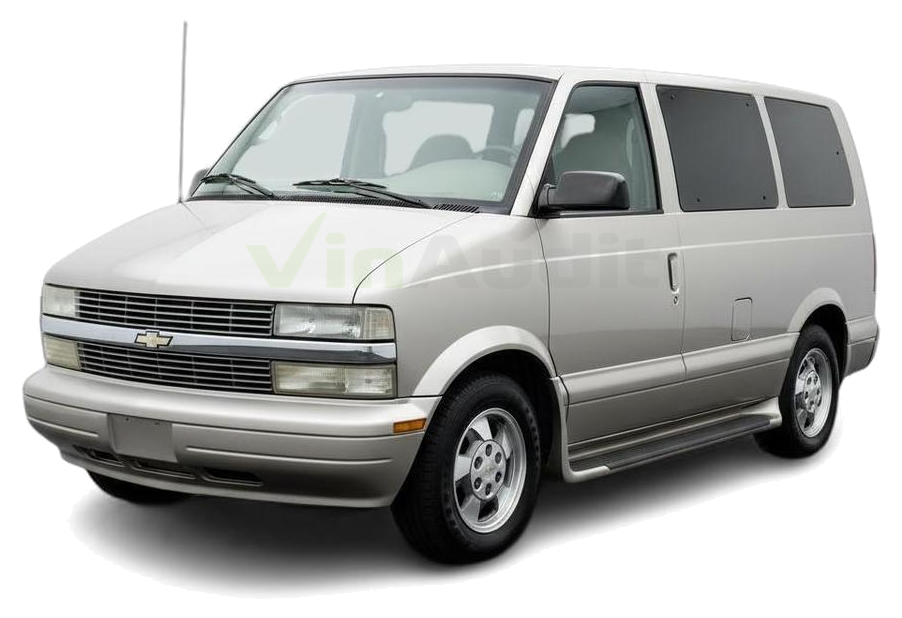
The Good
The 2003 Chevrolet Astro's key advantages include its strong 4.3L V6 performance, making it a reliable workhorse. Its truck-like durability and impressive towing capacity appeal to practical buyers, while available AWD offers emotional appeal for adventure and confidence in adverse weather. It provides excellent value as an affordable hauler of people or cargo, balancing comfort with rugged utility.
The Bad
Known weaknesses for the 2003 Chevrolet Astro include less-than-stellar fuel economy, a basic and somewhat dated interior, and potentially soft braking performance. Owners should watch out for common steering component wear (idler/pitman arms), potential fuel pump failures, and rust development, especially in colder climates.
2003 Chevrolet Astro: Quick Overview
- Engine Options: The 2003 Chevrolet Astro was exclusively powered by a 4.3-liter Vortec V6 engine. This robust engine was a staple across many GM trucks and vans.
- Horsepower: The 4.3L Vortec V6 produced 190 horsepower at 4400 rpm and 250 lb-ft of torque at 2800 rpm.
- Fuel Economy: Fuel economy figures were relatively modest. Rear-wheel drive (RWD) models typically achieved an estimated 16 MPG city / 20 MPG highway. All-wheel drive (AWD) variants saw a slight dip, averaging around 15 MPG city / 19 MPG highway.
- 0-60 Times: While not designed for speed, the 2003 Astro could accelerate from 0-60 mph in approximately 10 to 11 seconds, respectable for its size and class at the time.
- Towing Capacity: One of the Astro's most significant strengths was its towing capability. Properly equipped, it could tow up to 5,400 pounds for RWD models and slightly less for AWD, depending on configuration and equipment.
- Trim-Level Features:
- Cargo Van: This base model was designed for utility, featuring vinyl seating, rubber floor mats, and minimal amenities. It prioritized cargo space and durability for commercial use.
- LS Passenger Van: Stepping up, the LS offered more comfort and convenience. Standard features typically included air conditioning, AM/FM stereo, cloth seating for 7 or 8 passengers, power windows, power door locks, and cruise control. Anti-lock brakes (ABS) were standard.
- LT Passenger Van: The top-tier LT trim added more premium features such as alloy wheels, an upgraded AM/FM/CD stereo, rear-seat audio controls, rear heating and air conditioning, power-adjustable driver's seat, keyless entry, fog lamps, and privacy glass.
- AWD Option: Available across both LS and LT passenger trims, and some cargo models, providing enhanced traction and capability.
- Interior Versatility: All passenger vans featured flexible seating configurations with removable rear bench seats, allowing for significant cargo hauling even in passenger variants. Available rear "Dutch doors" (a liftgate with two hinged lower doors) offered convenient access.
2003 Chevrolet Astro Specifications
Vehicle Information
| Year | 2003 |
| Make | Chevrolet |
| Model | Astro |
| Trim | - |
| Style | 2WD |
| Type | Van |
| Category | Cargo Van |
Manufacturing Details
| Made In | United States |
| Manufacturing City | BALTIMORE/LANSING (CRAFT CENTER) |
Dimensions
| Doors | 3-Door |
| Curb Weight | 3915 pounds |
| Gross Vehicle Weight Rating | 5600 pounds |
| Overall Height | 75.00 inches |
| Overall Length | 189.80 inches |
| Overall Width | 77.50 inches |
| Wheelbase Length | 111.20 inches |
| Standard Seating | 2 |
Engine & Performance
| Engine | 4.3L V6 |
| Engine Size | 4.3L |
| Engine Cylinders | 6 |
| Transmission | 4-Speed Automatic |
| Transmission Type | Automatic |
| Transmission Speeds | 4-Speed |
| Drivetrain | Rear-Wheel Drive |
Additional Features
| Anti-Brake System | 4-Wheel ABS |
| Steering Type | Recirculating |
Pricing
| Manufacturer Suggested Retail Price (MSRP) | $22,050 |
| Invoice Price | $19,955 |
| Delivery Charges | $705 |
Vehicle History Report
Specifications
History
Events
History Check
Check
Check
Check
Check
Listings
Recalls
Check
Analysis
What Problems Does the 2003 Chevrolet Astro Have?
Frequently Reported Problems:
- Steering and Suspension Components: This is a very common issue. Owners frequently report premature wear of idler arms, pitman arms, tie rod ends, and ball joints. This leads to loose steering, wandering, and clunking noises, requiring regular replacement, especially with heavy use or poor road conditions. Power steering pump leaks are also known.
- Fuel Pump Failure: A significant concern, especially as the vehicle ages. The in-tank fuel pump is prone to failure, often necessitating the removal of the fuel tank for replacement, which can be labor-intensive and costly. Fuel gauge sender unit failures, leading to inaccurate fuel readings, are also related.
- Intake Manifold Gasket Leaks: The 4.3L Vortec V6 engine can suffer from intake manifold gasket leaks, often manifesting as coolant loss or internal coolant consumption. If left unaddressed, this can lead to engine damage.
- Electrical Issues: While not typically catastrophic, minor electrical gremlins are common. These include intermittent power window or door lock operation, issues with dashboard lights, or blend door actuators for the HVAC system.
- Brake Wear: Some owners report faster than average wear on front brake components (pads and rotors), potentially due to the vehicle's weight and design.
- Rust: This is a major long-term concern, particularly in regions that use road salt. Rust commonly appears on rocker panels, wheel wells, door bottoms, and around the frame, potentially compromising structural integrity and resale value over time.
- Transmission: The automatic transmission (typically the 4L60E) is generally durable but can experience rough shifting or slipping at higher mileages if not properly maintained with regular fluid and filter changes.
Recalls:
For the 2003 model year specifically, there weren't a large number of widespread, major recalls. However, it's always advisable for any potential owner to check the National Highway Traffic Safety Administration (NHTSA) database using the specific Vehicle Identification Number (VIN) for any open recalls that might apply. General GM recalls for ignition switches or certain power window switch fire risks for this vehicle generation might have indirectly affected some units or carried over from earlier model years, so a VIN check is paramount.
Long-Term Reliability Concerns:
Despite these issues, the Astro's core mechanical components, especially the 4.3L V6 engine, are known for impressive longevity if properly maintained. The body-on-frame construction makes it very durable. However, the cumulative effect of steering and suspension wear, rust, and potential fuel system issues means that proactive maintenance and inspection are vital for long-term reliability. Addressing these known weaknesses promptly can significantly extend the vehicle's lifespan.
How long will the 2003 Chevrolet Astro last?
However, weaknesses emerge over time. Rust is a primary concern, especially in high-salt regions, affecting rocker panels, wheel wells, and chassis components. Steering and suspension parts (ball joints, idler/pitman arms) will invariably require replacement. Fuel pumps, a common failure point, can be costly. While the core drivetrain is resilient, these age-related wear items need attention to ensure a truly long service life.
What Technology & Safety Features are Included?
Built-in Tech & Entertainment:
- Standard entertainment on most trims was an AM/FM stereo.
- Optional upgrades for the LT trim or specific packages included an AM/FM stereo with a CD player. Some models might have even offered a cassette player.
- Basic convenience features like power windows, power door locks, and cruise control were standard or optional on passenger versions.
- Rear-seat audio controls were an available option for passenger comfort, allowing occupants to manage volume and source from the back.
- Rear heating and air conditioning (HVAC) was a popular optional feature, especially for passenger models, ensuring comfort throughout the cabin.
- The Astro did not feature advanced infotainment systems, integrated navigation, Bluetooth connectivity, or USB ports.
Driver-Assistance Features:
Driver-assistance technologies such as lane departure warning, blind-spot monitoring, or adaptive cruise control were not available on the 2003 Chevrolet Astro. The primary "assistance" came from its available all-wheel-drive system, which provided enhanced traction and stability in challenging driving conditions.
Safety Features:
- Standard Safety:
- Driver and front passenger airbags were standard.
- Anti-lock Braking System (ABS) was standard on most, if not all, 2003 Astro models, aiding in control during hard braking.
- Daytime running lights were also a standard feature.
- Child safety locks on the rear doors provided security for younger passengers.
- Optional Safety: There were no significant optional safety features beyond the standard offerings for this model year. Side airbags, stability control, or traction control systems were generally not available.
Crash-Test Ratings (NHTSA):
The National Highway Traffic Safety Administration (NHTSA) conducted crash tests on the 2003 Chevrolet Astro, providing the following ratings (based on the standards of that time):
- Frontal Crash:
- Driver: 3 out of 5 stars
- Passenger: 3 out of 5 stars
- Side Crash:
- Front Seat: Not rated (as side airbags were not a standard or typical option)
- Rear Seat: Not rated
- Rollover:
- 2 out of 5 stars (for 2WD models). This relatively low rating was common for taller vans and SUVs of the era due to their higher center of gravity.
What Colors Options are Available?
2003 Chevrolet Astro Prices and Market Value
Currently, in the used market (late 2023/early 2024), prices vary dramatically. Well-maintained examples in good condition generally range from $3,000 to $8,000. Exceptional, low-mileage, or camper-converted units might fetch over $10,000, while high-mileage or neglected ones can be found for under $2,000.
The Astro experienced significant initial depreciation, typical for vans. However, its depreciation stabilized long ago. Current resale value is heavily influenced by condition (rust is a major detractor), mileage, and the presence of desirable features like AWD. Its "retro" appeal and robust platform for DIY conversions have also provided a slight boost to values for clean examples, demonstrating its lasting utility over outright luxury.
2003 Chevrolet Astro Cost of Ownership
Overall, the 2003 Astro is relatively economical to own from an initial purchase and repair perspective. However, its substantial fuel consumption is a continuous cost. Provided rust is managed and known issues are addressed, it offers good value as a durable, low-cost utility vehicle, but it's not a fuel-efficient choice.
2003 Chevrolet Astro Fuel Efficiency
2003 Chevrolet Astro Safety Rating
NHTSA
IIHS
2003 Chevrolet Astro Recalls & Defects
Suspension:front:control Arm:lower Ball Joint
Exterior Lighting
Fuel System, Gasoline
2003 Chevrolet Astro Warranty
Basic
Powertrain
Rust
2003 Chevrolet Astro Insurance
reasonable repair costs.
How Does the 2003 Chevrolet Astro Compare to Other Van?
Against Full-Size Vans (e.g., Ford E-150, Dodge Ram Van 1500):
- Performance: Astro's 4.3L V6 offers decent power, but full-size vans often feature larger V8 engines, providing superior towing capacity (though Astro's 5,400 lbs is excellent for its size) and payload. Full-size vans are less nimble.
- Features: Both are utilitarian. Full-size vans offer more interior volume but similar basic amenities. Astro's smaller footprint makes it easier to maneuver and park.
- Reliability: All are known for robust drivetrains. Astro has common steering/fuel pump issues; full-size vans might have different age-related quirks but are generally durable.
- Price: New, full-size vans were pricier. Used, they can be comparable or slightly more expensive due to commercial demand.
Against Minivans (e.g., Chrysler Town & Country, Toyota Sienna, Honda Odyssey):
- Performance: Minivans typically offer smoother, more car-like rides, better fuel economy, and sometimes quicker acceleration. The Astro's truck-like handling is less refined but provides superior ruggedness and towing. Only Sienna offered AWD, comparable to Astro.
- Features: Minivans excel here, with power sliding doors, more sophisticated climate controls, better interior ergonomics, and more advanced entertainment/safety features (e.g., more airbags, sometimes stability control). The Astro is far more basic.
- Reliability: Toyota Sienna and Honda Odyssey often lead in reliability, though some model years had transmission issues. Astro is reliable in its core engine/transmission but prone to specific wear items.
- Price: New, minivans were generally similarly priced or slightly higher for well-equipped models. Used, minivans often depreciate faster initially, making them good value, but clean Astros have seen a resurgence in niche markets.
Recommendations:
- Similar Alternative: The GMC Safari is virtually identical.
- Better Alternatives (depending on needs):
- If heavy towing, extreme durability, or maximum cargo volume are paramount, a used Ford E-150 or Dodge Ram Van 1500 offers more raw capability, albeit with worse fuel economy and maneuverability.
- If passenger comfort, fuel efficiency, refined driving dynamics, and modern features are priorities, a used Toyota Sienna (especially AWD models for light weather) or Honda Odyssey would be vastly superior. They sacrifice the Astro's heavy-duty towing and ruggedness for a more car-like experience.
- For a slightly more modern, mid-size utility van, albeit at a higher price point, the Mercedes-Benz Metris or Ford Transit Connect (newer models) offer a better balance of efficiency, features, and utility.
Final Verdict: Is the 2003 Chevrolet Astro a Good Van?
It can be an excellent used buy, offering substantial capability for a low purchase price. However, prospective buyers should strictly seek out models with minimal rust, a well-documented maintenance history, and a thorough pre-purchase inspection. The LT Passenger Van with AWD offers the most versatility. Be prepared for regular steering/suspension maintenance and high fuel costs. It's worth buying if you need a reliable workhorse and understand its limitations, accepting its "old-school" charm and focusing on its enduring functionality rather than contemporary luxury or economy.

Eugene S
Eugene is an automotive enthusiast with over 15 years of experience in the used car market. As a writer at VINCheck.info, he brings deep industry insight and a passion for cars, helping readers make smart, informed decisions. Eugene has written hundreds of used car reviews and is known for breaking down complex automotive topics into clear, actionable advice. Over the years, he has driven and worked on a wide range of vehicles—starting with tuning street cars in his early days and eventually focusing on performance upgrades and reliability improvements. Today, he specializes in evaluating used vehicles through the lens of real-world ownership and enthusiast needs. A longtime fan of Porsche, Eugene especially appreciates vehicles that blend durability with driving enjoyment.