
The Good
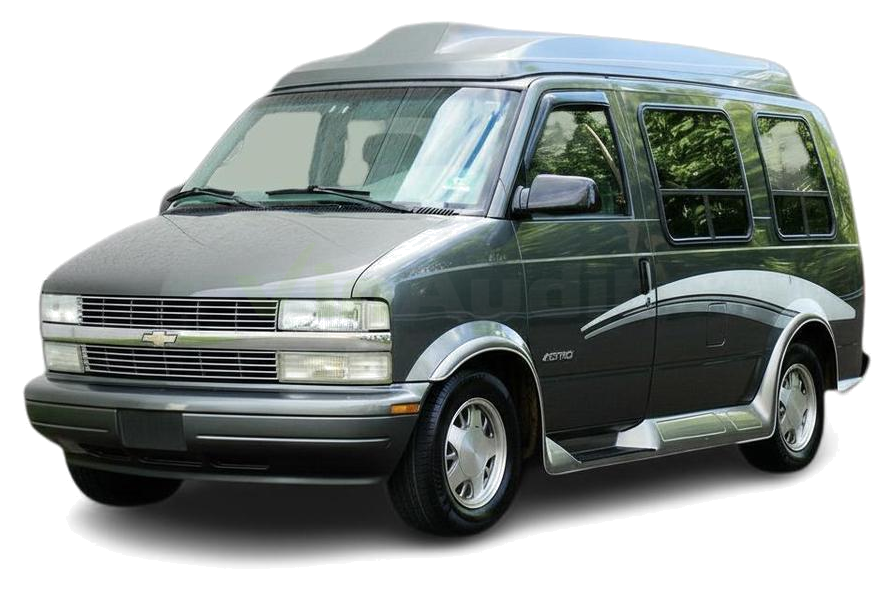
The 2001 Astro offers excellent practicality with its powerful V6 engine, strong towing, and massive cargo space, appealing to buyers needing utility. Its simple, rugged design and reputation for reliability (when maintained) provide peace of mind. While not luxurious, its comfortable ride and spaciousness for a workhorse van are appreciated. It represents strong value in the used market for those needing a dependable hauler.
The Bad
Known weaknesses for the 2001 Chevrolet Astro include its subpar fuel economy, particularly for city driving, and a somewhat dated interior with basic materials. Common mechanical issues can arise with the intake manifold gasket and fuel pump. Rust, especially on the body and frame, is also a significant concern in salt-belt regions, requiring careful inspection.
2001 Chevrolet Astro: Quick Overview
- Engine Options:
For 2001, the Chevrolet Astro was exclusively powered by a 4.3-liter "Vortec" V6 engine. This engine was widely used across GM's truck and SUV lineup, known for its torque and durability. - Horsepower:
The 4.3L Vortec V6 produced 190 horsepower at 4400 RPM, coupled with 250 lb-ft of torque at 2800 RPM, providing ample power for hauling and towing. - Fuel Economy:
Fuel economy ratings for the 2001 Astro were generally modest, reflecting its truck-based architecture and weight.- 2WD: Approximately 16 MPG city / 20 MPG highway.
- AWD: Approximately 15 MPG city / 19 MPG highway.
- 0-60 MPH Times:
Given its size and purpose, the Astro was not built for speed. 0-60 MPH times typically ranged from 10.5 to 11.5 seconds, depending on the drivetrain (2WD vs. AWD) and load. - Towing Capacity:
One of the Astro's strongest selling points was its impressive towing capacity for its class.- Maximum Towing Capacity: Up to 5,500 pounds when properly equipped, making it suitable for hauling trailers, boats, or campers.
- Trim-Level Features:
The 2001 Astro was available in Cargo and Passenger configurations, with Passenger models offering LS and LT trims.- Cargo Van: Basic utility vehicle, typically with vinyl flooring, limited amenities, and often no rear windows. Designed purely for commercial use.
- Passenger Van (LS): The base passenger model, offering seating for 7 or 8. Standard features included power steering, power brakes, AM/FM stereo, front air conditioning, and dual airbags. Many features were optional.
- Passenger Van (LT): The higher-tier passenger model, building on the LS. It added more convenience and comfort features such as power windows and door locks, cruise control, tilt steering wheel, upgraded cloth upholstery, rear air conditioning/heat, remote keyless entry, and possibly a CD player. Alloy wheels were also a common option on the LT. AWD was an option across both passenger trims.
2001 Chevrolet Astro Specifications
Vehicle Information
| Year | 2001 |
| Make | Chevrolet |
| Model | Astro |
| Trim | - |
| Style | CL Van AWD 4AT 4.3L V6 |
| Type | Van |
| Category | commercial |
Manufacturing Details
| Made In | United States |
| Manufacturing City | BALTIMORE/LANSING (CRAFT CENTER) |
Dimensions
| Doors | 3-Door |
| Curb Weight | 4200 pounds |
| Gross Vehicle Weight Rating | - |
| Overall Height | 76 inches |
| Overall Length | 189 inches |
| Overall Width | 75 inches |
| Wheelbase Length | 111 inches |
| Standard Seating | 7 |
Engine & Performance
| Engine | 4.3L V6 |
| Engine Size | 4.3L |
| Engine Cylinders | 6 |
| Transmission | 4-Speed Automatic |
| Transmission Type | Automatic |
| Transmission Speeds | 4-Speed |
| Drivetrain | All-Wheel Drive |
Additional Features
| Anti-Brake System | 4-Wheel ABS |
| Steering Type | Recirculating Ball |
Pricing
| Manufacturer Suggested Retail Price (MSRP) | $26,000 |
| Invoice Price | $24,000 |
| Delivery Charges | $800 |
Vehicle History Report
Specifications
History
Events
History Check
Check
Check
Check
Check
Listings
Recalls
Check
Analysis
What Problems Does the 2001 Chevrolet Astro Have?
Rust is a major long-term concern, particularly in areas exposed to road salt. The body panels, rocker panels, rear wheel wells, and especially the frame can experience significant corrosion, which can compromise structural integrity over time. Electrical issues are also relatively common, including problems with power windows, door locks, dashboard gauges, and lighting, often due to aging wiring or faulty connections. The heating, ventilation, and air conditioning (HVAC) system can also develop issues, such as blower motor failures or blend door actuator problems.
Transmission problems, specifically with the 4L60E automatic transmission, can occur, though proper fluid changes can extend its life. Symptoms include harsh shifting or slipping. Steering and suspension components, such as ball joints, tie rods, and idler arms, tend to wear out over time, leading to loose steering or clunking noises. For the 2001 model year specifically, there were a few recalls. One significant recall (NHTSA Campaign ID: 00V251000) involved the rear door hinges, which could fracture and cause the door to separate. Another (NHTSA Campaign ID: 01V057000) addressed potential issues with seat belt buckle assemblies. Always check for completed recall services when considering a used model. While these vans are known for high mileage, diligent maintenance is crucial to mitigate these common issues.
How long will the 2001 Chevrolet Astro last?
What Technology & Safety Features are Included?
Driver-assistance features were essentially non-existent. There were no advanced systems like adaptive cruise control, lane-keeping assist, or blind-spot monitoring. The primary driver aid was power steering and power brakes.
Safety features were also fundamental. All 2001 Astro models came standard with anti-lock brakes (ABS) on all four wheels and dual front airbags for the driver and front passenger. Side airbags, traction control, or stability control were not available. Optional safety features were limited to items like remote keyless entry, which offered a minor convenience and security enhancement.
Crash-test ratings for the 2001 Chevrolet Astro from the National Highway Traffic Safety Administration (NHTSA) were as follows:
- Frontal Crash Rating (Driver): 4 out of 5 stars
- Frontal Crash Rating (Passenger): 4 out of 5 stars
- Side Impact Rating (Front Seat): 3 out of 5 stars
- Side Impact Rating (Rear Seat): 4 out of 5 stars
- Rollover Rating (2WD): 3 out of 5 stars
- Rollover Rating (AWD): 3 out of 5 stars
What Colors Options are Available?
2001 Chevrolet Astro Prices and Market Value
2001 Chevrolet Astro Cost of Ownership
2001 Chevrolet Astro Fuel Efficiency
2001 Chevrolet Astro Insurance
reasonable repair costs.
How Does the 2001 Chevrolet Astro Compare to Other Van?
In terms of Performance, the Astro's 4.3L V6 was a strong contender, offering superior torque and towing capacity compared to most minivans, and competitive with the base engines of full-size vans. Its available AWD system gave it a significant edge over most rivals, including all minivans, for traction in adverse conditions.
When it came to Features, the Astro was more spartan than minivans like the Town & Country, which emphasized comfort and convenience with features like power sliding doors and more refined interiors. Against full-size cargo vans, the Astro's feature set was comparable, offering basic amenities with optional power accessories and rear AC. Its interior design was functional but dated.
Reliability of the Astro was generally good for its era, known for its durable truck-based chassis and engine. However, it shares common GM V6 issues like intake manifold gaskets and fuel pump failures with its GMC Safari twin. The Ford E-150 and Dodge Ram Van also had their own specific long-term issues but were considered workhorses. Minivans sometimes offered better initial quality but could have more complex systems that proved costly over time.
In terms of Price, both new and used, the Astro typically slotted below full-size vans and was often more affordable than comparably equipped minivans. Today, the Astro is one of the most budget-friendly options for a capable work or family hauler.
Alternatives:
- GMC Safari: This is the Astro's identical twin, offering the exact same performance, features, and reliability profile. Choosing between them is purely a matter of badge preference or specific trim availability.
- Ford E-150 Econoline: A more robust, full-size van, offering greater cargo capacity and higher towing limits with V8 engine options. It's a better alternative if maximum space and capability are paramount, though it's larger, thirstier, and less maneuverable.
- Dodge Ram Van: Similar to the E-150, another full-size option providing more space and capability, also with V8 engines.
- Chevrolet Express/GMC Savana: These full-size vans effectively replaced the Astro in terms of cargo and passenger hauling for GM. They are larger, more powerful, and offer updated safety and convenience features, making them a "better" alternative if budget allows for a newer used model and greater size is acceptable.
Final Verdict: Is the 2001 Chevrolet Astro a Good Van?

Eugene S
Eugene is an automotive enthusiast with over 15 years of experience in the used car market. As a writer at VINCheck.info, he brings deep industry insight and a passion for cars, helping readers make smart, informed decisions. Eugene has written hundreds of used car reviews and is known for breaking down complex automotive topics into clear, actionable advice. Over the years, he has driven and worked on a wide range of vehicles—starting with tuning street cars in his early days and eventually focusing on performance upgrades and reliability improvements. Today, he specializes in evaluating used vehicles through the lens of real-world ownership and enthusiast needs. A longtime fan of Porsche, Eugene especially appreciates vehicles that blend durability with driving enjoyment.