
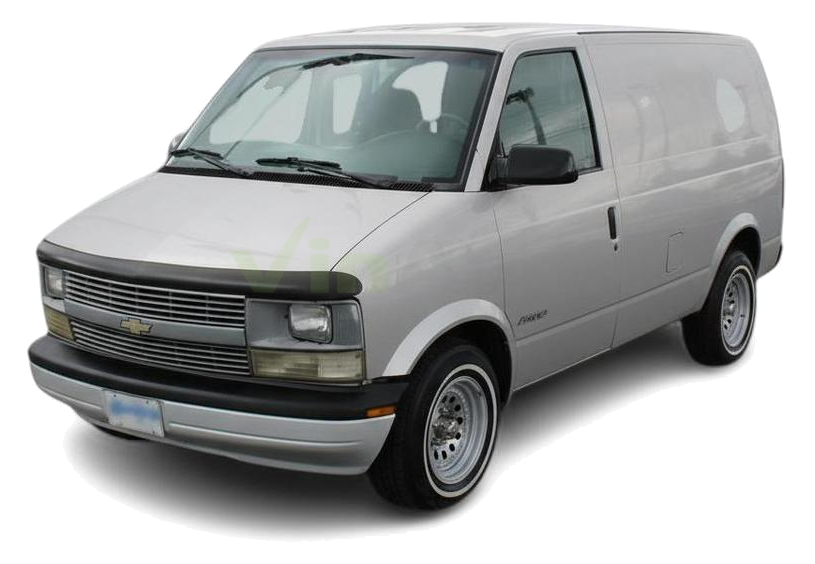
The Good
The 2000 Chevrolet Astro boasts a robust powertrain and dependable performance, appealing to practical buyers seeking reliability. Its spacious interior offers comfort for families or cargo, while its utilitarian design speaks to those who value function over form. This van provides exceptional value as a workhorse or versatile people-mover.
The Bad
Common concerns for the 2000 Chevrolet Astro include potential transmission issues, particularly with higher mileage. Rust, especially around the wheel wells and rocker panels, is another significant area to inspect. Fuel economy is also a drawback compared to more modern vehicles.
2000 Chevrolet Astro: Quick Overview
- Engine Options: The 2000 Chevrolet Astro was offered with two primary engine options:
- 4.3L V6 (LGZ)
- 5.0L V8 (L30) - Less common, typically found in AWD models or heavy-duty configurations.
- Horsepower:
- 4.3L V6: Approximately 165-190 horsepower, depending on the specific variant and year.
- 5.0L V8: Around 210 horsepower.
- 4.3L V6: Approximately 165-190 horsepower, depending on the specific variant and year.
- Fuel Economy: Fuel economy for the 2000 Astro is generally poor by modern standards. Expect around 14-16 MPG in the city and 17-19 MPG on the highway for the V6 engine, with the V8 being less efficient.
- 0-60 Times: 0-60 mph times are not a strong suit for the Astro, with most V6 models taking around 9-11 seconds to reach 60 mph. V8 models may be slightly quicker.
- Towing Capacity: The Astro was a capable hauler. With the proper towing package, it could tow up to 5,000 to 6,000 pounds, depending on the configuration (RWD vs. AWD, engine, axle ratio).
- Trim-Level Features:
- LS: Typically included standard features like air conditioning, power windows and locks, AM/FM stereo with cassette player, tilt steering wheel, and cruise control. It often served as the base model but was still well-equipped for its time.
- LT: The premium trim level, the LT added more luxurious amenities. This often included upgraded cloth or leather seating, a premium sound system with CD player, rear seat audio controls, rear climate control, alloy wheels, and sometimes a sunroof.
- LS: Typically included standard features like air conditioning, power windows and locks, AM/FM stereo with cassette player, tilt steering wheel, and cruise control. It often served as the base model but was still well-equipped for its time.
2000 Chevrolet Astro Specifications
Vehicle Information
| Year | 2000 |
| Make | Chevrolet |
| Model | Astro |
| Trim | - |
| Style | CL Van AWD 4AT 4.3L V6 |
| Type | Van |
| Category | passenger |
Manufacturing Details
| Made In | United States |
| Manufacturing City | BALTIMORE/LANSING (CRAFT CENTER) |
Dimensions
| Doors | 3-Door |
| Curb Weight | 4200 pounds |
| Gross Vehicle Weight Rating | - |
| Overall Height | 75 inches |
| Overall Length | 189 inches |
| Overall Width | 75 inches |
| Wheelbase Length | 111 inches |
| Standard Seating | 7 |
Engine & Performance
| Engine | 4.3L V6 |
| Engine Size | 4.3L |
| Engine Cylinders | 6 |
| Transmission | 4-Speed Automatic |
| Transmission Type | Automatic |
| Transmission Speeds | 4-Speed |
| Drivetrain | All-Wheel Drive |
Additional Features
| Anti-Brake System | 4-Wheel ABS |
| Steering Type | Recirculating Ball |
Pricing
| Manufacturer Suggested Retail Price (MSRP) | $25,000 |
| Invoice Price | $23,000 |
| Delivery Charges | $800 |
Vehicle History Report
Specifications
History
Events
History Check
Check
Check
Check
Check
Listings
Recalls
Check
Analysis
What Problems Does the 2000 Chevrolet Astro Have?
Rust is another significant problem, particularly in regions with harsh winters and road salt. The body-on-frame construction means that rust can affect the frame itself, leading to structural integrity concerns. Areas like the rocker panels, wheel wells, and frame rails are particularly susceptible. Inspecting these areas thoroughly for any signs of corrosion is vital before purchasing.
Other reported issues include:
- Fuel pump failures: These can occur unexpectedly, leaving the vehicle inoperable.
- Alternator failures: Like many vehicles of this era, alternators can wear out.
- Ignition switch problems: This can lead to intermittent starting issues or the engine dying while driving.
- Sensor issues: Various sensors, such as the crankshaft position sensor or oxygen sensors, can fail, leading to performance problems and check engine lights.
- Power steering leaks: The power steering system can develop leaks over time.
How long will the 2000 Chevrolet Astro last?
What Technology & Safety Features are Included?
In terms of driver-assistance features, the 2000 Astro was quite limited by today's standards. Anti-lock brakes (ABS) were standard, providing improved stopping power and control during emergency braking situations. Some models might have offered traction control, especially with the all-wheel-drive option, helping to maintain grip in slippery conditions.
Safety features included front airbags for the driver and front passenger. Seatbelt pretensioners were also standard to help restrain occupants in a collision. For a vehicle of its size and era, it provided a reasonably protective environment. Official crash-test ratings for the 2000 Chevrolet Astro from organizations like the NHTSA or IIHS might be scarce or less detailed compared to modern vehicles. However, vehicles of this type generally performed adequately in frontal and side-impact tests for their time, though their higher center of gravity could present rollover risks, especially in sharp maneuvers or if equipped with AWD.
What Colors Options are Available?
Exterior Colors
Interior Colors
2000 Chevrolet Astro Prices and Market Value
2000 Chevrolet Astro Cost of Ownership
2000 Chevrolet Astro Fuel Efficiency
2000 Chevrolet Astro Insurance
reasonable repair costs.
How Does the 2000 Chevrolet Astro Compare to Other Van?
Performance: The Astro's V6 and optional V8 offered better towing and hauling power than most car-based minivans, which were more focused on car-like ride and handling. However, car-based minivans typically offered more refined acceleration and better fuel efficiency. The Ford Econoline, especially in its V8 configurations, offered comparable or superior towing.
Features: Compared to car-based minivans, the Astro's interior felt more utilitarian, with fewer luxury and tech features available. While LT trims offered some creature comforts, they lagged behind the advanced features found in newer generations of Odyssey or Sienna. The Econoline was more of a work vehicle, with fewer creature comforts than the Astro.
Reliability: The Astro's truck-based chassis contributed to its perceived durability, especially for hauling and towing. However, transmission issues were a known weakness, and rust was a concern. Car-based minivans often had their own sets of common problems (e.g., transmission issues in early Odysseys or Caravans), but generally offered a more comfortable ride. The GMC Safari shared the Astro's reliability profile.
Price: The Astro typically offered a lower purchase price than comparable new vehicles and held its value surprisingly well on the used market due to its niche appeal.
Alternatives:
- Similar: 2000 GMC Safari: If you like the Astro, the Safari is essentially the same vehicle.
- Better for comfort & efficiency: 2000 Honda Odyssey/Toyota Sienna: For families prioritizing a comfortable ride, better fuel economy, and more modern amenities, these Japanese minivans are strong contenders, though they lack towing capability.
- Better for serious towing/hauling: 2000 Ford Econoline: If pure utility and heavy-duty towing are paramount, the Econoline is a more robust choice, though it sacrifices ride comfort and fuel economy.
Final Verdict: Is the 2000 Chevrolet Astro a Good Van?
It is worth buying, but primarily on the used market. Avoid new purchases as it was discontinued. Focus on well-maintained examples, ideally with the 4.3L V6 engine for a balance of power and fuel economy (though still poor). Prioritize vehicles with documented maintenance, especially regarding the transmission, and thoroughly inspect for rust. Opting for AWD can add versatility but may impact fuel economy. If you can find a clean, lower-mileage Astro with a history of care, it can still offer significant value as a practical and enduring vehicle.

Cathleen V
Cathleen is an exceptional freelance writer covering hot topics in the automotive world from a gearhead's perspective. Her articles delve into various aspects of automotive technology and history, offering readers detailed insights into engine performance, reliability, and maintenance. Through her engaging and informative writing, Cathleen provides valuable information to automotive enthusiasts and consumers alike, helping them make informed decisions about vehicle maintenance and purchases.