
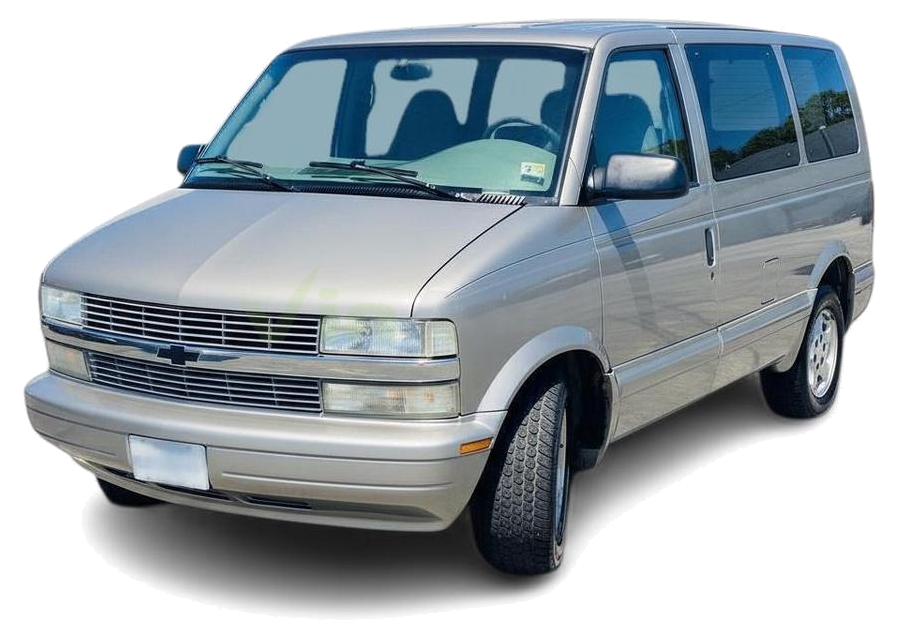
The Good
The 2004 Astro offers practical advantages like strong towing capacity and significant cargo space, appealing to buyers needing utility. Emotionally, its rugged, traditional van design evokes a sense of reliability and capability for adventure or work. Its durable V6 engine and body-on-frame construction contribute to long-term value, making it a dependable choice for varied uses.
The Bad
Known weaknesses for the 2004 Astro include its rather dated interior, truck-like ride quality which can feel unrefined, and comparatively poor fuel economy. Rust can be an issue, particularly around the rear wheel wells and rocker panels. Owners should also watch for front suspension component wear and potential intake manifold gasket leaks.
2004 Chevrolet Astro: Quick Overview
- Engine Options: The 2004 Chevrolet Astro was exclusively offered with a single robust engine: the 4.3L Vortec V6 (L35 or L30 code for some variants). This engine was known for its ample torque, perfectly suited for hauling and towing needs, a key differentiator from its minivan counterparts.
- Horsepower: The 4.3L Vortec V6 produced 190 horsepower at 4400 RPM, providing sufficient power for both city driving and highway cruising, even when fully loaded or towing. Its torque output was equally impressive, peaking at 250 lb-ft at 2800 RPM.
- Fuel Economy: Given its truck-based platform and V6 engine, the Astro's fuel economy was not its strong suit. EPA estimates for the 2004 model were typically around 15 MPG in the city and 20 MPG on the highway for rear-wheel-drive models. All-wheel-drive variants saw a slight dip, usually around 14 MPG city/17 MPG highway.
- 0-60 Times: While not designed for speed, the 2004 Astro generally achieved 0-60 mph times in the range of 10-11 seconds, which was respectable for a full-size van of its era. This performance was adequate for merging onto highways and daily driving tasks.
- Towing Capacity: One of the Astro's most significant selling points was its outstanding towing capacity. Properly equipped, the 2004 model could tow up to 5,500 pounds (for 2WD models) or 5,200 pounds (for AWD models), making it ideal for pulling trailers, boats, or campers. This capacity far exceeded that of typical minivans.
- Trim-Level Features: The 2004 Astro was available primarily in two passenger trims: the LS and the LT, along with a base cargo van.
- LS Trim: Standard features included air conditioning, power windows and door locks, an AM/FM stereo, cloth upholstery, and seating for 7 or 8 passengers depending on configuration. It often came with 15-inch steel wheels.
- LT Trim: The more upscale LT trim added features like cruise control, upgraded cloth or optional leather seating, a CD player, remote keyless entry, alloy wheels, and a more refined interior trim. It also offered optional features such as rear air conditioning, privacy glass, and a towing package. Both trims could be optioned with the Versatrak all-wheel-drive system.
2004 Chevrolet Astro Specifications
Vehicle Information
| Year | 2004 |
| Make | Chevrolet |
| Model | Astro |
| Trim | - |
| Style | LS Van AWD 4AT 4.3L V6 |
| Type | Van |
| Category | passenger |
Manufacturing Details
| Made In | United States |
| Manufacturing City | BALTIMORE/LANSING (CRAFT CENTER) |
Dimensions
| Doors | 3-Door |
| Curb Weight | 4300 pounds |
| Gross Vehicle Weight Rating | - |
| Overall Height | 75 inches |
| Overall Length | 189 inches |
| Overall Width | 79 inches |
| Wheelbase Length | 111 inches |
| Standard Seating | 7 |
Engine & Performance
| Engine | 4.3L V6 |
| Engine Size | 4.3L |
| Engine Cylinders | 6 |
| Transmission | 4-Speed Automatic |
| Transmission Type | Automatic |
| Transmission Speeds | 4-Speed |
| Drivetrain | All-Wheel Drive |
Additional Features
| Anti-Brake System | 4-Wheel ABS |
| Steering Type | Recirculating Ball |
Pricing
| Manufacturer Suggested Retail Price (MSRP) | $29,000 |
| Invoice Price | $27,000 |
| Delivery Charges | $800 |
Vehicle History Report
Specifications
History
Events
History Check
Check
Check
Check
Check
Listings
Recalls
Check
Analysis
What Problems Does the 2004 Chevrolet Astro Have?
Another recurring issue involves the fuel pump. Owners frequently report fuel pump failures, often without warning, which can leave the vehicle stranded. Given the pump's location inside the fuel tank, replacement is a labor-intensive and costly repair.
Suspension components are also a common area of concern. The front lower ball joints and idler arms are prone to premature wear, leading to clunking noises, loose steering, and uneven tire wear. Regular inspection and replacement of these parts are critical for safety and vehicle handling. These issues were not specific to the 2004 model year but common across the later Astro/Safari generation.
Electrical problems, though less frequent than the mechanical issues, can arise. These often manifest as issues with dashboard gauges, lighting, or power accessories. Rust, especially in salt-belt regions, is a significant long-term concern. Areas around the rear wheel wells, rocker panels, and frame components are particularly susceptible.
Regarding recalls, the 2004 Chevrolet Astro had a few relevant ones. For example, some models were included in a recall related to general motors park position cable fractured, which could allow the vehicle to roll if parked on an incline without the parking brake engaged. Another recall concerned improper wiring harness routing, potentially leading to chafing and short circuits. It's crucial for potential buyers to check if all recall repairs have been performed on any specific vehicle.
Overall, while the 4.3L V6 is a workhorse, diligent maintenance, especially of the cooling system and front suspension, is key to mitigating these known issues and ensuring long-term reliability.
How long will the 2004 Chevrolet Astro last?
What Technology & Safety Features are Included?
Driver-assistance features were minimal, reflecting the technology available in 2004. Standard features typically included power steering and anti-lock brakes (ABS). Traction control was an optional feature, particularly on rear-wheel-drive models, to aid stability in slippery conditions. However, advanced systems like electronic stability control, lane departure warning, or blind-spot monitoring were not offered.
In terms of safety, the 2004 Astro came with standard front airbags for the driver and front passenger. Three-point seatbelts were provided for all outboard seating positions. Side-impact airbags or head curtain airbags were not available. The robust body-on-frame construction, while contributing to towing capability, also offered a degree of passive safety.
For crash-test ratings, the National Highway Traffic Safety Administration (NHTSA) provided results for the 2004 Chevrolet Astro:
- Frontal Driver: 4 out of 5 stars
- Frontal Passenger: 3 out of 5 stars
- Side Impact (Front Seat): 5 out of 5 stars
- Side Impact (Rear Seat): 5 out of 5 stars
- Rollover: 3 out of 5 stars (for 2WD models) or 2 out of 5 stars (for AWD models), reflecting its higher center of gravity typical of vans.
What Colors Options are Available?
2004 Chevrolet Astro Prices and Market Value
2004 Chevrolet Astro Cost of Ownership
2004 Chevrolet Astro Fuel Efficiency
2004 Chevrolet Astro Insurance
reasonable repair costs.
How Does the 2004 Chevrolet Astro Compare to Other Van?
Performance: Against minivans like the Dodge Grand Caravan, the Astro's 4.3L V6 offered superior towing capacity (up to 5,500 lbs vs. ~3,800 lbs) and a more robust, truck-like driving feel. However, the minivans typically offered a smoother, more car-like ride and better fuel economy. Compared to full-size vans, the Astro was more maneuverable and easier to park, while still retaining significant cargo and towing capabilities. It also uniquely offered an AWD option, which minivans rarely had and full-size vans mostly lacked.
Features: Here, the Astro lagged. Minivans of the era, particularly the Grand Caravan, pioneered features like Stow 'n Go seating (later years), dual sliding doors, and more refined interiors with better creature comforts and entertainment options. The Astro's interior was dated, functional, and utilitarian. Full-size vans were similarly basic but offered even greater sheer capacity.
Reliability: The Astro's 4.3L V6 is a known workhorse, contributing to its reputation for durability. However, it shares common GM issues like intake manifold gaskets and fuel pump failures. Minivans like the Grand Caravan had their own known transmission issues in certain model years, while the Ford E-Series vans were generally quite robust. The Astro stands as a reasonably reliable choice, provided common issues are addressed.
Price: New, the Astro was competitively priced for its capabilities. On the used market, it's often more affordable than comparable full-size vans due to its slightly smaller size, but typically costs more than older minivans due to its robust construction and utility.
Recommended Alternatives:
- For more passenger comfort and features: A used Honda Odyssey or Toyota Sienna offers superior ride quality, better fuel economy, and more advanced (for the time) interior amenities.
- For even greater utility/cargo space: A Ford E-Series or Chevrolet Express van. These are larger, heavier-duty, but less agile.
- For a similar AWD utility package: The GMC Safari is essentially the same vehicle. Otherwise, finding a similar blend of AWD, towing, and mid-size maneuverability is challenging in this class and era.
Final Verdict: Is the 2004 Chevrolet Astro a Good Van?
As a new purchase, it was a solid value, but today, it's definitively a used-market consideration. It is worth buying if you find a well-maintained example, ideally with documented service history, and are prepared for its truck-like ride and lower fuel economy. Look for models where common issues like intake manifold gaskets and front suspension components have been addressed. The LT trim offers a few more creature comforts, but the LS is equally capable. The AWD option adds versatility, but also a slight fuel economy penalty. Avoid examples with significant rust or neglected maintenance, as repairs can quickly outweigh the purchase price.

Drew B
Drew is a seasoned automotive expert and contributor to VinCheck.info. With nearly 15 years of experience as a former Porsche technician, he brings a wealth of hands-on knowledge to his writing. Born in North Carolina, a region renowned for its deep-rooted NASCAR culture, Drew developed a passion for cars early in life, often building and working on vehicles from a young age. At VINCheck, Drew leverages his extensive technical background to provide in-depth analyses of various vehicles. His articles often focus on engine performance, reliability, and maintenance insights, offering readers practical information grounded in real-world experience. Some of his notable contributions include reviews on the Mazda CX-5's longevity and detailed examinations of engine options for models like the 2011 Toyota Camry and Tacoma