
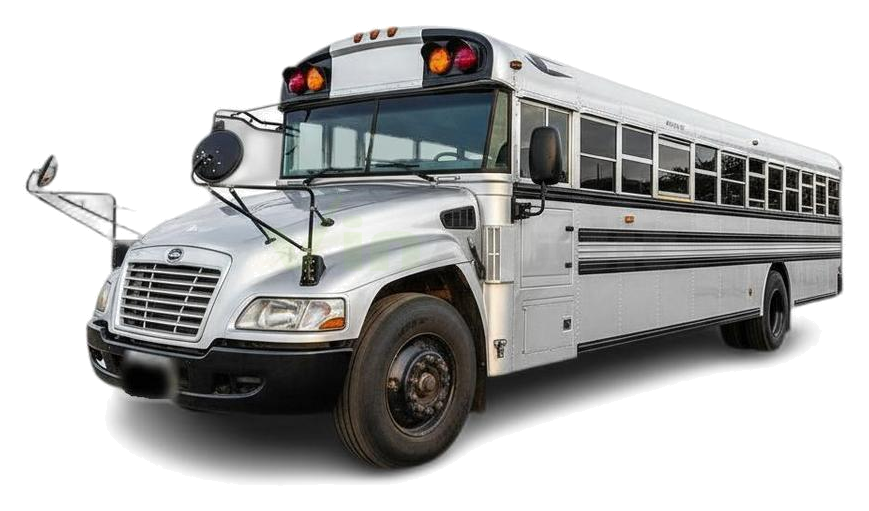
The 2010 Blue Bird Vision is a robust and purpose-built transit and school bus. Originally manufactured by the Blue Bird Corporation, a well-respected name in bus production, the Vision model has been a staple in transportation fleets. Its body style is a conventional transit bus, often configured for school or shuttle services. The Vision model has been produced for many years, with the 2010 iteration representing a specific point in its evolution. Key trims often relate to passenger capacity and specialized equipment. While specific new pricing varied greatly based on configuration, used models can range from $15,000 to $40,000. Its popularity stems from its reputation for durability and practicality in demanding operational environments.
The Good
The 2010 Blue Bird Vision excels in durability and reliability, offering a dependable workhorse for essential transportation. Its practical design prioritizes passenger safety and ease of operation. For practical buyers, its long-term value and robust construction are key. Emotionally, it provides peace of mind knowing it's built to withstand rigorous use.
The Bad
Potential weaknesses for the 2010 Blue Bird Vision include typical wear and tear on older components, such as the engine, transmission, and suspension, especially if maintenance has been neglected. Older brake systems and electrical components may also require attention. Fuel economy might not be a strong suit compared to modern vehicles.
2010 Blue Bird Vision: Quick Overview
- Engine Options: The 2010 Blue Bird Vision was typically equipped with robust diesel engines designed for heavy-duty use. Common options included Cummins ISB series engines and sometimes International MaxxForce engines. Specific displacement varied, but often ranged from 5.9-liter to 6.7-liter.
- Horsepower: Horsepower ratings generally fell within the 200 to 300 horsepower range, providing ample power for acceleration and carrying substantial passenger loads, especially on inclines.
- Fuel Economy: Fuel economy for a vehicle of this size and purpose is not a primary design consideration and is significantly lower than passenger vehicles. Expect figures in the single digits, typically in the 5-8 miles per gallon range, heavily dependent on load, terrain, and driving conditions.
- 0-60 Times: 0-60 mph acceleration is not a relevant metric for this type of vehicle. Its focus is on steady, safe acceleration to operational speeds, not rapid performance.
- Towing Capacity: The 2010 Blue Bird Vision is not designed for towing. Its purpose is to transport passengers, not to pull trailers or other vehicles.
- Trim-Level Features: Trim levels and features are highly customizable based on the buyer's needs, but generally include:
- Passenger Capacity: Varies significantly, from smaller shuttle configurations (e.g., 10-15 passengers) to larger school bus configurations (up to 70+ passengers).
- Seating: Durable, vinyl-covered bench seats designed for public transportation.
- Accessibility Features: Optional wheelchair lifts and securement systems were common for specialized transport needs.
- HVAC: Robust heating and air conditioning systems designed for passenger comfort in various climates.
- Safety Features: Emergency exits, flashing lights (for school bus configurations), robust body construction, and internal safety features like padded seat tops and sides.
- Driver Amenities: Typically feature a straightforward driver's cockpit with essential controls, power steering, and often an air brake system for superior stopping power.
- Destination Signs: For transit applications, electronic or manual destination signs were often installed.
2010 Blue Bird Vision Specifications
Vehicle Information
| Year | 2010 |
| Make | Blue Bird |
| Model | Vision |
| Trim | - |
| Style | - |
| Type | Bus |
| Category | Bus |
Manufacturing Details
| Made In | United States |
| Manufacturing City | FORT VALLEY |
Dimensions
| Doors | - |
| Curb Weight | - |
| Gross Vehicle Weight Rating | 33000 pounds |
| Overall Height | - |
| Overall Length | - |
| Overall Width | - |
| Wheelbase Length | - |
| Standard Seating | - |
Engine & Performance
| Engine | 6.7L I6 |
| Engine Size | 6.7L |
| Engine Cylinders | 6 |
| Transmission | - |
| Transmission Type | - |
| Transmission Speeds | - |
| Drivetrain | - |
Additional Features
| Anti-Brake System | - |
| Steering Type | - |
Pricing
| Manufacturer Suggested Retail Price (MSRP) | - |
| Invoice Price | - |
| Delivery Charges | - |
Vehicle History Report
Vehicle
Specifications
Specifications
Ownership
History
History
All History
Events
Events
NMVTIS Title
History Check
History Check
Salvage/Rebuilt
Check
Check
Accident
Check
Check
Theft
Check
Check
Open Lien
Check
Check
Past Sale
Listings
Listings
Safety
Recalls
Recalls
Odometer
Check
Check
Market Price
Analysis
Analysis
What Problems Does the 2010 Blue Bird Vision Have?
While the 2010 Blue Bird Vision is generally known for its durability, like any vehicle that has been in service for over a decade, certain issues can emerge. Frequently reported problems often stem from the cumulative effects of high mileage and rigorous daily use. Common concerns include wear and tear on the drivetrain, such as the transmission potentially exhibiting shifting issues or the engine requiring more frequent maintenance. The cooling system, including radiators and hoses, can be susceptible to leaks or performance degradation over time. Brake systems, especially on buses equipped with air brakes, may require regular inspection and component replacement. Electrical gremlins are also not uncommon in older vehicles; this can manifest as intermittent issues with lights, gauges, or other electronic accessories. Fuel injection systems on diesel engines, while robust, can eventually develop issues that impact performance and fuel efficiency. Suspension components, including shocks, springs, and bushings, will naturally wear down and may require replacement to maintain ride quality and handling. Rust and corrosion can also be a concern, particularly in regions with harsh winters or where de-icing salts are frequently used. The undercarriage and body panels are most susceptible. For the 2010 model year specifically, there haven't been widespread, unique issues that are dramatically different from other vehicles of its age and type. Recalls are typically issued by manufacturers to address safety-critical defects. Prospective buyers should always check for any outstanding recalls with the manufacturer or relevant government agencies. Long-term reliability heavily depends on the vehicle's maintenance history. A well-maintained 2010 Blue Bird Vision with regular oil changes, fluid checks, and timely repairs can still offer many more years of service. Conversely, a neglected unit is far more likely to present persistent and costly problems. Owners often report that while repairs can be costly due to the size and complexity of the vehicle, the underlying components are generally robust if cared for.
How long will the 2010 Blue Bird Vision last?
The 2010 Blue Bird Vision, when properly maintained, is designed for longevity. Many of these buses operate in commercial or school fleet environments, accumulating high mileage. It's not uncommon to see Blue Bird Visions with 200,000 to 400,000 miles or more. These vehicles can realistically provide 15 to 20 years of service, or even longer, with consistent and thorough maintenance. The chassis and core components are built for durability. However, long-term weaknesses can include the gradual deterioration of rubber components (hoses, seals, bushings), potential rust on the body and undercarriage, and eventual wear on more complex systems like transmissions and engines, especially if regular fluid changes and preventative maintenance are overlooked. Overall, its long-term durability is a strong suit, making it a sound investment for buyers prioritizing longevity.
What Technology & Safety Features are Included?
The 2010 Blue Bird Vision, by its nature as a utilitarian transit or school bus, focuses primarily on safety and functionality rather than cutting-edge technology or luxury entertainment. Built-in tech is generally minimal, centered around essential operational systems. The dashboard will typically feature a set of analog gauges for speed, RPM, fuel level, engine temperature, and oil pressure. Indicator lights for the air brake system, turn signals, and dashboard warnings are standard. Communication systems might include a basic radio, often with AM/FM capabilities and possibly a CD player, though these are usually robust, commercial-grade units rather than sophisticated infotainment systems. Driver-assistance features in this era of bus design were very limited. Power steering is a standard feature, aiding maneuverability. Backup cameras or advanced parking sensors were not common, especially on school bus configurations. Safety features are where the Blue Bird Vision truly shines. The construction itself is a primary safety feature, with a reinforced steel body designed to protect occupants. Emergency exits are strategically placed throughout the cabin, including roof hatches and emergency windows. For school bus models, a robust stop arm with flashing lights is a critical safety feature to alert other traffic. Seat belts for the driver are standard, and while not universally mandated for passengers in all configurations and jurisdictions for this model year, they are often present in newer iterations or specialized transit models. The passenger seats themselves are typically high-backed and designed with padding to absorb impact in the event of a sudden stop or collision. The focus is on passive safety: structural integrity and occupant containment. Active safety features like ABS (Anti-lock Braking System) are often available, especially on air brake systems, providing improved control during emergency braking. Crash-test ratings for large commercial vehicles like buses are not conducted in the same manner as for passenger cars by organizations like the NHTSA or IIHS. Instead, their safety is evaluated based on rigorous design standards, regulations (like FMVSS - Federal Motor Vehicle Safety Standards), and real-world performance in demanding operational environments. Blue Bird has a long-standing reputation for meeting and exceeding these stringent standards, prioritizing structural integrity and occupant protection.
What Colors Options are Available?
2010 Blue Bird Vision Prices and Market Value
When new, the 2010 Blue Bird Vision's price varied significantly based on configuration, seating capacity, engine choice, and optional equipment, but typically ranged from $80,000 to $150,000 or more for fully equipped school or transit models. Currently, the used market for a 2010 Blue Bird Vision sees prices ranging from approximately $10,000 to $40,000. The depreciation curve for these vehicles is relatively steep in the first few years due to their commercial nature, but they hold their value reasonably well over time compared to consumer vehicles, given their robust construction and long service life. Factors significantly affecting resale value include mileage, overall condition, maintenance history, the presence of any specialized equipment (like wheelchair lifts), and the severity of any rust or mechanical issues. Buses with lower mileage and documented maintenance tend to command higher prices. Conversion projects for RVs or other custom uses can also increase demand and value.
2010 Blue Bird Vision Cost of Ownership
Owning a 2010 Blue Bird Vision can be economical or costly depending on usage and maintenance. Insurance costs will likely be higher than for a passenger car due to its size and commercial classification; specialized commercial auto insurance is required. Fuel costs will be significant, as these diesel engines are not fuel-efficient, typically achieving single-digit MPG. Maintenance is crucial and can be expensive, involving regular fluid changes, filter replacements, and potential repairs to the engine, transmission, and brakes. Repair costs can also be substantial, as parts and labor for large vehicles are more costly. Overall, while the initial purchase price might be lower than a new bus, the ongoing operational and maintenance expenses make it a moderately costly vehicle to own, especially for private use. For fleet operators, the cost is amortized over intensive use.
2010 Blue Bird Vision Fuel Efficiency
Fuel Type
Diesel
Fuel Capacity
-
City Mileage
-
Highway Mileage
-
2010 Blue Bird Vision Warranty
Basic
Original warranty
0 months / No data
Estimated remaining
Expired
Powertrain
Original warranty
0 months / No data
Estimated remaining
Expired
Rust
Original warranty
0 months / No data
Estimated remaining
Expired
2010 Blue Bird Vision Insurance
Insurance for a 2010 Blue Bird Vision is moderately priced, reflecting its status as a Bus with strong safety ratings and
reasonable repair costs.
How Does the 2010 Blue Bird Vision Compare to Other Bus?
The 2010 Blue Bird Vision competes in the medium-duty school and transit bus segment against formidable rivals such as IC Bus (formerly International), Thomas Built Buses, and Freightliner Custom Chassis.
Performance: Performance across these brands is generally comparable, focusing on torque and durability rather than speed. Diesel engines from Cummins, International, and Detroit Diesel are common, offering similar power output for hauling heavy loads. The Blue Bird Vision is known for its solid, dependable performance in demanding conditions.
Features: Feature sets can vary widely based on specific configurations. Blue Bird typically offers a robust, no-nonsense interior focused on durability and safety. Rivals like Thomas Built Buses might offer slightly more ergonomic driver stations or varied seating options. IC Bus often boasts strong aftermarket support. For the 2010 model year, advanced technological features were minimal across all brands; safety and functionality were paramount.
Reliability: Blue Bird has a long-standing reputation for building highly reliable buses. Along with IC Bus and Thomas Built Buses, they are considered industry leaders in durability and longevity. These buses are engineered for thousands of operating hours and miles. Weaknesses are often related to the rigors of use rather than inherent design flaws. Long-term reliability is a strong suit for all major manufacturers in this class, provided maintenance is up to par.
Price: Used prices for a 2010 Blue Bird Vision typically fall within a competitive range against similar models from IC Bus and Thomas Built Buses. A well-maintained 2010 IC CE or Thomas Saf-T-Liner C2 might be found in a similar price bracket. Factors like mileage, condition, and specific configurations will influence these prices more than brand loyalty.
Alternatives:
- IC Bus CE Series (2010): A very similar offering, known for its durability and widespread use in school districts. Often considered a direct competitor with comparable reliability and features.
- Thomas Built Buses Saf-T-Liner C2 (2010): Another strong contender, also built for rigorous service with a focus on safety and passenger comfort. Performance and reliability are on par with Blue Bird.
If seeking a more modern interior or potentially better fuel economy (though still modest for buses), exploring later model years of these same brands or specialized shuttle bus manufacturers might be considered, but for a 2010 model year, the Blue Bird Vision remains a highly competitive and sound choice, with IC Bus and Thomas Built Buses being very comparable alternatives.
Performance: Performance across these brands is generally comparable, focusing on torque and durability rather than speed. Diesel engines from Cummins, International, and Detroit Diesel are common, offering similar power output for hauling heavy loads. The Blue Bird Vision is known for its solid, dependable performance in demanding conditions.
Features: Feature sets can vary widely based on specific configurations. Blue Bird typically offers a robust, no-nonsense interior focused on durability and safety. Rivals like Thomas Built Buses might offer slightly more ergonomic driver stations or varied seating options. IC Bus often boasts strong aftermarket support. For the 2010 model year, advanced technological features were minimal across all brands; safety and functionality were paramount.
Reliability: Blue Bird has a long-standing reputation for building highly reliable buses. Along with IC Bus and Thomas Built Buses, they are considered industry leaders in durability and longevity. These buses are engineered for thousands of operating hours and miles. Weaknesses are often related to the rigors of use rather than inherent design flaws. Long-term reliability is a strong suit for all major manufacturers in this class, provided maintenance is up to par.
Price: Used prices for a 2010 Blue Bird Vision typically fall within a competitive range against similar models from IC Bus and Thomas Built Buses. A well-maintained 2010 IC CE or Thomas Saf-T-Liner C2 might be found in a similar price bracket. Factors like mileage, condition, and specific configurations will influence these prices more than brand loyalty.
Alternatives:
- IC Bus CE Series (2010): A very similar offering, known for its durability and widespread use in school districts. Often considered a direct competitor with comparable reliability and features.
- Thomas Built Buses Saf-T-Liner C2 (2010): Another strong contender, also built for rigorous service with a focus on safety and passenger comfort. Performance and reliability are on par with Blue Bird.
If seeking a more modern interior or potentially better fuel economy (though still modest for buses), exploring later model years of these same brands or specialized shuttle bus manufacturers might be considered, but for a 2010 model year, the Blue Bird Vision remains a highly competitive and sound choice, with IC Bus and Thomas Built Buses being very comparable alternatives.
Final Verdict: Is the 2010 Blue Bird Vision a Good Bus?
The 2010 Blue Bird Vision is ideal for organizations or individuals requiring a robust, durable, and safe vehicle for transporting a significant number of passengers, such as school districts, charter companies, churches, or even for conversion into an RV or mobile workspace. It is worth buying if the primary needs are longevity, reliability, and a strong safety record over cutting-edge technology or fuel efficiency.
Purchasing this vehicle is best done on the used market, as new models are prohibitively expensive for most individuals. It is crucial to buy a unit with a comprehensive maintenance history and in good mechanical condition, as repairs can be costly. Specific trims with lower mileage and fewer operational hours will offer better long-term value. For those prioritizing a solid foundation for a project or needing a workhorse for dependable transport, the 2010 Blue Bird Vision remains a viable and often excellent choice when acquired prudently.