by VIN, Year, Make, Model by License Plate

2003 Spartan Motorhome Overview, Reviews, Ratings & Specs

Rating: 0.00
Based on 0 Owner Reviews
Eugene S | October 26, 2025
The 2003 Spartan Motorhome represents a robust and durable option in the Class A motorhome segment. Spartan Motors is renowned for its chassis manufacturing, often providing the foundation for high-end motorhomes. While Spartan itself didn't typically produce complete motorhomes under its own brand in 2003, they were a premium chassis provider for many custom and luxury builders. The chassis itself is the key offering, catering to discerning buyers prioritizing build quality and longevity. Pricing varied significantly based on the coachbuilder, but Spartan chassis generally commanded a premium, indicating a higher initial investment.


The Good

The 2003 Spartan Motorhome chassis offers exceptional performance and legendary reliability, built for the long haul. Its sturdy construction ensures a smooth, comfortable ride, appealing to those who value peace of mind and a premium ownership experience. Practical buyers appreciate its durability, while emotional buyers are drawn to the freedom and adventure it enables.

The Bad

Potential weaknesses for a 2003 Spartan Motorhome chassis often relate to its age and complexity. Owners should be vigilant about checking for wear and tear on specialized components, ensuring proper maintenance of the engine and transmission, and inspecting the chassis for any signs of corrosion or structural compromise.

2003 Spartan Motorhome: Quick Overview

  • Engine Options: The 2003 Spartan Motorhome chassis was typically equipped with powerful diesel engines. Common options included:
    • Cummins ISL (e.g., 370-400 horsepower)
    • Caterpillar C7 or C9 (e.g., 350-400 horsepower)
  • Horsepower: Ranging generally from 350 to 400 horsepower, depending on the specific engine model and configuration.
  • Fuel Economy: Fuel economy for diesel motorhomes of this era is highly variable, dependent on driving conditions, load, and terrain. Expect figures in the range of 6-10 miles per gallon (MPG).
  • 0-60 Times: Official 0-60 mph times are rarely published for motorhomes due to their size and purpose. However, with the powerful diesel engines, acceleration would be moderate, likely in the 15-25 second range when fully loaded.
  • Towing Capacity: Towing capacity is substantial, typically rated for 10,000 to 15,000 pounds, allowing for towing of vehicles, trailers, or boats. This is a key feature for those who wish to bring extra recreational equipment.
  • Trim-Level Features: Spartan chassis were often considered a premium base for luxury motorhomes, implying a high level of standard features and the availability of numerous optional upgrades. The 'trim' was more about the coachbuilder's implementation on the Spartan chassis. These would include:
    • Robust chassis construction for superior ride and handling.
    • Advanced suspension systems (e.g., independent front suspension on some models).
    • High-capacity braking systems.
    • Generous fuel tank sizes for extended range.
    • Potential for generator integration and comprehensive electrical systems.
    • The 'features' were more about the chassis's capability and the foundation for luxury living: solid construction, high towing capacity, and smooth ride. Coachbuilders would then outfit the interior with premium amenities, custom cabinetry, high-end appliances, and advanced entertainment systems.

2003 Spartan Motorhome Specifications

Vehicle Information
Year 2003
Make Spartan
Model Motorhome
Trim -
Style -
Type Truck
Category Medium Truck
Manufacturing Details
Made In United States
Manufacturing City CHARLOTTE
Dimensions
Doors -
Curb Weight -
Gross Vehicle Weight Rating 38000 pounds
Overall Height -
Overall Length -
Overall Width -
Wheelbase Length -
Standard Seating -
Engine & Performance
Engine 8.3L I6
Engine Size 8.3L
Engine Cylinders 6
Transmission -
Transmission Type -
Transmission Speeds -
Drivetrain -
Additional Features
Anti-Brake System -
Steering Type -
Pricing
Manufacturer Suggested Retail Price (MSRP) -
Invoice Price -
Delivery Charges -

Vehicle History Report

Vehicle
Specifications
Ownership
History
All History
Events
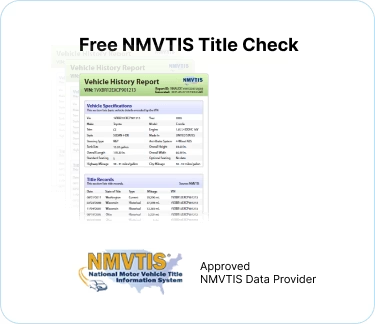
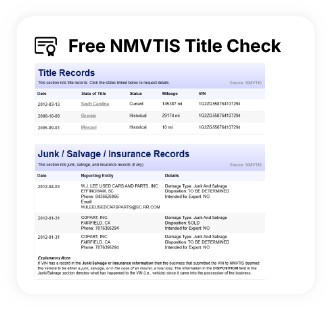
NMVTIS Title
History Check
Salvage/Rebuilt
Check
Accident
Check
Theft
Check
Open Lien
Check
Past Sale
Listings
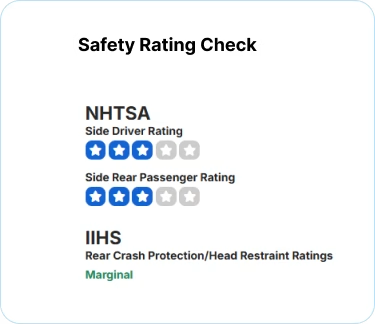
Safety
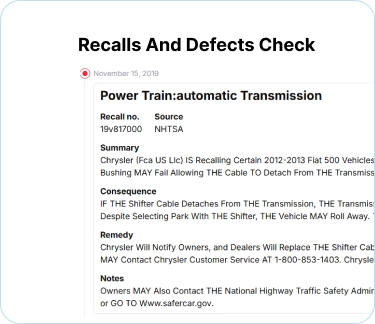
Recalls
Odometer
Check
Market Price
Analysis

What Problems Does the 2003 Spartan Motorhome Have?

As Spartan Motors primarily manufactured the chassis for motorhomes in 2003, issues often relate to the underlying structure and powertrain rather than integrated coach systems, which were handled by the coachbuilder.

A common area of concern for older diesel chassis, including those from Spartan around 2003, is the maintenance and potential failure of the engine and transmission. For Cummins ISL engines, common issues could include fuel injector problems, turbocharger wear, and EGR (Exhaust Gas Recirculation) system issues, especially if maintenance schedules were not strictly followed. Similarly, Caterpillar engines can experience wear on seals, turbochargers, and cooling system components over time.

Transmission issues are also a possibility. Allison transmissions, frequently paired with these diesel engines, are generally robust, but age can lead to wear in seals, torque converters, and electronic control modules. Fluid changes and filter replacements are critical to longevity.

Chassis-specific concerns might include potential wear in suspension components, air brake system maintenance (checking for leaks and ensuring proper operation), and the integrity of the fuel lines and exhaust system. While Spartan chassis are known for their durability, the sheer age of a 2003 model means that various components will have reached the end of their service life and require replacement. This is not necessarily a sign of inherent unreliability but rather the natural lifecycle of mechanical parts.

Corrosion on the chassis frame and suspension components can be an issue, especially in regions where road salt is used extensively during winter. Owners should thoroughly inspect the frame rails, crossmembers, and suspension mounts for any signs of rust or structural compromise.

Recalls on Spartan chassis are less common than on mass-produced vehicles, but they do occur. These typically relate to specific component issues (e.g., a particular brake part or electrical harness). It is crucial for owners to check the NHTSA (National Highway Traffic Safety Administration) website for any outstanding recalls related to their specific chassis VIN. Given the age, most critical recalls would likely have been addressed, but it's always wise to verify.

Long-term reliability hinges heavily on the meticulous maintenance performed by previous owners. A well-maintained 2003 Spartan chassis can be exceptionally reliable, while one that has been neglected will likely present a multitude of age-related issues.

How long will the 2003 Spartan Motorhome last?

Based on owner data and typical usage patterns for Class A diesel motorhomes, a 2003 Spartan Motorhome chassis, when well-maintained, can comfortably achieve 200,000 to 300,000 miles, or even more. Many owners use their motorhomes for extended travel, accumulating 10,000 to 20,000 miles annually.

The long-term durability of a Spartan chassis is one of its strongest selling points. Built with heavy-duty components and robust engineering, they are designed for longevity. However, weaknesses emerge with time and mileage. The primary concerns revolve around the powertrain (engine and transmission), which, while strong, will eventually require significant maintenance or rebuilds. Suspension components, brake systems, and cooling systems are also subject to wear. Electrical systems, though generally reliable, can develop issues with age. Overall, the chassis itself is incredibly durable, but ongoing maintenance and eventual component replacement are keys to unlocking its full lifespan.

What Technology & Safety Features are Included?

The 2003 Spartan Motorhome, being a chassis primarily, means its built-in technology, entertainment, and safety features are largely determined by the coachbuilder that utilized the Spartan chassis. However, we can outline what was typical for premium Class A motorhomes of this era and what the Spartan chassis itself contributes.

Technology and Entertainment:
By 2003 standards, premium motorhomes built on Spartan chassis often featured sophisticated entertainment systems for the time. This typically included:
  • Multiple televisions (CRT or early flat-panel LCD).
  • DVD players and VCRs.
  • AM/FM radios with CD players.
  • Surround sound systems.
  • Satellite radio preparation or active systems.
  • In-dash navigation systems were an option, though often basic by today's standards.
  • Intercom systems between the cockpit and living areas.
  • 12V and 120V power outlets throughout the coach.

Driver-Assistance Features:
Driver-assistance features were rudimentary in 2003 compared to modern vehicles. On a Spartan chassis, one could expect:
  • Rearview cameras (often a single, low-resolution camera).
  • Side-view cameras were sometimes optional.
  • Cruise control.
  • Power mirrors.
  • Air brakes (standard on most heavy-duty diesel chassis for improved stopping power).
  • The Spartan chassis itself offered enhanced handling due to its robust suspension and frame, indirectly contributing to a more stable driving experience.

Safety Features:
Safety on a 2003 motorhome built on a Spartan chassis focused on structural integrity and essential safety systems:
  • Heavy-duty chassis construction designed to absorb impact.
  • Seatbelts for all seating positions (though not always 3-point belts in the cockpit).
  • Fire extinguishers were standard.
  • LP gas detectors and smoke detectors.
  • CO (Carbon Monoxide) detectors.
  • Emergency egress windows.
  • ABS (Anti-lock Braking System) was often standard on the chassis.

Optional Features:
The list of optional features was extensive and dictated by the coachbuilder. These could include:
  • Full-width awnings.
  • Hydraulic leveling systems.
  • Washer/dryer combinations.
  • More advanced entertainment packages with multiple screens and higher-end audio.
  • Generator upgrades.
  • Dual-pane insulated windows.

Crash-Test Ratings:
It is important to note that RVs, including motorhomes built on specialized chassis like Spartan, are not subjected to the same rigorous crash-test ratings (like NHTSA's frontal or side-impact tests) as passenger cars and light trucks. The primary safety focus is on the structural integrity of the chassis and the coach body, and the implementation of on-board safety systems. Spartan's reputation for building sturdy chassis suggests a strong inherent safety structure.

What Colors Options are Available?

We’re working on this section!
In the meantime, feel free to explore the other sections for more content.

2003 Spartan Motorhome Prices and Market Value

The initial price of a 2003 motorhome built on a Spartan chassis would have been considerable, typically ranging from $200,000 to upwards of $500,000 or more, depending on the coachbuilder's luxury level, size, and features. Spartan chassis themselves commanded a premium over standard chassis.

Currently, the used market prices for 2003 Spartan motorhomes are highly variable. You might find them listed anywhere from $40,000 to $90,000 or more. The significant depreciation seen in the first 5-10 years of an RV's life plateaus considerably after that. Factors affecting resale value include the overall condition, mileage, maintenance history, floor plan, brand reputation of the coachbuilder (e.g., Foretravel, Tiffin on Spartan chassis), and the presence of modern upgrades (like updated electronics or solar panels). A well-maintained unit with lower mileage and desirable features will always command a higher price. The Spartan chassis itself is a positive factor, suggesting superior build quality and longevity, which is attractive to many used RV buyers.

2003 Spartan Motorhome Cost of Ownership

Owning a 2003 Spartan Motorhome is generally considered costly rather than economical. Insurance premiums can be substantial, reflecting the vehicle's size, value, and the risks associated with RV travel. Fuel costs are significant due to the powerful diesel engine, with fuel economy typically ranging from 6-10 MPG. Maintenance and repairs are where costs can escalate rapidly; while the Spartan chassis is durable, diesel engines and complex RV systems require specialized, often expensive, servicing. Expect annual maintenance bills of $1,000-$3,000+, with major repairs potentially costing thousands. Long-term ownership involves consistent investment in upkeep to ensure reliability and prevent costly breakdowns.

2003 Spartan Motorhome Fuel Efficiency

Fuel Type -
Fuel Capacity -
City Mileage -
Highway Mileage -

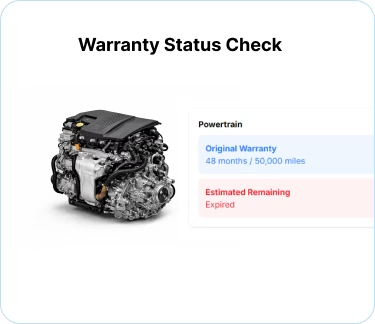
2003 Spartan Motorhome Warranty

Basic
Original warranty 0 months / No data
Estimated remaining Expired
Powertrain
Original warranty 0 months / No data
Estimated remaining Expired
Rust
Original warranty 0 months / No data
Estimated remaining Expired

2003 Spartan Motorhome Insurance

Insurance for a 2003 Spartan Motorhome is moderately priced, reflecting its status as a Truck with strong safety ratings and
reasonable repair costs.

How Does the 2003 Spartan Motorhome Compare to Other Truck?

When comparing the 2003 Spartan Motorhome chassis, it's important to note that Spartan was a premium chassis manufacturer, not typically a complete motorhome brand in itself. Thus, it's best to compare it against other premium diesel pusher chassis manufacturers and the luxury motorhomes they underpinned. Key rivals in this segment for 2003 included Freightliner Custom Chassis (often found under brands like Winnebago, Fleetwood, and Tiffin) and, to a lesser extent, manufacturers like Tiffin's own PowerGlide chassis or chassis from Country Coach.

Performance: Spartan chassis were known for robust performance, often featuring powerful Cummins or Caterpillar diesel engines with ample horsepower and torque, providing strong towing and hill-climbing capabilities. Freightliner chassis also offered comparable engine options and performance. Spartan often had a slight edge in ride quality and handling due to its more specialized design and suspension.

Features: The features available were dictated by the coachbuilder. However, Spartan chassis often served as the foundation for higher-end luxury coaches, implying that when new, they were equipped with premium amenities. Both Spartan and Freightliner chassis supported sophisticated coach builds with high-end finishes and technology.

Reliability: Spartan has a long-standing reputation for robust and reliable chassis, built for durability and longevity. Freightliner is also highly regarded for reliability, though some argue Spartan had a slight edge in heavy-duty build quality. Long-term, both require diligent maintenance, but the fundamental construction of a Spartan chassis is a strong indicator of enduring reliability.

Price: Spartan chassis typically commanded a premium price when new compared to standard offerings, reflecting their superior build. Consequently, motorhomes built on Spartan chassis were also generally more expensive than those on more common chassis. Freightliner, while also a premium option, might have been slightly more accessible in some configurations.

Alternatives:
  • Freightliner Custom Chassis (e.g., XCR, XC chassis): This is the most direct and common competitor. Excellent reliability, widespread service network, and available in various configurations. Many high-quality motorhomes use Freightliner.
  • Tiffin PowerGlide Chassis: Tiffin's in-house chassis offered strong performance and reliability, particularly favored by Tiffin owners for its integration with their coach designs.
  • Country Coach/Monaco Chassis: These luxury brands often used their own or specialized chassis, known for high-end builds and solid construction.

For a 2003 model, if performance, robust construction, and a superior driving experience are paramount, a Spartan chassis remains a top-tier choice. If a more widespread service network and potentially slightly lower purchase price on the used market are priorities, a Freightliner chassis would be a very comparable alternative. Ultimately, the specific coachbuilder and the individual unit's maintenance history are critical factors.

Final Verdict: Is the 2003 Spartan Motorhome a Good Truck?

The 2003 Spartan Motorhome chassis is ideal for experienced RVers or those who prioritize a supremely robust, reliable, and well-engineered foundation for their travels. It's for buyers who understand that older, high-quality diesel motorhomes require ongoing investment in maintenance and repairs, but offer a level of durability and driving experience unmatched by newer, entry-level RVs.

It is absolutely worth buying for the right buyer, particularly on the used market. The key conditions for a successful purchase are: a meticulously documented maintenance history, a thorough pre-purchase inspection by an experienced RV mechanic specializing in diesel pushers, and realistic expectations regarding ownership costs. Buying a unit from a reputable coachbuilder that utilized the Spartan chassis (e.g., Foretravel, Tiffin, Newmar) will further enhance its value and desirability. New units are obviously not available, but a well-preserved used 2003 Spartan motorhome represents a significant value for those seeking a long-term, high-quality travel companion.

2003 Spartan Motorhome Owner Reviews

0.00
Consumer Rating, Based on 0 Consumer Reviews
Overall rating
Cancel
Thank You for Your Review!

We truly appreciate the time and effort you took to share your experience with us.

Uh oh!

Something went wrong, please try again later.

Author Image
Eugene S

Eugene is an automotive enthusiast with over 15 years of experience in the used car market. As a writer at VINCheck.info, he brings deep industry insight and a passion for cars, helping readers make smart, informed decisions. Eugene has written hundreds of used car reviews and is known for breaking down complex automotive topics into clear, actionable advice. Over the years, he has driven and worked on a wide range of vehicles—starting with tuning street cars in his early days and eventually focusing on performance upgrades and reliability improvements. Today, he specializes in evaluating used vehicles through the lens of real-world ownership and enthusiast needs. A longtime fan of Porsche, Eugene especially appreciates vehicles that blend durability with driving enjoyment.