The 1984 Toyota Pick-Up, part of the iconic compact pickup truck lineage that began in the late 1970s and continued through the early 1990s, is renowned for its enduring legacy. Available primarily as a 2WD or 4WD compact pickup truck, it came in various cab configurations like standard cab and XtraCab. Key trims often included the base model, DLX, and SR5. While new pricing varied, these trucks are now highly sought after in the used market for their legendary reliability and go-anywhere capability.
The Good
The 1984 Toyota Pick-Up excels in unmatched reliability, robust 4WD capability, and exceptional fuel efficiency. Its simple, rugged design appeals to practical buyers, while its reputation for durability and go-anywhere spirit evokes strong emotional connections for enthusiasts.
The Bad
Common weaknesses for the 1984 Toyota Pick-Up include potential for frame rust, especially in rust-belt regions. Also, look out for worn suspension components, aging interior plastics, and the possibility of engine oil leaks, particularly from the rear main seal.

1984 Toyota Pick-Up: Quick Overview
- Engine Options: The 1984 Toyota Pick-Up typically offered a choice between two gasoline engines:
- 2.4L 4-Cylinder (22R): This was the most common engine, known for its durability and torque.
- 2.4L 4-Cylinder (22R-E): An electronically fuel-injected version of the 22R, offering slightly improved efficiency and smoother operation.
- Horsepower:
- 22R engine: Approximately 96 horsepower.
- 22R-E engine: Approximately 101 horsepower.
- Fuel Economy: Fuel economy varied depending on the drivetrain (2WD/4WD) and engine, but generally ranged from 18-24 MPG city and 22-28 MPG highway.
- 0-60 Times: Due to its utilitarian nature and engine output, acceleration was not a strong suit. 0-60 mph times were typically in the 12-15 second range.
- Towing Capacity: Towing capacity varied by configuration and options but was generally rated around 3,500 lbs for properly equipped models.
- Trim-Level Features:
- Base Model: Basic features, vinyl interior, manual windows and locks, AM radio.
- DLX (Deluxe): Added carpeting, a more comfortable seat, chrome accents, and optional power steering.
- SR5 (Sport Rally Special): Typically included more premium interior appointments, sportier suspension tuning, sometimes alloy wheels, and could be optioned with more creature comforts like air conditioning.
- Other Notable Features: Manual or automatic transmissions, available power steering, power brakes, and a shift-on-the-fly 4WD system on 4WD models.
1984 Toyota Pick-Up Specifications
Vehicle Information
| Year | 1984 |
| Make | Toyota |
| Model | Pick-Up |
| Trim | - |
| Style | Regular Cab 2WD |
| Type | Pickup Truck |
| Category | Medium Truck |
Manufacturing Details
| Made In | Japan |
| Manufacturing City | HAMURA |
Dimensions
| Doors | 2-Door |
| Curb Weight | - |
| Gross Vehicle Weight Rating | - |
| Overall Height | - |
| Overall Length | - |
| Overall Width | - |
| Wheelbase Length | - |
| Standard Seating | - |
Engine & Performance
| Engine | 2.4-L L-4 SOHC 8V |
| Engine Size | 2.4L |
| Engine Cylinders | 4 |
| Transmission | - |
| Transmission Type | - |
| Transmission Speeds | - |
| Drivetrain | Rear-Wheel Drive |
Additional Features
| Anti-Brake System | - |
| Steering Type | - |
Pricing
| Manufacturer Suggested Retail Price (MSRP) | - |
| Invoice Price | - |
| Delivery Charges | - |
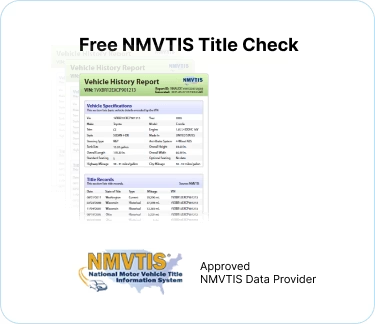
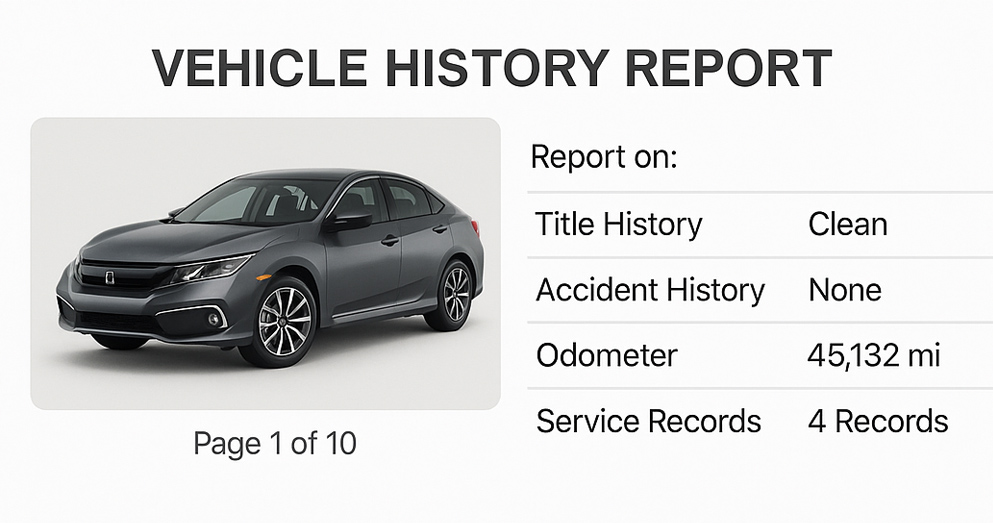
Vehicle History Report
Vehicle
Specifications
Specifications
Ownership
History
History
All History
Events
Events
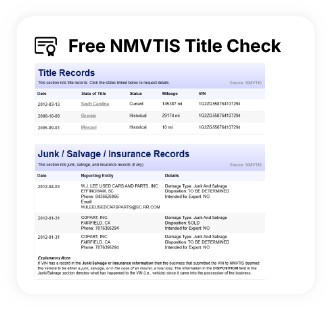
NMVTIS Title
History Check
History Check
Salvage/Rebuilt
Check
Check
Accident
Check
Check
Theft
Check
Check
Open Lien
Check
Check
Past Sale
Listings
Listings
Safety
Recalls
Recalls
Odometer
Check
Check
Market Price
Analysis
Analysis
What Problems Does the 1984 Toyota Pick-Up Have?
The 1984 Toyota Pick-Up, while celebrated for its overall reliability, does have some commonly reported issues that owners should be aware of. One of the most significant concerns is frame rust. In areas with harsh winters and road salt usage, the frames are prone to significant corrosion, which can compromise structural integrity and be costly to repair. Inspections of the frame, especially around the rear axle and suspension mounting points, are crucial.
Another frequent issue relates to the engine's oil seals. The rear main engine seal is known to leak over time, leading to oil drips. While not always a catastrophic failure, it requires attention and can be an indicator of the engine's age and potential need for rebuilding. The 22R and 22R-E engines are robust but can develop vacuum leaks as rubber hoses age and crack, affecting idle quality and fuel efficiency.
Suspension components, such as ball joints, tie rod ends, and leaf springs, can wear out over time, especially on heavily used trucks. These are generally standard maintenance items, but their replacement can add to ownership costs. Interior components, particularly the dashboard and door panels, can become brittle and crack due to sun exposure.
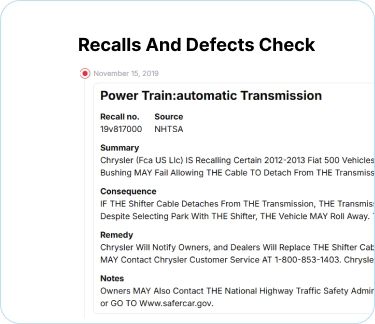
Carburetor issues were also sometimes reported on non-EFI models, requiring periodic adjustments or rebuilding. Clutch wear is common on manual transmission vehicles, as is normal wear and tear on the drivetrain components for 4WD models. While there haven't been widespread, major recalls specific to the 1984 model year that significantly impact its long-term reliability, regular maintenance and addressing minor issues proactively are key to ensuring these trucks continue to run for decades. No specific model year within this generation is particularly notorious for unique widespread problems beyond the general aging of components.
Another frequent issue relates to the engine's oil seals. The rear main engine seal is known to leak over time, leading to oil drips. While not always a catastrophic failure, it requires attention and can be an indicator of the engine's age and potential need for rebuilding. The 22R and 22R-E engines are robust but can develop vacuum leaks as rubber hoses age and crack, affecting idle quality and fuel efficiency.
Suspension components, such as ball joints, tie rod ends, and leaf springs, can wear out over time, especially on heavily used trucks. These are generally standard maintenance items, but their replacement can add to ownership costs. Interior components, particularly the dashboard and door panels, can become brittle and crack due to sun exposure.
Carburetor issues were also sometimes reported on non-EFI models, requiring periodic adjustments or rebuilding. Clutch wear is common on manual transmission vehicles, as is normal wear and tear on the drivetrain components for 4WD models. While there haven't been widespread, major recalls specific to the 1984 model year that significantly impact its long-term reliability, regular maintenance and addressing minor issues proactively are key to ensuring these trucks continue to run for decades. No specific model year within this generation is particularly notorious for unique widespread problems beyond the general aging of components.
How long will the 1984 Toyota Pick-Up last?
Based on owner data and anecdotal evidence, a well-maintained 1984 Toyota Pick-Up can easily achieve 200,000 to 300,000 miles, with many examples surpassing even 400,000 miles. The legendary durability of the 22R engine is a major factor. Long-term durability is excellent, provided routine maintenance like oil changes, filter replacements, and timely attention to leaks and worn components are performed. The main weaknesses that emerge over time are typically related to corrosion (frame rust) and the eventual wear of rubber and plastic parts due to age and environmental exposure, rather than inherent mechanical failures of the core powertrain.
What Technology & Safety Features are Included?
The 1984 Toyota Pick-Up is a product of its time, meaning its technology, entertainment, driver-assistance, and safety features are extremely rudimentary by modern standards.
Built-in Tech and Entertainment: Standard equipment typically included an AM or AM/FM radio. Optional upgrades might have included a cassette player, though this was less common. There were no advanced infotainment systems, touchscreens, or digital displays. Climate control was basic, consisting of a heater and fan; air conditioning was an optional, though not ubiquitous, feature. Power windows and locks were also optional and rare on base models.
Driver-Assistance Features: Driver assistance systems as we know them today did not exist. Features like cruise control were available on some higher trims, but that was the extent of it. ABS (Anti-lock Braking System) was not offered. The primary focus was on mechanical operation rather than electronic aids.
Safety Features: Safety features were basic. Standard equipment included lap belts. Shoulder belts might have been present depending on the specific configuration and market. There were no airbags. Crumple zones were not a sophisticated design element as they are in modern vehicles.
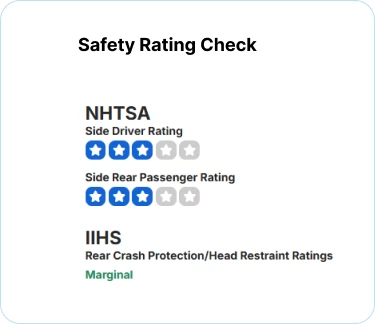
Crash-Test Ratings: Official crash-test ratings from organizations like the NHTSA (National Highway Traffic Safety Administration) or IIHS (Insurance Institute for Highway Safety) are generally not available or are considered irrelevant for vehicles of this era due to vastly different testing methodologies and vehicle design standards. These trucks were built with a focus on robustness and mechanical simplicity, not the advanced safety structures and passive safety systems found in contemporary vehicles.
Built-in Tech and Entertainment: Standard equipment typically included an AM or AM/FM radio. Optional upgrades might have included a cassette player, though this was less common. There were no advanced infotainment systems, touchscreens, or digital displays. Climate control was basic, consisting of a heater and fan; air conditioning was an optional, though not ubiquitous, feature. Power windows and locks were also optional and rare on base models.
Driver-Assistance Features: Driver assistance systems as we know them today did not exist. Features like cruise control were available on some higher trims, but that was the extent of it. ABS (Anti-lock Braking System) was not offered. The primary focus was on mechanical operation rather than electronic aids.
Safety Features: Safety features were basic. Standard equipment included lap belts. Shoulder belts might have been present depending on the specific configuration and market. There were no airbags. Crumple zones were not a sophisticated design element as they are in modern vehicles.
Crash-Test Ratings: Official crash-test ratings from organizations like the NHTSA (National Highway Traffic Safety Administration) or IIHS (Insurance Institute for Highway Safety) are generally not available or are considered irrelevant for vehicles of this era due to vastly different testing methodologies and vehicle design standards. These trucks were built with a focus on robustness and mechanical simplicity, not the advanced safety structures and passive safety systems found in contemporary vehicles.
What Colors Options are Available?
1984 Toyota Pick-Up Prices and Market Value
When new in 1984, the Toyota Pick-Up typically ranged from around $7,000 for a base 2WD model to upwards of $15,000 for a well-equipped 4WD SR5 XtraCab. Unlike most vehicles, these compact trucks have defied typical depreciation curves. Due to their legendary reliability and cult status, many well-maintained examples have actually appreciated or held their value remarkably well. Factors significantly affecting resale value include condition (rust is a major detractor), mileage, originality, drivetrain (4WD is more desirable), and trim level. Pristine, low-mileage examples, especially from arid climates, can command prices rivaling or exceeding their original MSRP.
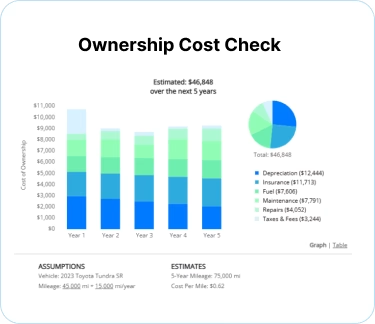
1984 Toyota Pick-Up Cost of Ownership
The 1984 Toyota Pick-Up is generally considered economical to own. Insurance costs are typically low due to its age and safety features. Fuel costs are reasonable, with the 4-cylinder engines offering good MPG. Maintenance is straightforward and parts are readily available and affordable, contributing to low repair costs for common issues. While major repairs like engine rebuilds or rust remediation can be expensive, routine upkeep is minimal. Overall, its long-term ownership costs are significantly lower than those of more modern vehicles, making it a budget-friendly choice for reliable transportation.
1984 Toyota Pick-Up Fuel Efficiency
Fuel Type
Gasoline
Fuel Capacity
-
City Mileage
-
Highway Mileage
-
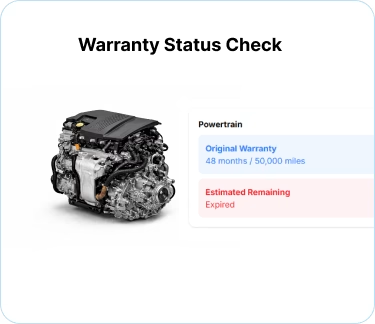
1984 Toyota Pick-Up Warranty
Basic
Original warranty
0 months / No data
Estimated remaining
Expired
Powertrain
Original warranty
0 months / No data
Estimated remaining
Expired
Rust
Original warranty
0 months / No data
Estimated remaining
Expired
1984 Toyota Pick-Up Insurance
Insurance for a 1984 Toyota Pick-Up is moderately priced, reflecting its status as a Pickup Truck with strong safety ratings and
reasonable repair costs.
How Does the 1984 Toyota Pick-Up Compare to Other Pickup Truck?
The 1984 Toyota Pick-Up competed in the compact truck segment primarily against vehicles like the Nissan Hardbody (Datsun), Mazda B-Series, and American offerings such as the Ford Ranger and Chevrolet S-10.
Performance: In terms of raw performance, the Toyota was not a leader. Its 4-cylinder engines prioritized durability and efficiency over speed. Rivals like the Ford Ranger and S-10 sometimes offered more powerful V6 engine options, providing quicker acceleration. However, the Toyota's available 4WD system was often considered more robust and capable off-road than some competitors, particularly in its ability to handle tough terrain.
Features: Feature-wise, the Toyota was spartan. Competitors might have offered more creature comforts, more advanced (for the time) audio systems, or slightly more refined interiors. The Toyota's appeal was its functional simplicity rather than a long list of amenities.
Reliability: This is where the Toyota Pick-Up truly shone and solidified its legendary status. While rivals offered decent reliability, the Toyota was in a league of its own. The 22R engine, in particular, became synonymous with indestructibility. Nissan trucks also had a strong reputation for reliability, but Toyota often held the edge in longevity and ease of maintenance. American trucks, while offering more power and features, generally lagged behind Japanese counterparts in long-term durability.
Price: Pricing was competitive across the segment, with Japanese trucks often being slightly more expensive but justifying it with their reliability.
Alternatives:
Similar: The Nissan Hardbody from the same era is a strong contender, offering comparable reliability and capability, though often with a slightly more modern aesthetic.
Better (if seeking more power/features): If sheer speed or a more comfortable, feature-rich experience is desired, a later model Ford Ranger or Chevy S-10 with a V6 engine might be considered. However, these will likely come with compromises in long-term dependability compared to the Toyota. For off-road enthusiasts who prioritize extreme capability and aftermarket support, a Jeep Comanche could be an interesting, albeit different, alternative.
Performance: In terms of raw performance, the Toyota was not a leader. Its 4-cylinder engines prioritized durability and efficiency over speed. Rivals like the Ford Ranger and S-10 sometimes offered more powerful V6 engine options, providing quicker acceleration. However, the Toyota's available 4WD system was often considered more robust and capable off-road than some competitors, particularly in its ability to handle tough terrain.
Features: Feature-wise, the Toyota was spartan. Competitors might have offered more creature comforts, more advanced (for the time) audio systems, or slightly more refined interiors. The Toyota's appeal was its functional simplicity rather than a long list of amenities.
Reliability: This is where the Toyota Pick-Up truly shone and solidified its legendary status. While rivals offered decent reliability, the Toyota was in a league of its own. The 22R engine, in particular, became synonymous with indestructibility. Nissan trucks also had a strong reputation for reliability, but Toyota often held the edge in longevity and ease of maintenance. American trucks, while offering more power and features, generally lagged behind Japanese counterparts in long-term durability.
Price: Pricing was competitive across the segment, with Japanese trucks often being slightly more expensive but justifying it with their reliability.
Alternatives:
Similar: The Nissan Hardbody from the same era is a strong contender, offering comparable reliability and capability, though often with a slightly more modern aesthetic.
Better (if seeking more power/features): If sheer speed or a more comfortable, feature-rich experience is desired, a later model Ford Ranger or Chevy S-10 with a V6 engine might be considered. However, these will likely come with compromises in long-term dependability compared to the Toyota. For off-road enthusiasts who prioritize extreme capability and aftermarket support, a Jeep Comanche could be an interesting, albeit different, alternative.
Final Verdict: Is the 1984 Toyota Pick-Up a Good Pickup Truck?
The 1984 Toyota Pick-Up is ideal for individuals seeking a dependable, no-frills workhorse or an iconic, classic off-roader. It's perfect for those who prioritize mechanical simplicity, extreme durability, and low long-term ownership costs over modern creature comforts and high performance. It is absolutely worth buying, especially as a used vehicle. The key is to find one with minimal rust, preferably from an arid climate.
4WD models are highly sought after for off-road use and general utility. SR5 trims offer a slightly more comfortable experience. Avoid heavily modified or neglected examples. For a buyer valuing longevity and reliability above all else, a well-preserved 1984 Toyota Pick-Up remains an excellent investment in dependable transportation.