The 2011 Chrysler 300C is a full-size luxury sedan known for its distinctive, imposing design and spacious interior. As part of the second generation of the 300 series (2005-2010 and revived in 2011), the 300C stood out with its bold grille and muscular lines. Key trims often included the base model and the more powerful SRT8. It was popular for offering a premium feel at a more accessible price point than some European rivals, making it a statement car for many.

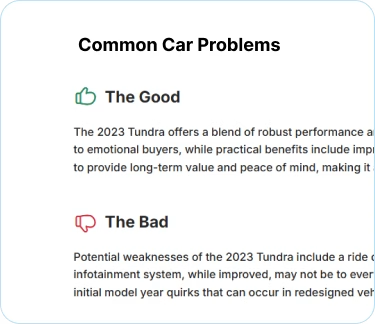
The Good
The 2011 Chrysler 300C offers a potent V8 engine for exhilarating performance, a stately and comfortable ride perfect for long journeys, and a striking, iconic design that commands attention. Its value proposition is strong, providing a luxurious experience that appeals to both the heart and the wallet.
The Bad
Potential buyers should be aware of the 2011 Chrysler 300C's somewhat dated interior electronics and infotainment system compared to newer vehicles. Fuel economy, particularly with the V8 engines, can be a concern. Some owners have reported issues with the transmission and electrical components over time.
2011 Chrysler 300C: Quick Overview
- Engine Options: The 2011 Chrysler 300C was primarily offered with two potent V8 engine options and a V6. The standard engine was a 5.7-liter HEMI V8, and an optional 6.1-liter HEMI V8 was available in the SRT8 trim. A 3.6-liter Pentastar V6 was also an option for the base model.
- Horsepower: The 5.7-liter HEMI V8 produced approximately 360 horsepower, while the more performance-oriented 6.1-liter HEMI V8 in the SRT8 variant delivered around 425 horsepower. The 3.6-liter V6 offered about 292 horsepower.
- Fuel Economy: Expect relatively low fuel economy, especially with the V8 engines. The 5.7L V8 typically averaged around 15 MPG city and 23 MPG highway. The SRT8's 6.1L V8 was even less efficient. The V6 offered a more palatable 18 MPG city and 27 MPG highway.
- 0-60 Times: Performance varied significantly with the engine. The 5.7L V8 could achieve 0-60 mph in roughly 6 seconds. The powerful 6.1L V8 SRT8 was significantly quicker, often clocking in under 5 seconds. The V6 models were more in the 7-second range.
- Towing Capacity: The 2011 Chrysler 300C was not primarily designed for heavy towing. While it could handle light towing, official towing capacities were not a prominent feature. For moderate towing, other vehicles in its class might be better suited.
- Trim-Level Features: Common trims for the 2011 300C included the base model, the 300S, and the high-performance 300 SRT8. Base models featured leather upholstery, heated front seats, dual-zone climate control, and a basic infotainment system. Higher trims and optional packages added premium audio systems, navigation, sunroofs, advanced safety features, larger wheels, and sportier styling cues, especially on the SRT8.
2011 Chrysler 300C Specifications
Vehicle Information
| Year | 2011 |
| Make | Chrysler |
| Model | 300 |
| Trim | - |
| Style | Rear-Wheel Drive |
| Type | - |
| Category | Large Car |
Manufacturing Details
| Made In | Canada |
| Manufacturing City | BRAMPTON |
Dimensions
| Doors | 4-Door |
| Curb Weight | 2047.06 kg |
| Gross Vehicle Weight Rating | 2494.76 kg |
| Overall Height | 150.37 cm |
| Overall Length | 504.44 cm |
| Overall Width | 190.5 cm |
| Wheelbase Length | 305.31 cm |
| Standard Seating | 5 |
Engine & Performance
| Engine | 5.7L V8 |
| Engine Size | 5.7L |
| Engine Cylinders | 8 |
| Transmission | 5-Speed Automatic |
| Transmission Type | Automatic |
| Transmission Speeds | 5-Speed |
| Drivetrain | Rear-Wheel Drive |
Additional Features
| Anti-Brake System | 4-Wheel ABS |
| Steering Type | Rack & Pinion |
Pricing
| Manufacturer Suggested Retail Price (MSRP) | $40,320 USD |
| Invoice Price | $38,319 USD |
| Delivery Charges | $825 USD |
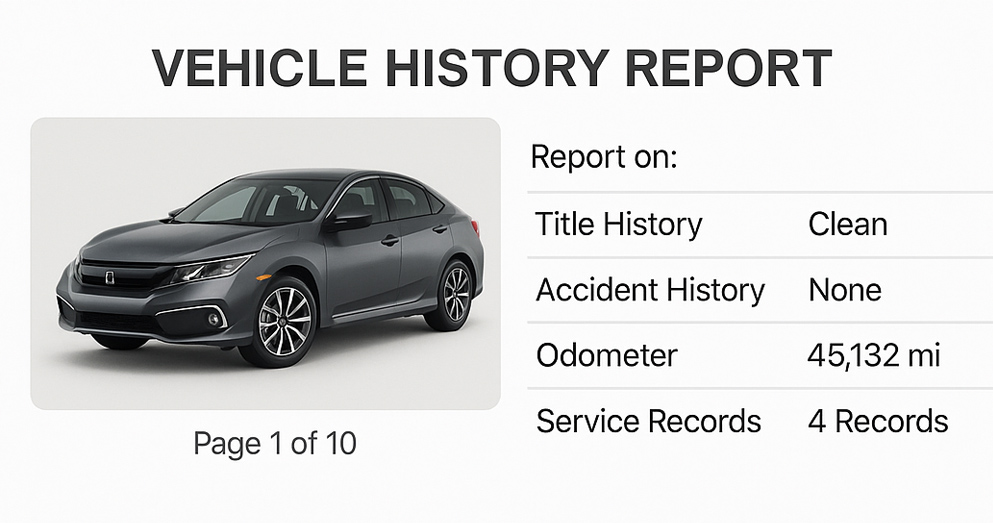
Vehicle History Report
Vehicle
Specifications
Specifications
Ownership
History
History
All History
Events
Events
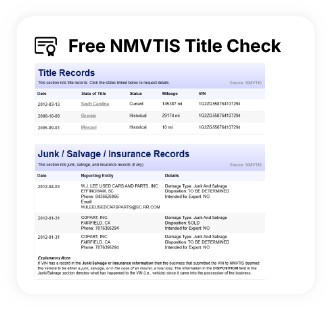
NMVTIS Title
History Check
History Check
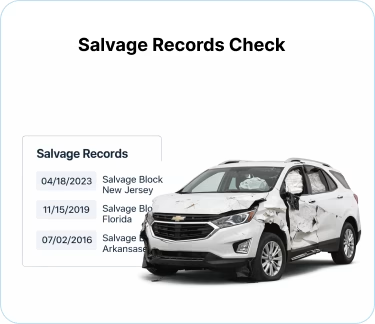
Salvage/Rebuilt
Check
Check
Accident
Check
Check
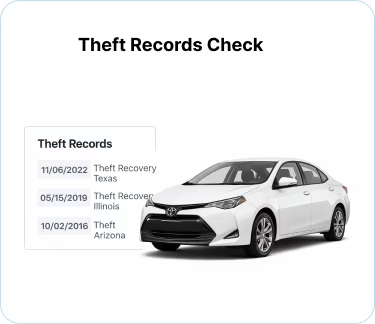
Theft
Check
Check
Open Lien
Check
Check
Past Sale
Listings
Listings
Safety
Recalls
Recalls
Odometer
Check
Check
Market Price
Analysis
Analysis
What Problems Does the 2011 Chrysler 300C Have?
The 2011 Chrysler 300C, being part of a newly refreshed generation, saw some common issues emerge. One of the more frequently reported problems revolved around the power steering system, with owners experiencing leaks and a gradual loss of assist over time. This can manifest as stiff steering, especially at lower speeds.
Another area of concern for some owners was the transmission. While generally robust, some instances of rough shifting, slipping gears, or the transmission failing to engage properly have been noted. This could be linked to the transmission control module or internal wear.
Electrical gremlins are also something to watch out for. This can range from minor annoyances like malfunctioning power windows, faulty door locks, or issues with the infotainment system, to more significant problems like a dead battery or intermittent dashboard warning lights. The electronic throttle control system has also been implicated in some drivability issues.
Suspension components, such as ball joints and control arms, can wear out, leading to clunking noises and degraded handling, especially on higher-mileage vehicles. The heating and cooling system, particularly the blend door actuators, could also fail, leading to inconsistent temperature control within the cabin.
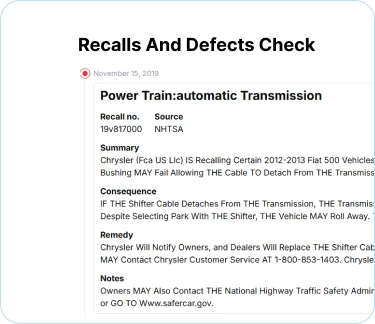
Regarding recalls, it is crucial to check for any outstanding recalls specific to the 2011 model year. Chrysler has issued recalls on various components across its model range over the years, and these can affect specific VIN ranges. Common recall areas have included airbag systems, braking components, and fuel system issues on different Chrysler models. While specific widespread recalls for the 2011 300C were not as numerous as some other vehicles, diligent research for the particular vehicle's history is essential. Long-term reliability can be good if the vehicle has been meticulously maintained, but neglected examples may present more significant challenges.
Another area of concern for some owners was the transmission. While generally robust, some instances of rough shifting, slipping gears, or the transmission failing to engage properly have been noted. This could be linked to the transmission control module or internal wear.
Electrical gremlins are also something to watch out for. This can range from minor annoyances like malfunctioning power windows, faulty door locks, or issues with the infotainment system, to more significant problems like a dead battery or intermittent dashboard warning lights. The electronic throttle control system has also been implicated in some drivability issues.
Suspension components, such as ball joints and control arms, can wear out, leading to clunking noises and degraded handling, especially on higher-mileage vehicles. The heating and cooling system, particularly the blend door actuators, could also fail, leading to inconsistent temperature control within the cabin.
Regarding recalls, it is crucial to check for any outstanding recalls specific to the 2011 model year. Chrysler has issued recalls on various components across its model range over the years, and these can affect specific VIN ranges. Common recall areas have included airbag systems, braking components, and fuel system issues on different Chrysler models. While specific widespread recalls for the 2011 300C were not as numerous as some other vehicles, diligent research for the particular vehicle's history is essential. Long-term reliability can be good if the vehicle has been meticulously maintained, but neglected examples may present more significant challenges.
How long will the 2011 Chrysler 300C last?
With proper and consistent maintenance, the 2011 Chrysler 300C can reasonably be expected to last between 150,000 and 200,000 miles, or even more. Many owners report achieving well over 200,000 miles with diligent care. The V8 HEMI engines, in particular, are known for their durability when oil changes and other scheduled maintenance are performed on time. However, weaknesses can emerge over time, especially if maintenance has been deferred. The aforementioned power steering, transmission, and electrical components are more prone to issues as the vehicle ages and accumulates mileage. Regular fluid changes, especially for the transmission and power steering, are critical for extending the life of these systems and maximizing the vehicle's longevity.
What Technology & Safety Features are Included?
The 2011 Chrysler 300C offered a decent array of technology and safety features for its time, though some aspects feel dated by today's standards. Standard tech often included a Uconnect infotainment system with a touchscreen display (size varied by trim and options), offering AM/FM radio, CD player, and an auxiliary input. Optional upgrades brought satellite radio, a more advanced navigation system with real-time traffic, and a premium audio system, often from Boston Acoustics or Harman Kardon.
Bluetooth connectivity for hands-free calling was also available, either standard or as an option. The instrument cluster provided driver information, and steering wheel-mounted audio controls were common.
Driver-assistance features were less prevalent than in modern vehicles. Some models offered parking sensors (rear), and blind-spot monitoring was an available option. Adaptive cruise control and forward collision warning were not widely offered or standard.
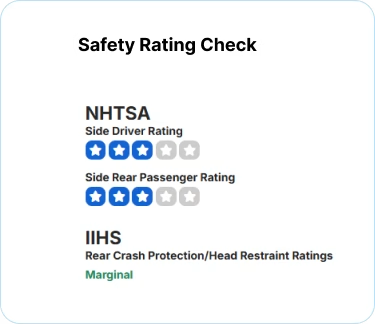
Safety features were more robust. Standard safety equipment typically included multi-stage front airbags, side-curtain airbags, front-seat side-impact airbags, anti-lock brakes (ABS), electronic stability control (ESC), and traction control. The 2011 Chrysler 300C received generally good crash-test ratings. The National Highway Traffic Safety Administration (NHTSA) awarded it a 5-star overall safety rating. The Insurance Institute for Highway Safety (IIHS) also gave it good ratings in their tests, including a "Good" rating in frontal offset and side impact crash tests, contributing to its reputation as a solid and secure vehicle for its era.
Bluetooth connectivity for hands-free calling was also available, either standard or as an option. The instrument cluster provided driver information, and steering wheel-mounted audio controls were common.
Driver-assistance features were less prevalent than in modern vehicles. Some models offered parking sensors (rear), and blind-spot monitoring was an available option. Adaptive cruise control and forward collision warning were not widely offered or standard.
Safety features were more robust. Standard safety equipment typically included multi-stage front airbags, side-curtain airbags, front-seat side-impact airbags, anti-lock brakes (ABS), electronic stability control (ESC), and traction control. The 2011 Chrysler 300C received generally good crash-test ratings. The National Highway Traffic Safety Administration (NHTSA) awarded it a 5-star overall safety rating. The Insurance Institute for Highway Safety (IIHS) also gave it good ratings in their tests, including a "Good" rating in frontal offset and side impact crash tests, contributing to its reputation as a solid and secure vehicle for its era.
What Colors Options are Available?
2011 Chrysler 300C Prices and Market Value
When new, the 2011 Chrysler 300C had a starting MSRP that typically ranged from around $30,000 to over $40,000, depending on the trim level and chosen options, with the SRT8 commanding a higher price. As is typical for luxury sedans, the 300C experienced significant depreciation in its early years. Currently, used 2011 Chrysler 300C models can be found for anywhere from $7,000 to $15,000, with prices heavily influenced by mileage, condition, and trim. Factors affecting resale value include the maintenance history, the presence of desirable optional features, overall condition (cosmetic and mechanical), and the demand for V8-powered sedans. Well-maintained examples, especially those with lower mileage, will retain more value.
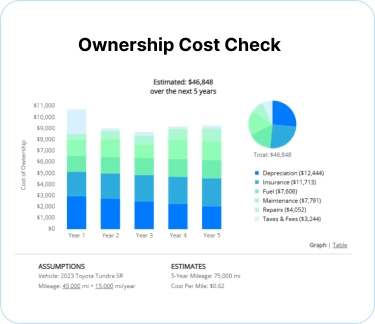
2011 Chrysler 300C Cost of Ownership
Owning a 2011 Chrysler 300C can be moderately costly, especially when considering fuel. The V8 engines, while powerful, are thirsty, leading to higher fuel expenses. Insurance costs can also be above average due to its luxury status and larger engine size. Maintenance costs are generally in line with other domestic luxury sedans; routine servicing is manageable, but repairs for specific components like the power steering system or transmission can be significant. Parts availability is good, but specialized repairs might be pricier. Overall, it is not the most economical car to own, primarily due to its fuel consumption and potential for more expensive repairs as it ages.
2011 Chrysler 300C Fuel Efficiency
Fuel Type
Gasoline
Fuel Capacity
46.62 liters
City Mileage
6.25 km/l
Highway Mileage
4 km/l
2011 Chrysler 300C Safety Rating
NHTSA
IIHS
2011 Chrysler 300C Warranty
Basic
Original warranty
36 months / 36,000 miles
Estimated remaining
Expired
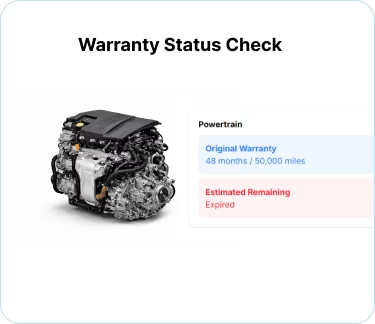
Powertrain
Original warranty
60 months / 100,000 miles
Estimated remaining
Expired
Rust
Original warranty
60 months / 100,000 miles
Estimated remaining
Expired
2011 Chrysler 300C Insurance
Insurance for a 2011 Chrysler 300C is moderately priced, reflecting its status as a Vehicle with strong safety ratings and
reasonable repair costs.
How Does the 2011 Chrysler 300C Compare to Other Vehicle?
The 2011 Chrysler 300C competed in the large sedan segment against rivals like the Ford Taurus, Buick LaCrosse, and more premium offerings such as the Cadillac DTS/XTS and even some entry-level luxury imports.
Performance: The 300C, especially with the HEMI V8s, offered superior performance and a more aggressive feel than many of its domestic peers like the Buick LaCrosse. The Ford Taurus SHO offered comparable or better performance, but at a higher price point. Import rivals often had more refined performance but lacked the brute force of the HEMI.
Features: In 2011, the 300C's interior and technology were competitive for its price, offering luxury touches and available features. However, rivals like the LaCrosse might have had slightly more modern interior designs or advanced tech options at the time. Premium imports generally led in cutting-edge technology.
Reliability: This is where the 300C sometimes lagged behind competitors. While generally decent with good maintenance, it was not as consistently reliable as some Japanese sedans like a Toyota Avalon. Domestic rivals like the Ford Taurus also had their share of reported issues. The 300C's known weaknesses in power steering and electrical systems can make it a less predictable choice for long-term, worry-free ownership compared to some rivals.
Price: The 300C's strong suit was its value proposition. It offered a substantial amount of presence and power for its price, often undercutting similarly equipped European luxury sedans.
Alternatives: For buyers prioritizing performance and style on a budget, the 2011 Chrysler 300C remains a strong contender. However, if reliability is paramount, a used Toyota Avalon (around the same model years) would be a more sensible, albeit less flamboyant, choice. For those seeking a more refined driving experience and interior, a used Buick LaCrosse (with the V6) could be considered, though it lacks the raw power of the 300C's V8. The Ford Taurus, especially in SHO trim, offers performance that rivals or exceeds the 300C but often at a higher used price point.
Performance: The 300C, especially with the HEMI V8s, offered superior performance and a more aggressive feel than many of its domestic peers like the Buick LaCrosse. The Ford Taurus SHO offered comparable or better performance, but at a higher price point. Import rivals often had more refined performance but lacked the brute force of the HEMI.
Features: In 2011, the 300C's interior and technology were competitive for its price, offering luxury touches and available features. However, rivals like the LaCrosse might have had slightly more modern interior designs or advanced tech options at the time. Premium imports generally led in cutting-edge technology.
Reliability: This is where the 300C sometimes lagged behind competitors. While generally decent with good maintenance, it was not as consistently reliable as some Japanese sedans like a Toyota Avalon. Domestic rivals like the Ford Taurus also had their share of reported issues. The 300C's known weaknesses in power steering and electrical systems can make it a less predictable choice for long-term, worry-free ownership compared to some rivals.
Price: The 300C's strong suit was its value proposition. It offered a substantial amount of presence and power for its price, often undercutting similarly equipped European luxury sedans.
Alternatives: For buyers prioritizing performance and style on a budget, the 2011 Chrysler 300C remains a strong contender. However, if reliability is paramount, a used Toyota Avalon (around the same model years) would be a more sensible, albeit less flamboyant, choice. For those seeking a more refined driving experience and interior, a used Buick LaCrosse (with the V6) could be considered, though it lacks the raw power of the 300C's V8. The Ford Taurus, especially in SHO trim, offers performance that rivals or exceeds the 300C but often at a higher used price point.
Final Verdict: Is the 2011 Chrysler 300C a Good Vehicle?
The 2011 Chrysler 300C is ideal for buyers who appreciate bold styling, a comfortable ride, and the rumble of a V8 engine without breaking the bank. It's a statement car that offers a lot of presence for its price, particularly on the used market. It's worth buying for those who prioritize comfort and power over absolute long-term reliability and fuel efficiency.
When considering a purchase, opting for a well-maintained used model is the sensible route, as buying new would incur substantial depreciation. Trims with the 5.7L HEMI V8 offer a good balance of performance and relative efficiency compared to the SRT8. Buyers should be prepared for higher fuel costs and potential repairs related to its known weaknesses, so a pre-purchase inspection is highly recommended. For a budget-conscious buyer seeking a stylish and powerful large sedan, it can be a compelling choice, provided they are aware of its potential maintenance needs.