
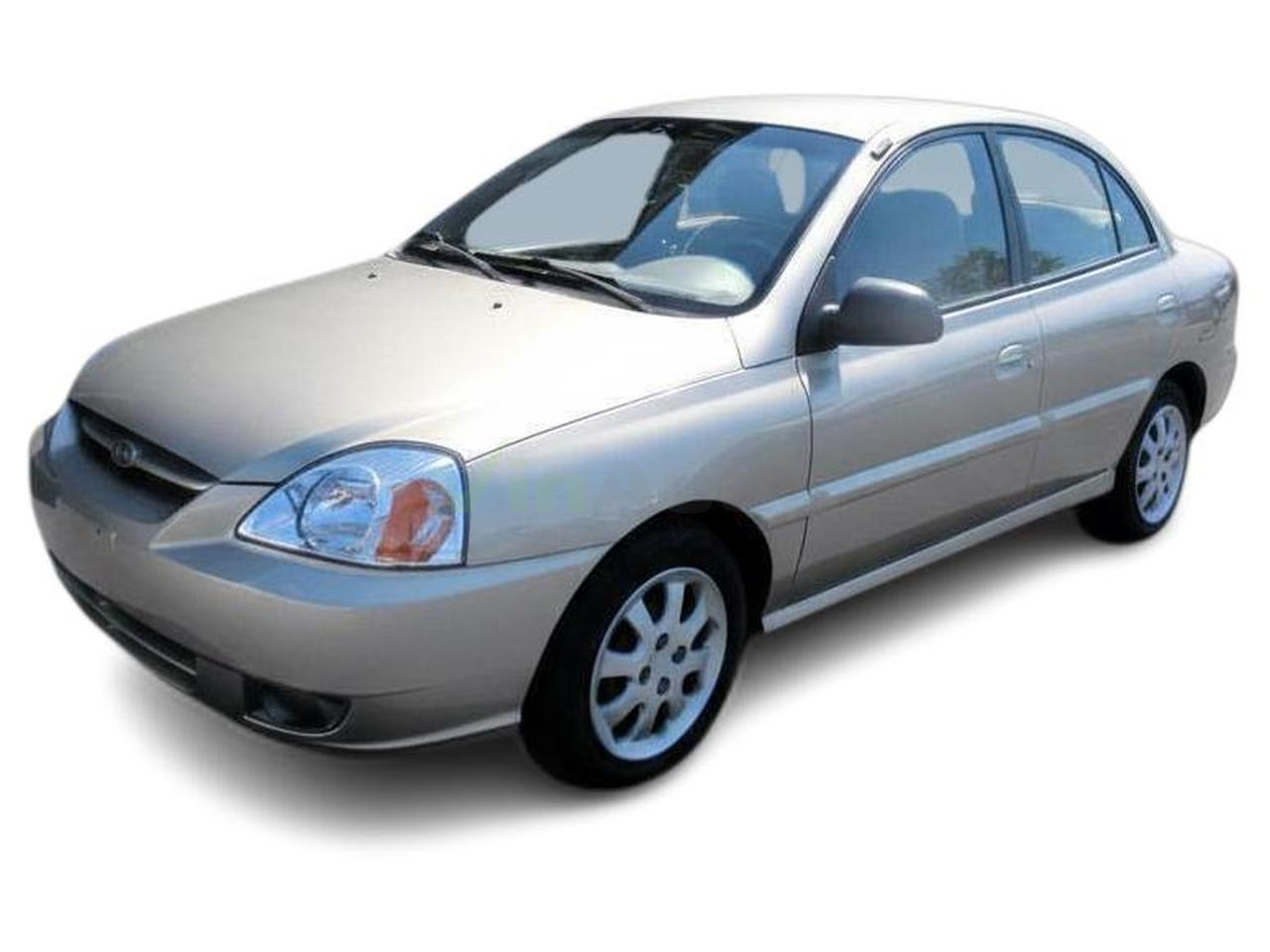
The 2003 KIA Rio, part of the first generation (2000-2005), was KIA's subcompact offering aimed at budget-conscious buyers. Available as a sedan and a hatchback, its key trims included the base LX and the slightly better-equipped SE. Its popularity stemmed from its exceptionally low entry price, making it one of the most affordable new cars available. It stood out for its sheer accessibility and no-frills approach to personal transportation.
The Good
The 2003 KIA Rio's primary advantage was its incredible value, offering basic transportation at an unmatched price. Its small size made it highly efficient and easy to maneuver, appealing to practical buyers. Emotionally, its affordability offered freedom and independence to a wide range of individuals.
The Bad
Buyers should be aware of potential issues with its basic interior materials, modest power output, and a ride that can be less refined than competitors. Long-term durability of certain components, particularly concerning rust in certain climates, is also a point to watch.
2003 KIA Rio: Quick Overview
- Engine Options: The 2003 KIA Rio was primarily offered with a 1.5-liter inline-4 engine.
- Horsepower: This engine typically produced around 96 horsepower.
- Fuel Economy: Fuel economy was a strong suit, with EPA estimates often around 27-30 MPG in the city and 34-37 MPG on the highway, depending on transmission.
- 0-60 Times: Acceleration was not a strong point, with 0-60 mph times generally in the 11-13 second range, reflecting its budget-oriented nature.
- Towing Capacity: Towing capacity is not applicable or generally not recommended for the 2003 KIA Rio due to its subcompact size and powertrain.
- Trim-Level Features:
LX Trim: Standard features typically included power steering, a tilt steering wheel, and a basic AM/FM/CD player. Air conditioning was often optional. Body style was available as a sedan or hatchback.
SE Trim: The SE trim often added a few creature comforts over the LX, such as upgraded interior trim, power windows, and power door locks. It also usually included air conditioning as standard. Body style was also available as a sedan or hatchback. Both trims featured front-wheel drive. The transmissions available were typically a 5-speed manual or a 4-speed automatic. Safety features were basic, usually including front airbags and anti-lock brakes (ABS) as an option or standard on higher trims.
2003 KIA Rio Specifications
Vehicle Information
| Year | 2003 |
| Make | KIA |
| Model | Rio |
| Trim | - |
| Style | Sedan |
| Type | Sedan |
| Category | Compact Car |
Manufacturing Details
| Made In | South Korea |
| Manufacturing City | SOHARI |
Dimensions
| Doors | 4-Door |
| Curb Weight | 2458 pounds |
| Gross Vehicle Weight Rating | - |
| Overall Height | 56.70 inches |
| Overall Length | 166.90 inches |
| Overall Width | 65.90 inches |
| Wheelbase Length | 94.90 inches |
| Standard Seating | 5 |
Engine & Performance
| Engine | 1.6L I4 |
| Engine Size | 1.6L |
| Engine Cylinders | 4 |
| Transmission | 4-Speed Automatic |
| Transmission Type | Automatic |
| Transmission Speeds | 4-Speed |
| Drivetrain | Front-Wheel Drive |
Additional Features
| Anti-Brake System | Non-ABS 4-Wheel ABS |
| Steering Type | Rack & Pinion |
Pricing
| Manufacturer Suggested Retail Price (MSRP) | $9,665 |
| Invoice Price | $9,260 |
| Delivery Charges | $540 |
Vehicle History Report
Vehicle
Specifications
Specifications
Ownership
History
History
All History
Events
Events
NMVTIS Title
History Check
History Check
Salvage/Rebuilt
Check
Check
Accident
Check
Check
Theft
Check
Check
Open Lien
Check
Check
Past Sale
Listings
Listings
Safety
Recalls
Recalls
Odometer
Check
Check
Market Price
Analysis
Analysis
What Problems Does the 2003 KIA Rio Have?
The 2003 KIA Rio, like many budget vehicles of its era, faced some common issues. One frequently reported concern was the potential for premature wear of suspension components, such as bushings and ball joints, leading to clunks and vibrations. The clutch in manual transmission models could also wear out more quickly than expected under heavy use. Electrical gremlins were not uncommon, with reports of issues with the power windows, door locks, and sometimes the radio not functioning correctly. The cooling system could also be a point of concern, with leaks from hoses or the radiator sometimes occurring. Regarding the engine, while generally robust for its displacement, some owners reported oil leaks. Rust is a significant long-term concern, especially for Rios used in areas with harsh winters and road salt. Rust can affect the rocker panels, wheel wells, and even structural components. While specific recalls for the 2003 model year might be limited, it's always advisable to check with the NHTSA for any outstanding safety campaigns. Long-term reliability is often dictated by how well the vehicle has been maintained. Neglected maintenance, particularly oil changes and coolant flushes, can exacerbate wear on engine and transmission components. The interior materials, while functional, were not always the most durable, and wear and tear on seats and dashboard plastics are common in older models.
How long will the 2003 KIA Rio last?
Based on owner data and typical maintenance habits, a well-maintained 2003 KIA Rio can realistically reach 150,000 to 200,000 miles, and in some cases, even more. However, reaching these higher mileage figures often requires diligent upkeep, including regular oil changes, fluid checks, and prompt attention to any developing issues. Weaknesses that tend to emerge over time include potential for rust, especially in corrosive environments, which can significantly impact long-term durability if not addressed. Suspension components and exhaust systems are also prone to wear and tear after many years of service. While the powertrain itself can be quite durable, the longevity of other systems is heavily dependent on consistent maintenance and avoiding harsh driving conditions.
What Technology & Safety Features are Included?
The 2003 KIA Rio was a decidedly no-frills vehicle when it came to technology, entertainment, and safety features, reflecting its budget-friendly positioning.
Entertainment: Standard entertainment typically consisted of an AM/FM radio with a CD player. Aux input or Bluetooth connectivity were not available. Speaker count was usually limited, providing basic audio output.
Driver-Assistance: Driver-assistance features were virtually non-existent. Power steering was standard, and some models might have offered a tilt steering wheel for improved driver comfort. ABS (Anti-lock Braking System) was an available option, particularly on higher trims or later in the model year, but not standard across all vehicles. Cruise control was generally not offered.
Safety: Standard safety equipment included front airbags for the driver and front passenger. Some models might have also included side-impact airbags as an optional extra. Seatbelt pretensioners were also part of the safety package.
Crash-Test Ratings: According to the National Highway Traffic Safety Administration (NHTSA), the 2003 KIA Rio received mixed crash test results. For frontal impacts, it achieved 4 out of 5 stars for the driver and front passenger. However, for side impacts, it received 3 out of 5 stars for both the front and rear passengers. These ratings indicate a decent level of protection in frontal collisions but highlight areas where it was less effective in side-impact scenarios. It's important to note that crash test standards and methodologies have evolved significantly since 2003, so these ratings should be viewed within the context of their time. Optional features were scarce, often limited to air conditioning, power windows, and power door locks on the SE trim. The focus was squarely on providing basic, functional transportation at the lowest possible cost.
Entertainment: Standard entertainment typically consisted of an AM/FM radio with a CD player. Aux input or Bluetooth connectivity were not available. Speaker count was usually limited, providing basic audio output.
Driver-Assistance: Driver-assistance features were virtually non-existent. Power steering was standard, and some models might have offered a tilt steering wheel for improved driver comfort. ABS (Anti-lock Braking System) was an available option, particularly on higher trims or later in the model year, but not standard across all vehicles. Cruise control was generally not offered.
Safety: Standard safety equipment included front airbags for the driver and front passenger. Some models might have also included side-impact airbags as an optional extra. Seatbelt pretensioners were also part of the safety package.
Crash-Test Ratings: According to the National Highway Traffic Safety Administration (NHTSA), the 2003 KIA Rio received mixed crash test results. For frontal impacts, it achieved 4 out of 5 stars for the driver and front passenger. However, for side impacts, it received 3 out of 5 stars for both the front and rear passengers. These ratings indicate a decent level of protection in frontal collisions but highlight areas where it was less effective in side-impact scenarios. It's important to note that crash test standards and methodologies have evolved significantly since 2003, so these ratings should be viewed within the context of their time. Optional features were scarce, often limited to air conditioning, power windows, and power door locks on the SE trim. The focus was squarely on providing basic, functional transportation at the lowest possible cost.
What Colors Options are Available?
2003 KIA Rio Prices and Market Value
When new, the 2003 KIA Rio was one of the most affordable cars on the market, with base LX models starting in the low $10,000s and SE trims around $12,000-$13,000. Its depreciation was quite steep initially, as is typical for entry-level vehicles. Currently, on the used market, you can find 2003 KIA Rios for anywhere from $1,500 to $4,000, heavily dependent on mileage, condition, and geographic location. Factors significantly affecting resale value include the presence of rust, the overall mechanical condition, documented maintenance history, and the number of previous owners. A well-preserved, low-mileage example with no rust can command a premium within its class, but generally, these vehicles are bought for their utility rather than their resale potential.
2003 KIA Rio Cost of Ownership
The 2003 KIA Rio is exceptionally economical to own. Insurance premiums are typically very low due to its low value and basic safety features. Fuel costs are minimal thanks to its excellent MPG. Routine maintenance, like oil changes and tire rotations, is inexpensive. Repair costs are generally affordable, with parts being readily available and labor rates for basic work being reasonable. While some repairs might be needed due to its age, the overall cost of ownership remains very low, making it a highly budget-friendly option for long-term use, provided it's maintained properly.
2003 KIA Rio Fuel Efficiency
Fuel Type
Gasoline
Fuel Capacity
25 gallons
City Mileage
22 miles/gallon
Highway Mileage
30 miles/gallon
2003 KIA Rio Safety Rating
NHTSA
IIHS
2003 KIA Rio Warranty
Basic
Original warranty
60 months / 60,000 miles
Estimated remaining
Expired
Powertrain
Original warranty
120 months / 100,000 miles
Estimated remaining
Expired
Rust
Original warranty
60 months / 100,000 miles
Estimated remaining
Expired
2003 KIA Rio Insurance
Insurance for a 2003 KIA Rio is moderately priced, reflecting its status as a Sedan with strong safety ratings and
reasonable repair costs.
How Does the 2003 KIA Rio Compare to Other Sedan?
In the subcompact segment of 2003, the KIA Rio competed against vehicles like the Chevrolet Aveo, Ford Focus (though slightly larger), Hyundai Accent, and Nissan Sentra (again, slightly larger).
Performance: The Rio's 96 horsepower was generally on the lower end of the spectrum, often trailing rivals like the Ford Focus and Nissan Sentra, which offered more potent engine options. Its 0-60 times were leisurely compared to many competitors.
Features: In terms of features, the Rio was basic. While rivals like the Ford Focus offered more available creature comforts and a more modern interior design, the Rio focused on essential functionality. Even compared to the Hyundai Accent, which shared some mechanical underpinnings, the Rio was often seen as even more stripped-down.
Reliability: Early KIA models, including the Rio, were not renowned for top-tier reliability compared to Japanese competitors like Honda and Toyota (though those were often in a higher price bracket). While the Rio was generally dependable for basic transport, it could be more prone to issues than a comparable Civic or Corolla.
Price: This is where the Rio shone. It was consistently one of the cheapest new cars available, making it a compelling choice for those with extremely tight budgets.
Alternatives:
Similar: The Hyundai Accent offered a very similar value proposition and was often a comparable choice.
Better (if budget allows slightly more): The Ford Focus offered a more engaging driving experience, better interior quality, and a wider array of available features. The Honda Civic and Toyota Corolla, though more expensive when new, offered superior long-term reliability, refinement, and resale value, making them excellent used choices if within budget. Even a used Chevrolet Aveo might offer slightly better refinement for a similar price point.
Performance: The Rio's 96 horsepower was generally on the lower end of the spectrum, often trailing rivals like the Ford Focus and Nissan Sentra, which offered more potent engine options. Its 0-60 times were leisurely compared to many competitors.
Features: In terms of features, the Rio was basic. While rivals like the Ford Focus offered more available creature comforts and a more modern interior design, the Rio focused on essential functionality. Even compared to the Hyundai Accent, which shared some mechanical underpinnings, the Rio was often seen as even more stripped-down.
Reliability: Early KIA models, including the Rio, were not renowned for top-tier reliability compared to Japanese competitors like Honda and Toyota (though those were often in a higher price bracket). While the Rio was generally dependable for basic transport, it could be more prone to issues than a comparable Civic or Corolla.
Price: This is where the Rio shone. It was consistently one of the cheapest new cars available, making it a compelling choice for those with extremely tight budgets.
Alternatives:
Similar: The Hyundai Accent offered a very similar value proposition and was often a comparable choice.
Better (if budget allows slightly more): The Ford Focus offered a more engaging driving experience, better interior quality, and a wider array of available features. The Honda Civic and Toyota Corolla, though more expensive when new, offered superior long-term reliability, refinement, and resale value, making them excellent used choices if within budget. Even a used Chevrolet Aveo might offer slightly better refinement for a similar price point.
Final Verdict: Is the 2003 KIA Rio a Good Sedan?
The 2003 KIA Rio is ideal for individuals or families on an extremely tight budget needing basic, reliable transportation. It's best suited for those prioritizing affordability above all else, such as first-time drivers, students, or those needing a second car for short commutes.
It is absolutely worth buying if purchased used, but with significant caveats. Focus on models with extensive maintenance records, minimal rust, and a pre-purchase inspection by a trusted mechanic. Avoid higher mileage examples unless you are mechanically inclined. The LX trim is the most basic, while the SE offers slightly more comfort features. Given its age, buying new is not an option, and the primary value lies in its incredibly low used market price point, making it a practical choice for essential mobility rather than a desire for luxury or performance.
