
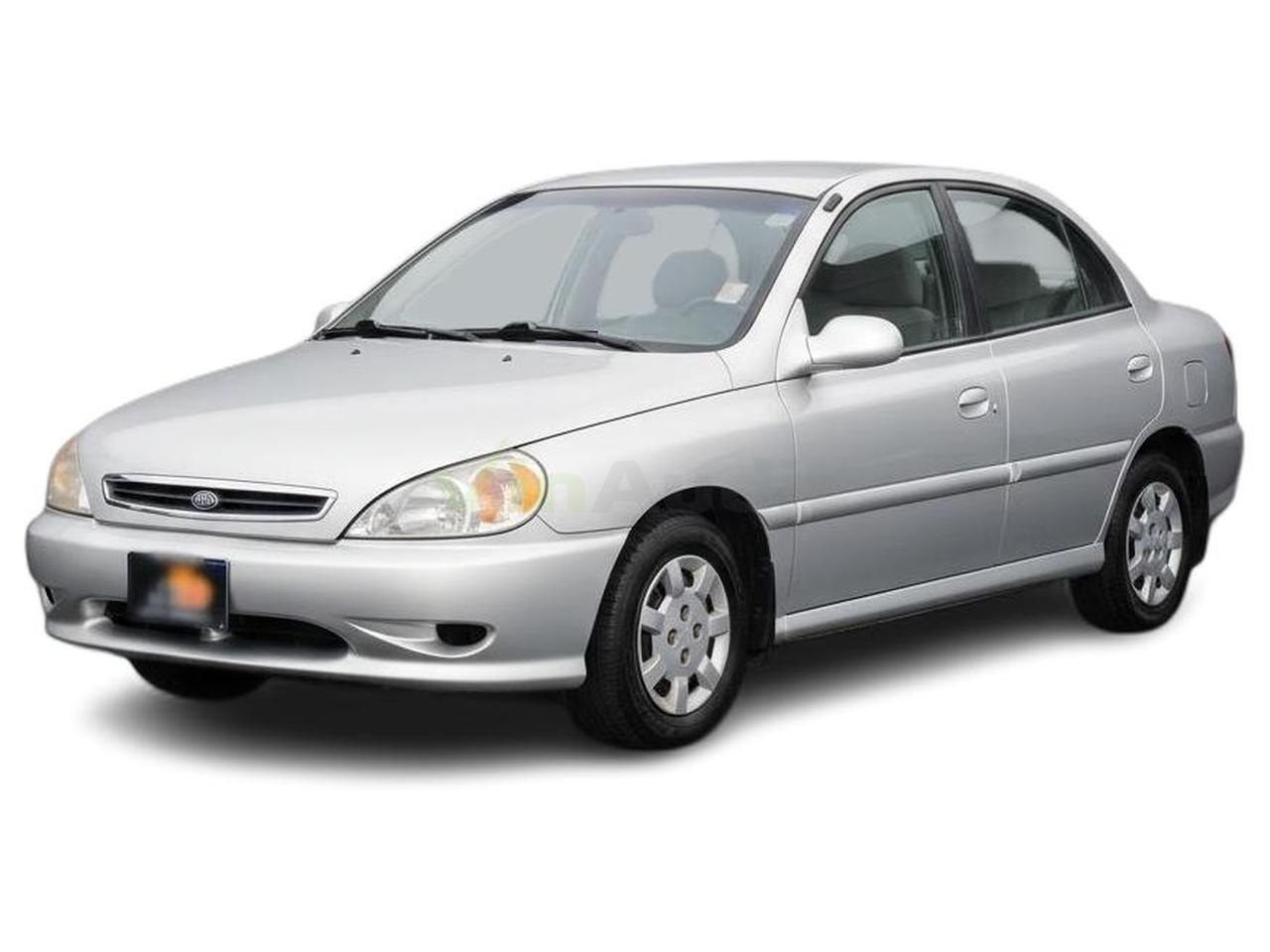
The 2001 Kia Rio was a subcompact car introduced to the North American market, aiming to offer an affordable entry point into car ownership. It was available as a four-door sedan and a five-door hatchback. Key trims typically included the base model and the more feature-rich LS. Its popularity stemmed from its exceptionally low starting price, making it one of the most budget-friendly new cars available at the time, appealing directly to cost-conscious buyers and first-time car owners.
The Good
The 2001 Kia Rio's primary advantage is its unbeatable value, offering an economical way to get around. Its compact size ensures excellent fuel efficiency, appealing to practical buyers. For those seeking a simple, no-frills transportation, it provides a functional and affordable solution, evoking a sense of smart financial decision-making.
The Bad
Potential buyers of the 2001 Kia Rio should be aware of its lackluster acceleration, basic interior materials, and a tendency for some components to wear out prematurely. Concerns often include engine performance issues and a less refined ride compared to some competitors.
2001 KIA Rio: Quick Overview
- Engine Options: The 2001 Kia Rio was primarily offered with a 1.5-liter inline-four engine.
- Horsepower: This engine typically produced around 92 horsepower.
- Fuel Economy: Expect fuel economy figures in the range of approximately 25-28 MPG in the city and 32-35 MPG on the highway, depending on transmission and driving conditions.
- 0-60 Times: Acceleration was a notable weak point. 0-60 mph times were generally in the 12-14 second range, indicating leisurely acceleration.
- Towing Capacity: Towing capacity is not applicable as this is a subcompact passenger car not designed for towing.
- Trim-Level Features:
- Base Trim: Generally included standard features like power steering, intermittent wipers, and a basic AM/FM stereo. Air conditioning was often an option.
- LS Trim: Typically added features such as power windows, power door locks, a tilt steering wheel, and upgraded interior trim. It might have also included a CD player instead of just an AM/FM radio.
2001 KIA Rio Specifications
Vehicle Information
| Year | 2001 |
| Make | KIA |
| Model | Rio |
| Trim | - |
| Style | - |
| Type | Sedan |
| Category | Compact Car |
Manufacturing Details
| Made In | Korea |
| Manufacturing City | WHASUNG |
Dimensions
| Doors | 4-Door |
| Curb Weight | - |
| Gross Vehicle Weight Rating | - |
| Overall Height | - |
| Overall Length | - |
| Overall Width | - |
| Wheelbase Length | - |
| Standard Seating | - |
Engine & Performance
| Engine | 1.5L I4 |
| Engine Size | 1.5L |
| Engine Cylinders | 4 |
| Transmission | 4-Speed Automatic |
| Transmission Type | Automatic |
| Transmission Speeds | 4-Speed |
| Drivetrain | Front-Wheel Drive |
Additional Features
| Anti-Brake System | - |
| Steering Type | - |
Pricing
| Manufacturer Suggested Retail Price (MSRP) | - |
| Invoice Price | - |
| Delivery Charges | - |
Vehicle History Report
Vehicle
Specifications
Specifications
Ownership
History
History
All History
Events
Events
NMVTIS Title
History Check
History Check
Salvage/Rebuilt
Check
Check
Accident
Check
Check
Theft
Check
Check
Open Lien
Check
Check
Past Sale
Listings
Listings
Safety
Recalls
Recalls
Odometer
Check
Check
Market Price
Analysis
Analysis
What Problems Does the 2001 KIA Rio Have?
The 2001 Kia Rio, while popular for its affordability, is known to have several common issues that can arise over time. One frequently reported problem involves the engine, with owners sometimes experiencing issues such as rough idling, stalling, and a reduction in power. This can sometimes be linked to problems with the ignition system, such as faulty spark plugs or coils.
Another area of concern for the 2001 model year specifically relates to the transmission. Some owners have reported premature wear in the automatic transmission, leading to slipping gears or complete failure. While not as widespread as engine issues, it's something to investigate during a pre-purchase inspection.
The suspension and steering components are also mentioned in owner forums. Issues like worn ball joints, tie rod ends, and noisy suspension components can contribute to a less comfortable ride and affect handling. The braking system, while generally functional, may also require more frequent attention to pads and rotors due to the vehicle's age.
Rust can be a concern, especially in regions with harsh winters and road salt. Inspecting the undercarriage, wheel wells, and rocker panels for significant corrosion is crucial. While there haven't been widespread major recalls for the 2001 model year that would indicate catastrophic failures across the board, individual component failures are not uncommon due to the vehicle's age and budget-oriented construction. Long-term reliability is often considered average at best, heavily dependent on consistent and thorough maintenance. Owners who neglected routine maintenance are more likely to encounter significant problems earlier in the vehicle's life.
Another area of concern for the 2001 model year specifically relates to the transmission. Some owners have reported premature wear in the automatic transmission, leading to slipping gears or complete failure. While not as widespread as engine issues, it's something to investigate during a pre-purchase inspection.
The suspension and steering components are also mentioned in owner forums. Issues like worn ball joints, tie rod ends, and noisy suspension components can contribute to a less comfortable ride and affect handling. The braking system, while generally functional, may also require more frequent attention to pads and rotors due to the vehicle's age.
Rust can be a concern, especially in regions with harsh winters and road salt. Inspecting the undercarriage, wheel wells, and rocker panels for significant corrosion is crucial. While there haven't been widespread major recalls for the 2001 model year that would indicate catastrophic failures across the board, individual component failures are not uncommon due to the vehicle's age and budget-oriented construction. Long-term reliability is often considered average at best, heavily dependent on consistent and thorough maintenance. Owners who neglected routine maintenance are more likely to encounter significant problems earlier in the vehicle's life.
How long will the 2001 KIA Rio last?
Based on owner data and typical maintenance, the 2001 Kia Rio can reasonably be expected to reach between 150,000 to 200,000 miles if well-maintained. However, without diligent upkeep, its lifespan can be significantly shorter. Long-term durability is a mixed bag; while the basic drivetrain can be robust with regular oil changes and fluid checks, other components like the transmission, suspension, and exhaust system may experience premature wear. The car's budget-friendly construction means that while the core function of transportation can persist, the overall quality of the ride and the reliability of non-essential features can degrade faster over time. Weaknesses in areas like rust prevention and interior material wear are more pronounced with age and higher mileage.
What Technology & Safety Features are Included?
The 2001 Kia Rio offered a very basic suite of technology and safety features, reflecting its status as an ultra-affordable subcompact.
Technology and Entertainment: Standard entertainment in most trims was a basic AM/FM radio with a cassette player. An optional upgrade included a CD player. Power windows and door locks were typically found on the higher LS trim or as optional extras on the base model. A tilt steering wheel was also an available convenience feature on some trims. Bluetooth connectivity, touchscreens, or advanced infotainment systems were non-existent, aligning with the technology of the early 2000s and the car's budget focus.
Driver-Assistance Features: Driver-assistance technology was extremely limited. Features like ABS (Anti-lock Braking System) were often optional, especially on lower trims, and were not universally equipped. Electronic Stability Control (ESC) or traction control were not available on this model. The focus was on core driving functions rather than advanced aids.
Safety Features: Standard safety equipment included front airbags for the driver and passenger. Seatbelt pretensioners were also standard. Side airbags were not a common offering and were generally not available.
Crash-Test Ratings: Crash test ratings for the 2001 Kia Rio are not as extensively documented or as high as modern vehicles. For the 2001 model year, the National Highway Traffic Safety Administration (NHTSA) gave the Kia Rio four out of five stars for frontal driver and passenger crash protection. The Insurance Institute for Highway Safety (IIHS) rated it as "Acceptable" in frontal offset crash tests. However, it's important to remember that safety standards and testing procedures have evolved significantly since 2001, and these ratings should be considered within that historical context.
Technology and Entertainment: Standard entertainment in most trims was a basic AM/FM radio with a cassette player. An optional upgrade included a CD player. Power windows and door locks were typically found on the higher LS trim or as optional extras on the base model. A tilt steering wheel was also an available convenience feature on some trims. Bluetooth connectivity, touchscreens, or advanced infotainment systems were non-existent, aligning with the technology of the early 2000s and the car's budget focus.
Driver-Assistance Features: Driver-assistance technology was extremely limited. Features like ABS (Anti-lock Braking System) were often optional, especially on lower trims, and were not universally equipped. Electronic Stability Control (ESC) or traction control were not available on this model. The focus was on core driving functions rather than advanced aids.
Safety Features: Standard safety equipment included front airbags for the driver and passenger. Seatbelt pretensioners were also standard. Side airbags were not a common offering and were generally not available.
Crash-Test Ratings: Crash test ratings for the 2001 Kia Rio are not as extensively documented or as high as modern vehicles. For the 2001 model year, the National Highway Traffic Safety Administration (NHTSA) gave the Kia Rio four out of five stars for frontal driver and passenger crash protection. The Insurance Institute for Highway Safety (IIHS) rated it as "Acceptable" in frontal offset crash tests. However, it's important to remember that safety standards and testing procedures have evolved significantly since 2001, and these ratings should be considered within that historical context.
What Colors Options are Available?
2001 KIA Rio Prices and Market Value
When new, the 2001 Kia Rio was one of the most affordable cars on the market, with a starting MSRP often in the low to mid-$10,000 range, making it an attractive option for budget-conscious buyers. Today, its used market price reflects its age and historical position. You can typically find 2001 Kia Rios for anywhere from $1,000 to $3,000, with prices highly dependent on mileage, condition, and location.
The Rio experienced significant depreciation, as is common with budget vehicles. Factors affecting its current resale value include its condition (rust, mechanical issues, interior wear), mileage (higher mileage drastically reduces value), and the overall demand for basic, inexpensive transportation. Well-maintained examples with lower mileage can fetch slightly more, but it remains a vehicle primarily valued for its absolute lowest cost of entry rather than any residual value retention.
2001 KIA Rio Cost of Ownership
The 2001 Kia Rio is exceptionally economical to own. Insurance premiums are typically very low due to its modest value and basic safety features. Fuel costs are minimal thanks to its excellent MPG. Routine maintenance, such as oil changes and filter replacements, is inexpensive. While some repairs might arise due to age, parts are generally affordable and widely available. Compared to many other vehicles, the Rio is very cost-effective to maintain and operate over the long term, making it a budget-friendly choice for daily transportation.
2001 KIA Rio Fuel Efficiency
Fuel Type
Gasoline
Fuel Capacity
25 gallons
City Mileage
25 miles/gallon
Highway Mileage
31 miles/gallon
2001 KIA Rio Safety Rating
NHTSA
2001 KIA Rio Insurance
Insurance for a 2001 KIA Rio is moderately priced, reflecting its status as a Sedan with strong safety ratings and
reasonable repair costs.
How Does the 2001 KIA Rio Compare to Other Sedan?
The 2001 Kia Rio competed in the subcompact segment against vehicles like the Hyundai Accent, Chevrolet Aveo (though it arrived later, its predecessors were in this space), Ford Focus (though often slightly larger/pricier), and the Honda Civic and Toyota Echo (which were generally more refined and reliable).
Performance: The Rio's 92-horsepower engine was generally outmatched by competitors. Rivals like the Honda Civic offered more spirited acceleration and a smoother ride. The Ford Focus also typically provided a more engaging driving experience. The Rio was squarely focused on basic, economical transport, not performance.
Features: While the Rio was one of the cheapest new cars available, its feature set was basic. Higher trims offered some essentials, but competitors often provided more standard convenience features or better integrated technology even at similar price points. For example, the Honda Civic and Toyota Echo often came with more refined interiors and better-equipped audio systems.
Reliability: This is where the Rio often lagged behind its Japanese rivals. While the engine could be dependable with care, competitors like the Honda Civic and Toyota Echo built reputations for exceptional long-term reliability and fewer mechanical issues. The Rio was more prone to wear and tear on various components over time.
Price: The Rio's standout advantage was its price. It was often significantly cheaper than comparable models from Honda, Toyota, or Ford. This made it an accessible option for those with extremely limited budgets.
Alternatives: For a similar price point, the 2001 Hyundai Accent is a very close sibling in terms of price and basic functionality, often sharing similar strengths and weaknesses. If one can stretch their budget slightly or find a well-maintained used example, the 2001 Honda Civic (especially DX or VP trims) or the 2001 Toyota Echo would be significantly better choices for long-term reliability, refinement, and overall driving experience, despite being more expensive initially or on the used market.
Performance: The Rio's 92-horsepower engine was generally outmatched by competitors. Rivals like the Honda Civic offered more spirited acceleration and a smoother ride. The Ford Focus also typically provided a more engaging driving experience. The Rio was squarely focused on basic, economical transport, not performance.
Features: While the Rio was one of the cheapest new cars available, its feature set was basic. Higher trims offered some essentials, but competitors often provided more standard convenience features or better integrated technology even at similar price points. For example, the Honda Civic and Toyota Echo often came with more refined interiors and better-equipped audio systems.
Reliability: This is where the Rio often lagged behind its Japanese rivals. While the engine could be dependable with care, competitors like the Honda Civic and Toyota Echo built reputations for exceptional long-term reliability and fewer mechanical issues. The Rio was more prone to wear and tear on various components over time.
Price: The Rio's standout advantage was its price. It was often significantly cheaper than comparable models from Honda, Toyota, or Ford. This made it an accessible option for those with extremely limited budgets.
Alternatives: For a similar price point, the 2001 Hyundai Accent is a very close sibling in terms of price and basic functionality, often sharing similar strengths and weaknesses. If one can stretch their budget slightly or find a well-maintained used example, the 2001 Honda Civic (especially DX or VP trims) or the 2001 Toyota Echo would be significantly better choices for long-term reliability, refinement, and overall driving experience, despite being more expensive initially or on the used market.
Final Verdict: Is the 2001 KIA Rio a Good Sedan?
The 2001 Kia Rio is ideal for individuals or students with an extremely tight budget who need basic, reliable transportation and prioritize affordability above all else. It is worth buying primarily as a used vehicle for its low purchase price, especially if you can find one that has been meticulously maintained. New, its value proposition was strong due to being one of the cheapest new cars available, but its build quality and features were commensurate with its price.
It is NOT recommended for those seeking performance, advanced features, or superior long-term reliability compared to its Japanese competitors. If considering a used Rio, inspect it thoroughly for rust and mechanical issues, and be prepared for potential maintenance costs. For many, slightly older or higher-mileage models from brands like Honda or Toyota might offer a better overall value in the long run, despite a potentially higher initial cost.
