
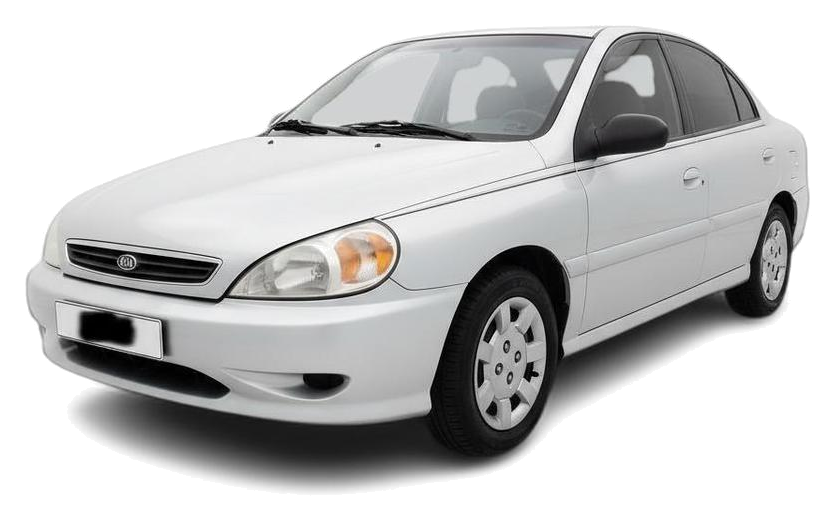
The Good
The 2002 KIA Rio's primary advantage is its incredible value, offering affordable transportation that appeals to budget-conscious buyers. Its straightforward design and respectable fuel efficiency make it a practical choice for daily commuting. Emotionally, it represents a step towards independence and personal mobility without a significant financial burden.
The Bad
Potential buyers of the 2002 KIA Rio should be aware of its modest power output, which can make highway passing a challenge. Interior materials may feel basic, and long-term reliability can be a concern, with some owners reporting issues with certain powertrain components and electrical systems.
2002 KIA Rio: Quick Overview
- Engine Options: The 2002 KIA Rio was offered with a single engine option for most markets: a 1.5-liter four-cylinder gasoline engine.
- Horsepower: This 1.5-liter engine typically produced around 90-96 horsepower, depending on the specific market and tuning.
- Fuel Economy: The Rio was designed for economy, with an estimated fuel economy of approximately 28-30 MPG in the city and 35-38 MPG on the highway.
- 0-60 Times: Acceleration was not a strong suit for the Rio. Expect 0-60 mph times to be in the range of 12-14 seconds, making it adequate for city driving but less spirited on the open road.
- Towing Capacity: As a subcompact car, the 2002 KIA Rio did not have a specified towing capacity and is not designed for towing.
- Trim-Level Features:
S Trim: Typically featured a basic equipment list including power steering, an AM/FM radio, and basic interior amenities. Air conditioning and power windows were often optional or not available on the absolute base models.
LX Trim: Added more creature comforts over the S trim. This could include air conditioning as standard, power windows and door locks, a better audio system, and potentially upgraded interior trim. Alloy wheels were sometimes an option on the LX trim. Both trims offered either a 5-speed manual transmission or an optional 4-speed automatic transmission. Safety features were generally limited, with standard dual front airbags and anti-lock brakes (ABS) often an option, particularly on higher trims or later production models.
2002 KIA Rio Specifications
Vehicle Information
| Year | 2002 |
| Make | Kia |
| Model | Rio |
| Trim | - |
| Style | 4-Speed |
| Type | Sedan |
| Category | Compact Car |
Manufacturing Details
| Made In | South Korea |
| Manufacturing City | WHASUNG |
Dimensions
| Doors | 4-Door |
| Curb Weight | 2297 pounds |
| Gross Vehicle Weight Rating | - |
| Overall Height | 56.70 inches |
| Overall Length | 165.90 inches |
| Overall Width | 65.90 inches |
| Wheelbase Length | 94.90 inches |
| Standard Seating | 5 |
Engine & Performance
| Engine | 1.5L I4 |
| Engine Size | 1.5L |
| Engine Cylinders | 4 |
| Transmission | 5-Speed Manual |
| Transmission Type | Manual |
| Transmission Speeds | 5-Speed |
| Drivetrain | Front-Wheel Drive |
Additional Features
| Anti-Brake System | Non-ABS 4-Wheel ABS |
| Steering Type | Rack & Pinion |
Pricing
| Manufacturer Suggested Retail Price (MSRP) | $9,095 |
| Invoice Price | $8,450 |
| Delivery Charges | $495 |
Vehicle History Report
Specifications
History
Events
History Check
Check
Check
Check
Check
Listings
Recalls
Check
Analysis
What Problems Does the 2002 KIA Rio Have?
The cooling system is also an area to watch, with occasional reports of radiator leaks or water pump failures, especially on higher-mileage vehicles. Suspension components, such as ball joints and bushings, can wear out over time, leading to noise and handling issues, which is not uncommon for vehicles in this age and class. While specific recalls for the 2002 model year are not extensive, it's always advisable to check the NHTSA website for any safety campaigns that may have been issued. Long-term reliability can be variable; many Rios soldier on with diligent maintenance, but those that have been neglected are more prone to accumulating a series of smaller, albeit costly, repairs. The overall impression is that while the 2002 Rio can be dependable, it requires proactive maintenance to mitigate its inherent weaknesses, particularly in the powertrain and electrical departments.
How long will the 2002 KIA Rio last?
What Technology & Safety Features are Included?
In terms of driver-assistance features, the 2002 Rio offered very little. Anti-lock Braking System (ABS) was often an optional feature, not standard across all trims or model years. Traction control or stability control systems were not available.
Safety features were also limited. Standard equipment usually included dual front airbags. Side airbags were not typically offered. Seatbelt pretensioners were standard.
Regarding crash-test ratings, data for the 2002 KIA Rio can be difficult to find from official sources like the NHTSA or IIHS, as many smaller and budget-oriented vehicles from this era did not undergo the extensive testing that is common today. However, based on general performance of similar subcompacts from that period, one could infer moderate to poor performance in more severe crash scenarios. Expecting high marks in frontal and side-impact tests would be unrealistic for a vehicle in this segment and price bracket from 2002. The focus was on providing essential passenger protection rather than advanced safety systems or occupant comfort technologies.
What Colors Options are Available?
2002 KIA Rio Prices and Market Value
2002 KIA Rio Cost of Ownership
2002 KIA Rio Fuel Efficiency
2002 KIA Rio Safety Rating
NHTSA
IIHS
2002 KIA Rio Recalls & Defects
Fuel System, Gasoline:delivery
2002 KIA Rio Warranty
Basic
Powertrain
Rust
2002 KIA Rio Insurance
reasonable repair costs.
How Does the 2002 KIA Rio Compare to Other Sedan?
Performance: In terms of performance, the Rio was generally on par with the least powerful models in its class. Its 1.5-liter engine offered modest acceleration, making it comparable to vehicles like the early Chevrolet Aveo but often lagging behind the more refined offerings from Honda and Toyota. The Ford Focus, even in its base configurations, could offer a slightly more engaging driving experience.
Features: The Rio's feature set was basic, emphasizing its low price. Rivals like the Honda Civic and Toyota Echo often offered more standard features, even in their entry-level trims, and had a wider array of optional technology and comfort amenities. The Ford Focus also generally provided a more feature-rich interior.
Reliability: This is where the Rio often faced challenges compared to its Japanese competitors. While the Honda Civic and Toyota Echo were renowned for their bulletproof reliability, the 2002 Rio had more reported issues, particularly with its powertrain and electrical systems. The Chevrolet Aveo, being a relatively new entry and built by GM, also had its share of reliability concerns, sometimes on par with or worse than the Rio.
Price: The Rio's standout advantage was its price. It was consistently one of the most affordable new cars available, often undercutting its competitors significantly. This made it a compelling choice for the absolute budget-conscious buyer.
Alternatives: For buyers prioritizing reliability and a more refined experience, even if at a slightly higher price point, a used Honda Civic or Toyota Echo from the same era would be superior alternatives. If a more engaging drive is desired, a Ford Focus offers a good balance. Similar alternatives focusing on pure affordability might include a used Chevrolet Aveo, though reliability can be a gamble with both.
Final Verdict: Is the 2002 KIA Rio a Good Sedan?

Eugene S
Eugene is an automotive enthusiast with over 15 years of experience in the used car market. As a writer at VINCheck.info, he brings deep industry insight and a passion for cars, helping readers make smart, informed decisions. Eugene has written hundreds of used car reviews and is known for breaking down complex automotive topics into clear, actionable advice. Over the years, he has driven and worked on a wide range of vehicles—starting with tuning street cars in his early days and eventually focusing on performance upgrades and reliability improvements. Today, he specializes in evaluating used vehicles through the lens of real-world ownership and enthusiast needs. A longtime fan of Porsche, Eugene especially appreciates vehicles that blend durability with driving enjoyment.