
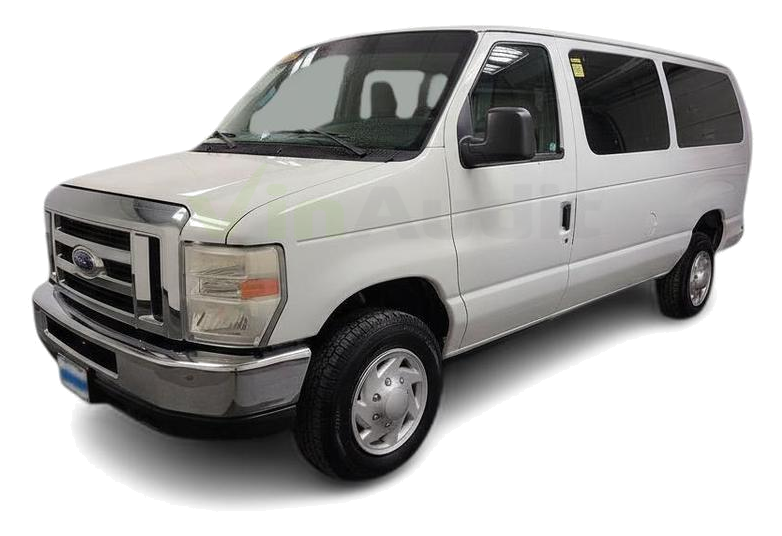
The 2010 Ford E-Series Wagon, part of a long-standing lineage of Ford vans dating back to the 1960s, offered robust utility and passenger-carrying capability. Available in various body styles including the E-150, E-250, and E-350, it served a wide range of needs from family transport to commercial use. Key trims often included the base model and the more feature-rich XLT. Its popularity stemmed from its cavernous interior, adaptable seating configurations, and legendary durability, making it a workhorse and a go-to for large families or businesses. The pricing for a new 2010 model typically ranged from approximately $25,000 to $40,000, depending on the configuration and options.
The Good
The 2010 E-Series Wagon boasts immense practicality with its spacious interior and strong V8 engines for towing needs. Its renowned reliability provides peace of mind, while the comfortable ride and commanding view appeal to families seeking adventure. This van offers exceptional value as a versatile, long-lasting vehicle.
The Bad
Potential buyers should be aware of the 2010 E-Series Wagon's less-than-stellar fuel economy, especially with V8 engines. Its large size can make maneuverability in tight spaces challenging. Also, look out for potential wear on interior components due to its utility-focused design and age.
2010 Ford E-Series Wagon: Quick Overview
- Engine Options: The 2010 Ford E-Series Wagon was primarily offered with a selection of V8 engines. Standard on the E-150 was a 4.6L Triton V8. Higher trims and heavier duty models (E-250, E-350) could be equipped with a more powerful 5.4L Triton V8 or a larger 6.8L Triton V10.
- Horsepower: The 4.6L V8 typically produced around 225 horsepower. The 5.4L V8 offered approximately 255 horsepower, while the 6.8L V10 pushed out around 305 horsepower.
- Fuel Economy: Fuel economy was a significant compromise for the E-Series Wagon's capabilities. Expect figures in the range of 10-13 MPG in the city and 14-17 MPG on the highway, heavily dependent on the engine, drivetrain (RWD/4WD), and load.
- 0-60 Times: Due to its size and weight, the E-Series Wagon was not designed for rapid acceleration. 0-60 mph times varied greatly but typically fell in the 9-11 second range for V8 models, and potentially longer for V10 or heavily laden vehicles.
- Towing Capacity: Towing capacity was a strong suit. Depending on the specific model (E-150, E-250, E-350), axle ratio, and engine, the E-Series Wagon could tow anywhere from around 5,000 lbs up to an impressive 10,000 lbs or more, making it suitable for hauling boats, trailers, or campers.
- Trim-Level Features: The base trim typically focused on functionality with vinyl seating and basic amenities. The XLT trim often included upgraded cloth or vinyl upholstery, power windows and locks, cruise control, a tilt steering wheel, and an upgraded audio system. Options could include rear climate control, a premium sound system, captain's chairs, and various towing packages.
2010 Ford E-Series Wagon Specifications
Vehicle Information
| Year | 2010 |
| Make | Ford |
| Model | E-Series |
| Trim | - |
| Style | 3-Door |
| Type | Bus |
| Category | Passenger Van |
Manufacturing Details
| Made In | United States |
| Manufacturing City | AVON LAKE |
Dimensions
| Doors | 3-Door |
| Curb Weight | 6500 pounds |
| Gross Vehicle Weight Rating | 9100 pounds |
| Overall Height | 84.10 inches |
| Overall Length | 231.90 inches |
| Overall Width | 70.10 inches |
| Wheelbase Length | 138.00 inches |
| Standard Seating | 15 |
Engine & Performance
| Engine | 5.4L V8 |
| Engine Size | 5.4L |
| Engine Cylinders | 8 |
| Transmission | 5-Speed Automatic |
| Transmission Type | Automatic |
| Transmission Speeds | 5-Speed |
| Drivetrain | Rear-Wheel Drive |
Additional Features
| Anti-Brake System | 4-Wheel ABS |
| Steering Type | Recirculating |
Pricing
| Manufacturer Suggested Retail Price (MSRP) | $34,845 |
| Invoice Price | $31,940 |
| Delivery Charges | $980 |
Vehicle History Report
Vehicle
Specifications
Specifications
Ownership
History
History
All History
Events
Events
NMVTIS Title
History Check
History Check
Salvage/Rebuilt
Check
Check
Accident
Check
Check
Theft
Check
Check
Open Lien
Check
Check
Past Sale
Listings
Listings
Safety
Recalls
Recalls
Odometer
Check
Check
Market Price
Analysis
Analysis
What Problems Does the 2010 Ford E-Series Wagon Have?
The 2010 Ford E-Series Wagon, while generally robust, is not without its potential issues. A common concern across many Ford vehicles of this era, including the E-Series, revolves around transmission problems. Owners have reported issues such as rough shifting, slipping gears, and premature transmission failure, particularly with higher mileage vehicles. Regular transmission fluid changes and proper maintenance are crucial to mitigate these risks. Another area to watch is the suspension system. Components like ball joints, tie rods, and control arms can experience wear over time, leading to clunking noises, uneven tire wear, and compromised handling. This is especially true if the vehicle has been used for heavy-duty work or frequently driven on rough roads.
The ignition system can also be a source of trouble, with reports of failing ignition coils and spark plugs leading to misfires, rough idling, and reduced engine performance. For 2010 models, specifically, there were recalls related to the fuel pump control module, which could potentially lead to stalling. It's essential to check for any outstanding recalls on a specific vehicle. Electrical issues, though less frequent, can also crop up, including problems with the power windows, door locks, or the instrument cluster.
Rust is a perennial concern for any vehicle of this age, especially in rust-belt regions. Undercarriage rust, wheel well corrosion, and rust around door seals are areas to inspect closely. While the E-Series is known for its longevity, the engine and transmission are the most critical components to assess. A well-maintained 2010 E-Series Wagon can still offer excellent service, but thorough inspection and a review of maintenance records are paramount before purchasing.
The ignition system can also be a source of trouble, with reports of failing ignition coils and spark plugs leading to misfires, rough idling, and reduced engine performance. For 2010 models, specifically, there were recalls related to the fuel pump control module, which could potentially lead to stalling. It's essential to check for any outstanding recalls on a specific vehicle. Electrical issues, though less frequent, can also crop up, including problems with the power windows, door locks, or the instrument cluster.
Rust is a perennial concern for any vehicle of this age, especially in rust-belt regions. Undercarriage rust, wheel well corrosion, and rust around door seals are areas to inspect closely. While the E-Series is known for its longevity, the engine and transmission are the most critical components to assess. A well-maintained 2010 E-Series Wagon can still offer excellent service, but thorough inspection and a review of maintenance records are paramount before purchasing.
How long will the 2010 Ford E-Series Wagon last?
The 2010 Ford E-Series Wagon is built for longevity and can often exceed 200,000 miles with proper care and regular maintenance. Owner data and anecdotal evidence suggest that with consistent oil changes, timely transmission fluid flushes, and attention to suspension components, these vans can remain reliable for 15-20 years or more. The underlying chassis and powertrain are robust. However, weaknesses over time often manifest as wear-and-tear items like brake components, exhaust systems, and rubber seals. Electrical gremlins can also appear as the vehicle ages. The most critical factor in achieving high mileage is a consistent maintenance schedule.
What Technology & Safety Features are Included?
The 2010 Ford E-Series Wagon focused more on utility and practicality than cutting-edge technology. Standard tech and entertainment features were generally basic. A standard audio system with an AM/FM radio and a CD player was common. Higher trims, like the XLT, might have offered an upgraded stereo with more speakers. Bluetooth connectivity and advanced infotainment systems were not prevalent in this model year. Driver-assistance features were also minimal, with most models lacking advanced systems like adaptive cruise control or lane-keeping assist.
Safety features were focused on fundamental protection. Standard safety equipment included front airbags, anti-lock brakes (ABS), and three-point seat belts for all occupants. Stability control systems were becoming more common in vehicles around this time, but their availability on the 2010 E-Series Wagon varied by trim and options. Optional safety features could include side-curtain airbags for enhanced head protection, particularly in passenger-focused configurations.
Crash-test ratings for the 2010 Ford E-Series Wagon from organizations like the NHTSA and IIHS were not as comprehensively tested or published as they are for modern passenger cars and SUVs. However, large vans generally perform reasonably well in frontal and side impact tests due to their substantial size and robust construction. It's advisable to check specific crash test results for this model year if available, but the vehicle's inherent size provides a degree of passive safety. The emphasis was on occupant restraint and structural integrity rather than active safety technologies.
Safety features were focused on fundamental protection. Standard safety equipment included front airbags, anti-lock brakes (ABS), and three-point seat belts for all occupants. Stability control systems were becoming more common in vehicles around this time, but their availability on the 2010 E-Series Wagon varied by trim and options. Optional safety features could include side-curtain airbags for enhanced head protection, particularly in passenger-focused configurations.
Crash-test ratings for the 2010 Ford E-Series Wagon from organizations like the NHTSA and IIHS were not as comprehensively tested or published as they are for modern passenger cars and SUVs. However, large vans generally perform reasonably well in frontal and side impact tests due to their substantial size and robust construction. It's advisable to check specific crash test results for this model year if available, but the vehicle's inherent size provides a degree of passive safety. The emphasis was on occupant restraint and structural integrity rather than active safety technologies.
What Colors Options are Available?
Exterior Colors
Oxford White
Ingot Silver Metallic
Sterling Gray Metallic
Black
Arizona Beige Metallic
Pale Adobe Metallic
Dark Blue Pearl
Red
Interior Colors
Med Charcoal Cloth
Lt Stone Cloth
Med Charcoal Vinyl
Lt Stone Vinyl
2010 Ford E-Series Wagon Prices and Market Value
When new, the 2010 Ford E-Series Wagon had an MSRP typically ranging from around $25,000 for a base E-150 model to over $40,000 for a well-equipped E-350 with advanced options. The depreciation curve for the E-Series Wagon is relatively gentle, especially for well-maintained models, due to its enduring utility. Current used market prices for a 2010 model can vary significantly, typically from $5,000 to $15,000 or more, depending heavily on mileage, condition, trim level, and engine. Factors affecting resale value include maintenance history, rust presence, tire condition, and overall mechanical soundness. Models with lower mileage and desirable configurations (e.g., V8 or V10 engines, passenger versions) will command higher prices.
2010 Ford E-Series Wagon Cost of Ownership
Owning a 2010 Ford E-Series Wagon is generally considered moderately costly, primarily due to fuel consumption. Insurance costs can be average to slightly higher than a sedan, depending on coverage and driver history. Fuel expenses will be significant, with its V8 engines averaging 10-17 MPG. Maintenance costs are comparable to other full-size trucks or vans, with regular fluid changes and potential suspension work being common. Repairs can be costly for major components like transmissions or engines, but parts are widely available. Overall, it's not an economical vehicle to own in terms of running costs, but its durability can offset some expenses over its long service life.
2010 Ford E-Series Wagon Fuel Efficiency
Fuel Type
Flex-Fuel
Fuel Capacity
35.00 gallons
City Mileage
-
Highway Mileage
-
2010 Ford E-Series Wagon Safety Rating
NHTSA
IIHS
2010 Ford E-Series Wagon Warranty
Basic
Original warranty
36 months / 36,000 miles
Estimated remaining
Expired
Powertrain
Original warranty
60 months / 60,000 miles
Estimated remaining
Expired
Rust
Original warranty
60 months / unlimited miles
Estimated remaining
Expired
2010 Ford E-Series Wagon Insurance
Insurance for a 2010 Ford E-Series Wagon is moderately priced, reflecting its status as a Bus with strong safety ratings and
reasonable repair costs.
How Does the 2010 Ford E-Series Wagon Compare to Other Bus?
The 2010 Ford E-Series Wagon competed primarily against the Chevrolet Express/GMC Savana twins and, to a lesser extent, the Mercedes-Benz Sprinter (though typically in a higher price bracket and different segment). In terms of performance, the E-Series Wagon, especially with its V8 and V10 options, offered strong towing and hauling capabilities, often rivaling or exceeding the Express/Savana in raw power. However, fuel economy was a weakness across all these heavy-duty vans.
When it comes to features, the 2010 E-Series Wagon was generally more utilitarian. Rivals like the Express/Savana offered similar basic amenities. The Mercedes-Benz Sprinter, if considered, offered more advanced features and a more refined interior, but at a significantly higher cost. Reliability is a mixed bag. The E-Series Wagon has a reputation for durability in its core mechanicals, but can suffer from transmission issues and body wear like its competitors. The Chevrolet/GMC twins also have their own sets of reported problems, often related to engine and electrical systems.
Price-wise, the 2010 E-Series Wagon was often competitively priced against the Express/Savana when new, and this trend continues in the used market. Cheaper than a Sprinter, it offered good value for its capability.
Alternatives:
When it comes to features, the 2010 E-Series Wagon was generally more utilitarian. Rivals like the Express/Savana offered similar basic amenities. The Mercedes-Benz Sprinter, if considered, offered more advanced features and a more refined interior, but at a significantly higher cost. Reliability is a mixed bag. The E-Series Wagon has a reputation for durability in its core mechanicals, but can suffer from transmission issues and body wear like its competitors. The Chevrolet/GMC twins also have their own sets of reported problems, often related to engine and electrical systems.
Price-wise, the 2010 E-Series Wagon was often competitively priced against the Express/Savana when new, and this trend continues in the used market. Cheaper than a Sprinter, it offered good value for its capability.
Alternatives:
- Chevrolet Express / GMC Savana: Very similar in purpose and capability to the E-Series. Offers comparable V8 engines and towing. Reliability can be comparable, with their own set of common issues. A strong alternative if found in good condition.
- Mercedes-Benz Sprinter: For those prioritizing comfort, fuel efficiency (relatively, compared to V8s), and modern features, the Sprinter is a superior choice, but commands a much higher price, both new and used. It's in a slightly different, more premium class.
Final Verdict: Is the 2010 Ford E-Series Wagon a Good Bus?
The 2010 Ford E-Series Wagon is ideal for large families needing to transport multiple passengers and cargo, tradespeople requiring a work vehicle with significant hauling capacity, or anyone needing a versatile, durable platform for conversion into a camper or specialized vehicle. It is generally worth buying on the used market if a thorough inspection reveals good mechanical condition and minimal rust. New models are no longer available.
The ideal conditions for purchase are for a well-maintained used example, preferably with lower mileage for its age. Specific trims like the E-150 or E-250 often provide a good balance of capability and slightly better fuel economy than the heavy-duty E-350. Prioritize vehicles with documented maintenance history and avoid those showing significant wear or corrosion. It excels as a no-frills, robust utility vehicle for those who value function over luxury.