
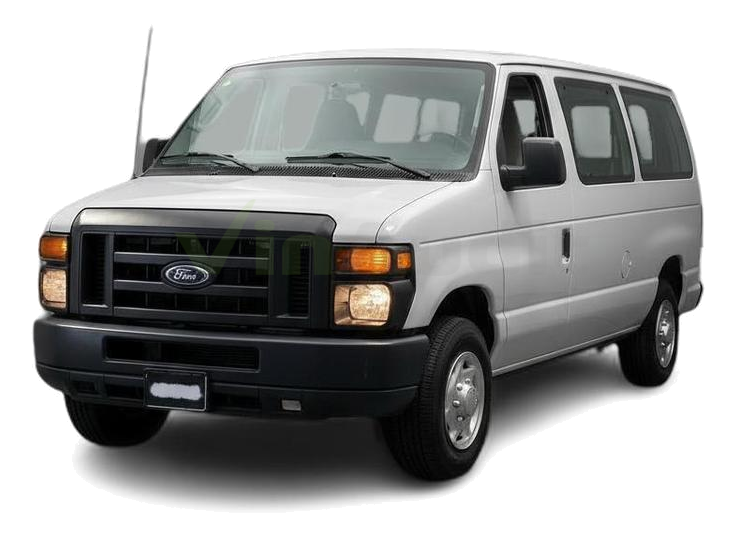
The Good
The 2012 E-Series Wagon offers formidable towing and hauling capabilities, a testament to its robust engineering. Its legendary reliability provides peace of mind, while its cavernous interior ensures ample comfort for all passengers. The practical, no-nonsense design prioritizes function, and for those seeking value, its durability translates to a strong long-term investment, offering both utilitarian prowess and a sense of security.
The Bad
Owners should be aware of potential issues such as aging interior materials, particularly in older models. Fuel economy is a significant drawback compared to modern vehicles. Some may find the ride less refined than contemporary SUVs or minivans, and certain powertrain components might require attention over time. Visibility can also be a concern due to its large size.
2012 Ford E-Series Wagon: Quick Overview
- Engine Options: The 2012 Ford E-Series Wagon typically offered two primary V8 engine options:
- 4.6L Triton V8
- 5.4L Triton V8
- Horsepower:
- The 4.6L V8 produced approximately 225 horsepower.
- The 5.4L V8 offered around 305 horsepower.
- Fuel Economy: As a large, rear-wheel-drive van, fuel economy was not a strong suit. Expect figures in the range of 10-13 MPG city and 14-17 MPG highway, heavily dependent on engine choice, payload, and driving conditions.
- 0-60 Times: Official 0-60 times are rarely published for this class of vehicle, but estimates place them in the 8-10 second range for the more powerful V8 engines, with a full load.
- Towing Capacity: The E-Series Wagon was capable of significant towing. When properly equipped, towing capacities could range from around 7,000 lbs to over 10,000 lbs, making it suitable for heavy trailers.
- Trim-Level Features:
- Wagon (Base): Typically included basic amenities like vinyl flooring, manual windows and locks, a standard audio system, and seating for up to 12 passengers. Focus was on utility and durability.
- XLT: Added features such as cloth seating, upgraded interior trim, cruise control, power windows and locks (on some configurations), and often a better sound system. Optional packages could include enhanced comfort and convenience features.
- General Features Across Trims: Standard features included robust suspension for load-carrying, heavy-duty brakes, and a utilitarian dashboard design. Available options could encompass rear climate control, upgraded infotainment systems, and various seating configurations to maximize passenger or cargo space.
2012 Ford E-Series Wagon Specifications
Vehicle Information
| Year | 2012 |
| Make | Ford |
| Model | E-Series |
| Trim | - |
| Style | 3-Door |
| Type | Minivan |
| Category | Passenger Van |
Manufacturing Details
| Made In | United States |
| Manufacturing City | AVON LAKE |
Dimensions
| Doors | 3-Door |
| Curb Weight | 5757 pounds |
| Gross Vehicle Weight Rating | 8520 pounds |
| Overall Height | 82.10 inches |
| Overall Length | 216.70 inches |
| Overall Width | 79.40 inches |
| Wheelbase Length | 138.00 inches |
| Standard Seating | 8 |
Engine & Performance
| Engine | 4.6L V8 |
| Engine Size | 4.6L |
| Engine Cylinders | 8 |
| Transmission | 4-Speed Automatic |
| Transmission Type | Automatic |
| Transmission Speeds | 4-Speed |
| Drivetrain | Rear-Wheel Drive |
Additional Features
| Anti-Brake System | 4-Wheel ABS |
| Steering Type | Recirculating |
Pricing
| Manufacturer Suggested Retail Price (MSRP) | $28,760 |
| Invoice Price | $26,554 |
| Delivery Charges | $995 |
Vehicle History Report
Specifications
History
Events
History Check
Check
Check
Check
Check
Listings
Recalls
Check
Analysis
What Problems Does the 2012 Ford E-Series Wagon Have?
Another area to watch for is the ignition system, specifically spark plugs and coil packs. Ford's Triton engines have a history of spark plugs breaking off during removal, which can lead to costly repairs if not handled carefully. Similarly, coil pack failures can cause misfires and a loss of power.
The interior components, especially on higher-mileage vehicles, can show signs of wear. This might include dashboard cracks, worn upholstery, and malfunctioning interior lights or climate control components. Suspension components, such as ball joints and tie rods, can also wear out over time due to the vehicle's weight and usage, leading to steering issues or clunking noises.
While specific recalls for the 2012 model year are less prominent compared to some other vehicles, it's always advisable to check the National Highway Traffic Safety Administration (NHTSA) database for any outstanding recalls. General long-term reliability hinges heavily on consistent maintenance. Vehicles that have had regular fluid changes, especially transmission and differential fluids, and have been driven within their payload limits, tend to fare much better. Neglecting maintenance on these robust but demanding vehicles can accelerate wear and lead to more significant problems.
No major model-year specific widespread critical failures are typically attributed solely to the 2012 E-Series Wagon itself, but rather general wear and tear associated with aging vehicles in this robust, utilitarian class. The overall reliability is often praised for its longevity, provided a diligent maintenance schedule is followed.
How long will the 2012 Ford E-Series Wagon last?
What Technology & Safety Features are Included?
Driver-assistance features were minimal. Rear parking sensors might have been available as an option on some higher trims, but advanced systems like rearview cameras, blind-spot monitoring, or adaptive cruise control were not part of the factory offerings. The focus was on the driver's direct control and visibility.
Safety features were more conventional. Standard equipment included front airbags for the driver and front passenger. Anti-lock braking system (ABS) was also standard, providing enhanced stopping power. For passenger safety in the rear, seatbelts were provided for all occupants, but advanced restraint systems were limited. Depending on the configuration, some models might have offered optional side-curtain airbags, particularly for the passenger variants.
Crash-test ratings for the E-Series Wagon are somewhat dated. Given its robust, body-on-frame construction, it generally performed adequately in older testing protocols. However, it's important to note that modern crash-test standards are significantly more stringent, and a vehicle from this era may not achieve the highest ratings by today's benchmarks. The vehicle's sheer mass and construction provide a degree of passive safety, but active safety and advanced electronic aids are largely absent. Optional features were primarily focused on enhancing comfort and utility, such as rear air conditioning, upgraded seating materials, and power accessories for convenience.
What Colors Options are Available?
2012 Ford E-Series Wagon Prices and Market Value
2012 Ford E-Series Wagon Cost of Ownership
2012 Ford E-Series Wagon Fuel Efficiency
2012 Ford E-Series Wagon Safety Rating
NHTSA
IIHS
2012 Ford E-Series Wagon Warranty
Basic
Powertrain
Rust
2012 Ford E-Series Wagon Insurance
reasonable repair costs.
How Does the 2012 Ford E-Series Wagon Compare to Other Minivan?
Feature-wise, the E-Series Wagon was generally more basic. Its interior design and available technology were functional but dated, especially when compared to newer full-size SUVs that offered more advanced infotainment, comfort features, and driver aids. The Express/Savana twins were similarly utilitarian. The main advantage of the E-Series was its sheer interior volume and configurability for both passengers and cargo.
Reliability is where the E-Series Wagon shined for its durability. While specific issues could arise (as detailed in other sections), the underlying chassis and powertrain were built for longevity. The Chevy/GMC twins also have a reputation for toughness, though some owners report more electrical gremlins. Large SUVs generally have strong reliability but can be more complex and expensive to repair.
Price is a major selling point for the E-Series on the used market. It offered significantly more space and utility for the money than a comparable SUV. The Express/Savana twins are often priced similarly.
**Alternatives:**
* 2012 Chevrolet Express/GMC Savana: Very similar in purpose, capability, and general design. Often a direct competitor, offering comparable V8 performance and ruggedness. Consider if you find a better deal or prefer GM's styling.
* Full-size SUVs (e.g., 2012 Chevrolet Suburban/GMC Yukon XL): If passenger comfort and a more refined ride are priorities over maximum cargo space and towing capacity, these are excellent alternatives. They offer more modern interiors but at a higher price point and with less utilitarian flexibility.
* Newer Vans (e.g., 2015+ Ford Transit, Ram ProMaster): If budget allows and you're looking for significantly improved fuel economy, modern technology, and enhanced driving dynamics, newer purpose-built vans are superior, though they come at a much higher cost. For the budget-conscious seeking immense utility, the 2012 E-Series remains a strong contender.
Final Verdict: Is the 2012 Ford E-Series Wagon a Good Minivan?

Simon A
Simon is a contributor to VinCheck, where he provides articles and reviews on various automotive topics. His work focuses on delivering accurate and up-to-date information about used cars, helping readers make informed decisions.