
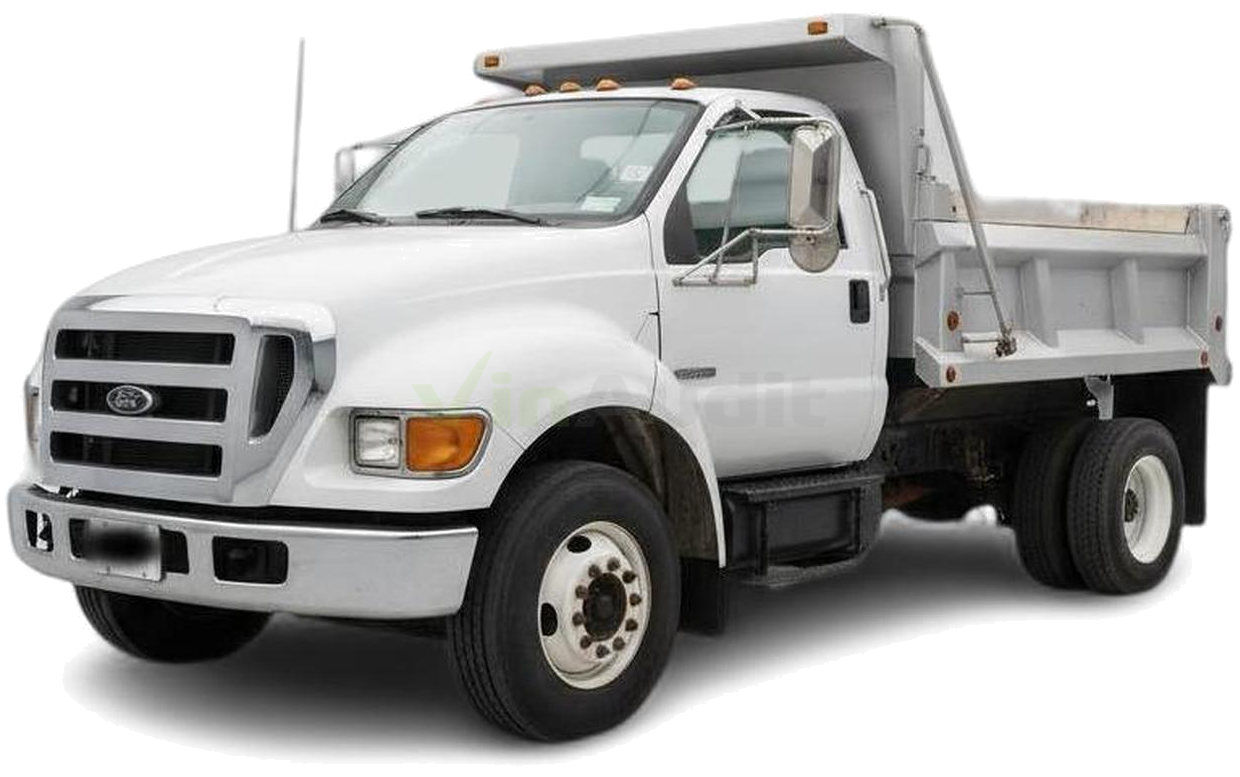
The 2004 Ford F-650 is a robust medium-duty truck, part of a lineage that began in the late 1990s and continued through the 2000s. Primarily offered as a chassis cab or a tractor, it was built to handle demanding commercial applications. Key trims often related to engine and drivetrain configurations rather than traditional passenger vehicle trims. Its popularity stems from its sheer capability, offering a blend of Ford's truck heritage with commercial-grade strength for specialized tasks, from towing heavy loads to serving as a platform for custom vocational bodies.
The Good
The 2004 Ford F-650 excels in raw power and towing prowess, appealing to those needing serious work capability. Its heavy-duty construction translates to impressive durability and longevity. While not built for luxury, its commanding presence and utilitarian design are appreciated by owners who value function over form, offering immense practical value for demanding tasks.
The Bad
Potential weaknesses for the 2004 Ford F-650 include its substantial fuel consumption, which can be a significant operational cost. Ride comfort is generally rudimentary, especially when unloaded. Buyers should also be aware of the potential for higher maintenance and repair costs associated with heavy-duty components and specialized parts.
2004 Ford F-650: Quick Overview
- Engine Options: The 2004 Ford F-650 was available with robust diesel engines, primarily from Cummins and Caterpillar, designed for heavy-duty commercial use.
- Cummins ISB: A common option, typically a 5.9-liter inline-six turbodiesel.
- Caterpillar C7: Another powerful choice, offering higher displacement and torque.
- Cummins ISB: A common option, typically a 5.9-liter inline-six turbodiesel.
- Horsepower: Horsepower ratings varied significantly depending on the specific engine and its configuration, generally ranging from approximately 200 hp to over 300 hp. Torque figures were very high, crucial for towing and hauling.
- Fuel Economy: Fuel economy is not a strong suit of the F-650, given its intended purpose. Owners typically saw figures in the single digits to low double digits (e.g., 8-15 MPG), heavily dependent on load, terrain, and driving style.
- 0-60 Times: 0-60 mph times are largely irrelevant for this class of vehicle and were not a primary performance metric. Acceleration was focused on load-carrying ability rather than speed, so times would be considerably long, likely exceeding 20 seconds even when unladen.
- Towing Capacity: The towing and payload capacities are the F-650's forte. Depending on the configuration, frame, axles, and chosen powertrain, towing capacities could range from 15,000 lbs to well over 50,000 lbs (or even higher with a fifth-wheel or gooseneck hitch), with payload capacities often exceeding 10,000 lbs.
- Trim-Level Features: Unlike consumer trucks, F-650 "trims" were more about vocational packages and configurations. Features were generally utilitarian. Cab styles included Regular Cab and Crew Cab. Standard features often focused on durability and function, such as heavy-duty alternators, batteries, and braking systems. Optional features could include air brakes, upgraded transmissions (e.g., Allison automatics), more powerful HVAC systems, and various auxiliary power take-off (PTO) options for specialized equipment.
2004 Ford F-650 Specifications
Vehicle Information
| Year | 2004 |
| Make | Ford |
| Model | F-650 |
| Trim | - |
| Style | Regular Cab 2WD |
| Type | Truck |
| Category | Medium Truck |
Manufacturing Details
| Made In | Mexico |
| Manufacturing City | - |
Dimensions
| Doors | 4-Door |
| Curb Weight | - |
| Gross Vehicle Weight Rating | - |
| Overall Height | - |
| Overall Length | - |
| Overall Width | - |
| Wheelbase Length | - |
| Standard Seating | - |
Engine & Performance
| Engine | 7.2L L6 DIESEL |
| Engine Size | 7.2L |
| Engine Cylinders | 6 |
| Transmission | Automatic |
| Transmission Type | Automatic |
| Transmission Speeds | - |
| Drivetrain | Rear-Wheel Drive |
Additional Features
| Anti-Brake System | - |
| Steering Type | - |
Pricing
| Manufacturer Suggested Retail Price (MSRP) | - |
| Invoice Price | - |
| Delivery Charges | - |
Vehicle History Report
Vehicle
Specifications
Specifications
Ownership
History
History
All History
Events
Events
NMVTIS Title
History Check
History Check
Salvage/Rebuilt
Check
Check
Accident
Check
Check
Theft
Check
Check
Open Lien
Check
Check
Past Sale
Listings
Listings
Safety
Recalls
Recalls
Odometer
Check
Check
Market Price
Analysis
Analysis
What Problems Does the 2004 Ford F-650 Have?
The 2004 Ford F-650, being a commercial-grade vehicle, is built for longevity but isn't immune to issues, especially as it ages. Frequently reported problems tend to revolve around its heavy-duty powertrain and chassis components. For diesel engines, particularly the Cummins ISB and Caterpillar C7, issues can include injector problems, turbocharger wear, and potential for head gasket failures if overheated or improperly maintained. EGR cooler failures are also not uncommon in diesel applications of this era. On the transmission side, especially with automatic transmissions like the Allison, while generally robust, they can suffer from wear over time, leading to shifting problems or fluid leaks. Drivetrain components such as U-joints, driveshafts, and differentials are subjected to immense stress and may require periodic maintenance or replacement. Electrical gremlins can also surface, often related to wiring harnesses that have been subjected to vibration, moisture, or extreme temperatures over many years. Brake systems, especially if equipped with air brakes, require regular inspection and maintenance to prevent leaks or component failure. Some owners have reported issues with exhaust systems, including rust and leaks, due to the harsh environments these trucks often operate in. Recalls for this specific model year might be limited and often relate to specific component suppliers or safety-critical systems. It's crucial to check for any outstanding recalls with Ford or the relevant component manufacturer. Long-term reliability is heavily dependent on the owner's maintenance regimen. Those that have been meticulously serviced, with regular fluid changes, filter replacements, and proactive checks of wear items, tend to fare much better than those used in demanding commercial operations with minimal upkeep. Wear and tear on suspension components, especially leaf springs and shocks, are expected given the loads they carry. Rust can also be a concern, particularly on the frame and body panels in regions with harsh winters and road salt usage. While the core chassis and engine are built for durability, the associated systems and components can present ongoing maintenance needs as the vehicle accumulates significant mileage.
How long will the 2004 Ford F-650 last?
The 2004 Ford F-650 is engineered for extensive service life. With proper, diligent maintenance, these trucks can routinely surpass 250,000 to 500,000 miles, and even reach over a million miles in some well-maintained commercial fleets. Years of service can easily extend to 15-25 years or more, depending on usage and environmental conditions. Its long-term durability is a testament to its heavy-duty construction. However, weaknesses that emerge over time include increased susceptibility to rust on the frame and body, potential for wear in the transmission and drivetrain components, and the cumulative effects of vibration on electrical systems and hoses. Regular inspections and preventative maintenance are paramount to maximizing its lifespan and mitigating costly repairs.
What Technology & Safety Features are Included?
The 2004 Ford F-650, as a commercial vehicle, prioritizes functionality and durability over cutting-edge technology and creature comforts found in consumer pickups. Built-in tech and entertainment features are typically basic, focusing on essential operations. You'd likely find a simple AM/FM radio, possibly with a CD player, and basic climate controls. Navigation systems or advanced infotainment displays are exceptionally rare, if available at all, even as options. Driver-assistance features in 2004 were rudimentary by today's standards. Some models might have had features like cruise control. Anti-lock braking systems (ABS) were standard or commonly optioned for safety. Advanced driver aids such as lane departure warnings, adaptive cruise control, or automatic emergency braking were not part of the F-650's offerings in this model year. Safety features were primarily focused on passive systems. This includes robust construction with a reinforced frame and cab designed to withstand significant impact. Seatbelts are standard. Airbags for the driver and front passenger were generally available, but their prevalence could depend on the specific configuration and options chosen by the original buyer. The F-650 was not subjected to the same consumer-focused crash-testing protocols (like NHTSA or IIHS) as light-duty trucks. Its safety is more defined by its inherent structural integrity and its capability to perform its intended heavy-duty tasks without compromising stability, rather than by standardized passenger vehicle crash test ratings. Optional features would have been more geared towards vocational needs, such as auxiliary lighting, heavy-duty alternators, power take-off (PTO) provisions, and advanced braking systems like air brakes for severe duty applications.
What Colors Options are Available?
2004 Ford F-650 Prices and Market Value
When new, the 2004 Ford F-650 carried a substantial price tag, often starting in the $60,000 to $80,000 range and quickly escalating well into six figures ($100,000+) with various vocational upfits, powertrains, and options. Its value proposition was in its capability, not its initial cost. On the used market, depreciation is significant but stabilizes for well-maintained examples. Current used prices can range widely from $10,000 to $30,000+, heavily influenced by mileage, condition, engine choice (diesel engines hold value better), and whether it has specialized equipment. Factors affecting resale value include the presence of rust, the condition of the engine and transmission, and the type of previous use (e.g., a former commercial workhorse vs. a personal project vehicle). A well-documented maintenance history is a major plus.
2004 Ford F-650 Cost of Ownership
Owning a 2004 Ford F-650 is decidedly costly. Insurance premiums will be higher than for standard pickups due to its commercial classification and replacement cost. Fuel costs are substantial, with diesel consumption being a major expense given its poor MPG. Maintenance is ongoing and can be expensive, requiring specialized heavy-duty parts and labor. Repairs, when needed, are also pricey due to the complexity and robustness of commercial-grade components. Overall, the F-650 is not an economical vehicle to own; its cost is justified by its unparalleled utility and durability for specific, demanding tasks.
2004 Ford F-650 Fuel Efficiency
Fuel Type
Diesel
Fuel Capacity
-
City Mileage
-
Highway Mileage
-
2004 Ford F-650 Warranty
Basic
Original warranty
0 months / No data
Estimated remaining
Expired
Powertrain
Original warranty
0 months / No data
Estimated remaining
Expired
Rust
Original warranty
0 months / No data
Estimated remaining
Expired
2004 Ford F-650 Insurance
Insurance for a 2004 Ford F-650 is moderately priced, reflecting its status as a Truck with strong safety ratings and
reasonable repair costs.
How Does the 2004 Ford F-650 Compare to Other Truck?
The 2004 Ford F-650 operates in a niche segment of the medium-duty truck market, where its key rivals are primarily other manufacturers producing similar chassis cab or tractor units for commercial applications. Competitors include the Sterling Acterra, Freightliner FL Series, and International (now Navistar) WorkStar or 4000 Series trucks. In terms of performance, the F-650 often competes directly with these rivals, offering comparable diesel engine power and torque capabilities from Cummins, Caterpillar, or potentially International's own DT series. Reliability is generally a strong suit across this class, with all manufacturers building these trucks for demanding, long-term use. However, specific engine and transmission choices within each brand can lead to variations in long-term durability. Features are where the F-650, and its contemporaries, differ significantly from consumer trucks. They are designed for work, so advanced tech and luxury are secondary. Expect basic cabins focused on functionality. Price-wise, new models were comparable, and the used market for all these medium-duty trucks is highly dependent on condition, mileage, and vocational configuration.
Alternatives:
- Freightliner FL Series (e.g., FL60, FL70): Often considered a direct competitor. Freightliner is known for its engineering and robustness. Some may find specific Freightliner models offer a slightly more refined ride or more readily available parts in certain regions.
- International WorkStar/4000 Series: Another strong contender, particularly if looking for International's own engine offerings alongside Cummins. They are built for ruggedness and can often be found in similar vocational configurations.
- Sterling Acterra: While Sterling trucks are less common in the used market now due to brand discontinuation, they were direct competitors offering similar heavy-duty capabilities.
For buyers needing similar heavy-duty capability but perhaps a slightly more refined experience, a highly optioned heavy-duty pickup truck from Ford (F-350/F-450 Super Duty), Ram (2500/3500), or Chevrolet/GMC (2500HD/3500HD) might be considered, though they will not match the F-650's ultimate towing and payload capacities for commercial ratings. However, for true medium-duty needs, the F-650 and its direct competitors remain the appropriate choice.
Alternatives:
- Freightliner FL Series (e.g., FL60, FL70): Often considered a direct competitor. Freightliner is known for its engineering and robustness. Some may find specific Freightliner models offer a slightly more refined ride or more readily available parts in certain regions.
- International WorkStar/4000 Series: Another strong contender, particularly if looking for International's own engine offerings alongside Cummins. They are built for ruggedness and can often be found in similar vocational configurations.
- Sterling Acterra: While Sterling trucks are less common in the used market now due to brand discontinuation, they were direct competitors offering similar heavy-duty capabilities.
For buyers needing similar heavy-duty capability but perhaps a slightly more refined experience, a highly optioned heavy-duty pickup truck from Ford (F-350/F-450 Super Duty), Ram (2500/3500), or Chevrolet/GMC (2500HD/3500HD) might be considered, though they will not match the F-650's ultimate towing and payload capacities for commercial ratings. However, for true medium-duty needs, the F-650 and its direct competitors remain the appropriate choice.
Final Verdict: Is the 2004 Ford F-650 a Good Truck?
The 2004 Ford F-650 is ideal for individuals or businesses requiring extreme towing, hauling, or specialized vocational capabilities that exceed that of a typical heavy-duty pickup truck. This includes RV conversion enthusiasts, heavy equipment transport operators, or those needing a platform for unique custom builds. It is worth buying primarily in the used market, provided it has been meticulously maintained and has a documented service history. New purchases are generally only feasible for fleets with specific, long-term commercial needs. Buyers should be prepared for higher operating costs (fuel, maintenance) and a utilitarian driving experience. Focus on models with reliable diesel engines (Cummins) and well-maintained transmissions. It is not suitable for daily commuting or those seeking comfort and fuel efficiency.
