
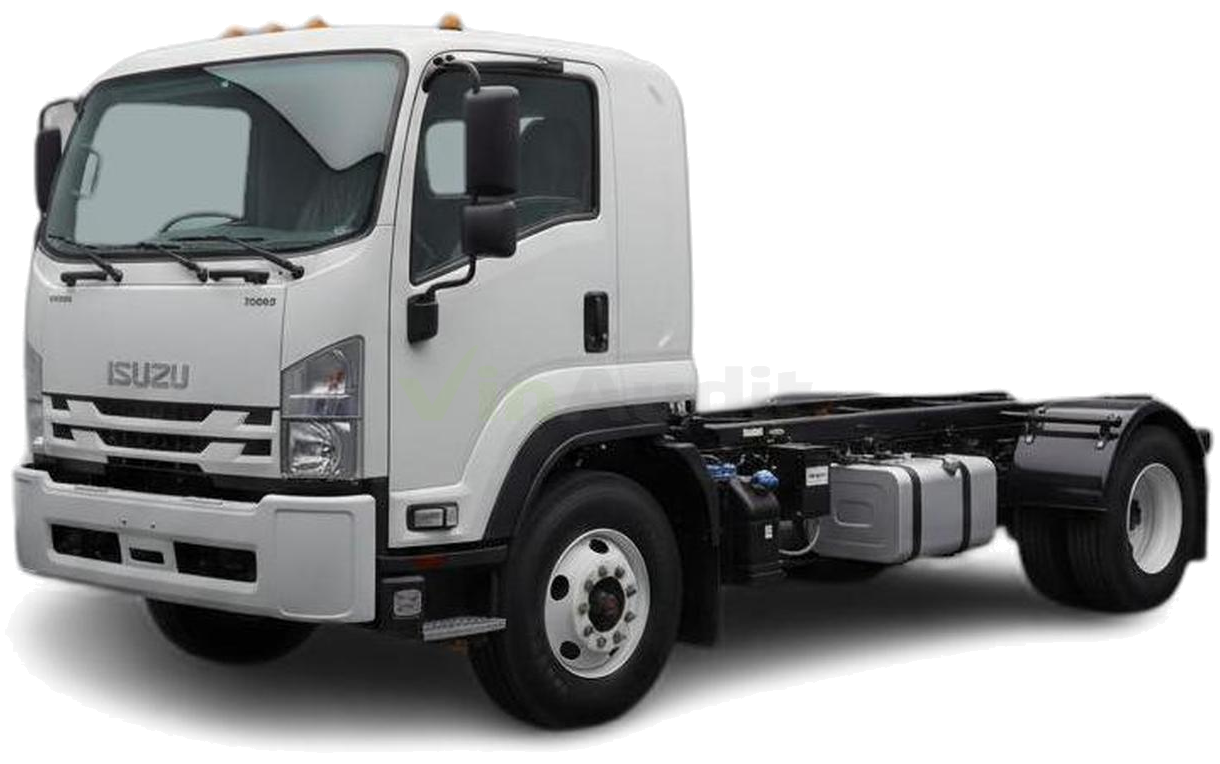
The 2023 Isuzu FTR is a medium-duty commercial truck, part of Isuzu's long-standing tradition of robust and reliable vehicles. Available primarily as a chassis cab, it allows for extensive customization to suit various vocational needs. While specific trims are less about luxury and more about function, the FTR generally ranges from the mid-$50,000s upwards, depending on configuration. Its popularity stems from its exceptional maneuverability, durable construction, and straightforward, efficient operation, making it a workhorse for businesses.
The Good
The 2023 Isuzu FTR excels in raw performance and unwavering reliability, offering a comfortable, no-nonsense cabin that translates into practical daily operation. Its efficient design and strong value proposition appeal to both the pragmatic need for a dependable work tool and the emotional peace of mind that comes with a robust investment.
The Bad
While generally robust, potential buyers should be aware that the 2023 Isuzu FTR's interior and technology features are more utilitarian than luxurious, which might be a drawback for drivers prioritizing advanced infotainment or premium cabin materials. Its design prioritizes function over flashy aesthetics.
2023 Isuzu FTR: Quick Overview
- Engine Options: The 2023 Isuzu FTR is powered by a single, well-regarded engine option: the Isuzu 4HK1-TC 5.2L turbocharged diesel engine.
- Horsepower: This engine produces 215 horsepower.
- Torque: It delivers a substantial 452 lb-ft of torque, crucial for hauling and towing.
- Fuel Economy: Specific MPG figures are not typically released for commercial trucks like the FTR, as they vary greatly depending on load, driving conditions, and body configuration. However, its diesel engine is designed for excellent fuel efficiency in its class.
- 0-60 Times: 0-60 mph times are not a standard metric for commercial trucks and are highly dependent on chassis configuration, load, and driving conditions. The focus is on functional acceleration for commercial use.
- Towing Capacity: While the FTR is primarily designed for hauling cargo in its truck bed, its Gross Vehicle Weight Rating (GVWR) ranges from 20,500 to 37,000 pounds, depending on the specific configuration. This allows for significant payload capacity rather than traditional towing in the sense of a trailer hitch. The chassis is built to handle substantial weight.
- Trim-Level Features: The Isuzu FTR is not offered in distinct luxury trims like passenger vehicles. Instead, it's a highly configurable chassis cab. Key standard features focus on functionality and durability:
- Power windows and door locks
- Air conditioning
- Tilt and telescopic steering wheel
- A comfortable, durable interior designed for long hours of operation
- Standard backup alarm
- Halogen headlights
- ABS (Anti-lock Braking System)
- Durable vinyl or cloth seating
- Basic audio system (AM/FM radio, auxiliary input)
2023 Isuzu FTR Specifications
Vehicle Information
| Year | 2023 |
| Make | Isuzu |
| Model | FTR |
| Trim | - |
| Style | - |
| Type | Truck |
| Category | Heavy Truck |
Manufacturing Details
| Made In | United States |
| Manufacturing City | CHARLOTTE |
Dimensions
| Doors | - |
| Curb Weight | - |
| Gross Vehicle Weight Rating | 26000 pounds |
| Overall Height | - |
| Overall Length | - |
| Overall Width | - |
| Wheelbase Length | - |
| Standard Seating | - |
Engine & Performance
| Engine | 6.7L V8 |
| Engine Size | 6.7L |
| Engine Cylinders | 8 |
| Transmission | - |
| Transmission Type | - |
| Transmission Speeds | - |
| Drivetrain | Rear-Wheel Drive |
Additional Features
| Anti-Brake System | - |
| Steering Type | - |
Pricing
| Manufacturer Suggested Retail Price (MSRP) | - |
| Invoice Price | - |
| Delivery Charges | - |
Vehicle History Report
Vehicle
Specifications
Specifications
Ownership
History
History
All History
Events
Events
NMVTIS Title
History Check
History Check
Salvage/Rebuilt
Check
Check
Accident
Check
Check
Theft
Check
Check
Open Lien
Check
Check
Past Sale
Listings
Listings
Safety
Recalls
Recalls
Odometer
Check
Check
Market Price
Analysis
Analysis
What Problems Does the 2023 Isuzu FTR Have?
The 2023 Isuzu FTR is generally regarded as a very reliable commercial vehicle, benefiting from Isuzu's long history in building dependable trucks. However, as with any vehicle, there can be isolated issues or areas that owners should be aware of. One area sometimes mentioned in the context of medium-duty trucks, including previous model years of the FTR, relates to the Diesel Particulate Filter (DPF) system. These systems are crucial for emissions control but can sometimes require specific maintenance or encounter regeneration issues if the truck is frequently used for short, low-speed trips where the DPF doesn't reach optimal operating temperatures to clean itself. This can lead to warning lights or reduced performance.
Another consideration for diesel engines in general, and which could potentially affect the FTR, is the Electronic Control Unit (ECU) or associated sensors. While not widespread, failures in these components can impact engine performance and diagnostics. Owners should ensure they follow recommended maintenance schedules diligently, including using the correct diesel fuel and adhering to fluid change intervals, to prevent potential issues.
Recalls for commercial vehicles are typically safety-related. While specific major recalls impacting the 2023 FTR model year in significant numbers are not broadly reported as of its release, it is always prudent for owners to check with Isuzu dealerships or official recall databases for any issued campaigns related to their specific VIN. The FTR has been in production for several years prior to 2023, and any recurring issues from earlier models would likely have been addressed in subsequent designs or production improvements. The overall consensus and reviews for Isuzu commercial trucks point towards robust engineering and longevity, with most problems being minor and manageable through proper upkeep and timely repairs. Long-term reliability is a strong suit for the FTR, making it a popular choice for businesses that depend on their fleet's uptime.
Another consideration for diesel engines in general, and which could potentially affect the FTR, is the Electronic Control Unit (ECU) or associated sensors. While not widespread, failures in these components can impact engine performance and diagnostics. Owners should ensure they follow recommended maintenance schedules diligently, including using the correct diesel fuel and adhering to fluid change intervals, to prevent potential issues.
Recalls for commercial vehicles are typically safety-related. While specific major recalls impacting the 2023 FTR model year in significant numbers are not broadly reported as of its release, it is always prudent for owners to check with Isuzu dealerships or official recall databases for any issued campaigns related to their specific VIN. The FTR has been in production for several years prior to 2023, and any recurring issues from earlier models would likely have been addressed in subsequent designs or production improvements. The overall consensus and reviews for Isuzu commercial trucks point towards robust engineering and longevity, with most problems being minor and manageable through proper upkeep and timely repairs. Long-term reliability is a strong suit for the FTR, making it a popular choice for businesses that depend on their fleet's uptime.
How long will the 2023 Isuzu FTR last?
Based on the reputation of Isuzu commercial vehicles and owner data for similar trucks, the 2023 Isuzu FTR can be expected to deliver a long service life, often exceeding 10 years and well over 200,000 miles, with diligent maintenance. Many fleet owners report getting significantly more mileage, with some units reaching 300,000 to 500,000 miles before major overhauls. The inherent durability of the Isuzu diesel engine and robust chassis are key factors. Weaknesses over time, if maintenance is neglected, might involve components subject to wear like suspension parts, brakes, and potentially exhaust after-treatment systems (DPF), especially under demanding usage patterns. However, the core powertrain and frame are known for their resilience, highlighting exceptional long-term durability when properly cared for.
What Technology & Safety Features are Included?
The 2023 Isuzu FTR prioritizes functionality and safety over cutting-edge consumer tech. Its built-in features are designed for the demands of commercial operation. Standard technology includes a basic AM/FM radio with an auxiliary input for portable music devices, and a digital display for vehicle information. Power windows and door locks are standard, enhancing driver convenience. The focus is on essential controls and information delivery.
In terms of driver-assistance and safety, the FTR comes equipped with standard anti-lock brakes (ABS) to help maintain steering control during emergency stops. It also includes a standard backup alarm, which is crucial for alerting pedestrians and other vehicles when the truck is reversing in busy environments. Halogen headlights provide adequate illumination for nighttime driving. While advanced driver-assistance systems (ADAS) like adaptive cruise control or lane-keeping assist are not typically offered on the FTR, its design emphasizes visibility and straightforward operation.
Optional features are generally geared towards vocational needs and operational efficiency. These can include telematics systems for fleet management, GPS tracking, and various communication devices. Depending on the specific body upfit, additional safety lighting or cameras might be integrated.
Crash-test ratings for commercial trucks like the Isuzu FTR are not typically conducted by organizations like the NHTSA or IIHS in the same manner as passenger vehicles. Instead, the vehicle's safety is evaluated based on its robust construction, adherence to commercial vehicle safety standards, and features like the strong frame, braking system, and mandated safety equipment. The design prioritizes occupant protection through its sturdy build and operational safety through features like the backup alarm and ABS. Isuzu builds these trucks with durability and protection as core engineering principles.
In terms of driver-assistance and safety, the FTR comes equipped with standard anti-lock brakes (ABS) to help maintain steering control during emergency stops. It also includes a standard backup alarm, which is crucial for alerting pedestrians and other vehicles when the truck is reversing in busy environments. Halogen headlights provide adequate illumination for nighttime driving. While advanced driver-assistance systems (ADAS) like adaptive cruise control or lane-keeping assist are not typically offered on the FTR, its design emphasizes visibility and straightforward operation.
Optional features are generally geared towards vocational needs and operational efficiency. These can include telematics systems for fleet management, GPS tracking, and various communication devices. Depending on the specific body upfit, additional safety lighting or cameras might be integrated.
Crash-test ratings for commercial trucks like the Isuzu FTR are not typically conducted by organizations like the NHTSA or IIHS in the same manner as passenger vehicles. Instead, the vehicle's safety is evaluated based on its robust construction, adherence to commercial vehicle safety standards, and features like the strong frame, braking system, and mandated safety equipment. The design prioritizes occupant protection through its sturdy build and operational safety through features like the backup alarm and ABS. Isuzu builds these trucks with durability and protection as core engineering principles.
What Colors Options are Available?
2023 Isuzu FTR Prices and Market Value
When new, the 2023 Isuzu FTR typically started in the mid-$50,000s for base configurations, with prices escalating significantly based on the chosen body style, wheelbase, and any specialized equipment. Used market prices for a 2023 Isuzu FTR can vary widely but generally fall within a range of $40,000 to $60,000 or more, depending heavily on mileage, condition, and the specific upfit. Depreciation for commercial trucks like the FTR tends to be more gradual than for passenger cars, especially for well-maintained vehicles with lower mileage. Key factors affecting resale value include the truck's mechanical condition, the overall wear and tear from its previous use (e.g., construction vs. delivery), the remaining service life of key components, and the demand for specific body types in the used market. A truck with a desirable and well-kept body (like a clean box truck or flatbed) will command a higher price.
2023 Isuzu FTR Cost of Ownership
Owning a 2023 Isuzu FTR presents a mixed bag regarding costs. Insurance premiums can be substantial due to its commercial nature and value. Fuel costs, while generally economical for a diesel of its size, will be a significant ongoing expense, influenced by mileage and diesel prices. Maintenance, though critical for longevity, involves routine oil changes, filter replacements, and potential DPF servicing, which can add up. Repair costs for specialized diesel components can be higher than for gasoline engines. Overall, while the upfront purchase might be considerable, the FTR is considered relatively economical to own long-term due to its reliability and fuel efficiency compared to larger trucks, making it a cost-effective workhorse for businesses when managed properly.
2023 Isuzu FTR Fuel Efficiency
Fuel Type
Diesel
Fuel Capacity
-
City Mileage
-
Highway Mileage
-
2023 Isuzu FTR Warranty
Basic
Original warranty
0 months / No data
Estimated remaining
Expired
Powertrain
Original warranty
0 months / No data
Estimated remaining
Expired
Rust
Original warranty
0 months / No data
Estimated remaining
Expired
2023 Isuzu FTR Insurance
Insurance for a 2023 Isuzu FTR is moderately priced, reflecting its status as a Truck with strong safety ratings and
reasonable repair costs.
How Does the 2023 Isuzu FTR Compare to Other Truck?
The 2023 Isuzu FTR competes in the competitive medium-duty truck segment, primarily against rivals like the Freightliner M2 106, Hino 155/195, and Chevrolet Silverado 4500HD/5500HD.
Performance: The FTR's 5.2L diesel engine with 215 hp and 452 lb-ft of torque offers robust performance for its class, particularly strong in torque for hauling. Freightliner's M2 106 offers more engine choices, including powerful diesel options, potentially giving it an edge in sheer power depending on configuration. Hino's offerings are also competitive, often praised for smooth power delivery. Chevrolet's chassis cab options provide strong performance with their Duramax diesel engines.
Features: The FTR leans towards essential functionality. Its interior is durable and practical but lacks the advanced infotainment or luxury appointments found in some competitor cabins, especially higher-trim Freightliners or newer Hino models which might offer more integrated tech. Safety features are standard and robust across the board, with ABS and backup alarms being common.
Reliability: Isuzu has a long-standing reputation for exceptional reliability, and the FTR is a testament to this, often praised for its durability and low cost of ownership over the long haul. Hino also has a strong reliability record. Freightliner, while a dominant player, can have more complex systems that might require more specialized maintenance. Chevrolet's medium-duty trucks are generally reliable but may not always match the sheer longevity statistics of Isuzu or Hino in fleet operations.
Price: The Isuzu FTR is typically positioned competitively, offering strong value for its reliability and build quality. Competitors like the Freightliner M2 106 can often be more expensive, especially with higher-spec engines and options. Hino and Chevrolet models can offer comparable pricing, making it a crucial decision based on specific needs and dealer support.
Recommendations: For buyers prioritizing absolute reliability, low maintenance costs, and excellent fuel efficiency in a workhorse chassis, the 2023 Isuzu FTR remains a top contender, potentially superior to others. If maximum power, extensive technological features, or a more refined cabin are paramount, a Freightliner M2 106 might be a better fit, albeit likely at a higher price point. Hino offers a strong alternative with a balance of performance and reliability. Chevrolet provides a domestic option that can be appealing for established service networks.
Performance: The FTR's 5.2L diesel engine with 215 hp and 452 lb-ft of torque offers robust performance for its class, particularly strong in torque for hauling. Freightliner's M2 106 offers more engine choices, including powerful diesel options, potentially giving it an edge in sheer power depending on configuration. Hino's offerings are also competitive, often praised for smooth power delivery. Chevrolet's chassis cab options provide strong performance with their Duramax diesel engines.
Features: The FTR leans towards essential functionality. Its interior is durable and practical but lacks the advanced infotainment or luxury appointments found in some competitor cabins, especially higher-trim Freightliners or newer Hino models which might offer more integrated tech. Safety features are standard and robust across the board, with ABS and backup alarms being common.
Reliability: Isuzu has a long-standing reputation for exceptional reliability, and the FTR is a testament to this, often praised for its durability and low cost of ownership over the long haul. Hino also has a strong reliability record. Freightliner, while a dominant player, can have more complex systems that might require more specialized maintenance. Chevrolet's medium-duty trucks are generally reliable but may not always match the sheer longevity statistics of Isuzu or Hino in fleet operations.
Price: The Isuzu FTR is typically positioned competitively, offering strong value for its reliability and build quality. Competitors like the Freightliner M2 106 can often be more expensive, especially with higher-spec engines and options. Hino and Chevrolet models can offer comparable pricing, making it a crucial decision based on specific needs and dealer support.
Recommendations: For buyers prioritizing absolute reliability, low maintenance costs, and excellent fuel efficiency in a workhorse chassis, the 2023 Isuzu FTR remains a top contender, potentially superior to others. If maximum power, extensive technological features, or a more refined cabin are paramount, a Freightliner M2 106 might be a better fit, albeit likely at a higher price point. Hino offers a strong alternative with a balance of performance and reliability. Chevrolet provides a domestic option that can be appealing for established service networks.
Final Verdict: Is the 2023 Isuzu FTR a Good Truck?
The 2023 Isuzu FTR is ideal for small to medium-sized businesses and fleet operators who demand unwavering reliability, exceptional durability, and cost-effective operation from their medium-duty trucks. It is particularly well-suited for vocational applications like delivery services, utility work, or as a chassis for specialized body upfits where uptime is critical.
It is definitely worth buying for those who prioritize a proven track record of longevity and low maintenance costs over luxury features or cutting-edge technology. The FTR offers strong value, especially when considering its long-term ownership proposition. Buying new offers the latest configurations and warranty, but a well-maintained used FTR can present an even more compelling value proposition for budget-conscious buyers. Specific trims are less relevant than the chosen body upfit, so focusing on a configuration that perfectly matches the intended commercial use is key. It's a pragmatic, no-nonsense tool built for work.