
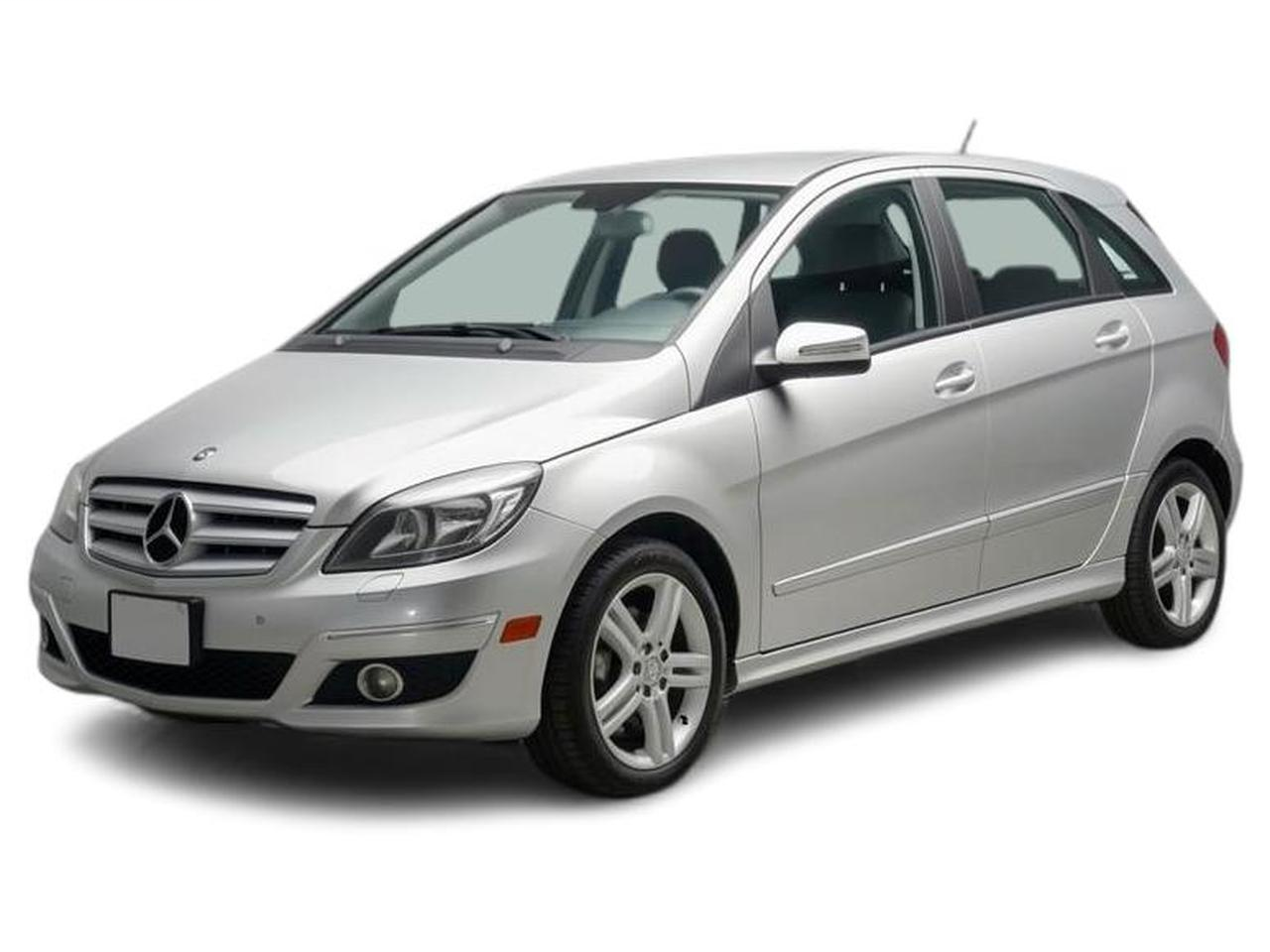
The 2011 Mercedes-Benz B-Class is a compact luxury multi-purpose vehicle (MPV), produced from 2005 to 2019 across two generations. For 2011, it represented the first generation. It featured a distinctive tall hatchback/MPV body style, offering surprising interior space. Key trims often included variations like the B180, B200, and B250, with pricing when new placing it above mainstream compacts but below other Mercedes-Benz sedans. Its popularity stemmed from its practical yet premium offering, combining Mercedes-Benz refinement with enhanced versatility.
The Good
The 2011 B-Class offers a comfortable ride, spacious interior for its size, and the prestige of a Mercedes-Benz badge. Practical buyers appreciate its versatility and efficiency, while emotional buyers are drawn to its premium feel and sophisticated design.
The Bad
Potential owners should be aware of the 2011 B-Class's relatively modest engine power for some trims, the potential for higher maintenance costs compared to non-premium brands, and some reports of electrical gremlins.
2011 Mercedes-Benz B-Class: Quick Overview
- Engine Options: The 2011 Mercedes-Benz B-Class was offered with a range of gasoline and diesel engines, primarily inline-four cylinder units. Common gasoline engines included a 1.5L and a 1.7L. Diesel options typically featured 2.0L powertrains.
- Horsepower: Depending on the specific engine and market, horsepower figures varied. For instance, the B180 models often had around 115-122 horsepower, while B200 models could produce approximately 135-140 horsepower. The B250, if available in a specific market for 2011, would have offered more power.
- Fuel Economy: Fuel economy was generally a strong point, especially with the diesel variants. Gasoline models could achieve combined MPG figures in the range of 25-30 MPG, while diesel variants could often exceed 40 MPG combined, making them quite economical for a premium vehicle.
- 0-60 Times: Acceleration was not the primary focus for the B-Class. 0-60 mph times typically ranged from around 10 to 12 seconds, depending heavily on the engine choice and transmission.
- Towing Capacity: The 2011 Mercedes-Benz B-Class was not designed for towing and generally has a very low or no stated towing capacity.
- Trim-Level Features: Standard features across trims often included power windows and mirrors, air conditioning, a basic audio system, and ABS. Higher trims or optional packages could add features like alloy wheels, a more advanced infotainment system, leather upholstery, automatic climate control, cruise control, and parking sensors. Safety features like multiple airbags and stability control were also standard.
2011 Mercedes-Benz B-Class Specifications
Vehicle Information
| Year | 2011 |
| Make | Mercedes-Benz |
| Model | B-Class |
| Trim | - |
| Style | B 200 Hatchback FWD 5MT 1.7L I4 |
| Type | Hatchback |
| Category | passenger |
Manufacturing Details
| Made In | - |
| Manufacturing City | - |
Dimensions
| Doors | 5-Door |
| Curb Weight | 2900 pounds |
| Gross Vehicle Weight Rating | - |
| Overall Height | 58.5 inches |
| Overall Length | 169.5 inches |
| Overall Width | 69.3 inches |
| Wheelbase Length | 102.6 inches |
| Standard Seating | 5 |
Engine & Performance
| Engine | 1.7L I4 |
| Engine Size | 1.7L |
| Engine Cylinders | 4 |
| Transmission | 5-Speed Manual |
| Transmission Type | Manual |
| Transmission Speeds | 5-Speed |
| Drivetrain | Front-Wheel Drive |
Additional Features
| Anti-Brake System | 4-Wheel ABS |
| Steering Type | Rack & Pinion |
Pricing
| Manufacturer Suggested Retail Price (MSRP) | $28,000 |
| Invoice Price | $26,000 |
| Delivery Charges | $850 |
Vehicle History Report
Vehicle
Specifications
Specifications
Ownership
History
History
All History
Events
Events
NMVTIS Title
History Check
History Check
Salvage/Rebuilt
Check
Check
Accident
Check
Check
Theft
Check
Check
Open Lien
Check
Check
Past Sale
Listings
Listings
Safety
Recalls
Recalls
Odometer
Check
Check
Market Price
Analysis
Analysis
What Problems Does the 2011 Mercedes-Benz B-Class Have?
While the 2011 Mercedes-Benz B-Class generally aimed for premium reliability, several issues have been noted by owners and mechanics. A common concern across various model years of the first generation B-Class, including 2011, relates to the transmission, particularly the automatic transmission, which can sometimes exhibit rough shifting or failure to engage gears. Another area that can require attention is the electronic systems; owners have reported issues with the infotainment system, power windows, and various sensors leading to warning lights. The suspension components, especially bushings and shock absorbers, can wear over time due to the vehicle's taller stance and focus on comfort. Electrical issues, such as problems with the alternator or battery drain, have also been documented. While specific recalls for the 2011 model year can vary by region, it's crucial for potential buyers to check for any outstanding recalls. Long-term reliability can be impacted by the cost of maintenance and repair, as parts for Mercedes-Benz vehicles are typically more expensive than those for mainstream brands. Diesel models, while often more fuel-efficient, can also present more complex and costly repairs if maintenance intervals are not strictly adhered to, particularly concerning the fuel injection system and emissions components.
How long will the 2011 Mercedes-Benz B-Class last?
With diligent maintenance, the 2011 Mercedes-Benz B-Class can reasonably achieve 150,000 to 200,000 miles or more. Owner data suggests that those who follow the recommended service schedule, use quality parts, and address minor issues promptly tend to experience greater longevity. The long-term durability is generally good, benefiting from Mercedes-Benz's engineering, particularly in the powertrain and chassis. However, weaknesses can emerge over time, including wear on suspension components, potential transmission issues if not serviced, and aging electrical connectors or modules. Regular fluid changes, especially for the transmission and brake systems, are critical for extending the vehicle's service life and avoiding costly repairs.
What Technology & Safety Features are Included?
The 2011 Mercedes-Benz B-Class offered a respectable suite of technology and safety features for its era, blending convenience with premium appeal. Standard entertainment typically included an AM/FM/CD stereo system with auxiliary input, power windows, and power mirrors. Optional upgrades could enhance the audio experience with more speakers or a more advanced head unit. Connectivity was relatively basic by today's standards, often lacking Bluetooth streaming or extensive smartphone integration in base models, though this could be an option on higher trims. Driver-assistance features were more focused on the fundamentals, with options like cruise control and parking sensors available. Safety was a key Mercedes-Benz focus, with the 2011 B-Class equipped with standard front, side, and curtain airbags, anti-lock brakes (ABS), and electronic stability control (ESC). ISOFIX child seat anchors were also a given. While specific crash-test ratings from organizations like the NHTSA or IIHS for the 2011 B-Class can vary by region and availability, Mercedes-Benz vehicles historically perform well in safety evaluations, benefiting from robust construction and advanced safety systems. Optional safety features might have included features like a tire pressure monitoring system. The overall tech offering aimed to provide a comfortable and secure driving environment, reflecting the brand's commitment to safety and refinement, even in its more compact offerings.
What Colors Options are Available?
2011 Mercedes-Benz B-Class Prices and Market Value
When new, the 2011 Mercedes-Benz B-Class was positioned as a premium compact, with prices typically starting in the mid-$20,000 range and climbing into the $30,000s for higher trims or with optional packages. As with most luxury vehicles, it experienced significant depreciation in its initial years. Currently, used market prices for a 2011 B-Class can range widely, from around $4,000 to $9,000, heavily dependent on mileage, condition, trim level, and geographic location. Factors affecting resale value include the vehicle's maintenance history, the presence of desirable options, overall condition, and the desirability of the specific engine and transmission combination. Well-maintained examples with lower mileage will command higher prices, while those with extensive use or known issues will depreciate more rapidly.
2011 Mercedes-Benz B-Class Cost of Ownership
Owning a 2011 Mercedes-Benz B-Class can be more costly than a comparable non-premium vehicle. Insurance premiums are typically higher due to the brand name and parts costs. Fuel costs are moderate to good, especially with diesel engines, but premium gasoline might be recommended for some variants. Maintenance and repair costs are generally the most significant factor; expect higher labor rates and more expensive parts. Regular, scheduled maintenance is crucial to avoid costly repairs. Overall, while it offers a premium experience, the 2011 B-Class is considered a moderately costly vehicle to own long-term due to its premium nature and associated maintenance expenses.
2011 Mercedes-Benz B-Class Fuel Efficiency
Fuel Type
Gasoline
Fuel Capacity
13.2 gallons
City Mileage
24 miles/gallon
Highway Mileage
32 miles/gallon
2011 Mercedes-Benz B-Class Insurance
Insurance for a 2011 Mercedes-Benz B-Class is moderately priced, reflecting its status as a Hatchback with strong safety ratings and
reasonable repair costs.
reasonable repair costs.
How Does the 2011 Mercedes-Benz B-Class Compare to Other Hatchback?
The 2011 Mercedes-Benz B-Class competed in a niche segment of compact premium MPVs or tall hatchbacks. Key rivals would include vehicles like the BMW 1 Series (hatchback variants, if available), Audi A3, and potentially higher-spec models from mainstream brands such as the Volkswagen Golf.
In terms of performance, the B-Class was generally outpaced by sportier rivals like the BMW 1 Series. Its focus was more on comfortable cruising than spirited driving. The Audi A3 offered a more refined and engaging driving experience.
Regarding features, the B-Class provided a premium interior feel and Mercedes-Benz refinement, but its technology suite, especially in base trims, might have lagged behind some competitors which offered more standard infotainment and connectivity options. The Audi A3 often had a more sophisticated interior design and advanced optional features.
In reliability, Mercedes-Benz generally has a good reputation, but the B-Class, particularly first-generation models, could face some of the same electrical and transmission gremlins as other premium European cars, potentially making them less reliable than some mainstream Japanese or American counterparts. The VW Golf, known for its solid engineering, often offered better long-term reliability and lower maintenance costs.
Concerning price, the B-Class was typically priced at a premium compared to mainstream hatchbacks like the Golf. When considering used values, the B-Class depreciated significantly, making it more accessible.
Alternatives: For a similar blend of practicality and premium feel, the Audi A3 (especially later models) is a strong contender, offering better driving dynamics and a more upscale interior. The Volkswagen Golf, while not a premium brand, offers excellent practicality, solid build quality, and often better reliability and lower running costs. If performance is a priority, a BMW 1 Series hatchback would be a more engaging choice. For those seeking maximum practicality with a premium badge, the B-Class is unique, but alternatives like the BMW 2 Series Active Tourer (newer generation) or even a compact premium SUV might offer similar space with more modern features.
Final Verdict: Is the 2011 Mercedes-Benz B-Class a Good Hatchback?
The 2011 Mercedes-Benz B-Class is ideal for buyers seeking a practical, versatile compact vehicle with the prestige and comfort of a Mercedes-Benz, particularly those who value interior space and a refined ride over outright performance. It's a reasonable purchase on the used market for individuals or small families prioritizing a premium badge on a budget. However, it's crucial to buy a well-maintained example, preferably with a complete service history. Used models are significantly more appealing than their original new prices due to depreciation. Specific trims with the more fuel-efficient diesel engines are often a good bet for lower running costs. It's less suitable for those on a tight maintenance budget or who expect cutting-edge technology and performance. Thorough pre-purchase inspection is highly recommended.

Jovan
Jovan specializes in interpreting vehicle records and making sense of VIN data. With over 10 years of experience in the automotive data industry, his work ensures that every report is clear, accurate, and useful for car buyers.