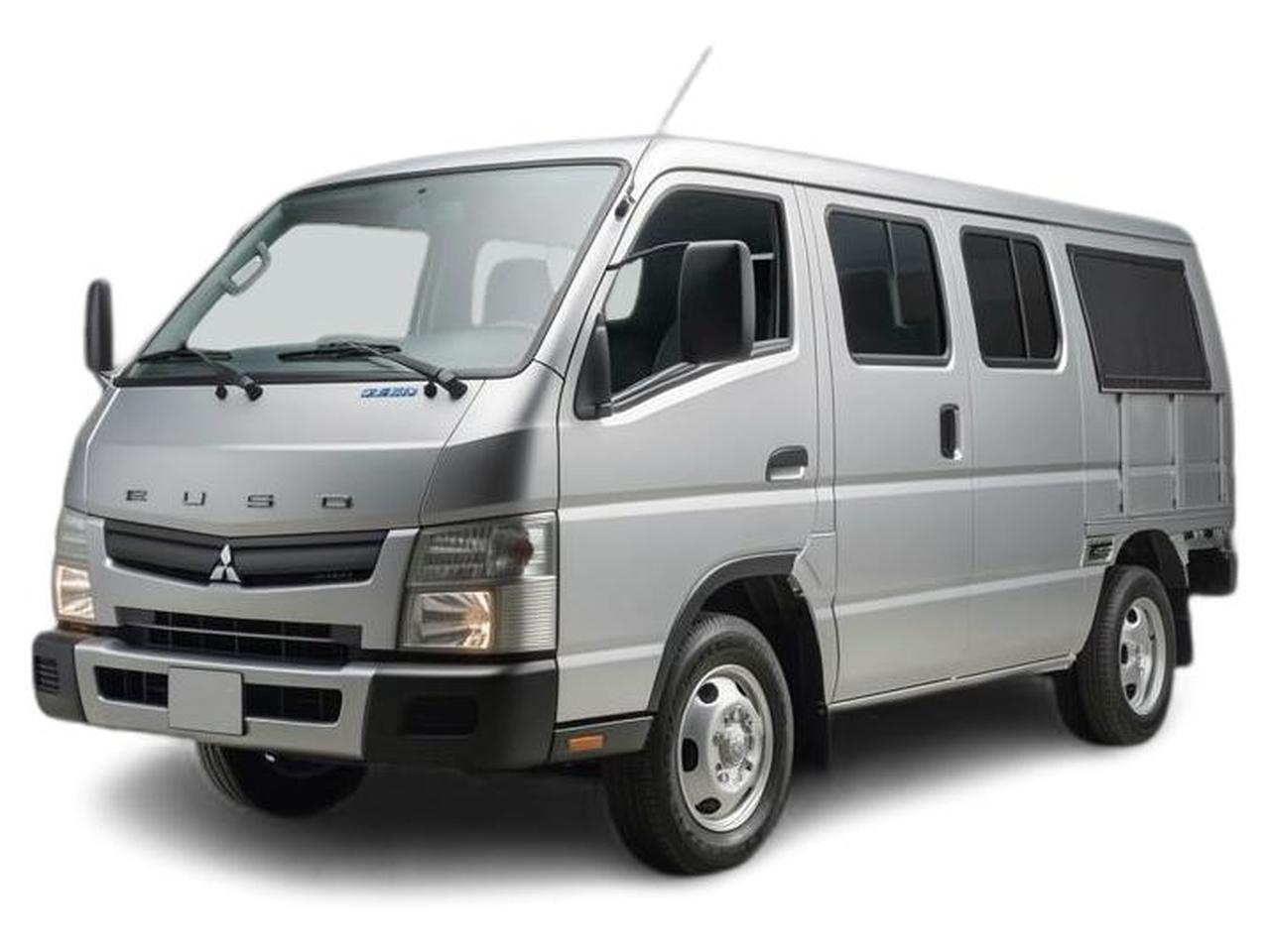
The 2017 Mitsubishi Fuso is a commercial light-duty truck, part of a long lineage of reliable work vehicles. Available in various body styles including chassis cab and cutaway, it's designed for vocational use. Popular trims often include variations like the FE130, FE160, and FG140, catering to different payload needs. While precise new pricing varies widely based on configuration and options, it historically offers competitive value in its segment, making it a popular choice for small businesses and fleet operators seeking dependable transportation for diverse tasks.
The Good
The 2017 Mitsubishi Fuso boasts impressive reliability and a reputation for durability, appealing to practical buyers focused on low operating costs. Its straightforward, functional design prioritizes ease of use and service. For those seeking peace of mind and a vehicle that consistently performs its duty, the Fuso offers substantial value and dependable service.
The Bad
Owners sometimes report that the 2017 Mitsubishi Fuso's interior can feel basic and lacking in modern amenities compared to some competitors. Additionally, while generally reliable, some specific powertrain or electrical components might require attention over time, necessitating regular maintenance.
2017 Mitsubishi Fuso: Quick Overview
- Engine Options: The 2017 Mitsubishi Fuso primarily featured a 3.0-liter, four-cylinder turbodiesel engine.
- Horsepower: This diesel engine typically produced around 161 horsepower.
- Torque: Torque figures generally hovered around 295 lb-ft, providing ample pulling power for its class.
- Fuel Economy: Official EPA estimates for fuel economy are not readily available for commercial vehicles like the Fuso in the same way as passenger cars. However, owners generally report good efficiency for a diesel truck, often in the range of 15-20 MPG depending on load and driving conditions.
- 0-60 Times: 0-60 mph acceleration times are not a primary metric for this type of commercial vehicle and are not typically published. Performance is focused on work capability rather than spirited driving.
- Towing Capacity: Towing capacities vary significantly based on the specific Fuso model (e.g., FE130, FE160) and its Gross Vehicle Weight Rating (GVWR). Lighter configurations might tow around 5,000-7,500 lbs, while heavier-duty models could go higher, often exceeding 10,000 lbs for certain applications when properly equipped. Always consult the vehicle's specific documentation for accurate towing limits.
- Trim-Level Features: Key trims like the FE130, FE160, and FG140 (4x4) offered different GVWRs and chassis configurations. Standard features often included power windows, power door locks, air conditioning, a basic AM/FM/CD audio system, and durable vinyl seating. Options could include upgraded audio systems, navigation, and various vocational body upfits like service bodies, box trucks, or dump beds. The FG model offered enhanced off-road capability.
2017 Mitsubishi Fuso Specifications
Vehicle Information
| Year | 2017 |
| Make | Mitsubishi |
| Model | Fuso |
| Trim | - |
| Style | - |
| Type | Truck |
| Category | Heavy Truck |
Manufacturing Details
| Made In | Japan |
| Manufacturing City | KAWASAKI-SHI |
Dimensions
| Doors | 4-Door |
| Curb Weight | - |
| Gross Vehicle Weight Rating | 16000 pounds |
| Overall Height | - |
| Overall Length | - |
| Overall Width | - |
| Wheelbase Length | - |
| Standard Seating | - |
Engine & Performance
| Engine | 3L I4 |
| Engine Size | 3L |
| Engine Cylinders | 4 |
| Transmission | Automatic |
| Transmission Type | Automatic |
| Transmission Speeds | - |
| Drivetrain | Rear-Wheel Drive |
Additional Features
| Anti-Brake System | - |
| Steering Type | - |
Pricing
| Manufacturer Suggested Retail Price (MSRP) | - |
| Invoice Price | - |
| Delivery Charges | - |
Vehicle History Report
Vehicle
Specifications
Specifications
Ownership
History
History
All History
Events
Events
NMVTIS Title
History Check
History Check
Salvage/Rebuilt
Check
Check
Accident
Check
Check
Theft
Check
Check
Open Lien
Check
Check
Past Sale
Listings
Listings
Safety
Recalls
Recalls
Odometer
Check
Check
Market Price
Analysis
Analysis
What Problems Does the 2017 Mitsubishi Fuso Have?
The 2017 Mitsubishi Fuso, like most commercial vehicles, has a reputation for durability. However, common areas that owners sometimes report issues with include the diesel particulate filter (DPF) system, which requires regular regeneration and can clog if not properly maintained, especially in short-haul or urban driving conditions. Some owners have noted potential issues with the DEF (Diesel Exhaust Fluid) system, including sensor failures or leaks, which can lead to engine derating or the inability to start the vehicle. The transmission, while generally robust, can sometimes exhibit wear over extended mileage, particularly if subjected to heavy loads frequently. Electrical gremlins, such as intermittent warning lights or issues with accessories, have been sporadically reported, though these are not widespread across the model year. Recalls for the 2017 model year have been relatively minor, often pertaining to specific safety-related components like seat belts or braking systems, and are typically addressed by dealerships. Long-term reliability is highly dependent on adherence to the manufacturer's rigorous maintenance schedule. Neglecting oil changes, fuel filter replacements, or DPF service can significantly shorten the lifespan of the engine and emissions systems. The 4x4 FG models, while capable, can be more complex to maintain due to their specialized drivetrain components. Overall, the Fuso is considered a reliable workhorse, but vigilance in maintenance is key to avoiding common, albeit often manageable, issues.
How long will the 2017 Mitsubishi Fuso last?
With diligent maintenance, a 2017 Mitsubishi Fuso can realistically achieve 250,000 to 400,000 miles, and in some cases, even more. These trucks are built for longevity in commercial applications. Owners who adhere strictly to the recommended service intervals for oil changes, filter replacements, and DPF regeneration can expect excellent long-term durability. Weaknesses that emerge over time often relate to the diesel exhaust system components (DPF, DEF), and potentially the transmission and suspension if consistently overloaded. However, with proactive care, these can often be addressed before becoming major failures, ensuring the vehicle remains a dependable asset for many years or hundreds of thousands of miles.
What Technology & Safety Features are Included?
The technology, entertainment, and safety features on the 2017 Mitsubishi Fuso are primarily focused on functionality and work-readiness rather than luxury or advanced digital integration. Standard entertainment typically includes a basic AM/FM radio with a CD player and an auxiliary input for connecting external devices. Some models might offer an optional upgraded audio system, possibly with Bluetooth connectivity for hands-free calling and audio streaming.
Driver-assistance features are minimal on this commercial-oriented vehicle. Expectations for advanced systems like lane departure warning or adaptive cruise control should be low. The focus is on practical visibility and control. Standard safety features include seat belts, airbags for the driver and front passenger, anti-lock brakes (ABS) for improved stopping power, and stability control systems to help prevent rollovers. The robust construction of the Fuso chassis contributes to its overall safety.
Optional features might extend to things like a rearview camera system, which is invaluable for backing up in tight urban environments or when attaching equipment. Some vocational upfits may include specialized lighting or warning systems relevant to their intended use.
Crash-test ratings for commercial trucks like the 2017 Mitsubishi Fuso are not typically conducted by organizations like the NHTSA or IIHS in the same way as passenger vehicles. Instead, their safety is assessed based on their structural integrity, braking performance, and the inclusion of standard safety equipment designed to protect occupants during typical operating conditions and in the event of an accident. Their heavy-duty construction inherently provides a significant level of passive safety.
Driver-assistance features are minimal on this commercial-oriented vehicle. Expectations for advanced systems like lane departure warning or adaptive cruise control should be low. The focus is on practical visibility and control. Standard safety features include seat belts, airbags for the driver and front passenger, anti-lock brakes (ABS) for improved stopping power, and stability control systems to help prevent rollovers. The robust construction of the Fuso chassis contributes to its overall safety.
Optional features might extend to things like a rearview camera system, which is invaluable for backing up in tight urban environments or when attaching equipment. Some vocational upfits may include specialized lighting or warning systems relevant to their intended use.
Crash-test ratings for commercial trucks like the 2017 Mitsubishi Fuso are not typically conducted by organizations like the NHTSA or IIHS in the same way as passenger vehicles. Instead, their safety is assessed based on their structural integrity, braking performance, and the inclusion of standard safety equipment designed to protect occupants during typical operating conditions and in the event of an accident. Their heavy-duty construction inherently provides a significant level of passive safety.
What Colors Options are Available?
2017 Mitsubishi Fuso Prices and Market Value
When new, the 2017 Mitsubishi Fuso's price varied significantly based on the specific model (e.g., FE130, FE160, FG140), wheelbase, engine, transmission, and any vocational body upfit. Base chassis cab configurations typically started in the high $30,000s to low $40,000s, with fully equipped models or specialized chassis exceeding $50,000 or more. The used market for a 2017 Fuso currently sees prices ranging broadly from around $15,000 to $35,000+, again heavily influenced by mileage, condition, and original configuration. Depreciation is moderate for these workhorses; they hold their value reasonably well due to their reputation for durability. Factors affecting resale value include a documented maintenance history, remaining engine/transmission life, overall condition (rust, interior wear), and whether it has a desirable body type like a box truck or service body. Lower mileage examples in excellent condition command a premium.
2017 Mitsubishi Fuso Cost of Ownership
Owning a 2017 Mitsubishi Fuso is generally considered economical for its class, primarily due to its durable diesel engine and good fuel efficiency. Insurance costs will be higher than a passenger car due to its commercial nature and potential for significant repair costs. Fuel costs are reasonable given the MPG, especially with diesel prices. Maintenance is crucial; expect regular oil changes, filter replacements, and DPF regeneration costs. Repairs can be moderately expensive, particularly for specialized diesel components or drivetrain issues. Overall, while initial purchase and insurance might be higher, its longevity and fuel economy make it an economical choice for businesses focused on operational efficiency over the long term.
2017 Mitsubishi Fuso Fuel Efficiency
Fuel Type
Diesel
Fuel Capacity
-
City Mileage
-
Highway Mileage
-
2017 Mitsubishi Fuso Warranty
Basic
Original warranty
0 months / No data
Estimated remaining
Expired
Powertrain
Original warranty
0 months / No data
Estimated remaining
Expired
Rust
Original warranty
0 months / No data
Estimated remaining
Expired
2017 Mitsubishi Fuso Insurance
Insurance for a 2017 Mitsubishi Fuso is moderately priced, reflecting its status as a Truck with strong safety ratings and
reasonable repair costs.
How Does the 2017 Mitsubishi Fuso Compare to Other Truck?
The 2017 Mitsubishi Fuso competes in the light-duty commercial truck segment against rivals like the Isuzu NPR/NQR, Hino 155/195, and Ford F-650 (though the F-650 is often considered a step heavier duty).
Performance: The Fuso's 3.0L diesel engine offers a good balance of power and fuel efficiency for its class, comparable to the Isuzu's 5.2L diesel and Hino's 5.1L diesel. While not blisteringly fast, it provides ample torque for hauling and towing within its GVWR. The FG4x4 model stands out for its off-road capability, a niche often not met by its 4x2 competitors.
Features: In terms of features, the Fuso tends to be more utilitarian. Rivals like Isuzu and Hino might offer slightly more refined interiors or a wider array of optional creature comforts in higher trims. Ford's F-650, being a larger truck, offers more customization and potentially more robust chassis options, but often at a higher price point and with lower fuel economy.
Reliability: The Mitsubishi Fuso has a strong reputation for reliability and durability, on par with or often exceeding its Japanese competitors like Isuzu and Hino. These brands are known for their robust powertrains and chassis designed for hard work. Ford's commercial offerings are also generally reliable but can sometimes have higher repair costs.
Price: The 2017 Fuso typically offered competitive pricing when new, often slotting between the more basic offerings and the more expensive, heavy-duty options. Used prices remain competitive. Isuzu and Hino models often trade at similar price points. The Ford F-650 generally starts at a higher price point.
Alternatives: For similar applications, the Isuzu NPR/NQR is a direct and excellent alternative, known for its reliability and widespread parts availability. The Hino 155/195 is also a strong contender with similar strengths. If greater payload or specific vocational needs are paramount, a slightly larger truck like a Ford F-650 (if budget allows) or a more specialized chassis might be considered, though these often come with higher operating costs. For off-road needs, the FG4x4 Fuso is somewhat unique in its class.
Performance: The Fuso's 3.0L diesel engine offers a good balance of power and fuel efficiency for its class, comparable to the Isuzu's 5.2L diesel and Hino's 5.1L diesel. While not blisteringly fast, it provides ample torque for hauling and towing within its GVWR. The FG4x4 model stands out for its off-road capability, a niche often not met by its 4x2 competitors.
Features: In terms of features, the Fuso tends to be more utilitarian. Rivals like Isuzu and Hino might offer slightly more refined interiors or a wider array of optional creature comforts in higher trims. Ford's F-650, being a larger truck, offers more customization and potentially more robust chassis options, but often at a higher price point and with lower fuel economy.
Reliability: The Mitsubishi Fuso has a strong reputation for reliability and durability, on par with or often exceeding its Japanese competitors like Isuzu and Hino. These brands are known for their robust powertrains and chassis designed for hard work. Ford's commercial offerings are also generally reliable but can sometimes have higher repair costs.
Price: The 2017 Fuso typically offered competitive pricing when new, often slotting between the more basic offerings and the more expensive, heavy-duty options. Used prices remain competitive. Isuzu and Hino models often trade at similar price points. The Ford F-650 generally starts at a higher price point.
Alternatives: For similar applications, the Isuzu NPR/NQR is a direct and excellent alternative, known for its reliability and widespread parts availability. The Hino 155/195 is also a strong contender with similar strengths. If greater payload or specific vocational needs are paramount, a slightly larger truck like a Ford F-650 (if budget allows) or a more specialized chassis might be considered, though these often come with higher operating costs. For off-road needs, the FG4x4 Fuso is somewhat unique in its class.
Final Verdict: Is the 2017 Mitsubishi Fuso a Good Truck?
The 2017 Mitsubishi Fuso is an ideal choice for small to medium-sized businesses, contractors, and tradespeople who require a dependable, no-frills workhorse for deliveries, service calls, or specialized upfits. Its target audience values long-term reliability, operational efficiency, and a reasonable purchase price over cutting-edge technology or luxurious interiors. It is definitely worth buying, particularly on the used market, provided it has a thorough maintenance history and is inspected by a qualified mechanic.
A used 2017 Fuso is often the most sensible option, offering significant cost savings while retaining much of its intended lifespan. Specific trims like the FE160 offer a good balance of payload and maneuverability, while the FG140 4x4 is excellent for those needing to operate off-pavement. Prioritize well-maintained examples, ideally with service records, to ensure you acquire a vehicle ready for continued demanding service.