
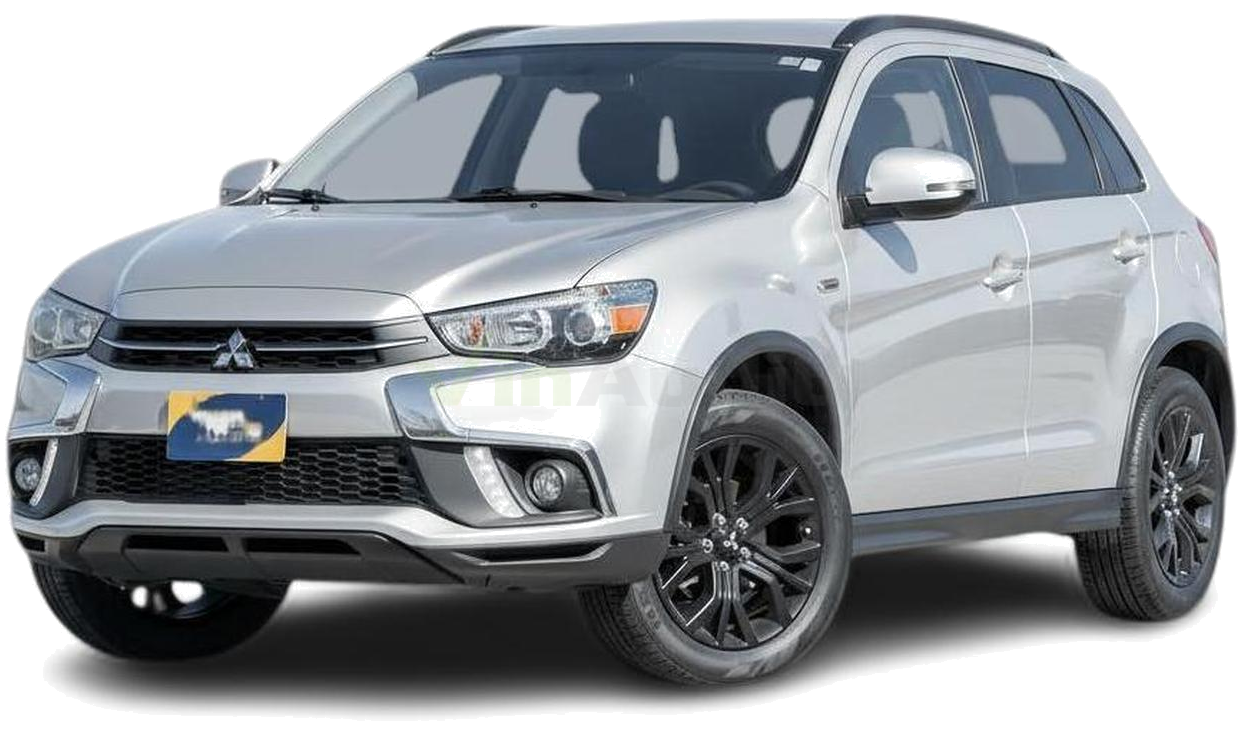
The Good
The 2019 RVR offers a commendable value proposition, boasting good fuel efficiency for its class and a straightforward, durable design. Its practical nature appeals to the sensible buyer, while the comfortable ride and accessible technology can add a touch of everyday enjoyment.
The Bad
Potential buyers should be aware of the RVR's somewhat unrefined powertrain, particularly the base engine's acceleration. Interior materials can feel less premium than some rivals, and cargo space is not class-leading. Road noise can also be noticeable.
2019 Mitsubishi RVR: Quick Overview
- Engine Options: The 2019 Mitsubishi RVR typically came with two main engine options:
- 2.0-liter inline-4 cylinder engine
- 2.4-liter inline-4 cylinder engine (available on higher trims)
- Horsepower:
- 2.0-liter: Approximately 148 horsepower
- 2.4-liter: Approximately 168 horsepower
- Fuel Economy (Estimated):
- 2.0-liter (FWD): Around 24 mpg city / 30 mpg highway
- 2.0-liter (AWD): Around 23 mpg city / 29 mpg highway
- 2.4-liter (AWD): Around 22 mpg city / 28 mpg highway
- 0-60 Times (Estimated):
- With the 2.0-liter engine, expect 0-60 mph times in the 9-10 second range.
- With the 2.4-liter engine, times might be slightly quicker, around 8-9 seconds.
- Towing Capacity: The 2019 Mitsubishi RVR is generally not designed for significant towing. Its towing capacity is typically very limited, often around 1,000 pounds, suitable only for very light loads or trailers.
- Trim-Level Features:
- ES (Base Trim): Standard features often include a rearview camera, automatic climate control, 7-inch touchscreen display, Bluetooth connectivity, and 16-inch steel wheels with covers.
- SE (Mid-Level Trim): Adds features like alloy wheels, heated front seats, keyless entry with push-button start, and sometimes an upgraded audio system.
- GT (Top Trim): Typically includes all SE features plus leather upholstery, a panoramic glass roof, LED interior lighting, and often advanced safety features like blind-spot monitoring and rear cross-traffic alert (depending on optional packages). All-wheel drive (AWD) was often standard or available on SE and GT trims.
2019 Mitsubishi RVR Specifications
Vehicle Information
| Year | 2019 |
| Make | Mitsubishi |
| Model | RVR |
| Trim | - |
| Style | - |
| Type | - |
| Category | - |
Manufacturing Details
| Made In | - |
| Manufacturing City | - |
Dimensions
| Doors | - |
| Curb Weight | - |
| Gross Vehicle Weight Rating | - |
| Overall Height | - |
| Overall Length | - |
| Overall Width | - |
| Wheelbase Length | - |
| Standard Seating | - |
Engine & Performance
| Engine | - |
| Engine Size | - |
| Engine Cylinders | - |
| Transmission | - |
| Transmission Type | - |
| Transmission Speeds | - |
| Drivetrain | - |
Additional Features
| Anti-Brake System | - |
| Steering Type | - |
Pricing
| Manufacturer Suggested Retail Price (MSRP) | - |
| Invoice Price | - |
| Delivery Charges | - |
Vehicle History Report
Specifications
History
Events
History Check
Check
Check
Check
Check
Listings
Recalls
Check
Analysis
What Problems Does the 2019 Mitsubishi RVR Have?
Transmission issues, though not widespread, have occasionally been reported, often related to rough shifting or hesitation. The Continuously Variable Transmission (CVT), when equipped, can sometimes be a source of complaint for those accustomed to traditional automatics, sometimes exhibiting a droning sound under acceleration.
Interior material quality is another area where the RVR sometimes falls short compared to rivals. Some owners report that the plastics can feel cheap and are prone to scratching over time, which might impact its perceived longevity and comfort for those who are meticulous about interior condition.
Brake wear has also been a point of discussion for some owners, with reports of pads and rotors needing replacement sooner than expected. While Mitsubishi often offers a good warranty, this can be a point of concern for those who keep their vehicles beyond the warranty period.
As for recalls, it's crucial for any buyer to check the National Highway Traffic Safety Administration (NHTSA) website for the specific vehicle's VIN. For the 2019 model year, recalls might have included issues like potential airbag inflator problems (a common recall across many manufacturers in various years), or minor issues with certain electrical components or vehicle software. These are typically addressed by dealerships.
Long-term reliability is generally considered acceptable for the RVR, especially if it receives regular maintenance. However, its simpler mechanicals mean fewer complex systems to fail, but also that it might not offer the same refined experience as more technologically advanced competitors over many years.
How long will the 2019 Mitsubishi RVR last?
What Technology & Safety Features are Included?
Higher trims, like the SE and GT, often add features such as heated front seats, keyless entry with push-button start, and an upgraded sound system. A panoramic glass roof was also a notable optional or standard feature on top trims, enhancing the cabin's sense of space and airiness.
In terms of safety, all 2019 RVR models come equipped with a suite of essential airbags, anti-lock brakes, traction control, and stability control. A rearview camera is standard, which is crucial for parking and reversing.
Available advanced driver-assistance systems (ADAS) were more limited on the 2019 model compared to some competitors. Blind-spot monitoring and rear cross-traffic alert were often available as part of an optional package on the higher trim levels, but features like adaptive cruise control or lane-keeping assist were generally not offered.
Crash-test ratings for the 2019 Mitsubishi RVR from the National Highway Traffic Safety Administration (NHTSA) typically resulted in an overall 4 out of 5 stars. The Insurance Institute for Highway Safety (IIHS) often awarded the RVR "Good" ratings in most of its crashworthiness tests, but its performance in the updated small overlap front test might have been less stellar, and the effectiveness of its headlights and front crash prevention systems were sometimes rated as "Acceptable" or "Basic," depending on the specific configuration and options.
What Colors Options are Available?
2019 Mitsubishi RVR Prices and Market Value
The RVR experiences a moderate rate of depreciation, which is typical for non-luxury brands. Its initial depreciation is steeper in the first few years, but it tends to level out thereafter. Factors that significantly affect its resale value include its mileage (lower is better), overall condition (well-maintained interiors and exteriors command higher prices), trim level (SE and GT are more desirable than ES), and whether it has all-wheel drive, which is a popular feature in many regions. A comprehensive maintenance history will also bolster its resale value. Competition from newer, more feature-rich subcompact SUVs can also impact its used market appeal over time.
2019 Mitsubishi RVR Cost of Ownership
2019 Mitsubishi RVR Fuel Efficiency
2019 Mitsubishi RVR Insurance
reasonable repair costs.
How Does the 2019 Mitsubishi RVR Compare to Other Vehicle?
Performance: In terms of performance, the RVR often lags behind its competitors. Its base 2.0-liter engine is generally less potent than what rivals like the Mazda CX-3 or Subaru Crosstrek offer, and even the 2.4-liter option in the RVR isn't particularly thrilling. The handling is competent but lacks the sporty feel of the CX-3 or the composed ride of the HR-V.
Features: The RVR's standard feature set is competitive for its price, often including a touchscreen, Bluetooth, and automatic climate control. However, it often misses out on the more advanced tech and connectivity options (like Apple CarPlay/Android Auto) that became standard or widely available in rivals around this model year. The interior materials also tend to feel less premium than those found in the Mazda CX-3 or Honda HR-V.
Reliability: Mitsubishi's reputation for reliability is generally solid, and the RVR benefits from a long warranty (though this is less of a factor for used buyers). Compared to some rivals known for exceptional long-term reliability like the Toyota C-HR or Honda HR-V, the RVR is generally considered good but not necessarily class-leading. However, its simpler mechanicals may mean fewer complex issues than more advanced vehicles.
Price: This is where the RVR often shines. It typically offers a lower entry price than many of its competitors, making it an appealing option for budget-conscious buyers.
Recommendations:
- Similar Alternatives: If you're looking for a similarly priced and straightforward SUV, the Kia Soul offers more space and a unique style. The Hyundai Kona is another strong contender with a more modern interior and a wider range of available tech.
- Better Alternatives: For a more engaging driving experience and better interior quality, consider the Mazda CX-3. If maximum practicality and excellent reliability are priorities, the Honda HR-V is a top choice. For standard all-wheel drive and impressive off-road capability in the segment, the Subaru Crosstrek is unmatched. The Toyota C-HR offers distinctive styling and Toyota's renowned reliability, though with less cargo space.
Final Verdict: Is the 2019 Mitsubishi RVR a Good Vehicle?
The RVR is best purchased used, as its initial depreciation makes it a better value proposition. When buying used, aim for SE or GT trims if possible, as they offer more desirable features and often come with the more powerful 2.4-liter engine and all-wheel drive. If you can find one with a full maintenance history and in good condition, it can be a reliable and economical mode of transportation. However, if a more engaging driving experience, premium interior, or the latest technology are high on your list, you might want to explore other options in the segment.

Eugene S
Eugene is an automotive enthusiast with over 15 years of experience in the used car market. As a writer at VINCheck.info, he brings deep industry insight and a passion for cars, helping readers make smart, informed decisions. Eugene has written hundreds of used car reviews and is known for breaking down complex automotive topics into clear, actionable advice. Over the years, he has driven and worked on a wide range of vehicles—starting with tuning street cars in his early days and eventually focusing on performance upgrades and reliability improvements. Today, he specializes in evaluating used vehicles through the lens of real-world ownership and enthusiast needs. A longtime fan of Porsche, Eugene especially appreciates vehicles that blend durability with driving enjoyment.