
The Good
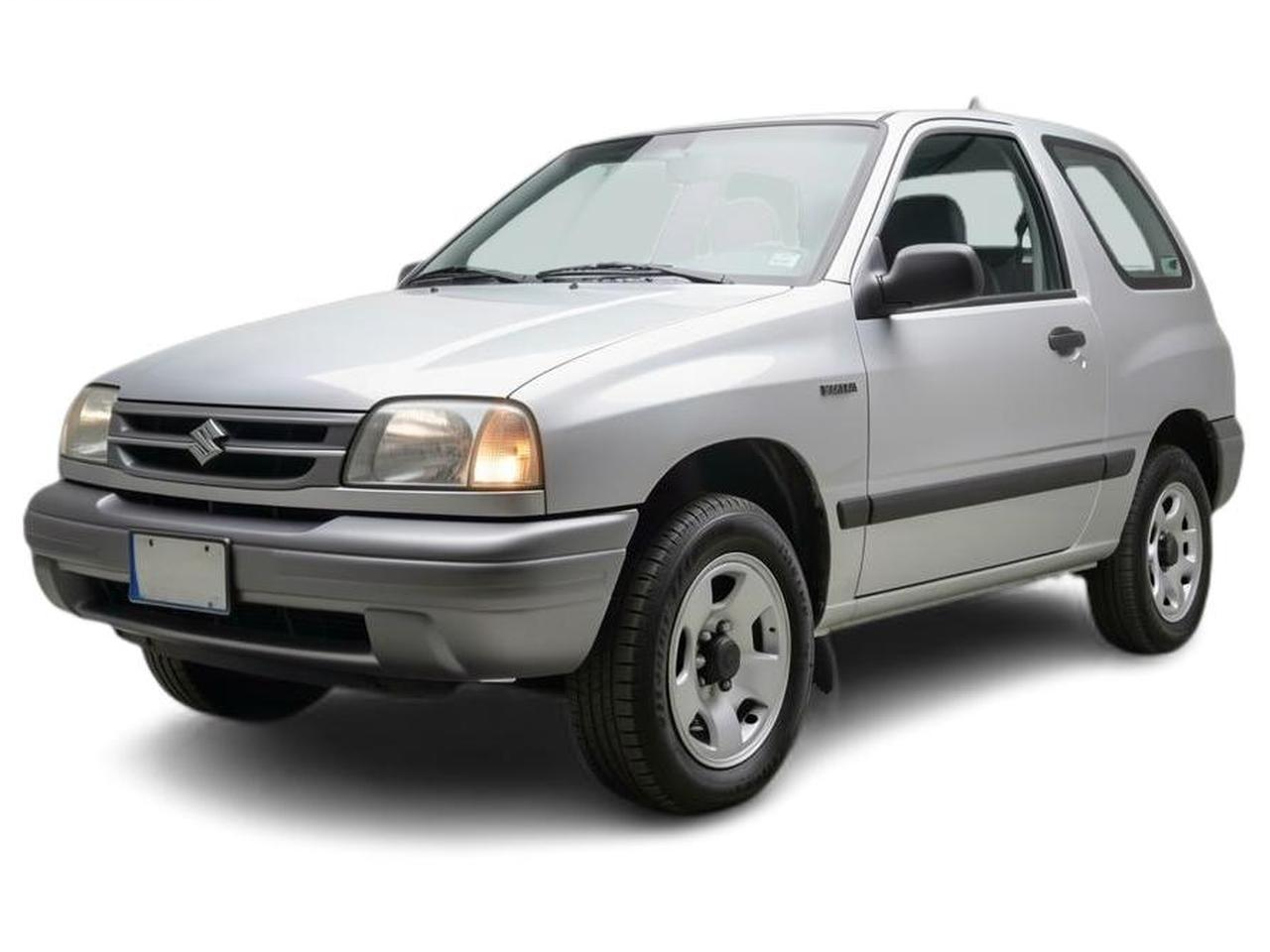
The 2001 Vitara offers a compelling package with its go-anywhere attitude and decent reliability for its class. Its compact size and manageable engine deliver respectable efficiency, while the upright design provides good visibility. For practical buyers, it's an affordable and capable runabout. Emotionally, its adventurous spirit and distinctive styling evoke a sense of freedom and fun.
The Bad
Potential buyers should be aware of common issues such as interior rattles and squeaks, especially on older models. Some owners have reported drivetrain issues like transfer case problems or clutch wear. The ride can be somewhat firm, and advanced safety features are minimal. Rust can also be a concern on the undercarriage and body panels in certain climates.
2001 Suzuki Vitara: Quick Overview
- Engine Options: The 2001 Suzuki Vitara primarily offered two engine options:
- 1.6-liter inline-4 cylinder engine.
- 2.0-liter inline-4 cylinder engine (later models and certain markets).
- Horsepower:
- The 1.6-liter engine typically produced around 95-97 horsepower.
- The 2.0-liter engine offered approximately 127-135 horsepower.
- Fuel Economy:
- Expect an average of around 20-23 MPG in the city and 24-27 MPG on the highway, depending on the engine and drivetrain (2WD/4WD).
- 0-60 Times:
- Around 11-13 seconds for the 1.6L engine and 9-11 seconds for the 2.0L engine, though this can vary significantly based on conditions and exact configuration.
- Towing Capacity:
- Typically rated for a modest towing capacity, often around 1,500 lbs to 2,000 lbs. This is generally suitable for small trailers or personal watercraft, not for heavy-duty hauling.
- Trim-Level Features:
- Base/Standard Trim: Usually included essential features like power steering, intermittent wipers, and a basic audio system. Air conditioning might have been optional.
- JLX Trim: Often added more comfort and convenience features such as air conditioning, power windows and locks, upgraded interior trim, and sometimes alloy wheels. Four-wheel drive was often standard or a popular option on this trim.
- Convertible Top: The convertible models featured a manually operated soft top, offering an open-air driving experience.
- 4WD System: Suzuki's reliable 4-mode 4WD system was a key feature, allowing drivers to select between 2WD, 4WD High, 4WD Low, and Neutral for enhanced off-road capability and traction in slippery conditions.
2001 Suzuki Vitara Specifications
Vehicle Information
| Year | 2001 |
| Make | Suzuki |
| Model | Vitara |
| Trim | - |
| Style | 2-Door 5-Speed |
| Type | Sport Utility Vehicle |
| Category | Standard Sport Utility Vehicle |
Manufacturing Details
| Made In | Canada |
| Manufacturing City | ONTARIO |
Dimensions
| Doors | 2-Door |
| Curb Weight | 3020 pounds |
| Gross Vehicle Weight Rating | 3924 pounds |
| Overall Height | 65.80 inches |
| Overall Length | 163.00 inches |
| Overall Width | 67.30 inches |
| Wheelbase Length | 97.60 inches |
| Standard Seating | 5 |
Engine & Performance
| Engine | 2L I4 |
| Engine Size | 2L |
| Engine Cylinders | 4 |
| Transmission | 5-Speed Automatic |
| Transmission Type | Automatic |
| Transmission Speeds | 5-Speed |
| Drivetrain | Rear-Wheel Drive |
Additional Features
| Anti-Brake System | Non-ABS 4-Wheel ABS |
| Steering Type | Rack & Pinion |
Pricing
| Manufacturer Suggested Retail Price (MSRP) | $18,099 |
| Invoice Price | $16,651 |
| Delivery Charges | $470 |
Vehicle History Report
Specifications
History
Events
History Check
Check
Check
Check
Check
Listings
Recalls
Check
Analysis
What Problems Does the 2001 Suzuki Vitara Have?
Another area of concern for many Vitaras is the body and frame, particularly regarding rust. In regions where road salt is used extensively during winter, the undercarriage, wheel wells, and body panels can be prone to significant corrosion. This can affect structural integrity and lead to costly repairs. Owners should thoroughly inspect the vehicle's underside for any signs of significant rust or damage before purchasing.
Interior components can also present challenges. Many owners report an increase in rattles and squeaks over time, especially on models that have seen hard use or have a lot of miles. The power window regulators can also be a point of failure. Some models have experienced issues with the air conditioning system, including leaks in the condenser or compressor failure. Electrical gremlins, though less common, can sometimes manifest as minor issues with dashboard lights or accessories.
While there aren't widespread, catastrophic recalls specifically for the 2001 model year that are frequently cited across all vehicles, it's always prudent to check with the National Highway Traffic Safety Administration (NHTSA) for any potential safety recalls that might apply to a specific VIN. Long-term reliability is generally considered decent for a vehicle of its age and price point, provided it has been maintained diligently. Neglected maintenance, particularly on the drivetrain and fluid changes, can significantly shorten its lifespan. The 1.6-liter engine is generally considered more reliable and simpler than the 2.0-liter, though both can offer good service with proper care.
How long will the 2001 Suzuki Vitara last?
What Technology & Safety Features are Included?
Entertainment: Standard entertainment typically consisted of a basic AM/FM stereo with a single-disc CD player. Higher trims might have offered an upgraded sound system with more speakers. Auxiliary inputs for portable music devices were not common in this model year. Cassette players were also still present on some base models.
Tech & Convenience: Basic convenience features included power steering and intermittent wipers. Air conditioning was a common option, often standard on higher trims like the JLX. Power windows and door locks were also frequently found on mid-to-upper trims. Cruise control was available on some models. The key technological highlight was Suzuki's capable 4-mode 4WD system, which offered drivers significant control over traction for various conditions.
Driver-Assistance Features: Advanced driver-assistance systems were virtually non-existent in the 2001 Vitara. Features like ABS (Anti-lock Braking System) were often optional, especially on rear-wheel-drive models, and became more standard on 4WD variants. Stability control and traction control were not offered.
Safety Features: Standard safety equipment included front airbags for the driver and passenger. Seatbelt pretensioners were also standard. Rear-wheel anti-lock brakes were optional on many models. Side-impact airbags and other advanced passive safety features were not available.
Crash-Test Ratings: Obtaining specific crash-test ratings for the 2001 Suzuki Vitara from organizations like the IIHS (Insurance Institute for Highway Safety) or NHTSA can be challenging as testing standards and availability for vehicles of this age and segment were less comprehensive. However, general reviews and the vehicle's construction suggest it would likely perform moderately in frontal and side impacts, with potential limitations in modern rollover resistance compared to contemporary SUVs due to its taller, narrower stance and body-on-frame construction. It's advisable to research specific NHTSA data if available for the exact model year and configuration.
What Colors Options are Available?
2001 Suzuki Vitara Prices and Market Value
2001 Suzuki Vitara Cost of Ownership
2001 Suzuki Vitara Fuel Efficiency
2001 Suzuki Vitara Safety Rating
NHTSA
IIHS
2001 Suzuki Vitara Recalls & Defects
Exterior Lighting
2001 Suzuki Vitara Warranty
Basic
Powertrain
Rust
2001 Suzuki Vitara Insurance
reasonable repair costs.
How Does the 2001 Suzuki Vitara Compare to Other Sport Utility Vehicle?
Performance: Compared to rivals like the CR-V and RAV4, the Vitara's base 1.6-liter engine was less powerful, offering slower acceleration. The 2.0-liter offered more competitive performance. Its off-road capability, especially with the 4WD system, often surpassed the car-based crossovers like the CR-V and RAV4, putting it closer to the more rugged Xterra, though the Xterra generally had more powerful engine options.
Features: In terms of features, the Vitara was typically less refined and offered fewer creature comforts than the CR-V or RAV4, which often had more advanced optional technology and higher-quality interior materials. The Escape also offered a wider array of engine choices and feature packages. However, the Vitara's simplicity and the availability of its robust 4WD system were strong points for those prioritizing off-road prowess.
Reliability: Historically, the Honda CR-V and Toyota RAV4 have held a reputation for superior long-term reliability and fewer common issues compared to the Vitara. The Ford Escape also faced its share of reliability concerns. The Vitara's reliability is decent for its price point, but it is generally not as bulletproof as its Japanese counterparts. Rust can be a more significant concern for the Vitara than for most competitors.
Price: This is where the Vitara often shone. It was typically priced more affordably than the CR-V, RAV4, and Escape when new, making it an attractive entry-level option.
Alternatives:
- Similar: If seeking a similar blend of compact size and off-road capability, a used Nissan Xterra (especially later models) could be considered, though it's often larger. A Jeep Cherokee (XJ) from its final years also offered strong off-road prowess but with different reliability quirks.
- Better: For overall reliability and on-road comfort, a used Honda CR-V or Toyota RAV4 from the same era would generally be a safer bet, assuming they are in good condition and priced similarly. If a more traditional, rugged SUV experience is desired, a used Toyota 4Runner or Jeep Wrangler (though more expensive) would offer superior off-road performance and durability.
Final Verdict: Is the 2001 Suzuki Vitara a Good Sport Utility Vehicle?
It is best suited for buyers who prioritize functionality and adventure over luxury and advanced technology. Look for well-maintained examples, ideally with lower mileage and evidence of regular servicing. The JLX trim with the 4WD system offers the most desirable package for those seeking its full potential. Avoid vehicles with significant rust or known drivetrain issues. If you can find one in good condition, it offers a unique blend of utility and a sense of adventure for a low price, but thorough inspection is paramount before purchase.

Drew B
Drew is a seasoned automotive expert and contributor to VinCheck.info. With nearly 15 years of experience as a former Porsche technician, he brings a wealth of hands-on knowledge to his writing. Born in North Carolina, a region renowned for its deep-rooted NASCAR culture, Drew developed a passion for cars early in life, often building and working on vehicles from a young age. At VINCheck, Drew leverages his extensive technical background to provide in-depth analyses of various vehicles. His articles often focus on engine performance, reliability, and maintenance insights, offering readers practical information grounded in real-world experience. Some of his notable contributions include reviews on the Mazda CX-5's longevity and detailed examinations of engine options for models like the 2011 Toyota Camry and Tacoma