
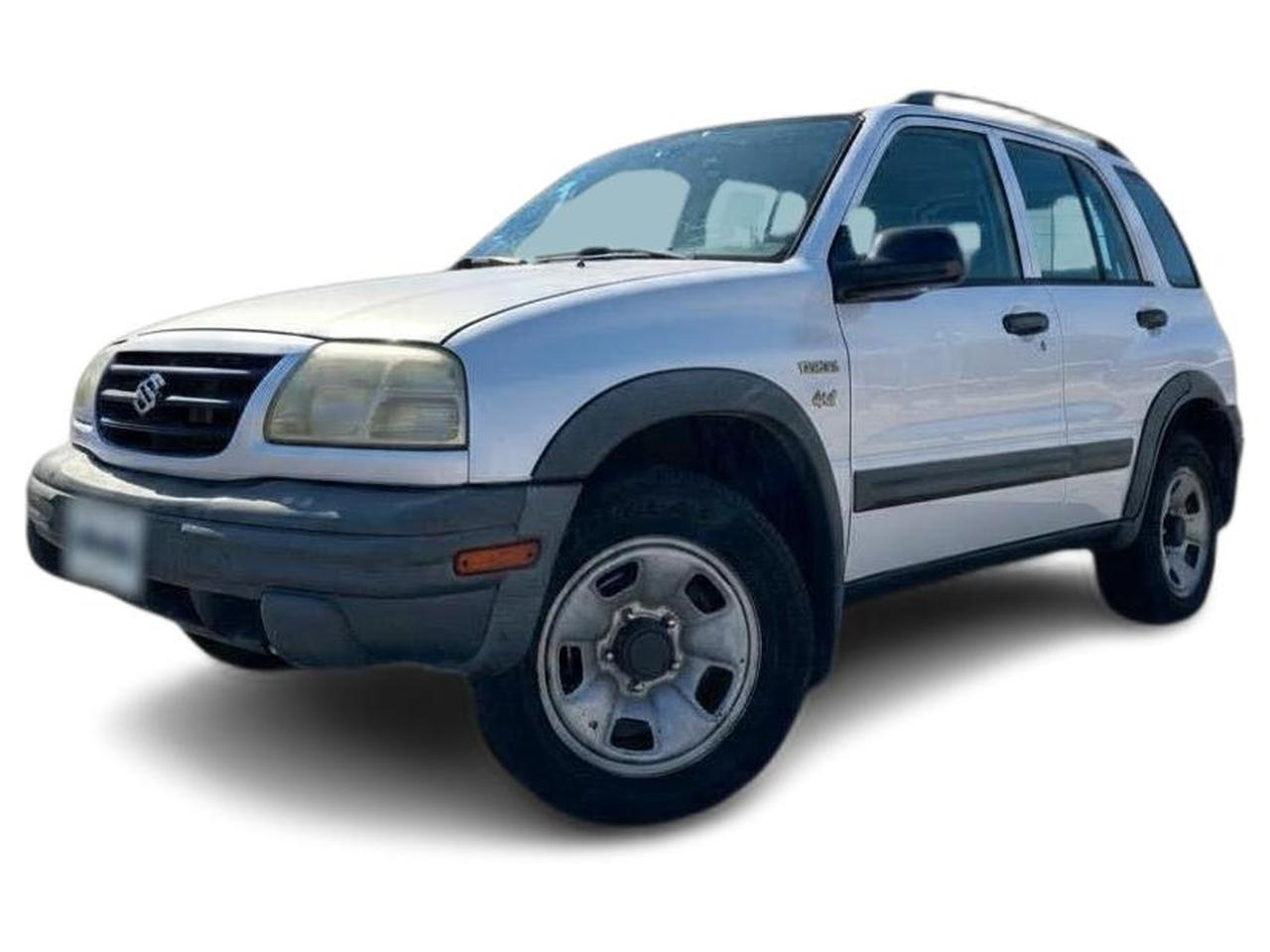
The Good
The 2004 Vitara excelled in its compact maneuverability and surprisingly capable off-road prowess for its class. Its value proposition was strong, offering a fun, rugged experience for budget-conscious buyers who craved adventure and a distinct, youthful design.
The Bad
Potential buyers should be aware of the Vitara's somewhat rough ride quality on pavement, limited cargo space, and the possibility of rust issues, particularly in older models or those exposed to harsh climates. Engine power can also be a concern for some.
2004 Suzuki Vitara: Quick Overview
- Engine Options: The 2004 Suzuki Vitara typically came with a choice of two main engines:
- A 2.0-liter inline 4-cylinder engine.
- A 2.5-liter V6 engine (optional on some higher trims). - Horsepower:
- The 2.0L inline-4 generally produced around 127 horsepower.
- The 2.5L V6 offered more power, typically in the range of 155-165 horsepower. - Fuel Economy:
- Fuel economy varied depending on the engine and drivetrain (2WD or 4WD). For the 2.0L, expect figures around 19-21 MPG in the city and 22-24 MPG on the highway.
- The V6 would generally yield slightly lower MPG figures. - 0-60 Times:
- Acceleration was not a strong suit. Models with the 2.0L engine could take approximately 10-12 seconds to reach 60 mph.
- The V6 models were a bit quicker, often in the 9-10 second range. - Towing Capacity:
- Towing capacity for the 2004 Vitara was generally modest. It was typically rated to tow around 1,500 to 2,000 pounds, making it suitable for small trailers or personal watercraft but not for larger loads. - Trim-Level Features:
- SE Trim: Often served as a base or mid-level option, typically including features like air conditioning, power windows and locks, a CD player, and 16-inch wheels. Four-wheel drive was usually an option.
- X-90 (Note: The X-90 was a distinct model, not a trim of the standard Vitara in 2004, but if referring to earlier generations' higher trims that might be mistakenly associated): Higher trims or earlier models (like the Grand Vitara) could include features like leather upholstery, heated seats, a sunroof, alloy wheels, and more advanced audio systems. For the 2004 model year itself, the focus was on the standard Vitara's utility. Standard features across trims often included ABS, dual airbags, and a spare tire mounted on the rear door.
2004 Suzuki Vitara Specifications
Vehicle Information
| Year | 2004 |
| Make | Suzuki |
| Model | Vitara |
| Trim | - |
| Style | 5-Speed |
| Type | Sport Utility Vehicle |
| Category | Standard Sport Utility Vehicle |
Manufacturing Details
| Made In | Canada |
| Manufacturing City | ONTARIO |
Dimensions
| Doors | 4-Door |
| Curb Weight | 2932 pounds |
| Gross Vehicle Weight Rating | 3814 pounds |
| Overall Height | 65.00 inches |
| Overall Length | 163.00 inches |
| Overall Width | 67.30 inches |
| Wheelbase Length | 97.60 inches |
| Standard Seating | 5 |
Engine & Performance
| Engine | 2.5L V6 |
| Engine Size | 2.5L |
| Engine Cylinders | 6 |
| Transmission | 5-Speed Automatic |
| Transmission Type | Automatic |
| Transmission Speeds | 5-Speed |
| Drivetrain | Rear-Wheel Drive |
Additional Features
| Anti-Brake System | Non-ABS 4-Wheel ABS |
| Steering Type | Rack & Pinion |
Pricing
| Manufacturer Suggested Retail Price (MSRP) | $16,999 |
| Invoice Price | $15,979 |
| Delivery Charges | $500 |
Vehicle History Report
Specifications
History
Events
History Check
Check
Check
Check
Check
Listings
Recalls
Check
Analysis
What Problems Does the 2004 Suzuki Vitara Have?
Another area to watch for is rust. Like many SUVs of its era, the Vitara can be susceptible to corrosion, especially in areas that experience harsh winters with road salt. Frame rust, brake lines, and the exhaust system are common areas where rust can develop. Thorough inspection of the undercarriage is highly recommended before purchasing.
Engine issues, though less common than transmission problems, can also arise. Some owners have reported issues with the oxygen sensors, leading to check engine lights and reduced fuel efficiency. Ignition system components, such as spark plugs and coils, may also need attention over time. A potential issue with the crankshaft position sensor has also been noted, which can cause stalling.
Brake system components, including rotors and pads, can wear out faster than expected, and some owners have reported premature failure of wheel bearings, especially on 4WD models that have seen off-road use. The power steering system can also develop leaks or make noise over time.
In terms of recalls, specific recalls for the 2004 model year are limited, but it's always advisable to check the NHTSA website for any outstanding safety campaigns applicable to the vehicle's VIN. Long-term reliability can be significantly impacted by maintenance. Adhering to the recommended service intervals for fluid changes (engine oil, transmission fluid, differential fluid) and regular inspections is paramount to prolonging the life of the Vitara.
How long will the 2004 Suzuki Vitara last?
What Technology & Safety Features are Included?
Entertainment systems were typically straightforward, usually featuring an AM/FM radio with a single-disc CD player. Higher trims might have offered an upgraded sound system with more speakers, but sophisticated infotainment or touchscreens were non-existent. Auxiliary input jacks for portable music devices were also uncommon for this model year.
Driver-assistance features were virtually nonexistent in the 2004 Vitara. You would not find features like cruise control (though it might have been optional on some trims), parking sensors, or any form of advanced driver aids. The focus was on a manual driving experience.
Safety features included standard equipment for the time, such as front airbags and anti-lock brakes (ABS) on all four wheels. Some models might have offered optional side-impact airbags, but these were not widespread. The vehicle's construction prioritized a basic level of occupant protection.
Crash-test ratings for the 2004 Suzuki Vitara are somewhat limited and can vary. The National Highway Traffic Safety Administration (NHTSA) generally gave it decent marks for side-impact protection, often awarding it four out of five stars. However, front-impact protection might have been rated slightly lower, with three out of five stars being common. The Insurance Institute for Highway Safety (IIHS) also conducted tests, and ratings should be verified for the specific model year, but typically, vehicles of this vintage in this class did not achieve the highest safety marks compared to modern standards. Optional features were scarce, mostly revolving around cosmetic enhancements like alloy wheels or roof racks, and drivetrain choices (2WD vs. 4WD).
What Colors Options are Available?
2004 Suzuki Vitara Prices and Market Value
2004 Suzuki Vitara Cost of Ownership
2004 Suzuki Vitara Fuel Efficiency
2004 Suzuki Vitara Safety Rating
NHTSA
IIHS
2004 Suzuki Vitara Recalls & Defects
Fuel System, Gasoline
2004 Suzuki Vitara Warranty
Basic
Powertrain
Rust
2004 Suzuki Vitara Insurance
reasonable repair costs.
How Does the 2004 Suzuki Vitara Compare to Other Sport Utility Vehicle?
Performance: The Vitara's performance was often a mixed bag. While its 4-cylinder engine offered decent fuel economy and its available 4WD provided good traction, its acceleration was generally slower than competitors like the Ford Escape or the more powerful engine options in the RAV4 and CR-V. The Subaru Forester often offered superior handling and a more refined ride.
Features: In terms of features, the Vitara lagged behind its peers. While competitors might have offered more standard amenities, better interior materials, and more advanced optional features, the Vitara focused on basic utility. The Honda CR-V and Toyota RAV4 were often praised for their more comfortable interiors and user-friendly designs.
Reliability: Reliability was a point of contention. While Suzuki vehicles could be durable, the Vitara, particularly its automatic transmission, had a reputation for being less reliable than the class leaders like the Toyota RAV4 and Honda CR-V, which consistently ranked high in reliability surveys. The Subaru Forester also generally offered strong reliability.
Price: The Vitara's main advantage was its price. It was typically offered at a lower entry price point than the CR-V, RAV4, or Forester, making it an attractive option for budget-conscious buyers. The Ford Escape also offered competitive pricing.
Alternatives:
- Similar: If you're looking for a similarly priced and rugged small SUV, the Ford Escape (especially early models) offers comparable capabilities and a slightly more powerful engine range. The Hyundai Tucson and Kia Sportage from the same era could also be considered for their value proposition.
- Better: For improved reliability, refinement, and overall better driving experience, the Toyota RAV4 and Honda CR-V are generally superior choices, even if they command slightly higher used prices. The Subaru Forester offers a more car-like ride and excellent all-wheel-drive performance.
Final Verdict: Is the 2004 Suzuki Vitara a Good Sport Utility Vehicle?

Drew B
Drew is a seasoned automotive expert and contributor to VinCheck.info. With nearly 15 years of experience as a former Porsche technician, he brings a wealth of hands-on knowledge to his writing. Born in North Carolina, a region renowned for its deep-rooted NASCAR culture, Drew developed a passion for cars early in life, often building and working on vehicles from a young age. At VINCheck, Drew leverages his extensive technical background to provide in-depth analyses of various vehicles. His articles often focus on engine performance, reliability, and maintenance insights, offering readers practical information grounded in real-world experience. Some of his notable contributions include reviews on the Mazda CX-5's longevity and detailed examinations of engine options for models like the 2011 Toyota Camry and Tacoma