by VIN, Year, Make, Model by License Plate

1994 Kenworth T800 Overview, Reviews, Ratings & Specs

Rating: 0.00
Based on 0 Owner Reviews
Drew B | June 1, 2026
The 1994 Kenworth T800 is a robust and highly customizable Class 8 truck, a staple in vocational and over-the-road applications since its introduction in the 1980s. Known for its durability and versatility, the T800 offers various body styles including conventional tractors and straight trucks. While specific trims varied with customer specifications, its popularity stems from its rugged construction, extensive customization options, and legendary Kenworth build quality, making it a trusted workhorse for decades. Pricing when new would have varied significantly based on configuration but represented a substantial investment in a long-term asset.


The Good

The 1994 Kenworth T800 excels in rugged performance and exceptional reliability, built to endure demanding tasks. Its durable design offers a solid value proposition, while a comfortable cab appeals to drivers. This truck represents a blend of uncompromising capability and enduring dependability.

The Bad

When considering a 1994 Kenworth T800, watch out for potential wear on older components, particularly in the drivetrain and suspension, due to its age. Electrical system issues and corrosion on exposed metal parts are also common concerns. Thorough inspection of the chassis and cab is crucial.

1994 Kenworth T800: Quick Overview

  • Engine Options: The 1994 Kenworth T800 was typically equipped with powerful diesel engines. Common options included Cummins engines, such as the N14 series, and Caterpillar C-15 engines. Detroit Diesel engines were also frequently specified. Specific engine displacement and configurations varied widely based on customer orders and intended use.
  • Horsepower: Horsepower ratings generally ranged from approximately 335 hp to over 500 hp, depending on the engine chosen. High-performance variants could be spec'd for heavy-duty hauling.
  • Fuel Economy: Fuel economy for a 1994 Kenworth T800 is highly dependent on the engine, transmission, gearing, load, and driving conditions. On average, these trucks might achieve between 4 to 7 miles per gallon (MPG).
  • 0-60 Times: 0-60 mph times are not a standard metric for heavy-duty trucks like the Kenworth T800, as their purpose is not rapid acceleration but sustained power and towing capacity. Performance is measured in hauling capability and gradeability rather than speed.
  • Towing Capacity: The towing capacity of a 1994 Kenworth T800 is substantial and depends heavily on its axle configuration (e.g., single axle, tandem axle), chassis strength, fifth wheel rating, and Gross Combination Weight Rating (GCWR). These trucks are designed for heavy-duty towing, often exceeding 80,000 pounds GCWR for standard configurations and capable of much higher ratings with specialized setups for specialized hauling.
  • Trim-Level Features: The T800 was known for its modular design and extensive customization, meaning there weren't distinct "trims" in the passenger car sense. Instead, features were selected by the buyer. However, common considerations and available features included:
    • Cab Configurations: Aerocab (aerodynamic) or conventional, with various sleeper options (e.g., 36-inch, 42-inch, 60-inch).
    • Suspension: Various air and mechanical suspension systems (e.g., Kenworth Airglide, Hendrickson).
    • Braking Systems: Air brakes, often with ABS (Anti-lock Braking System) as an option.
    • Interior Amenities: Depending on the sleeper and options, interiors could range from basic to quite comfortable, with features like air conditioning, power windows (on some), upgraded seats, and auxiliary heating.
    • Wheelbase and Axle Configurations: Customizable to suit specific applications.
    • Fifth Wheel Type: Manual or air-slide, rated for different trailer weights.

1994 Kenworth T800 Specifications

Vehicle Information
Year 1994
Make Kenworth
Model T800
Trim -
Style -
Type Truck
Category Heavy Truck
Manufacturing Details
Made In United States
Manufacturing City CHILLICOTHE
Dimensions
Doors -
Curb Weight -
Gross Vehicle Weight Rating -
Overall Height -
Overall Length -
Overall Width -
Wheelbase Length -
Standard Seating -
Engine & Performance
Engine 14L I6
Engine Size 14L
Engine Cylinders 6
Transmission -
Transmission Type -
Transmission Speeds -
Drivetrain 6x4
Additional Features
Anti-Brake System -
Steering Type -
Pricing
Manufacturer Suggested Retail Price (MSRP) -
Invoice Price -
Delivery Charges -

Vehicle History Report

Vehicle
Specifications
Ownership
History
All History
Events
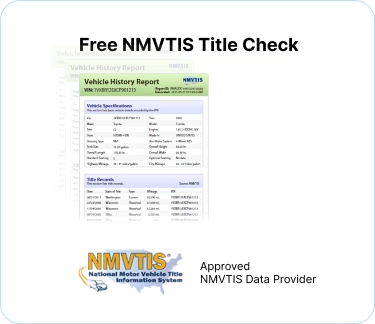
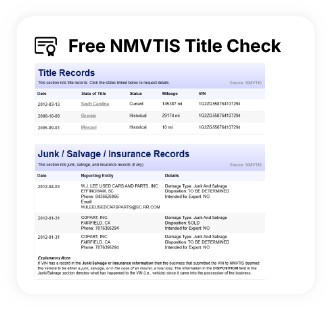
NMVTIS Title
History Check
Salvage/Rebuilt
Check
Accident
Check
Theft
Check
Open Lien
Check
Past Sale
Listings
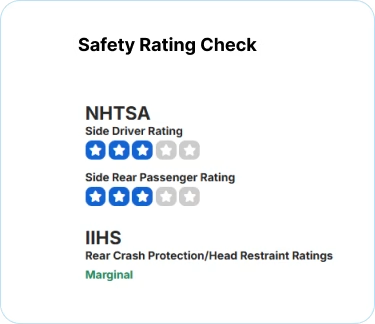
Safety
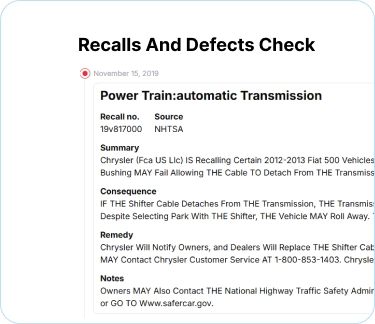
Recalls
Odometer
Check
Market Price
Analysis

What Problems Does the 1994 Kenworth T800 Have?

Given the 1994 model year, the 1994 Kenworth T800, like any vehicle of its age, can exhibit common issues related to wear and tear over time. While Kenworth trucks are renowned for their durability, specific concerns that may arise include: Electrical System Gremlins: As vehicles age, electrical connections can corrode, wiring harnesses can fray, and components like alternators, starters, and the central electrical control module can fail. This can manifest as intermittent dashboard warning lights, issues with power windows or mirrors (if equipped), or starting problems. Suspension and Drivetrain Wear: The constant stress of heavy loads can lead to wear in the suspension components (leaf springs, shocks, air springs if equipped), U-joints, driveshafts, and differentials. Clunking noises, vibrations, or uneven tire wear can be indicators of these issues. Cooling System Issues: Radiators can develop leaks, coolant hoses can degrade, and water pumps can fail. Overheating can be a significant problem and lead to more severe engine damage if not addressed promptly. Cab and Chassis Corrosion: Exposure to road salt and harsh weather conditions can lead to rust and corrosion on the chassis, frame rails, and cab structure, particularly around wheel wells, door sills, and under the cab. Significant corrosion can compromise structural integrity. Fuel System Components: Diesel fuel systems, including injectors, fuel pumps, and seals, can degrade over time, leading to performance issues, hard starting, or fuel leaks. The quality of fuel used and regular maintenance play a significant role here. Brake System Maintenance: While robust, air brake systems require regular maintenance of seals, valves, and chambers. Leaks in the air system can affect braking performance. Recalls: Specific recalls for the 1994 model year would need to be researched through official channels like the NHTSA (National Highway Traffic Safety Administration) database. However, recalls often address manufacturing defects or safety-related issues that may have been identified and rectified by the manufacturer. For a vehicle of this vintage, it's more likely that any original recalls would have been addressed years ago. The focus for an owner would be on ongoing maintenance and proactive replacement of worn parts rather than solely relying on past recalls. Long-Term Reliability: The long-term reliability of a 1994 Kenworth T800 hinges heavily on its maintenance history, the quality of repairs, and how it was operated. Trucks that have been regularly serviced, with parts replaced proactively, and have not been subjected to extreme abuse are likely to remain reliable. Conversely, neglected trucks may present a cascade of problems.

How long will the 1994 Kenworth T800 last?

A 1994 Kenworth T800, when well-maintained, can realistically accumulate well over 1 million miles, with many exceeding 1.5 million miles. Owner data and maintenance habits are paramount. Trucks used for long-haul operations with regular oil changes, filter replacements, and proactive component servicing can enjoy decades of service. Weaknesses that emerge over time often relate to the cumulative stress on the drivetrain, suspension, and chassis, alongside the natural degradation of rubber and plastic components. However, the fundamental construction of the Kenworth T800 is incredibly robust, meaning that even with high mileage, major structural issues are less common than in lighter-duty vehicles, provided there hasn't been significant damage or neglect.

What Technology & Safety Features are Included?

The 1994 Kenworth T800, by modern standards, features very rudimentary technology, driver-assistance, and safety systems. Its focus was squarely on robust mechanical performance and operator utility. Built-in Tech and Entertainment: In 1994, "tech" in a heavy-duty truck meant functional essentials. Entertainment was typically limited to an AM/FM radio, often with a cassette player. Digital displays were minimal, usually comprising basic gauges for speed, RPM, fuel, oil pressure, and coolant temperature. Some premium options might have included a CB radio. Advanced diagnostics were often performed via specialized tools rather than integrated onboard computers in the way we understand them today. Driver-Assistance Features: Driver-assistance systems as we know them (like adaptive cruise control, lane departure warnings, or automatic emergency braking) were virtually non-existent. The primary "assistance" came from the truck's design, such as power steering, air brakes, and adjustable seating. Cruise control was a common, but not always standard, option. Safety Features: Safety features were basic but critical. These included robust, heavy-duty air brakes, designed for stopping immense loads. Seatbelts were standard. The truck's sheer mass and strong chassis provided a significant degree of passive safety in the event of a collision. Reflective markings and lighting were standard for visibility. Advanced safety technologies like airbags for the driver or passenger were not a common feature in commercial trucks of this era. ABS (Anti-lock Braking System) was becoming more prevalent as an optional or standard feature on newer models by this time, enhancing braking control during emergencies. Optional Features: Buyers could often opt for features that enhanced comfort and functionality, such as air conditioning systems, power mirrors, upgraded interior trim, auxiliary heating, and different suspension types. The extensive customization options meant that the presence and type of specific features varied greatly from one truck to another. Crash-Test Ratings: Commercial heavy-duty trucks like the 1994 Kenworth T800 are typically not subjected to the same type of crash-testing protocols as passenger vehicles by organizations like the NHTSA or IIHS. Their safety is evaluated based on different standards, focusing on occupant protection in severe impacts, braking system performance, and overall structural integrity under extreme conditions. Kenworth's reputation for building exceptionally strong and durable vehicles suggests a high degree of inherent safety due to their robust construction, but formal crash-test ratings are not readily available in the consumer sense.

What Colors Options are Available?

We’re working on this section!
In the meantime, feel free to explore the other sections for more content.

1994 Kenworth T800 Prices and Market Value

When new in 1994, the price of a Kenworth T800 could range significantly, typically from $80,000 to over $150,000 depending on engine, configuration, and options chosen. As a robust, purpose-built commercial vehicle, the T800 experiences depreciation, but it holds its value remarkably well compared to consumer vehicles, especially those with low mileage and excellent maintenance records. Current used market prices for a 1994 Kenworth T800 can vary widely, from $20,000 for a high-mileage, basic configuration to $60,000 or more for well-maintained, low-hour trucks with desirable specifications. Factors affecting resale value include engine and transmission condition, chassis integrity (rust is a major detractor), tire condition, interior wear, and overall cosmetic appearance. Trucks that have been used in less demanding vocational roles or for long-haul with meticulous care tend to command higher prices.

1994 Kenworth T800 Cost of Ownership

Owning a 1994 Kenworth T800 involves substantial costs, making it a significant investment rather than an economical choice for casual users. Insurance premiums will be higher than for passenger vehicles, reflecting its commercial classification and high replacement cost value. Fuel costs are considerable, given its large diesel engine and typical usage; expect fuel efficiency in the 4-7 MPG range. Maintenance and repair are critical; while parts are generally durable, they are also expensive and require specialized mechanics. Long-term ownership costs are high but can be managed with diligent preventative maintenance. It is not an economical vehicle to own in terms of running costs but offers value through its longevity and capability if properly maintained.

1994 Kenworth T800 Fuel Efficiency

Fuel Type Diesel
Fuel Capacity -
City Mileage -
Highway Mileage -

1994 Kenworth T800 Recalls & Defects

Seats
Recall date 1995-05-16
Recall no. 95v098000
Source NHTSA
Summary AN Interference Condition Between THE Back Cushion and THE Recliner Handle CAN Cause AN Incomplete Latching OF THE Recliner Mechanism.
Consequence This Condition CAN Cause THE Seat Back TO "ratchet" Rearward. Rearward Movement OF THE Seat Back Increases TO Where THE Seatback HAS Moved TO A Fully Reclined Horizontal Position. Complete Loss OF Back Support Could Cause THE Driver TO Lose Control OF THE Vehicle and Cause AN Accident.
Remedy Dealers Will Inspect THE Seat And, IF Necessary, Install A NEW Recliner Latch Spring and Handle.
Notes System: Interior; Seats.vehicle Description: Medium Duty Trucks Equipped With Bostrum AIR Cushion II Reclining Seats.note: IF Your Vehicle IS Presented TO AN Authorized Dealer ON AN Agreed Upon Service Date and THE Remedy IS NOT Provided Free OF Charge Within A Reasonable Time, Please Contact Kenworth AT 1-206-828-5418. Also Contact THE National Highway Traffic Safety Administration's Auto Safety Hotline AT 1-800-424-9393.
Equipment:other:labels
Recall date 2001-04-24
Recall no. 01v142000
Source NHTSA
Summary Vehicle Description: Heavy Duty Trucks Equipped With Meritor Fg941 Steer Axles. THE Gross Axle Weight Rating (Gawr) WAS Determined Incorrectly and Over-Stated ON THE Vehicle Certification Label. With THE Incorrect Gawr Listed, These Labels DO NOT Meet THE Certification Requirements OF Part 567, "requirements FOR Manufacturers OF Motor Vehicles." Vehicles Will BE Remedied Either BY Assigning THE Proper Weight Rating OR, IF Possible, BY Changing THE Necessary Components TO Meet THE Currently Assigned Weight Rating.
Consequence These Vehicles Would NOT BE IN Compliance With Federal Regulations.
Remedy Vehicles Will BE Remedied Either BY Assigning THE Proper Weight Rating OR, IF Possible, BY Changing THE Necessary Components TO Meet THE Currently Assigned Weight Rating. Owner Notification Began June 22, 2001. Owners WHO Take Their Vehicles TO AN Authorized Dealer ON AN Agreed Upon Service Date and DO NOT Receive THE Free Remedy Within A Reasonable Time Should Contact Kenworth AT 1-425-828-5000.
Notes Also Contact THE National Highway Traffic Safety Administration's Auto Safety Hotline AT 1-888-Dash-2-dot (1-888-327-4236).
Service Brakes, AIR
Recall date 2003-03-31
Recall no. 03v126000
Source NHTSA
Summary Certain Trucks Equipped With Meritor P 18x7 Brakes With 36" Brake Chambers Fail TO Comply With THE Requirements OF Federal Motor Vehicle Safety Standard (Fmvss) NO. 121, "air Brake Systems." These Trucks Were Manufactured With A Combined AIR Reservoir Volume Less Than 12 Times THE Combined Volume OF All Service Brake Chambers.
Consequence This Does NOT Meet THE Requirements OF THE Standard.
Remedy Dealers Will ADD AN Additional Tank or Change ONE OF THE Existing AIR Tanks TO A Larger Size. Owner Notification Began ON MAY 5, 2003. Owners WHO Take Their Vehicles TO AN Authorized Dealer ON AN Agreed Upon Service Date and DO NOT Receive THE Free Remedy Within A Reasonable Time Should Contact Kenworth AT 1-425-828-5440.
Notes Kenworth Recall NO. 03kw3. Customers CAN Also Contact THE National Highway Traffic Safety Administration's Auto Safety Hotline AT 1-888-Dash-2-dot (1-888-327-4236).

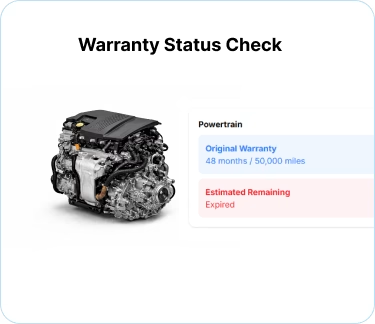
1994 Kenworth T800 Warranty

Basic
Original warranty 0 months / No data
Estimated remaining Expired
Powertrain
Original warranty 0 months / No data
Estimated remaining Expired
Rust
Original warranty 0 months / No data
Estimated remaining Expired

1994 Kenworth T800 Insurance

Insurance for a 1994 Kenworth T800 is moderately priced, reflecting its status as a Truck with strong safety ratings and
reasonable repair costs.

How Does the 1994 Kenworth T800 Compare to Other Truck?

The 1994 Kenworth T800 competed in a highly competitive Class 8 truck market, facing formidable rivals such as the Peterbilt 379, Freightliner FLD Series, and Mack Vision/CH Series. Performance: The T800 was engineered for exceptional performance, particularly in demanding vocational applications and long-haul trucking. Its robust chassis and powerful engine options (Cummins, Caterpillar, Detroit Diesel) provided superior pulling power and durability. Rivals like the Peterbilt 379 also offered comparable high-performance engine options and robust build quality. Freightliner often focused on a balance of cost and performance, while Mack trucks were historically known for their heavy-duty capabilities and distinctive designs. Features: Kenworth T800s were renowned for their extensive customization, allowing buyers to spec their trucks precisely for their needs, from cab size and sleeper options to suspension and drivetrain configurations. This level of customization was a significant advantage. Peterbilt also offered a high degree of customization. Freightliner often provided a more standardized feature set with value pricing as a key differentiator. Mack trucks offered a solid, no-nonsense feature set focused on durability. Reliability: Kenworth has a long-standing reputation for legendary reliability and durability, often considered a benchmark in the industry. The T800 is built with heavy-duty components designed for longevity. Peterbilt trucks are also highly regarded for their reliability and build quality, often seen as a direct peer to Kenworth. Freightliner, while offering good reliability, sometimes prioritized cost-effectiveness, which could lead to slightly less robust componentry in some configurations compared to Kenworth or Peterbilt. Mack trucks also possess a reputation for ruggedness and reliability. Price: In 1994, these trucks were premium investments. Kenworth and Peterbilt typically commanded higher price tags due to their perceived superior build quality and brand prestige. Freightliner often offered a more competitive price point, appealing to operators seeking a balance of performance and affordability. Mack trucks fell within a similar premium range, emphasizing their heavy-duty heritage. Recommendations: Similar Alternatives: The Peterbilt 379 is a very close competitor, offering similar levels of customization, performance, and reliability, often appealing to those who prefer the Peterbilt aesthetic. The Mack CH Series also presents a strong alternative for those prioritizing raw durability and a more traditional truck feel. Potentially Better Alternatives (depending on need): For operators prioritizing a slightly lower initial investment without a drastic compromise on performance and reliability, a well-maintained Freightliner FLD Series from the same era could be a viable option. However, if the absolute highest standard of build quality and long-term resilience is paramount, sticking with Kenworth or Peterbilt is usually the preferred choice. Newer models from any of these manufacturers, if budget allows, would offer more advanced technology and potentially better fuel efficiency.

Final Verdict: Is the 1994 Kenworth T800 a Good Truck?

The 1994 Kenworth T800 is ideal for owner-operators, fleet owners, and vocational businesses that require an exceptionally durable, reliable, and customizable heavy-duty truck. It is absolutely worth buying if one prioritizes longevity, robust performance, and the ability to tailor the vehicle to specific tasks over modern creature comforts and advanced technology. Buying a used 1994 T800 is highly recommended, given that new models are no longer produced. The key condition for a worthwhile purchase is a thorough inspection by a qualified heavy-duty mechanic, focusing on the engine, transmission, chassis, and any specific vocational equipment. Prioritize trucks with documented maintenance history. It's a tool for work, not a luxury vehicle, and its value lies in its enduring capability.

1994 Kenworth T800 Owner Reviews

0.00
Consumer Rating, Based on 0 Consumer Reviews
Overall rating
Cancel
Thank You for Your Review!

We truly appreciate the time and effort you took to share your experience with us.

Uh oh!

Something went wrong, please try again later.

Author Image
Drew B

Drew is a seasoned automotive expert and contributor to VinCheck.info. With nearly 15 years of experience as a former Porsche technician, he brings a wealth of hands-on knowledge to his writing. Born in North Carolina, a region renowned for its deep-rooted NASCAR culture, Drew developed a passion for cars early in life, often building and working on vehicles from a young age. At VINCheck, Drew leverages his extensive technical background to provide in-depth analyses of various vehicles. His articles often focus on engine performance, reliability, and maintenance insights, offering readers practical information grounded in real-world experience. Some of his notable contributions include reviews on the Mazda CX-5's longevity and detailed examinations of engine options for models like the 2011 Toyota Camry and Tacoma