
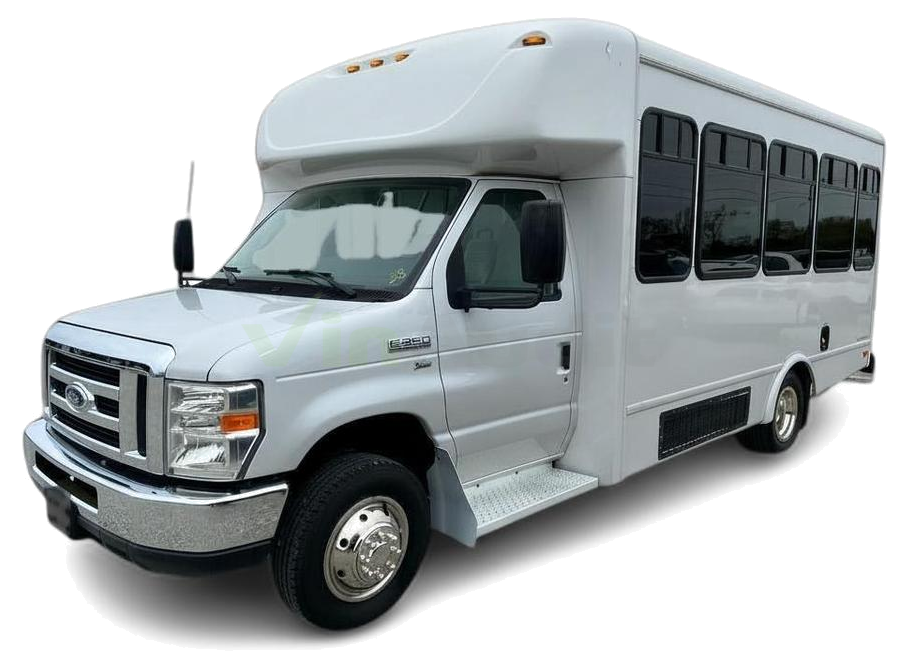
The Good
The 2015 Ford E-Series boasts strong V8/V10 performance for heavy loads, and legendary reliability with its proven, simple mechanics. While basic, its spacious interior offers practical utility and customization potential. Its utilitarian design appeals to those seeking a no-nonsense workhorse. Though not efficient, its robust value and low maintenance costs attract practical buyers, while its dependable, "get-the-job-done" character holds emotional appeal for many.
The Bad
Known weaknesses for the 2015 Ford E-Series include its dated interior design, notably poor fuel economy, and a relatively unrefined ride, especially when unladen. It lacks modern technology and advanced safety features common in contemporary vehicles. Potential issues to watch for on older models, though often improved by 2015, include rust accumulation and specific engine or transmission wear from heavy commercial use.
2015 Ford E-Series: Quick Overview
Key specifications for the 2015 Ford E-Series include:
- Engine Options:
- 4.6-liter Triton V8 (standard on E-150, often base E-250)
- 5.4-liter Triton V8 (most common, available across all van models)
- 6.8-liter Triton V10 (available on E-350 Super Duty models and cutaways, designed for maximum power)
- Horsepower:
- 4.6L V8: Approximately 225 hp
- 5.4L V8: Approximately 255 hp
- 6.8L V10: Approximately 305 hp
- Fuel Economy:
- No official EPA ratings are typically provided for heavy-duty commercial vans. Owners generally report figures ranging from 12-16 MPG combined, heavily dependent on engine, load, and driving conditions. Expect lower figures with the V10.
- 0-60 Times:
- Performance metrics like 0-60 mph times are not a focus for this utility vehicle and are rarely published. Expect acceleration in the 9-12 second range, varying significantly with engine, cargo, and specific configuration.
- Towing Capacity:
- Varies significantly by model and configuration:
- E-150: Around 5,000-7,000 lbs
- E-250: Around 7,000-10,000 lbs
- E-350: Can exceed 10,000 lbs, especially with the 6.8L V10 and proper tow package.
- Trim-Level Features:
- The 2015 E-Series was offered in two primary body styles: Cargo Van and Passenger Wagon (Wagon).
- XL (Base Trim): Focused on utility, it typically included vinyl seats, AM/FM radio, air conditioning, and basic gauges. Power windows, locks, and mirrors were often optional or part of convenience packages.
- XLT (Mid-Tier Trim): Added more comfort and convenience, such as cloth seats, cruise control, power windows and door locks, chrome exterior accents, an upgraded stereo with a CD player and auxiliary input, and remote keyless entry.
- Passenger Wagons: Available in 8, 12, or 15-passenger configurations, with rear air conditioning/heating often standard or optional.
- Cutaway Chassis: A bare chassis for custom upfitting into RVs, ambulances, shuttle buses, or box trucks, offering specific heavy-duty configurations.
- Common options across trims included heavy-duty alternator, limited-slip rear axle, trailer tow packages, and privacy glass.
2015 Ford E-Series Specifications
Vehicle Information
| Year | 2015 |
| Make | Ford |
| Model | E-Series |
| Trim | - |
| Style | - |
| Type | Van |
| Category | Medium Truck |
Manufacturing Details
| Made In | United States |
| Manufacturing City | AVON LAKE |
Dimensions
| Doors | 2-Door |
| Curb Weight | - |
| Gross Vehicle Weight Rating | - |
| Overall Height | - |
| Overall Length | - |
| Overall Width | - |
| Wheelbase Length | - |
| Standard Seating | - |
Engine & Performance
| Engine | 5.4L V8 |
| Engine Size | 5.4L |
| Engine Cylinders | 8 |
| Transmission | 4-Speed Automatic |
| Transmission Type | Automatic |
| Transmission Speeds | 4-Speed |
| Drivetrain | Rear-Wheel Drive |
Additional Features
| Anti-Brake System | - |
| Steering Type | - |
Pricing
| Manufacturer Suggested Retail Price (MSRP) | - |
| Invoice Price | - |
| Delivery Charges | - |
Vehicle History Report
Specifications
History
Events
History Check
Check
Check
Check
Check
Listings
Recalls
Check
Analysis
What Problems Does the 2015 Ford E-Series Have?
As the 2015 Ford E-Series represented the final iteration of a long-running platform, many of its inherent design flaws had been addressed or minimized in earlier model years. However, several general E-Series reliability concerns and frequently reported problems still apply, especially given the vehicle's typical usage in commercial or heavy-duty applications.
One of the most persistent concerns for the Triton V8 and V10 engines (5.4L and 6.8L) involved spark plug issues. While earlier models were infamous for spark plugs ejecting from cylinder heads or breaking during removal, Ford implemented design improvements over the years. By 2015, the risk was significantly reduced, but careful maintenance and proper torque specifications during spark plug replacement remain crucial. Another common engine-related issue is exhaust manifold cracking, often leading to a noticeable "ticking" sound, especially on cold starts. This is due to repeated heat cycles and can result in exhaust leaks requiring replacement.
The transmissions (typically the 4R75E or 4R100 depending on engine and duty) are generally robust, but heavy use, especially towing or high mileage, can lead to wear and potential solenoid issues. Owners should monitor for harsh shifts or slipping. Rust is a significant long-term reliability concern for E-Series vans, particularly on the frame, rocker panels, rear wheel wells, and door bottoms, especially in regions that use road salt. Regular inspection and rust prevention are advisable.
Suspension components like ball joints, tie rods, and bushings are wear items that will require replacement over time, given the vehicle's weight and potential for heavy loads. Brake components also tend to wear faster than in lighter vehicles. Minor electrical gremlins, such as issues with the HVAC blower motor or resistor, are also occasionally reported across the E-Series lifespan.
Regarding recalls, the 2015 model year, being the final year of production for the van body, saw fewer new, platform-specific recalls compared to earlier iterations. Owners should always check the NHTSA database using their specific VIN for any outstanding recalls that might apply to component suppliers or late production issues, although major structural or powertrain recalls are less common for a mature design like this in its last year.
How long will the 2015 Ford E-Series last?
What Technology & Safety Features are Included?
The 2015 Ford E-Series, being the culmination of a decades-old design, offers a very basic suite of built-in technology, entertainment, and driver-assistance features, reflecting its utilitarian focus rather than modern passenger vehicle comforts.
Built-in Tech & Entertainment: Standard amenities were minimal. A basic AM/FM stereo was standard, with an optional CD player and an auxiliary input jack for external devices. Advanced infotainment systems like touchscreens, navigation, or integrated Bluetooth for hands-free calling were not factory options. The interior prioritizes functionality and ruggedness over cutting-edge electronics, meaning aftermarket solutions are necessary for most modern conveniences.
Driver-Assistance Features: In this category, the 2015 E-Series is notably lacking compared to contemporary vehicles. There were no advanced systems such as blind-spot monitoring, lane-keeping assist, adaptive cruise control, or automatic emergency braking. The most 'advanced' driver aid available as an option might have been rear parking sensors to assist with maneuvering the large vehicle. A rearview camera was also a common aftermarket addition but rarely a factory-installed feature.
Safety Features: Despite its age, the E-Series did incorporate some essential safety features. Standard safety equipment included driver and front passenger airbags, providing basic frontal impact protection. Anti-lock brakes (ABS) were standard across all models, crucial for maintaining control during hard braking, especially with heavy loads. A significant safety enhancement introduced in its later years was Ford's AdvanceTrac with Roll Stability Control (RSC), which used sensors to monitor vehicle stability and selectively apply brakes or reduce engine power to prevent rollovers or skids. A Tire Pressure Monitoring System (TPMS) was also standard. However, it lacked the full complement of side curtain airbags or other advanced occupant protection systems found in newer vehicles.
Crash-Test Ratings: Large commercial vans like the Ford E-Series were generally not subjected to the same comprehensive crash-test evaluations by organizations like the National Highway Traffic Safety Administration (NHTSA) or the Insurance Institute for Highway Safety (IIHS) as typical passenger cars or light trucks. Therefore, detailed crash-test ratings are largely unavailable. While its robust body-on-frame construction provides inherent structural rigidity, it lacks the advanced crumple zones and extensive airbag arrays that define modern passive safety.
What Colors Options are Available?
2015 Ford E-Series Prices and Market Value
2015 Ford E-Series Cost of Ownership
2015 Ford E-Series Fuel Efficiency
2015 Ford E-Series Warranty
Basic
Powertrain
Rust
2015 Ford E-Series Insurance
reasonable repair costs.
How Does the 2015 Ford E-Series Compare to Other Van?
When stacking the 2015 Ford E-Series against its key rivals, a clear picture emerges of its traditional strengths and weaknesses compared to more modern alternatives.
Key Rivals: Its most direct contemporary competitor was the Chevrolet Express / GMC Savana, which offered a very similar body-on-frame construction and V8 engine options. Other rivals include the Nissan NV (another traditional full-size van, though newer in its inception) and the more modern, European-inspired Ford Transit (the E-Series' eventual successor) and Mercedes-Benz Sprinter.
- Performance: The E-Series, with its strong 5.4L V8 and optional 6.8L V10, delivers excellent towing and hauling capability, rivaling the Express/Savana's V8s and often surpassing the NV's V8. The Transit and Sprinter, while offering more refined driving dynamics and often better fuel economy (especially the Sprinter's diesels), typically don't match the raw, low-end torque and brute force of the E-Series V10 for extreme heavy-duty tasks.
- Features: This is where the E-Series shows its age. It, along with the Express/Savana and NV, offered very basic interior amenities, utilitarian design, and minimal built-in tech (AM/FM radio, basic climate control). The Transit and Sprinter, by contrast, offered significantly more modern interiors, better ergonomics, more advanced infotainment options (even in 2015), and a wider array of optional safety and driver-assistance features.
- Reliability: The E-Series, Express/Savana, and NV are all renowned for their rugged, simple, and proven mechanical reliability. Their traditional designs mean fewer complex electronics to fail, and parts are widely available and affordable. The Sprinter, while well-built, can be more complex and potentially more costly to maintain or repair due to specialized components and service requirements. The Transit, being newer, introduced more complexity but generally maintains good reliability.
- Price: The E-Series, Express/Savana, and NV generally presented a more affordable entry point, both new and on the used market, compared to the more premium and technologically advanced Sprinter and Transit models.
Recommendations:
- If your priority is ultimate raw towing/hauling capacity, proven simplicity, and lowest initial purchase/maintenance cost, the 2015 Ford E-Series or a similarly aged Chevrolet Express/GMC Savana remains an excellent, cost-effective choice.
- For better fuel economy, modern comfort, superior driving dynamics, and diverse body configurations (especially tall-roof options), a Ford Transit (new or used) or Nissan NV (for a slightly more modern traditional option) would be better alternatives.
- For specialized tall-roof applications, diesel efficiency, or a more refined driving experience with a premium price tag, the Mercedes-Benz Sprinter stands out.
The 2015 E-Series is best for those who value "old-school" durability and straightforward mechanics over advanced features and fuel efficiency.
Final Verdict: Is the 2015 Ford E-Series a Good Van?
It is absolutely worth buying, but almost exclusively on the used market, as 2015 was its final year for the full-size van body. Look for E-250 or E-350 trims with the 5.4L V8 for a balanced blend of power and "economy," or the 6.8L V10 for maximum towing.
Conditions for purchase include thoroughly inspecting for rust, checking the service history, and being prepared for its notably poor fuel economy. It's a pragmatic choice for those who need to haul, tow, or customize on a budget, valuing straightforward dependability above all else.

Cathleen V
Cathleen is an exceptional freelance writer covering hot topics in the automotive world from a gearhead's perspective. Her articles delve into various aspects of automotive technology and history, offering readers detailed insights into engine performance, reliability, and maintenance. Through her engaging and informative writing, Cathleen provides valuable information to automotive enthusiasts and consumers alike, helping them make informed decisions about vehicle maintenance and purchases.