
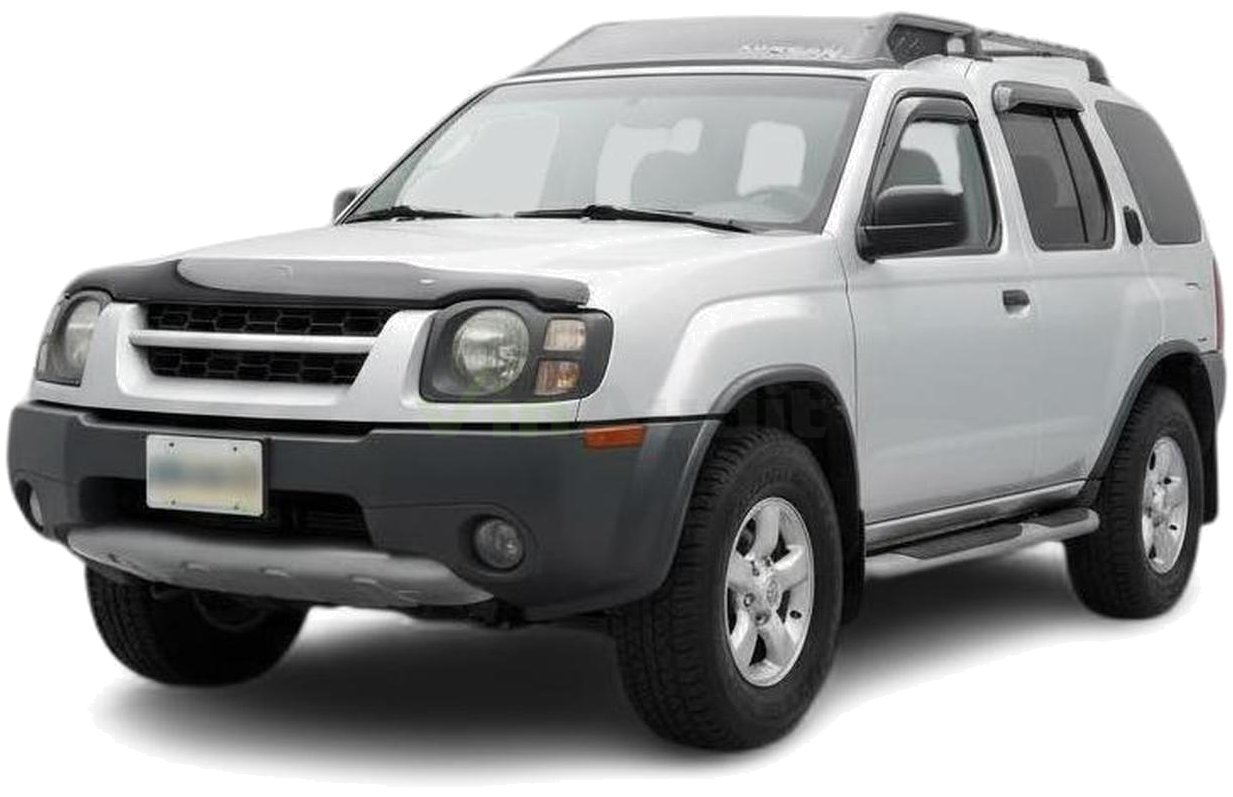
The 2002 Nissan Xterra belongs to the first generation (2000-2004) of Nissan's rugged, adventure-focused SUV. Sporting a distinctive "built-for-adventure" body-on-frame design, it came in XE and SE trims. Initially priced from around $18,000 to $27,000, its no-nonsense, utilitarian approach and integrated roof rack made it popular among outdoor enthusiasts seeking a capable, affordable off-roader without the frills of more luxurious SUVs.
The Good
The 2002 Xterra offers strong off-road capability and a robust, utilitarian design that appeals to adventurers. Its practical cargo space and simple mechanicals often translate to decent reliability and a good value proposition for budget-conscious buyers, while its distinctive styling and rugged demeanor foster emotional appeal.
The Bad
Potential buyers should watch out for significant frame rust, especially in regions using road salt. Other common weaknesses include V6 timing belt maintenance, sagging rear leaf springs, and fuel gauge sending unit failures. Its fuel economy is also notably low, and the interior technology is quite dated.
2002 Nissan Xterra: Quick Overview
- Engine Options:
- 2.4-liter DOHC 16-valve 4-cylinder (I4)
- 3.3-liter SOHC 12-valve V6 (naturally aspirated)
- 3.3-liter SOHC 12-valve Supercharged V6 (available on SE trim) - Horsepower:
- I4: Approximately 143 hp
- Naturally Aspirated V6: Approximately 170 hp
- Supercharged V6: Approximately 210 hp - Fuel Economy (EPA estimates, varied by drivetrain/transmission):
- I4 2WD Manual: ~18-20 MPG city, 22-24 MPG highway
- V6 2WD Automatic: ~15-17 MPG city, 19-21 MPG highway
- V6 4WD Automatic: ~14-16 MPG city, 18-20 MPG highway
- Supercharged V6 estimates were similar or slightly lower than the naturally aspirated V6. - 0-60 Times: Not a primary performance metric for this SUV; generally in the 9-11 second range for V6 models, and 12-14 seconds for I4 models.
- Towing Capacity:
- I4: Up to 3,500 lbs
- V6: Up to 5,000 lbs (depending on configuration) - Trim-Level Features:
- XE: This was the base, more utilitarian trim. Standard features typically included:
- 15-inch steel wheels
- Cloth upholstery
- AM/FM/CD audio system
- Air conditioning
- Power steering
- Front bucket seats
- Rear privacy glass
- Integrated tubular roof rack with a "gear basket" - SE: The premium trim offering more comfort and convenience. It built upon the XE's features and often added:
- 16-inch alloy wheels
- Power windows and door locks
- Power mirrors
- Upgraded audio system, sometimes with a cassette player and more speakers
- Remote keyless entry
- Cruise control
- Available Supercharged V6 engine option
- Optional leather-wrapped steering wheel and shifter knob
- XE: This was the base, more utilitarian trim. Standard features typically included:
2002 Nissan Xterra Specifications
Vehicle Information
| Year | 2002 |
| Make | Nissan |
| Model | Xterra |
| Trim | - |
| Style | - |
| Type | Wagon |
| Category | Standard Sport Utility Vehicle |
Manufacturing Details
| Made In | United States |
| Manufacturing City | MUSASHIMURAYAMA |
Dimensions
| Doors | 4-Door |
| Curb Weight | - |
| Gross Vehicle Weight Rating | 6000 pounds |
| Overall Height | - |
| Overall Length | - |
| Overall Width | - |
| Wheelbase Length | - |
| Standard Seating | - |
Engine & Performance
| Engine | VG33E |
| Engine Size | 3.3L |
| Engine Cylinders | 6 |
| Transmission | 4-Speed Automatic |
| Transmission Type | Automatic |
| Transmission Speeds | 4-Speed |
| Drivetrain | Four-Wheel Drive |
Additional Features
| Anti-Brake System | - |
| Steering Type | - |
Pricing
| Manufacturer Suggested Retail Price (MSRP) | - |
| Invoice Price | - |
| Delivery Charges | - |
Vehicle History Report
Vehicle
Specifications
Specifications
Ownership
History
History
All History
Events
Events
NMVTIS Title
History Check
History Check
Salvage/Rebuilt
Check
Check
Accident
Check
Check
Theft
Check
Check
Open Lien
Check
Check
Past Sale
Listings
Listings
Safety
Recalls
Recalls
Odometer
Check
Check
Market Price
Analysis
Analysis
What Problems Does the 2002 Nissan Xterra Have?
The 2002 Nissan Xterra, while generally rugged, does have several frequently reported problems and long-term reliability concerns, especially due to its age. Perhaps the most significant issue is frame rust, particularly severe in areas where road salt is used. This can compromise structural integrity and be very costly to repair, often leading to total loss. Prospective buyers should thoroughly inspect the frame for corrosion.
Another common issue, specifically for V6 models, relates to the timing belt. It requires replacement around 105,000 miles, and if neglected, can lead to catastrophic engine damage. Verifying this maintenance is crucial. Owners also frequently report fuel gauge sending unit failures, resulting in inaccurate fuel level readings. This is a common Nissan problem across several models of that era.
Rear leaf springs are known to sag over time, affecting ride height and handling, especially when carrying loads. Cracked exhaust manifolds can also occur, leading to exhaust leaks and noise. Power window motors, particularly on the driver's side, are prone to failure. Less common but reported issues include steering component wear, catalytic converter problems, and oxygen sensor failures.
For recalls, the 2002 Xterra has had several. One notable recall involved the crankshaft position sensor, which could fail, causing the engine to stall. Another recall addressed potential issues with certain fuel pump components that could lead to fuel leaks. There were also recalls regarding front suspension components that could corrode. It's always advisable to check a specific vehicle's VIN for any open recalls.
Another common issue, specifically for V6 models, relates to the timing belt. It requires replacement around 105,000 miles, and if neglected, can lead to catastrophic engine damage. Verifying this maintenance is crucial. Owners also frequently report fuel gauge sending unit failures, resulting in inaccurate fuel level readings. This is a common Nissan problem across several models of that era.
Rear leaf springs are known to sag over time, affecting ride height and handling, especially when carrying loads. Cracked exhaust manifolds can also occur, leading to exhaust leaks and noise. Power window motors, particularly on the driver's side, are prone to failure. Less common but reported issues include steering component wear, catalytic converter problems, and oxygen sensor failures.
For recalls, the 2002 Xterra has had several. One notable recall involved the crankshaft position sensor, which could fail, causing the engine to stall. Another recall addressed potential issues with certain fuel pump components that could lead to fuel leaks. There were also recalls regarding front suspension components that could corrode. It's always advisable to check a specific vehicle's VIN for any open recalls.
How long will the 2002 Nissan Xterra last?
With diligent maintenance, a 2002 Nissan Xterra can achieve impressive longevity, often reaching 200,000 to 300,000 miles or more, translating to 15-20+ years of service. Its body-on-frame construction and generally robust powertrains contribute to this potential durability. However, this longevity heavily depends on maintenance habits. Proactive rust prevention and repair, timely timing belt changes (for V6), and regular fluid maintenance are critical.
Over time, the primary weaknesses that can limit its lifespan are significant frame rust, which can render the vehicle unsafe, and neglected timing belt replacements leading to engine failure. Suspension components, such as leaf springs and shocks, also degrade and require replacement to maintain ride quality and safety. While engines and transmissions are generally durable, age-related wear on peripheral components like sensors, alternators, and starters is common.
What Technology & Safety Features are Included?
The 2002 Nissan Xterra, true to its rugged, no-frills philosophy, featured built-in tech and entertainment that was basic by today's standards but adequate for its era. The standard entertainment system typically included an AM/FM stereo with a CD player. Higher trims (SE) might have offered an upgraded sound system, sometimes with a cassette player, and more speakers. Connectivity was limited to a 12V power outlet. There were no integrated navigation systems, Bluetooth, or touchscreens.
Driver-assistance features were minimal to non-existent. The Xterra did not offer modern amenities like blind-spot monitoring, lane-keeping assist, or adaptive cruise control. The only notable driver-assistance-related feature, often optional on lower trims, was an anti-lock braking system (ABS), which was becoming more common but not universally standard across all models.
In terms of safety, the 2002 Xterra came standard with dual front airbags for the driver and passenger, three-point seatbelts for all outboard seating positions, and child safety seat anchors (LATCH system). Side airbags were not offered for this model year.
Crash test ratings for the 2002 Nissan Xterra provide a reasonable benchmark for its safety performance:
Driver-assistance features were minimal to non-existent. The Xterra did not offer modern amenities like blind-spot monitoring, lane-keeping assist, or adaptive cruise control. The only notable driver-assistance-related feature, often optional on lower trims, was an anti-lock braking system (ABS), which was becoming more common but not universally standard across all models.
In terms of safety, the 2002 Xterra came standard with dual front airbags for the driver and passenger, three-point seatbelts for all outboard seating positions, and child safety seat anchors (LATCH system). Side airbags were not offered for this model year.
Crash test ratings for the 2002 Nissan Xterra provide a reasonable benchmark for its safety performance:
- NHTSA (National Highway Traffic Safety Administration):
- Frontal Impact (Driver): 4 out of 5 stars
- Frontal Impact (Passenger): 4 out of 5 stars
- Side Impact (Driver): 3 out of 5 stars
- Side Impact (Rear Passenger): 5 out of 5 stars
- Rollover Resistance (2WD & 4WD): 3 out of 5 stars - IIHS (Insurance Institute for Highway Safety):
- Moderate Overlap Front: Good (the highest rating)
What Colors Options are Available?
2002 Nissan Xterra Prices and Market Value
When new in 2002, the Nissan Xterra had a starting MSRP ranging from approximately $18,000 for a base 2WD XE I4 model up to around $27,000-$28,000 for a fully loaded 4WD SE with the Supercharged V6 option.
Today, its value has significantly depreciated, placing it firmly in the affordable used vehicle market. Current used market prices can range from as low as $2,000 for high-mileage examples with cosmetic or minor mechanical issues, up to $8,000-$10,000+ for exceptionally well-maintained, low-mileage 4WD SE models, particularly those in rust-free condition. Depreciation has largely bottomed out, and well-preserved examples might even see slight appreciation among enthusiasts.
Factors heavily affecting resale value include the absence of frame rust (the most critical), overall mechanical condition, mileage, the presence of 4WD, the more desirable V6 or Supercharged V6 engines, and a clean interior/exterior. Maintenance records also play a significant role.
Today, its value has significantly depreciated, placing it firmly in the affordable used vehicle market. Current used market prices can range from as low as $2,000 for high-mileage examples with cosmetic or minor mechanical issues, up to $8,000-$10,000+ for exceptionally well-maintained, low-mileage 4WD SE models, particularly those in rust-free condition. Depreciation has largely bottomed out, and well-preserved examples might even see slight appreciation among enthusiasts.
Factors heavily affecting resale value include the absence of frame rust (the most critical), overall mechanical condition, mileage, the presence of 4WD, the more desirable V6 or Supercharged V6 engines, and a clean interior/exterior. Maintenance records also play a significant role.
2002 Nissan Xterra Cost of Ownership
Long-term ownership of a 2002 Nissan Xterra can be a mixed bag, depending on the vehicle's initial condition and owner's habits. Insurance costs are generally quite low due to its age and modest market value. Fuel costs, however, are a significant factor, as the Xterra is not fuel-efficient, especially the V6 and 4WD models, making it somewhat costly to run daily. Maintenance is generally reasonable for routine items, and parts are widely available. Major repairs, particularly for timing belt services (V6) or extensive rust remediation, can be costly. For a mechanically savvy owner who can perform DIY repairs and finds a rust-free example, it can be an economical vehicle. Otherwise, it can become costly if major issues arise or if professional repairs are consistently needed for its various age-related problems.
2002 Nissan Xterra Fuel Efficiency
Fuel Type
Gasoline
Fuel Capacity
-
City Mileage
15 miles/gallon
Highway Mileage
19 miles/gallon
2002 Nissan Xterra Safety Rating
NHTSA
2002 Nissan Xterra Recalls & Defects
Steering:column
Recall date
2010-11-11
Recall no.
10v554000
Source
NHTSA
Summary
Nissan IS Recalling Certain Model Year 2002-2004 Frontier Vehicles Manufactured From July 9, 2001 Through October 20, 2004, and Model Year 2002-2004, Xterra Vehicles Manufactured From July 9, 2001, Through January 6, 2005. Over Time Corrosion MAY Form IN THE Lower Steering Column Joint and Limit Movement OF THE Joint. THE Limited Movement OF This Joint MAY Create Excessive Load ON THE Lower Steering Column Shaft. IF THE Vehicle Continues TO BE Driven IN This Condition, IT MAY Lead TO Cracking OF THE Shaft During Low Speed Maneuvers That Require Large Steering Inputs.
Consequence
THE Shaft MAY Break Which Could Result IN Loss OF Steering Control During These Low Speed Maneuvers Increasing THE Risk OF A Crash.
Remedy
THE Steering Column Shaft and Joint Will BE Replaced With A Shaft OF A Different Design. This Service Will BE Performed Free OF Charge. THE Recall Began ON December 13, 2010. Owners MAY Contact Nissan AT 1-800-647-7261.
Notes
Nissan Safety Recal NO. R1037.owners MAY Also Contact THE National Highway Traffic Safety Administration's Vehicle Safety Hotline AT 1-888-327-4236 (Tty 1-800-424-9153), or GO TO <A Href=http://Www.safercar.gov>http://www.safercar.gov</a> .
Suspension:rear
Recall date
2002-11-12
Recall no.
02v299000
Source
NHTSA
Summary
ON Certain Pickup Trucks and Sport Utility Vehicles, Water MAY Enter THE Rear Axle Housing DUE TO Inadequate Sealing OF THE Anti-Lock Braking System (Abs) Sensor.
Consequence
This CAN Result IN Corrosion and Eventual Failure OF THE Wheel Bearing. IF This Occurs, THE Wheel Assembly Could Separate From THE Vehicle Increasing THE Risk OF A Crash.
Remedy
Dealers Will Inspect THE Rear Axle FOR Water Intrusion and ANY Affected Components Will BE Replaced. THE ABS Sensor Will BE Resealed TO Prevent Water Intrusion. Owner Notification Began December 10, 2003. Owners WHO Take Their Vehicles TO AN Authorized Dealer ON AN Agreed Upon Service Date and DO NOT Receive THE Free Remedy Within A Reasonable Time Should Contact Nissan AT 1-800-647-7261.
Notes
Also Contact THE National Highway Traffic Safety Administration's Auto Safety Hotline AT 1-888-Dash-2-dot (1-888-327-4236).
Vehicle Speed Control
Recall date
2002-11-12
Recall no.
02v298000
Source
NHTSA
Summary
ON Certain Pickup Trucks and Sport Utility Vehicles Equipped With A Supercharger, Under Certain Conditions, Such AS Full Throttle IN Low Gear When THE Engine IS NOT Fully Warmed UP and AT Cold Ambient Temperature, THE Amount OF Intake AIR Flow Through THE AIR Flow Meter MAY Exceed THE Maximum Preset Diagnosis Limit Value.
Consequence
This Will Cause THE Engine Control System TO GO Into THE Failsafe Mode. Under This Condition, THE Malfunction Indicator Lamp Will Illuminate and Engine Speed Will NOT Exceed 2400 RPM Regardless OF THE Throttle Position, Increasing THE Risk OF A Crash.
Remedy
Dealers Will Reprogram THE Electronic Control Module. Owner Notification Began January 15, 2003. Owners WHO Take Their Vehicles TO AN Authorized Dealer ON AN Agreed Upon Service Date and DO NOT Receive THE Free Remedy Within A Reasonable Time Should Contact Nissan AT 1-800-647-7261.
Notes
Also Contact THE National Highway Traffic Safety Administration's Auto Safety Hotline AT 1-888-Dash-2-dot (1-888-327-4236).
AIR Bags:frontal:driver Side:inflator Module
Recall date
2003-02-27
Recall no.
03v061000
Source
NHTSA
Summary
ON Certain Vehicles, THE Electrical Connector FOR THE Driver AIR BAG MAY Come Loose. IF THE Connector Comes Loose, THE Supplemental AIR BAG Warning Light Flashes Intermittently.
Consequence
THE Driver Side AIR BAG Will NOT Deploy IN THE Event OF A Crash, Increasing THE Risk OF Personal Injury.
Remedy
Dealers Will Install A Retaining Clip ON THE Clock Spring Electrical Connector. Owner Notification Began April 21, 2003. Owners WHO Take Their Vehicles TO AN Authorized Dealer ON AN Agreed Upon Service Date and DO NOT Receive THE Free Remedy Within A Reasonable Time Should Contact Nissan AT 1-800-647-7261.
Notes
Nissan Recall NO. R3001.customers CAN Also Contact THE National Highway Traffic Safety Administration's Auto Safety Hotline AT 1-888-Dash-2-dot (1-888-327-4236).
Fuel System, Gasoline:delivery:fuel Pump
Recall date
2004-05-24
Recall no.
04v230000
Source
NHTSA
Summary
ON Certain Pickup Trucks Equipped With SIX Cylinder Engines and Sport Utility Vehicles Equipped With Four or SIX Cylinder Engines, THE Fuel Pump Terminal ON THE Fuel-Sending Unit CAN Develop A Crack IN THE Plastic Molding. This CAN Cause THE Terminal Strip TO Corrode Under Some Environmental Conditions.
Consequence
IF Corrosion Occurs, THE Terminal Strip Could Eventually Break Causing THE Fuel Pump TO Stop Operation. This Will Result IN NOT Being Able TO Start THE Engine or Cause THE Engine TO Stop Running Without Warning, Which CAN Result IN A Crash.
Remedy
IN THE Following States, Dealers Will Replace THE Fuel-Sending Unit. These States ARE Connecticut, Delaware, Illinois, Indiana, Iowa, Kentucky, Maine, Maryland, Massachusetts, Michigan, Minnesota, NEW Hampshire, NEW Jersey, NEW York, Ohio, Pennsylvania, Rhode Island, Tennessee, Vermont, Virginia, West Virginia, Wisconsin, and THE District OF Columbia. IN THE Other States, THE Dealer Will Inspect THE Fuel Pump Terminal ON THE Sending Unit FOR Corrosion. IF Corrosion IS Present, THE Dealer Will Replace THE Unit. IF There IS NOT Corrosion, THE Dealer Will Apply Sealant TO THE Terminal Housing TO Help Prevent Corrosion IN THE Future. Owner Notification Began ON June 28, 2004. Owners Should Contact Nissan AT 1-800-647-7261.
Notes
Customers CAN Also Contact THE National Highway Traffic Safety Administration's Auto Safety Hotline AT 1-888-Dash-2-dot (1-888-327-4236).
Exterior Lighting
Recall date
2006-03-23
Recall no.
06e026000
Source
NHTSA
Summary
Certain Pro-A Motors Corner Lamps, Turn Signals, and Headlights Sold AS Replacement Lamps FOR USE ON Certain Passenger Vehicles Listed Above. Some Combination Lamps That ARE NOT Equipped With Amber Side Reflectors Fail TO Conform TO Federal Motor Vehicle Safety Standard NO. 108, Lamps, Reflective Devices, and Associated Equipment.
Consequence
Without THE Amber Reflectors, THE Vehicle Will BE Poorly Illuminated, Possibly Resulting IN A Vehicle Crash Without Warning.
Remedy
Pro-A Motors Will Notify Owners and Offer TO Repurchase THE Lamps. THE Recall Began ON April 3, 2006. Owners MAY Contact Pro-A Motors AT 323-838-2988.
Notes
This Recall Only Pertains TO Pro-A Motors Aftermarket Lamps and HAS NO Relation TO ANY Original Equipment Installed ON THE Listed Passenger Vehicles.for More Information ON THE Lamp Model Numbers, Click ON Document Search and View Document Titled "lamp Model Numbers."customers MAY Contact THE National Highway Traffic Safety Administration's Vehicle Safety Hotline AT 1-888-327-4236 (Tty: 1-800-424-9153); or GO TO Http://Www.safercar.gov.
2002 Nissan Xterra Insurance
Insurance for a 2002 Nissan Xterra is moderately priced, reflecting its status as a Wagon with strong safety ratings and
reasonable repair costs.
How Does the 2002 Nissan Xterra Compare to Other Wagon?
The 2002 Nissan Xterra competed directly with rugged, body-on-frame SUVs like the 3rd Generation Toyota 4Runner (1996-2002), Jeep Cherokee (XJ), Jeep Liberty (KJ), and Ford Explorer.
In terms of performance, the Xterra's available 3.3L V6 (170 hp) and Supercharged V6 (210 hp) offered decent power for its class, comparable to the 4Runner's 3.4L V6 (183 hp) and the Explorer's V6 options. The Xterra was generally more capable off-road than the Explorer, but arguably less refined on-road than the 4Runner. Its distinct integrated roof rack and gear basket were a unique functional feature.
Features across all these rivals were fairly basic for the era. The Xterra, 4Runner, and Jeeps all offered good 4x4 systems. The Xterra focused more on utilitarian aspects, while the 4Runner might have offered a slightly more comfortable interior. The Explorer typically offered more amenities but often less off-road prowess.
Reliability is where the Xterra faces its stiffest competition. The 3rd Gen Toyota 4Runner is widely regarded as the benchmark for reliability in this segment, often suffering fewer significant common issues than the Xterra, particularly regarding frame rust. While the Xterra is robust, its known issues like frame rust, timing belt service, and fuel gauge sending units can be more problematic than typical 4Runner concerns. Jeeps of this era also have a strong off-road reputation but often come with their own set of electrical and mechanical quirks.
Price is a major differentiator today. Used Xterras are generally more affordable than comparable 3rd Gen 4Runners, which command a premium due to their legendary reliability. Xterras are often similarly priced or slightly more expensive than older Jeep Cherokees (XJ), but typically less than Jeep Liberties (KJ) or Ford Explorers of the same vintage, depending on condition.
Alternatives: For ultimate reliability and resale value, a 3rd Gen Toyota 4Runner is often a superior, albeit pricier, alternative. If off-road capability is paramount and budget is tight, a well-maintained Jeep Cherokee (XJ) could be considered. For a more modern feel and slightly better on-road manners, a second-generation Nissan Xterra (2005-2015) offers more power, improved safety, and refinement, but at a higher cost.
In terms of performance, the Xterra's available 3.3L V6 (170 hp) and Supercharged V6 (210 hp) offered decent power for its class, comparable to the 4Runner's 3.4L V6 (183 hp) and the Explorer's V6 options. The Xterra was generally more capable off-road than the Explorer, but arguably less refined on-road than the 4Runner. Its distinct integrated roof rack and gear basket were a unique functional feature.
Features across all these rivals were fairly basic for the era. The Xterra, 4Runner, and Jeeps all offered good 4x4 systems. The Xterra focused more on utilitarian aspects, while the 4Runner might have offered a slightly more comfortable interior. The Explorer typically offered more amenities but often less off-road prowess.
Reliability is where the Xterra faces its stiffest competition. The 3rd Gen Toyota 4Runner is widely regarded as the benchmark for reliability in this segment, often suffering fewer significant common issues than the Xterra, particularly regarding frame rust. While the Xterra is robust, its known issues like frame rust, timing belt service, and fuel gauge sending units can be more problematic than typical 4Runner concerns. Jeeps of this era also have a strong off-road reputation but often come with their own set of electrical and mechanical quirks.
Price is a major differentiator today. Used Xterras are generally more affordable than comparable 3rd Gen 4Runners, which command a premium due to their legendary reliability. Xterras are often similarly priced or slightly more expensive than older Jeep Cherokees (XJ), but typically less than Jeep Liberties (KJ) or Ford Explorers of the same vintage, depending on condition.
Alternatives: For ultimate reliability and resale value, a 3rd Gen Toyota 4Runner is often a superior, albeit pricier, alternative. If off-road capability is paramount and budget is tight, a well-maintained Jeep Cherokee (XJ) could be considered. For a more modern feel and slightly better on-road manners, a second-generation Nissan Xterra (2005-2015) offers more power, improved safety, and refinement, but at a higher cost.
Final Verdict: Is the 2002 Nissan Xterra a Good Wagon?
The 2002 Nissan Xterra is an ideal vehicle for budget-conscious adventurers, outdoor enthusiasts, or individuals seeking a rugged, no-frills SUV for light to moderate off-roading and utilitarian purposes. It's also suitable for those who appreciate its distinctive, purposeful styling and don't mind its dated interior or less-than-stellar fuel economy.
It is absolutely worth buying in the current used market, but under very specific conditions. A thorough pre-purchase inspection is critical, focusing heavily on the absence of significant frame rust and verification of V6 timing belt service. Opting for a 4WD SE trim with the V6 or Supercharged V6 engine will provide the best blend of power and capability. It's not for those prioritizing modern amenities, plush comfort, or exceptional fuel efficiency. If you find a well-maintained, rust-free example, especially a 4WD model, it offers tremendous value as a capable and distinctive adventure vehicle.
