
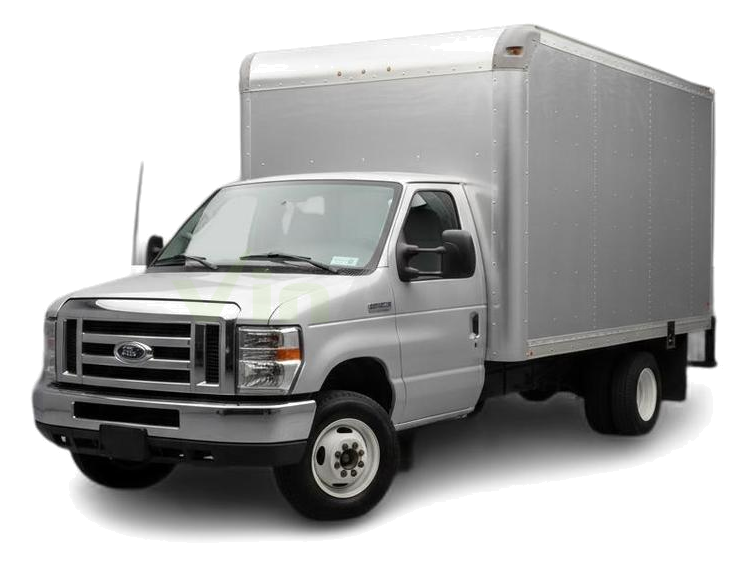
The Good
The 2017 Ford E-Series offers immense practicality with its powerful V8 engine options, providing robust towing and hauling capabilities essential for commercial applications. Its body-on-frame durability assures long-term reliability and lower repair costs for practical buyers. Emotionally, it's a familiar workhorse, inspiring confidence with its proven track record and straightforward design, a true "get-the-job-done" vehicle.
The Bad
Known weaknesses for the 2017 Ford E-Series include its dated interior design and lack of modern amenities compared to newer rivals like the Transit. Fuel economy is notably poor, especially with the larger engines and heavy loads. The ride quality can be stiff, and maneuverability in tight spaces is challenging due to its sheer size.
2017 Ford E-Series: Quick Overview
The 2017 Ford E-Series, primarily available as cutaway and stripped chassis models, came with robust specifications tailored for heavy-duty applications:
- Engine Options:
- 4.6L Triton V8 (primarily for lighter-duty applications, though less common by 2017 in new chassis)
- 5.4L Triton V8 (most common, a dependable workhorse)
- 6.8L Triton V10 (for maximum power and towing/hauling, especially in E-450 chassis)
- Horsepower:
- 4.6L V8: Approximately 225 hp
- 5.4L V8: Approximately 255 hp
- 6.8L V10: Approximately 305 hp
- Fuel Economy:
- Official EPA ratings were not typically provided for these chassis models due to the wide variety of upfits. However, owner estimates generally range from 8-14 MPG combined, heavily dependent on engine, load, and upfit type. The larger V10 is notoriously thirsty.
- 0-60 Times:
- Not officially published for these commercial chassis, as acceleration is secondary to utility. Estimates would vary wildly based on upfit and weight, but expect slow, deliberate acceleration, likely in the 10-15+ second range, especially for heavily loaded V10 models.
- Towing Capacity (if applicable):
- Highly dependent on chassis model (E-350, E-450) and upfit. Max towing capacity can range from approximately 10,000 lbs to over 14,000 lbs for properly equipped E-450 cutaways. Gross Vehicle Weight Rating (GVWR) varied from 10,050 lbs to 14,500 lbs.
- Trim-Level Features:
- The concept of "trims" as seen in passenger vehicles doesn't fully apply here. The E-Series was offered as E-350 (Super Duty) and E-450 (Super Duty) cutaway or stripped chassis. Features were sparse and focused on utility:
- Standard Equipment: Air conditioning, AM/FM radio, vinyl seating, power steering, anti-lock brakes (ABS), dual front airbags, tilt steering wheel.
- Optional Equipment: Cruise control, power windows/locks, upgraded radio, backup alarm, various wheelbase and frame lengths, different axle ratios, heavy-duty alternator, auxiliary fuel ports, traction control, engine block heater. The bulk of "features" would be added by third-party upfitters (e.g., ambulance bodies, RV conversions, shuttle bus seating).
2017 Ford E-Series Specifications
Vehicle Information
| Year | 2017 |
| Make | Ford |
| Model | E-Series |
| Trim | - |
| Style | - |
| Type | Van |
| Category | Cargo Van |
Manufacturing Details
| Made In | United States |
| Manufacturing City | AVON LAKE |
Dimensions
| Doors | 2-Door |
| Curb Weight | - |
| Gross Vehicle Weight Rating | - |
| Overall Height | - |
| Overall Length | - |
| Overall Width | - |
| Wheelbase Length | - |
| Standard Seating | - |
Engine & Performance
| Engine | 6.8L V10 |
| Engine Size | 6.8L |
| Engine Cylinders | 10 |
| Transmission | 6-Speed Automatic |
| Transmission Type | Automatic |
| Transmission Speeds | 6-Speed |
| Drivetrain | Rear-Wheel Drive |
Additional Features
| Anti-Brake System | - |
| Steering Type | - |
Pricing
| Manufacturer Suggested Retail Price (MSRP) | $51,995 |
| Invoice Price | - |
| Delivery Charges | - |
Vehicle History Report
Specifications
History
Events
History Check
Check
Check
Check
Check
Listings
Recalls
Check
Analysis
What Problems Does the 2017 Ford E-Series Have?
Transmission problems, particularly with the 4R75E or 5R110W TorqShift automatic transmissions, can occur, especially under heavy towing or neglected maintenance. Overheating, delayed shifts, or slipping are signs to watch for. Front end components like ball joints, tie rods, and wheel bearings tend to wear out, especially in vehicles that carry heavy loads or accumulate high mileage on rough roads. Steering gear box leaks are also not uncommon.
Electrical issues can sometimes crop up, including problems with instrument cluster lighting, power window motors, or wiring harnesses, though these are less systemic than engine/transmission concerns. Due to their commercial nature, rust can be a significant long-term reliability concern, particularly in areas exposed to road salt, affecting the frame, suspension components, and exhaust system. Recalls for the 2017 Ford E-Series were generally minor or related to specific upfitter modifications rather than fundamental chassis defects. For instance, some recalls addressed potential issues with certain types of ambulance conversions or specific brake line routing. Overall, while the E-Series is known for its durability, prospective buyers should be aware of these common heavy-duty wear items and specific engine quirks.
How long will the 2017 Ford E-Series last?
What Technology & Safety Features are Included?
Driver-assistance features were largely absent. There was no adaptive cruise control, lane-keeping assist, blind-spot monitoring, or forward collision warning system. The primary driver aid would be standard power steering and anti-lock brakes (ABS). Rearview cameras were beginning to become more common in 2017, and while not standard on the bare chassis, they were often installed by upfitters as a safety measure, especially for larger RVs or shuttle buses, or available as a dealer-installed option.
Safety features are also rudimentary by modern standards. The 2017 E-Series came with standard dual front airbags for the driver and front passenger. Three-point safety belts were also standard. Side airbags, curtain airbags, or advanced occupant protection systems were not available. Given its heavy-duty commercial nature and the fact that it's a chassis designed for various upfits, comprehensive crash-test ratings from organizations like the NHTSA or IIHS are not typically conducted for the bare E-Series cutaway or stripped chassis. These ratings are usually applied to complete vehicles with a specific body configuration. Its robust body-on-frame construction inherently provides a strong base, but occupant protection largely depends on the final upfit and specific body added by third-party manufacturers.
What Colors Options are Available?
2017 Ford E-Series Prices and Market Value
2017 Ford E-Series Cost of Ownership
2017 Ford E-Series Fuel Efficiency
2017 Ford E-Series Warranty
Basic
Powertrain
Rust
2017 Ford E-Series Insurance
reasonable repair costs.
How Does the 2017 Ford E-Series Compare to Other Van?
In terms of Performance, the E-Series, especially with its 6.8L V10, offers exceptional raw towing and hauling power, often surpassing the V8 options in the Express/Savana for sheer grunt. The Transit, with its smaller EcoBoost V6 engines, offers more modern power delivery and better fuel efficiency, but might not match the E-Series' ultimate heavy-duty capability for certain extreme upfits. For heavy-duty applications, the E-Series' body-on-frame design gives it a rugged edge.
Regarding Features, the E-Series is significantly behind. Its interior is spartan, lacking modern infotainment, advanced driver-assistance systems, or refined ergonomics. The Express/Savana are similarly dated. The Ford Transit, by contrast, offers a much more modern cabin, better seating, available touchscreen infotainment, and a suite of contemporary safety features like lane-keeping assist and adaptive cruise control on higher trims. If modern amenities are a priority, the E-Series falls short.
Reliability is a strong suit for the E-Series. Its proven, decades-old powertrain and simple mechanics make it a known quantity for maintenance and repairs, and many units achieve very high mileage. The Express/Savana also boast strong reliability. The Transit, being newer, still has a good reliability reputation but with more complex systems. For raw, unkillable durability, the E-Series often excels, though it comes with its own set of common, manageable issues like exhaust manifold leaks.
Price-wise, a new 2017 E-Series chassis was competitive with the Express/Savana cutaways. Used, the E-Series tends to hold its value well due to persistent demand in specialized markets (RV, ambulance). The Transit, being newer and more featured, often commands a higher price used. As alternatives for heavy-duty vocational applications, the 2017 Chevrolet Express 3500/4500 Cutaway or GMC Savana 3500/4500 Cutaway are direct competitors, offering similar ruggedness and V8 power. For those needing a more modern platform, better fuel economy, and more creature comforts, the Ford Transit Cutaway or even Ram ProMaster Cutaway (though generally less capable in heavy towing) would be better alternatives, assuming their capabilities meet the specific upfit requirements.
Final Verdict: Is the 2017 Ford E-Series a Good Van?

Drew B
Drew is a seasoned automotive expert and contributor to VinCheck.info. With nearly 15 years of experience as a former Porsche technician, he brings a wealth of hands-on knowledge to his writing. Born in North Carolina, a region renowned for its deep-rooted NASCAR culture, Drew developed a passion for cars early in life, often building and working on vehicles from a young age. At VINCheck, Drew leverages his extensive technical background to provide in-depth analyses of various vehicles. His articles often focus on engine performance, reliability, and maintenance insights, offering readers practical information grounded in real-world experience. Some of his notable contributions include reviews on the Mazda CX-5's longevity and detailed examinations of engine options for models like the 2011 Toyota Camry and Tacoma