The 2004 BIG TEX Big Tex is a heavy-duty utility trailer known for its robust construction and versatility. While exact model years and specific trims can vary within the Big Tex lineup, the 2004 iteration reflects the brand's commitment to durability. These trailers are popular for their ability to handle substantial loads, making them a go-to choice for construction, agriculture, and personal hauling needs. Their standout feature is their sheer toughness and straightforward, reliable design, built to withstand demanding work environments.

The Good
The 2004 BIG TEX Big Tex excels in raw hauling capability and unwavering reliability, offering peace of mind for tough jobs. Its sturdy design appeals to practical needs, while its consistent performance and value resonate with those seeking a dependable workhorse that won't break the bank.
The Bad
Potential weaknesses for the 2004 BIG TEX Big Tex can include rust and corrosion on the frame and bed, especially in harsh climates, and wear and tear on tires and axles due to heavy use. Electrical system issues, such as faulty lights or wiring, can also arise over time.
2004 BIG TEX Big Tex: Quick Overview
- Vehicle Type: Utility Trailer
- Manufacturer: Big Tex Trailers
- Model Year Focus: 2004
- Body Style: Primarily flatbed or dump trailer configurations.
- Engine Options: N/A (as it is a trailer, it does not have an engine).
- Horsepower: N/A
- Fuel Economy: N/A
- 0-60 Times: N/A
- Towing Capacity: Varies significantly by model and configuration. Big Tex trailers are known for robust towing capacities, often ranging from 7,000 lbs Gross Vehicle Weight Rating (GVWR) for smaller models up to 20,000 lbs or more for heavy-duty tandem or triple-axle units. Specific models would need to be checked for exact ratings.
- Key Trims/Configurations:
- Flatbed Trailers: Available in various lengths and widths, with different axle configurations (single, tandem, triple) to achieve desired GVWR. Features often include stake pockets, tie-down points, and ramps (sometimes removable or fold-up).
- Dump Trailers: Equipped with a hydraulic lift system for dumping loads, available in various sizes and GVWRs. Features can include scissor lifts or telescopic cylinders, barn doors, and electric or manual hydraulic pumps.
- Car Haulers: Designed with a deck and ramps specifically for transporting vehicles.
- Equipment Trailers: Built for hauling heavier machinery, often with reinforced frames and specialized ramps.
- Typical Features (depending on trim):
- Durable steel frame construction.
- Pressure-treated wooden deck or steel deck.
- Heavy-duty axles and suspension systems.
- Electric or hydraulic brakes (standard on many models for safety).
- Integrated lighting systems.
- D-rings or stake pockets for securing loads.
- Leaf spring suspension.
- Adjustable coupler (e.g., 2 5/16" ball).
- Stabilizer jacks.
- Spare tire mount.
- Heavy-duty jack stand.
2004 BIG TEX Big Tex Specifications
Vehicle Information
| Year | 2004 |
| Make | BIG TEX |
| Model | Big Tex |
| Trim | - |
| Style | - |
| Type | Recreational Vehicle |
| Category | Special Purpose Vehicle |
Manufacturing Details
| Made In | United States |
| Manufacturing City | ODESSA |
Dimensions
| Doors | - |
| Curb Weight | - |
| Gross Vehicle Weight Rating | - |
| Overall Height | - |
| Overall Length | - |
| Overall Width | - |
| Wheelbase Length | - |
| Standard Seating | - |
Engine & Performance
| Engine | - |
| Engine Size | - |
| Engine Cylinders | - |
| Transmission | - |
| Transmission Type | Not Applicable |
| Transmission Speeds | - |
| Drivetrain | Not Applicable |
Additional Features
| Anti-Brake System | Not Applicable |
| Steering Type | - |
Pricing
| Manufacturer Suggested Retail Price (MSRP) | - |
| Invoice Price | - |
| Delivery Charges | - |
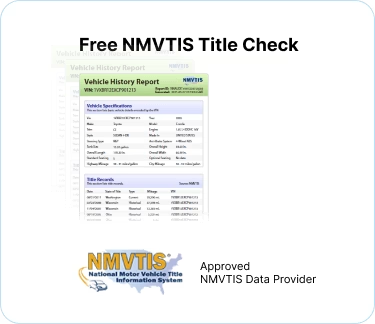
Vehicle History Report
Vehicle
Specifications
Specifications
Ownership
History
History
All History
Events
Events
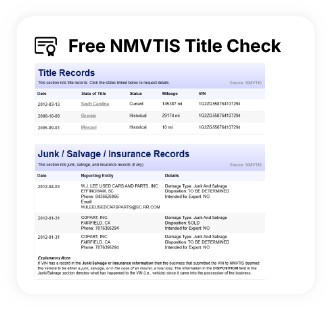
NMVTIS Title
History Check
History Check
Salvage/Rebuilt
Check
Check
Accident
Check
Check
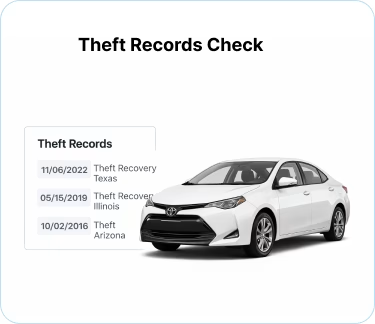
Theft
Check
Check
Open Lien
Check
Check
Past Sale
Listings
Listings
Safety
Recalls
Recalls
Odometer
Check
Check
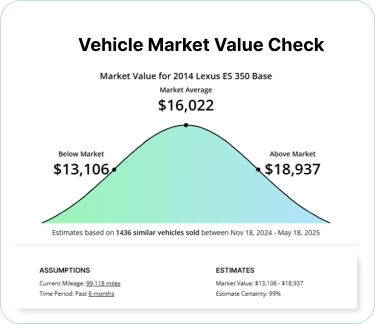
Market Price
Analysis
Analysis
What Problems Does the 2004 BIG TEX Big Tex Have?
While the 2004 BIG TEX Big Tex is generally lauded for its durability, like any equipment that undergoes rigorous use, certain issues can emerge over time. One of the most common concerns, particularly with trailers of this age and material, is rust and corrosion. Exposure to the elements, road salt, and moisture can lead to the degradation of the steel frame and bed. Owners often report needing to address rust spots with sanding, priming, and repainting to prevent further damage. The wooden deck, if equipped, can also rot or splinter if not properly maintained, requiring replacement.
Another area to watch out for is the trailer's electrical system. Wiring can become brittle, corroded, or damaged due to vibration and exposure. This can lead to malfunctioning trailer lights (brake lights, turn signals, running lights), which is not only a nuisance but also a safety hazard and a potential issue during inspections. Loose connections or failing ground wires are frequent culprits.
The braking system, especially electric brakes, can also require attention. Brake components such as brake pads, rotors, or drums can wear out, and the braking mechanism itself might need adjustment or repair. The brake controller unit in the tow vehicle, while not part of the trailer itself, can also be a source of problems if not functioning correctly.
Axle and suspension issues are also possibilities. Overloading or rough terrain can stress the axles and leaf springs, leading to bent axles or broken springs. Wheel bearings are another critical component that requires periodic maintenance (lubrication) and eventual replacement due to wear. Tire wear should also be monitored closely, as uneven wear can indicate alignment issues or improper inflation, and tires themselves will eventually need replacement due to age, even if they have tread left.
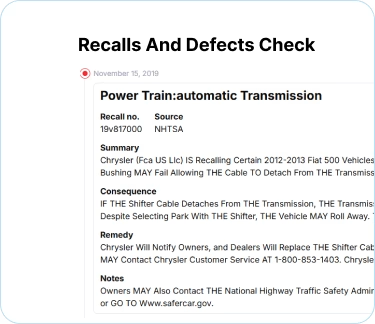
While specific recalls for the 2004 model year are not widely publicized for this particular trailer, it is always advisable for owners to check with Big Tex Trailers or the National Highway Traffic Safety Administration (NHTSA) for any potential safety recalls that might have been issued. Long-term reliability is generally good if the trailer has been maintained diligently, but neglect will accelerate wear and increase the likelihood of problems.
Another area to watch out for is the trailer's electrical system. Wiring can become brittle, corroded, or damaged due to vibration and exposure. This can lead to malfunctioning trailer lights (brake lights, turn signals, running lights), which is not only a nuisance but also a safety hazard and a potential issue during inspections. Loose connections or failing ground wires are frequent culprits.
The braking system, especially electric brakes, can also require attention. Brake components such as brake pads, rotors, or drums can wear out, and the braking mechanism itself might need adjustment or repair. The brake controller unit in the tow vehicle, while not part of the trailer itself, can also be a source of problems if not functioning correctly.
Axle and suspension issues are also possibilities. Overloading or rough terrain can stress the axles and leaf springs, leading to bent axles or broken springs. Wheel bearings are another critical component that requires periodic maintenance (lubrication) and eventual replacement due to wear. Tire wear should also be monitored closely, as uneven wear can indicate alignment issues or improper inflation, and tires themselves will eventually need replacement due to age, even if they have tread left.
While specific recalls for the 2004 model year are not widely publicized for this particular trailer, it is always advisable for owners to check with Big Tex Trailers or the National Highway Traffic Safety Administration (NHTSA) for any potential safety recalls that might have been issued. Long-term reliability is generally good if the trailer has been maintained diligently, but neglect will accelerate wear and increase the likelihood of problems.
How long will the 2004 BIG TEX Big Tex last?
Estimating average mileage for a utility trailer like the 2004 BIG TEX Big Tex is less common than for vehicles; usage is typically measured in years of service and the number of miles towed. With regular maintenance, including inspecting tires, checking lights, lubricating wheel bearings, and addressing any surface rust promptly, a well-cared-for Big Tex trailer can easily last 15-20 years or more. Many owners report their trailers are still in excellent working condition after a decade of heavy use. The core strength of Big Tex trailers lies in their robust steel frames and axles, which are built for longevity. However, neglect in maintenance, particularly concerning the brakes, tires, and exposure to corrosive environments, can significantly shorten its service life. Weaknesses tend to manifest as rust, electrical gremlins, and eventual wear on suspension and braking components, rather than catastrophic structural failure if properly maintained.
What Technology & Safety Features are Included?
The 2004 BIG TEX Big Tex, being a utility trailer, does not feature built-in technology in the same vein as passenger vehicles. Its focus is on functionality and safety in its intended purpose.
Safety Features:
The primary safety features are designed around its towing and load-carrying capabilities. This typically includes:
Driver-Assistance Features:
As a trailer, there are no driver-assistance features like lane departure warnings or adaptive cruise control. The responsibility for safe operation lies entirely with the driver of the tow vehicle.
Technology and Entertainment:
There is no integrated technology or entertainment system. The trailer's purpose is purely utilitarian.
Optional Features:
While not "tech," various options enhance utility and safety:
Crash-Test Ratings:
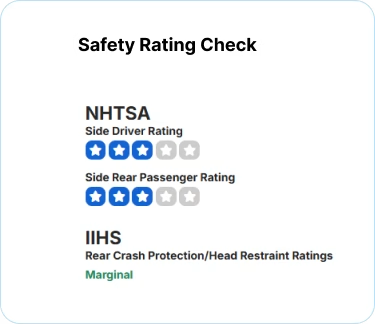
Trailers of this nature are generally not subjected to crash-test ratings in the same way passenger cars are by organizations like the NHTSA or IIHS. Their safety is evaluated based on their adherence to manufacturing standards, braking system effectiveness, and structural integrity under load.
Safety Features:
The primary safety features are designed around its towing and load-carrying capabilities. This typically includes:
- Braking System: Most Big Tex trailers, especially those with higher GVWRs, are equipped with electric brakes on one or more axles. These brakes are activated by a brake controller installed in the tow vehicle, providing essential stopping power. Some heavier-duty models might have hydraulic surge brakes.
- Lighting System: A comprehensive set of trailer lights is standard, including brake lights, tail lights, turn signals, and side marker lights. These are crucial for signaling intentions to other drivers and for visibility at night.
- Reflective Tape: Often, reflective tape is applied to the sides and rear of the trailer to enhance visibility, especially in low-light conditions.
- Axle and Suspension: Robust axle and leaf spring suspension systems are engineered to handle significant weight and maintain stability during towing.
- Frame and Construction: The heavy-duty steel frame is inherently a safety feature, designed to withstand the stresses of hauling substantial loads without failing.
Driver-Assistance Features:
As a trailer, there are no driver-assistance features like lane departure warnings or adaptive cruise control. The responsibility for safe operation lies entirely with the driver of the tow vehicle.
Technology and Entertainment:
There is no integrated technology or entertainment system. The trailer's purpose is purely utilitarian.
Optional Features:
While not "tech," various options enhance utility and safety:
- Spare tire and mount
- Various ramp styles (e.g., full-width, bi-fold, spring-assist)
- D-rings or stake pockets for load securement
- Toolboxes
- Electric or manual jacks
- Winches
- Removable metal side rails
Crash-Test Ratings:
Trailers of this nature are generally not subjected to crash-test ratings in the same way passenger cars are by organizations like the NHTSA or IIHS. Their safety is evaluated based on their adherence to manufacturing standards, braking system effectiveness, and structural integrity under load.
What Colors Options are Available?
2004 BIG TEX Big Tex Prices and Market Value
Pricing for a new 2004 BIG TEX Big Tex trailer would have varied significantly based on size, configuration (flatbed, dump, etc.), and GVWR. Entry-level flatbed models might have started in the range of $2,000-$3,000, while more complex or larger dump trailers could have cost upwards of $5,000-$8,000 or more.
Currently, the used market for a 2004 BIG TEX Big Tex trailer sees prices heavily influenced by its condition, size, and features. Expect to find well-maintained, functional trailers ranging from $1,500 for smaller, basic models to $4,000-$7,000 or even higher for larger, heavy-duty dump trailers with good tires, brakes, and minimal rust.
Depreciation is generally quite slow for reputable utility trailers like Big Tex, especially if they are well-maintained. The durable construction means they hold their value better than many consumer goods. Factors affecting resale value include:
Currently, the used market for a 2004 BIG TEX Big Tex trailer sees prices heavily influenced by its condition, size, and features. Expect to find well-maintained, functional trailers ranging from $1,500 for smaller, basic models to $4,000-$7,000 or even higher for larger, heavy-duty dump trailers with good tires, brakes, and minimal rust.
Depreciation is generally quite slow for reputable utility trailers like Big Tex, especially if they are well-maintained. The durable construction means they hold their value better than many consumer goods. Factors affecting resale value include:
- Condition: Rust, structural integrity, condition of the deck, tires, and brakes are paramount.
- Maintenance History: Proof of regular upkeep can increase value.
- Features: Hydraulic dump systems, good ramps, and tie-down points are desirable.
- Size and GVWR: Larger, higher-capacity trailers are often in higher demand.
- Location: Demand can vary regionally.
2004 BIG TEX Big Tex Cost of Ownership
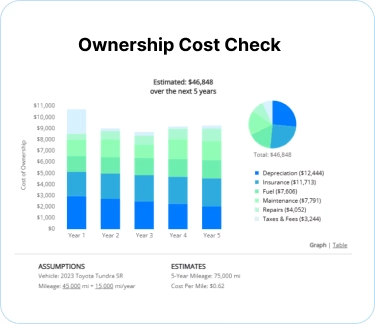
Ownership costs for a 2004 BIG TEX Big Tex are generally quite economical, especially when considering its robust utility. Insurance for a trailer is typically less expensive than for a vehicle; policies often cover theft, damage, and liability. Fuel costs are obviously borne by the tow vehicle. Maintenance is key to keeping costs low: regular checks of tires, brakes, lights, and bearings are essential. Repairs, when needed, are usually straightforward for competent mechanics or handy owners, focusing on brakes, tires, or welding for rust. Long-term costs are dominated by maintenance and eventual replacement of wear items rather than major component failures, making it an economical choice for heavy-duty hauling.
2004 BIG TEX Big Tex Fuel Efficiency
Fuel Type
NOT Applicable
Fuel Capacity
-
City Mileage
-
Highway Mileage
-
2004 BIG TEX Big Tex Insurance
Insurance for a 2004 BIG TEX Big Tex is moderately priced, reflecting its status as a Recreational Vehicle with strong safety ratings and
reasonable repair costs.
How Does the 2004 BIG TEX Big Tex Compare to Other Recreational Vehicle?
The 2004 BIG TEX Big Tex operates in a competitive landscape of utility trailers. Its key rivals often include brands like **Lowe's (Master Tow), Carry-On Trailer, PJ Trailers, and Diamond C Trailers**, among others.
Performance: In terms of raw hauling performance, Big Tex generally holds its own. Its frames are typically robust, designed for substantial payload capacities. Rivals like PJ Trailers and Diamond C are also known for their heavy-duty builds and can often match or exceed Big Tex's towing capacities in comparable models. However, a poorly maintained Big Tex might lag behind a well-kept rival.
Features: Features can vary widely within each brand and across different trailer types (flatbed, dump, etc.). Big Tex often provides a solid foundation of essential features. PJ Trailers and Diamond C might offer more premium options or more innovative designs in certain configurations, such as advanced hydraulic systems on dump trailers or specialized decking on car haulers. Brands found at big-box stores like Lowe's (e.g., Master Tow) might offer lower entry prices but sometimes with less robust construction or fewer standard features compared to dedicated trailer manufacturers.
Reliability: Big Tex has a strong reputation for reliability and durability. Their trailers are built to withstand tough use. Brands like PJ Trailers and Diamond C are also highly regarded for their build quality and longevity. Smaller or less established brands might have more inconsistent reliability. The 2004 Big Tex, if well-maintained, is likely to be as reliable as many of its contemporaries.
Price: This is where comparisons get nuanced. Big Tex trailers often represent a good balance of quality and price, positioning them as a mid-to-high-tier option. They are typically more expensive than budget brands from large retailers but often more competitively priced than some of the ultra-premium, custom-option-heavy manufacturers. For a 2004 model, the used market prices will reflect this; Big Tex trailers often retain their value well.
Recommendations:
Performance: In terms of raw hauling performance, Big Tex generally holds its own. Its frames are typically robust, designed for substantial payload capacities. Rivals like PJ Trailers and Diamond C are also known for their heavy-duty builds and can often match or exceed Big Tex's towing capacities in comparable models. However, a poorly maintained Big Tex might lag behind a well-kept rival.
Features: Features can vary widely within each brand and across different trailer types (flatbed, dump, etc.). Big Tex often provides a solid foundation of essential features. PJ Trailers and Diamond C might offer more premium options or more innovative designs in certain configurations, such as advanced hydraulic systems on dump trailers or specialized decking on car haulers. Brands found at big-box stores like Lowe's (e.g., Master Tow) might offer lower entry prices but sometimes with less robust construction or fewer standard features compared to dedicated trailer manufacturers.
Reliability: Big Tex has a strong reputation for reliability and durability. Their trailers are built to withstand tough use. Brands like PJ Trailers and Diamond C are also highly regarded for their build quality and longevity. Smaller or less established brands might have more inconsistent reliability. The 2004 Big Tex, if well-maintained, is likely to be as reliable as many of its contemporaries.
Price: This is where comparisons get nuanced. Big Tex trailers often represent a good balance of quality and price, positioning them as a mid-to-high-tier option. They are typically more expensive than budget brands from large retailers but often more competitively priced than some of the ultra-premium, custom-option-heavy manufacturers. For a 2004 model, the used market prices will reflect this; Big Tex trailers often retain their value well.
Recommendations:
- Similar Alternatives: PJ Trailers and Diamond C Trailers are excellent alternatives if you are looking for comparable or potentially higher-grade build quality and features, though they might come at a slightly higher price point, new or used. Carry-On Trailer is another strong competitor, often offering a good range of options at competitive prices.
- Potentially Better Alternatives (depending on specific needs): If budget is a primary concern and heavy-duty needs are occasional, a well-inspected trailer from a reputable retailer like Lowe's might suffice. For specialized tasks (e.g., heavy equipment transport), dedicated equipment trailer manufacturers might offer superior design and capacity.
- Considerations: When looking at a 2004 model, the condition and maintenance history are far more critical than the brand name alone. A meticulously cared-for 2004 Big Tex could easily outperform a neglected trailer from a theoretically superior brand.
Final Verdict: Is the 2004 BIG TEX Big Tex a Good Recreational Vehicle?
The 2004 BIG TEX Big Tex is ideal for individuals, contractors, farmers, or anyone needing a dependable and rugged trailer for hauling materials, equipment, or vehicles. Its strength lies in its robust construction and proven reliability for demanding tasks.
It is generally worth buying, particularly on the used market, provided it has been reasonably maintained. Its long-term durability means that a well-kept 2004 model can still offer many years of service.
Buying conditions:
Overall, a 2004 Big Tex is a solid investment for those prioritizing a workhorse trailer that can handle heavy loads and last for years with proper care.
It is generally worth buying, particularly on the used market, provided it has been reasonably maintained. Its long-term durability means that a well-kept 2004 model can still offer many years of service.
Buying conditions:
- Used: Highly recommended if you find one in good condition. Thoroughly inspect for rust, check the condition of the tires, brakes, and lights. A pre-purchase inspection by a trailer specialist is wise for larger investments.
- New: While a 2004 model is no longer new, if considering a newer Big Tex, they continue the legacy of quality.
- Specific Trims: The value proposition depends on your needs. A basic flatbed is great for general hauling, while a dump trailer is invaluable for moving bulk materials. Ensure the GVWR meets your requirements.
Overall, a 2004 Big Tex is a solid investment for those prioritizing a workhorse trailer that can handle heavy loads and last for years with proper care.