
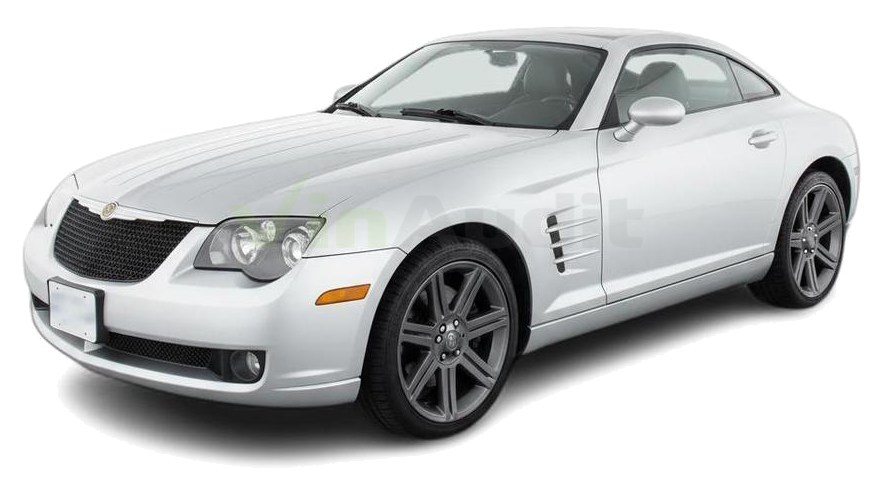
The 2006 Chrysler Crossfire is a distinctive two-door sports coupe or convertible that stood out in its model years (2004-2008) with its unique styling. Based on the Mercedes-Benz R170 SLK platform, it offered a blend of European engineering and American flair. Key trims included the base, Limited, and the high-performance SRT-6. Its striking, retro-futuristic design, often compared to a powerboat, and the availability of a supercharged SRT-6 model made it a head-turner and popular among those seeking something different.
The Good
The 2006 Crossfire boasts a head-turning, unique design that appeals to emotion. Its European underpinnings suggest competent handling and a refined ride, while the supercharged SRT-6 offers exhilarating performance. For practical buyers, the coupe's relatively spacious trunk and the availability of a manual transmission can be appealing.
The Bad
Known weaknesses for the 2006 Crossfire include potential issues with the transmission, electrical gremlins, and a somewhat cramped interior for larger occupants. Rear visibility can also be a concern, and some components are becoming harder to source due to the vehicle's limited production run.
2006 Chrysler Crossfire: Quick Overview
- Engine Options:
- 3.2L V6 SOHC (Base and Limited Trims): This naturally aspirated engine provided a solid foundation for the Crossfire.
- 3.2L V6 SOHC Supercharged (SRT-6 Trim): The SRT-6 featured a supercharger for a significant power boost. - Horsepower:
- Base/Limited: Approximately 215 horsepower.
- SRT-6: Approximately 330 horsepower. - Fuel Economy (EPA Estimates):
- 3.2L V6 (Automatic): Around 17 MPG city / 23 MPG highway.
- 3.2L V6 (Manual): Around 16 MPG city / 23 MPG highway.
- SRT-6 (Automatic or Manual): Fuel economy is generally lower, closer to 15 MPG city / 21 MPG highway, with a greater thirst for premium fuel. - 0-60 Times:
- Base/Limited: Typically in the mid-to-high 6-second range.
- SRT-6: Significantly quicker, often in the low 5-second range. - Towing Capacity: The Chrysler Crossfire was not designed or equipped for towing, therefore it has no official towing capacity.
- Trim-Level Features:
- Base: Standard features often included power windows and locks, air conditioning, cruise control, 17-inch alloy wheels, and an AM/FM/CD audio system.
- Limited: Added features could include leather seating, heated seats, automatic climate control, and upgraded interior trim.
- SRT-6: This top-tier trim was distinguished by its supercharged engine, sport-tuned suspension, larger brakes, unique aerodynamic enhancements (like a rear spoiler), 18-inch front and 19-inch rear alloy wheels, and more aggressive interior styling, often with Alcantara accents.
2006 Chrysler Crossfire Specifications
Vehicle Information
| Year | 2006 |
| Make | Chrysler |
| Model | Crossfire |
| Trim | - |
| Style | Coupe |
| Type | Coupe |
| Category | Sports Car |
Manufacturing Details
| Made In | United States |
| Manufacturing City | OSNABRUEK |
Dimensions
| Doors | 2-Door |
| Curb Weight | 3010 pounds |
| Gross Vehicle Weight Rating | - |
| Overall Height | 51.50 inches |
| Overall Length | 159.80 inches |
| Overall Width | 69.50 inches |
| Wheelbase Length | 94.50 inches |
| Standard Seating | 2 |
Engine & Performance
| Engine | 3.2L V6 SOHC 18V |
| Engine Size | 3.2L |
| Engine Cylinders | 6 |
| Transmission | 6-Speed Manual |
| Transmission Type | Manual |
| Transmission Speeds | 6-Speed |
| Drivetrain | Rear-Wheel Drive |
Additional Features
| Anti-Brake System | 4-Wheel ABS |
| Steering Type | Recirculating |
Pricing
| Manufacturer Suggested Retail Price (MSRP) | $29,145 |
| Invoice Price | $27,131 |
| Delivery Charges | $925 |
Vehicle History Report
Vehicle
Specifications
Specifications
Ownership
History
History
All History
Events
Events
NMVTIS Title
History Check
History Check
Salvage/Rebuilt
Check
Check
Accident
Check
Check
Theft
Check
Check
Open Lien
Check
Check
Past Sale
Listings
Listings
Safety
Recalls
Recalls
Odometer
Check
Check
Market Price
Analysis
Analysis
What Problems Does the 2006 Chrysler Crossfire Have?
The 2006 Chrysler Crossfire, while sharing some Mercedes-Benz engineering, has its own set of frequently reported issues and long-term reliability concerns. One of the most common complaints revolves around the automatic transmission, with some owners reporting premature failure or issues with shifting. This can be a costly repair.
Electrical gremlins are another recurring theme. Owners have reported problems with window regulators, power locks, the infotainment system, and various sensors. These can be frustrating to diagnose and fix.
The convertible top mechanism on the Roadster model can also be a source of trouble, with hydraulic leaks or malfunctioning motors being reported. Regular maintenance and careful operation are crucial for these complex systems.
Fuel pump failures have also been noted, sometimes leading to the car not starting or stalling unexpectedly. Suspension components, such as bushings and ball joints, can wear out over time, leading to clunks or uneven handling, which is not uncommon for a performance-oriented car of this age.
While there aren't widespread, model-year-specific catastrophic failures for the 2006 model year that differ significantly from other Crossfire years, it's worth noting that the earlier models might have had more initial kinks ironed out in later production runs. However, due to the Crossfire's relatively low production numbers and its age, sourcing certain parts, especially specialized interior or exterior trim pieces, can become increasingly difficult and expensive. Regular and diligent maintenance is key to mitigating many of these potential issues and ensuring longevity.
Electrical gremlins are another recurring theme. Owners have reported problems with window regulators, power locks, the infotainment system, and various sensors. These can be frustrating to diagnose and fix.
The convertible top mechanism on the Roadster model can also be a source of trouble, with hydraulic leaks or malfunctioning motors being reported. Regular maintenance and careful operation are crucial for these complex systems.
Fuel pump failures have also been noted, sometimes leading to the car not starting or stalling unexpectedly. Suspension components, such as bushings and ball joints, can wear out over time, leading to clunks or uneven handling, which is not uncommon for a performance-oriented car of this age.
While there aren't widespread, model-year-specific catastrophic failures for the 2006 model year that differ significantly from other Crossfire years, it's worth noting that the earlier models might have had more initial kinks ironed out in later production runs. However, due to the Crossfire's relatively low production numbers and its age, sourcing certain parts, especially specialized interior or exterior trim pieces, can become increasingly difficult and expensive. Regular and diligent maintenance is key to mitigating many of these potential issues and ensuring longevity.
How long will the 2006 Chrysler Crossfire last?
Based on owner data and typical maintenance habits for a vehicle of its age, a 2006 Chrysler Crossfire can reasonably be expected to last between 150,000 to 200,000 miles or serve for 15-20 years. Long-term durability heavily depends on the owner's commitment to regular maintenance, including timely oil changes, fluid flushes, and addressing minor issues before they escalate. The European-derived drivetrain components are generally robust, but the aforementioned transmission and electrical issues can present weaknesses over time if not properly cared for. Cars that have been driven regularly and meticulously maintained are more likely to achieve higher mileage and remain reliable performers, while neglected examples may encounter more significant and costly repairs sooner.
What Technology & Safety Features are Included?
The 2006 Chrysler Crossfire's technology and safety features were a mix of contemporary offerings for its time and elements reflecting its Mercedes-Benz lineage. Standard entertainment in the base model typically included an AM/FM/CD player, often with six speakers, providing a decent audio experience. Higher trims, like the Limited, might have featured an upgraded Infinity sound system for enhanced audio quality. While advanced infotainment systems with touchscreens were not prevalent, the Crossfire offered a relatively straightforward and functional audio interface.
Driver-assistance features were minimal by modern standards. The vehicle came equipped with standard anti-lock braking system (ABS) and, on most models, traction control, which aided in maintaining stability during acceleration and braking. Optional features could include a six-disc CD changer integrated into the head unit.
Safety was addressed through a standard set of airbags, including front and side-impact airbags for the driver and front passenger. The car's chassis was engineered to provide a degree of structural integrity, benefiting from its Mercedes-Benz underpinnings.
Crash-test ratings for the Chrysler Crossfire are somewhat limited due to its niche market and shorter production run. However, based on its design and the safety structures inherited from its Mercedes-Benz platform, it was generally considered to offer adequate protection for its occupants. The National Highway Traffic Safety Administration (NHTSA) data for this era is less comprehensive than today, but the underlying engineering suggests a reasonable safety profile. It's important to remember that advanced driver-assistance systems like lane departure warning, blind-spot monitoring, or adaptive cruise control were not available on the 2006 Crossfire.
Driver-assistance features were minimal by modern standards. The vehicle came equipped with standard anti-lock braking system (ABS) and, on most models, traction control, which aided in maintaining stability during acceleration and braking. Optional features could include a six-disc CD changer integrated into the head unit.
Safety was addressed through a standard set of airbags, including front and side-impact airbags for the driver and front passenger. The car's chassis was engineered to provide a degree of structural integrity, benefiting from its Mercedes-Benz underpinnings.
Crash-test ratings for the Chrysler Crossfire are somewhat limited due to its niche market and shorter production run. However, based on its design and the safety structures inherited from its Mercedes-Benz platform, it was generally considered to offer adequate protection for its occupants. The National Highway Traffic Safety Administration (NHTSA) data for this era is less comprehensive than today, but the underlying engineering suggests a reasonable safety profile. It's important to remember that advanced driver-assistance systems like lane departure warning, blind-spot monitoring, or adaptive cruise control were not available on the 2006 Crossfire.
What Colors Options are Available?
2006 Chrysler Crossfire Prices and Market Value
When new, the 2006 Chrysler Crossfire had a starting MSRP that generally ranged from the low $30,000s for the base model, climbing into the mid-$40,000s for the SRT-6 variant. As with most vehicles, the Crossfire experienced significant depreciation in its early years.
Currently, used market prices for a 2006 Chrysler Crossfire vary widely based on condition, mileage, trim level, and location. You can typically find examples ranging from $4,000 to $12,000, with the SRT-6 models commanding higher prices due to their performance and rarity. Factors affecting resale value include the car's maintenance history, accident-free record, and the overall demand for unique, sporty coupes. Well-maintained, low-mileage SRT-6 models are the most sought after and hold their value best within the Crossfire lineup.
2006 Chrysler Crossfire Cost of Ownership
Owning a 2006 Chrysler Crossfire can be a mixed bag in terms of cost. Insurance premiums are generally moderate, comparable to other sporty coupes, though the SRT-6 might incur slightly higher rates. Fuel costs can be higher than average, especially for the supercharged SRT-6, which requires premium gasoline and has lower MPG. Maintenance costs can be average to above average; while some parts are shared with more common Chrysler models, specialized components and the European-derived engineering can lead to pricier repairs. Repair costs, particularly for transmission or complex electrical issues, can be significant. Overall, the Crossfire is not considered an economical car to own long-term; its appeal lies more in its distinctive style and performance than in low operating expenses.
2006 Chrysler Crossfire Fuel Efficiency
Fuel Type
Gasoline
Fuel Capacity
15.90 gallons
City Mileage
17 miles/gallon
Highway Mileage
25 miles/gallon
2006 Chrysler Crossfire Safety Rating
NHTSA
IIHS
2006 Chrysler Crossfire Warranty
Basic
Original warranty
36 months / 36,000 miles
Estimated remaining
Expired
Powertrain
Original warranty
36 months / 36,000 miles
Estimated remaining
Expired
Rust
Original warranty
60 months / 100,000 miles
Estimated remaining
Expired
2006 Chrysler Crossfire Insurance
Insurance for a 2006 Chrysler Crossfire is moderately priced, reflecting its status as a Coupe with strong safety ratings and
reasonable repair costs.
How Does the 2006 Chrysler Crossfire Compare to Other Coupe?
The 2006 Chrysler Crossfire occupied a unique niche, making direct comparisons challenging, but it can be considered against vehicles like the Ford Mustang, Chevrolet Corvette, and the more entry-level luxury coupes such as the BMW 3 Series or Audi A4 of the same era.
Performance: The base Crossfire's 215 hp V6 was adequate but not class-leading. The SRT-6, with its 330 hp supercharged V6, offered genuinely strong performance, rivaling some base Corvettes. In contrast, a V6 Mustang offered similar horsepower to the base Crossfire but often with a more raw, engaging driving experience. The Corvette generally offered superior performance across the board.
Features: The Crossfire's interior, while stylish, could feel less refined than its German-engineered roots might suggest, and its feature list was not as extensive as some competitors. For instance, a BMW 3 Series or Audi A4 of the same year would typically offer more advanced technology, luxury appointments, and a wider array of optional features.
Reliability: This is where the Crossfire often falls short compared to some rivals. While its Mercedes-Benz underpinnings are a plus, reported issues with transmissions and electrical systems can be more prevalent than in a Ford Mustang or a well-maintained Chevrolet Corvette. Long-term reliability can be a concern, especially for less meticulously maintained examples.
Price: When new, the Crossfire was priced competitively, slotting between mainstream sports cars and entry-level luxury coupes. Used, it offers a distinctive style at a lower price point than comparable German coupes.
Alternatives: For similar distinctive styling and decent performance at a lower price, a used 2006 Ford Mustang GT offers a V8 engine and a more robust aftermarket. For a more luxurious and refined experience with potentially better reliability (though higher purchase price), a used BMW 3 Series (E46) coupe or convertible would be a strong contender. If pure performance is the priority and budget allows, a Chevrolet Corvette (C5 or early C6) offers superior power and handling. The Crossfire is best suited for buyers prioritizing unique aesthetics over absolute practicality or proven long-term reliability.
Performance: The base Crossfire's 215 hp V6 was adequate but not class-leading. The SRT-6, with its 330 hp supercharged V6, offered genuinely strong performance, rivaling some base Corvettes. In contrast, a V6 Mustang offered similar horsepower to the base Crossfire but often with a more raw, engaging driving experience. The Corvette generally offered superior performance across the board.
Features: The Crossfire's interior, while stylish, could feel less refined than its German-engineered roots might suggest, and its feature list was not as extensive as some competitors. For instance, a BMW 3 Series or Audi A4 of the same year would typically offer more advanced technology, luxury appointments, and a wider array of optional features.
Reliability: This is where the Crossfire often falls short compared to some rivals. While its Mercedes-Benz underpinnings are a plus, reported issues with transmissions and electrical systems can be more prevalent than in a Ford Mustang or a well-maintained Chevrolet Corvette. Long-term reliability can be a concern, especially for less meticulously maintained examples.
Price: When new, the Crossfire was priced competitively, slotting between mainstream sports cars and entry-level luxury coupes. Used, it offers a distinctive style at a lower price point than comparable German coupes.
Alternatives: For similar distinctive styling and decent performance at a lower price, a used 2006 Ford Mustang GT offers a V8 engine and a more robust aftermarket. For a more luxurious and refined experience with potentially better reliability (though higher purchase price), a used BMW 3 Series (E46) coupe or convertible would be a strong contender. If pure performance is the priority and budget allows, a Chevrolet Corvette (C5 or early C6) offers superior power and handling. The Crossfire is best suited for buyers prioritizing unique aesthetics over absolute practicality or proven long-term reliability.
Final Verdict: Is the 2006 Chrysler Crossfire a Good Coupe?
The 2006 Chrysler Crossfire is ideal for the enthusiast who prioritizes distinctive, head-turning styling and wants a sporty coupe or convertible experience without the typical brand cachet or price tag of European sports cars. It's for someone who appreciates its unique design, perhaps drawn to its retro-futuristic aesthetic, and is willing to overlook some of its practicality and potential reliability quirks.
Whether it's worth buying hinges heavily on the specific vehicle and price. As a used car, particularly for the SRT-6 trim, it can represent a compelling value for performance enthusiasts seeking an uncommon machine. However, buyers should be prepared for potentially higher maintenance and repair costs than more mainstream vehicles. A thorough pre-purchase inspection by a mechanic familiar with these cars is essential. It is generally not recommended to buy one new in today's market, as newer, more advanced, and reliable alternatives are readily available. Focus on well-maintained examples with a documented service history.