
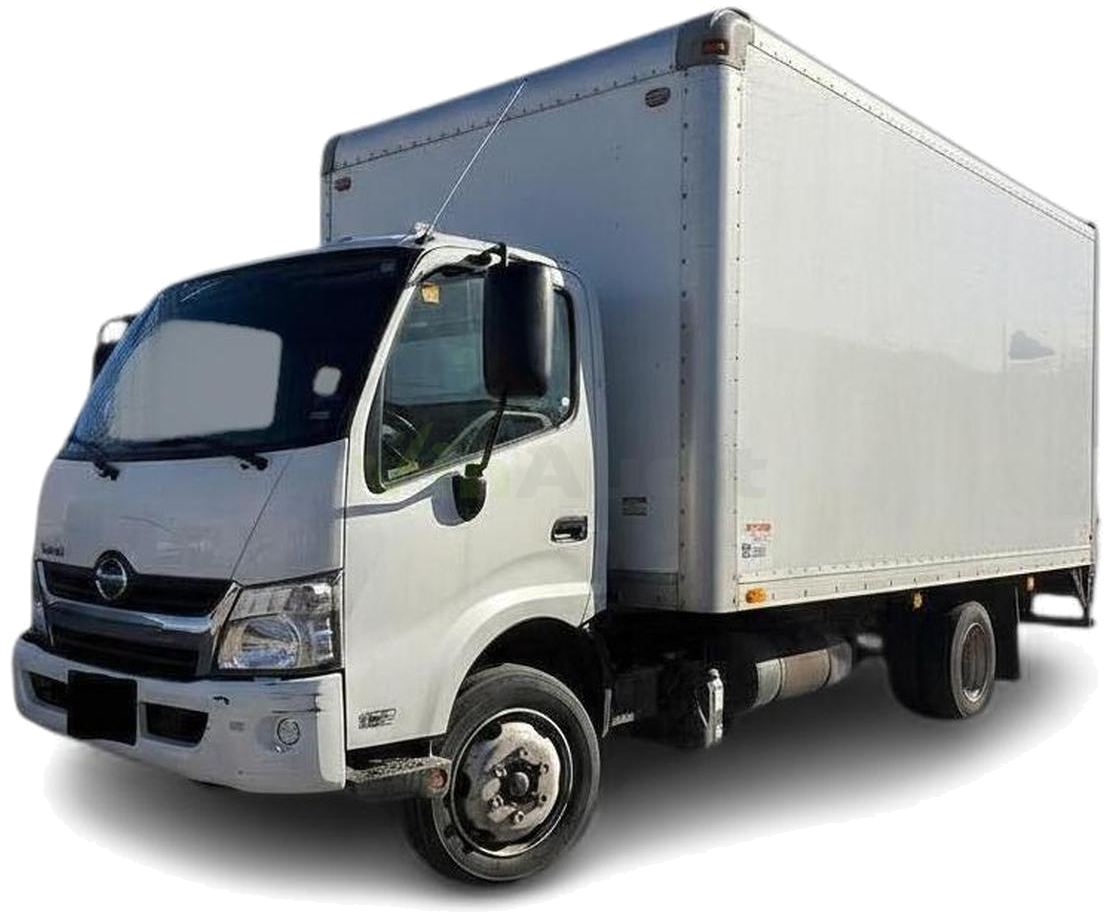
The Good
The 2017 Hino 195 offers impressive fuel efficiency and a reliable powertrain, ensuring peace of mind for business owners. Its comfortable cabin reduces driver fatigue on long hauls, while its robust build promises lasting value, making it a smart, dependable investment.
The Bad
Potential owners should be aware of occasional issues with the Diesel Particulate Filter (DPF) system, which can require specific maintenance. Some drivers have noted that the ride can be somewhat stiff when unloaded, and interior materials, while durable, may not feel as premium as some competitors.
2017 Hino 195: Quick Overview
- Engine Options: The 2017 Hino 195 is equipped with a single engine option: a 5.1-liter Hino J05E-UN inline 4-cylinder turbocharged diesel engine.
- Horsepower: This engine produces 210 horsepower.
- Torque: It generates 447 lb-ft of torque.
- Fuel Economy: Specific MPG figures are not officially published for commercial trucks like the Hino 195, as they vary greatly with load, terrain, and driving style. However, Hino is known for its fuel-efficient diesel engines, and owners typically report competitive mileage within its class, often in the range of 12-16 MPG.
- 0-60 Times: 0-60 mph acceleration times are not a standard metric for commercial vehicles of this type and are not readily available. Performance is optimized for hauling and power rather than rapid acceleration.
- Towing Capacity: The Hino 195 has a Gross Vehicle Weight Rating (GVWR) of 19,500 lbs. Towing capacity is dependent on the specific body configuration and trailer setup, but it is designed for substantial towing needs, often upwards of 10,000 lbs or more when properly equipped.
- Transmission: It comes standard with an Aisin 6-speed automatic transmission with overdrive.
- Drivetrain: Rear-wheel drive (RWD) is standard.
- Body Style: Primarily offered as a chassis cab, allowing for custom body installations such as box trucks, flatbeds, utility bodies, or service bodies.
- Wheelbase Options: Various wheelbase options are typically available to accommodate different body lengths and applications.
- Brakes: Hydraulic disc brakes with ABS are standard.
- Suspension: Front and rear leaf spring suspension.
- Trim Level Features (Standard): While not broken down into distinct trims like passenger vehicles, the 2017 Hino 195 chassis cab generally includes: cloth seats, power windows and door locks, air conditioning, a tilt and telescopic steering wheel, an AM/FM/CD player with auxiliary input, and a durable interior designed for commercial use. Optional features might include navigation systems, upgraded audio, and various safety enhancements depending on the dealer package.
- Fuel Tank Capacity: Typically around 30-40 gallons, depending on configuration.
2017 Hino 195 Specifications
Vehicle Information
| Year | 2017 |
| Make | Hino |
| Model | 195 |
| Trim | - |
| Style | - |
| Type | Truck |
| Category | Heavy Truck |
Manufacturing Details
| Made In | Japan |
| Manufacturing City | HAMURA |
Dimensions
| Doors | - |
| Curb Weight | - |
| Gross Vehicle Weight Rating | - |
| Overall Height | - |
| Overall Length | - |
| Overall Width | - |
| Wheelbase Length | - |
| Standard Seating | - |
Engine & Performance
| Engine | J05E-TP |
| Engine Size | 5L |
| Engine Cylinders | 4 |
| Transmission | - |
| Transmission Type | - |
| Transmission Speeds | - |
| Drivetrain | - |
Additional Features
| Anti-Brake System | - |
| Steering Type | - |
Pricing
| Manufacturer Suggested Retail Price (MSRP) | - |
| Invoice Price | - |
| Delivery Charges | - |
Vehicle History Report
Specifications
History
Events
History Check
Check
Check
Check
Check
Listings
Recalls
Check
Analysis
What Problems Does the 2017 Hino 195 Have?
Another area that sometimes arises in owner discussions is the exhaust gas recirculation (EGR) system. Problems with EGR valves or coolers can lead to engine performance issues and check engine lights. These are typical concerns for diesel engines that meet stringent emissions standards. While not specific to the 2017 model year, these are common long-term reliability considerations for this powertrain.
Transmission issues, while not rampant, can occur with heavy use. Given the automatic transmission, ensuring regular fluid changes according to Hino's recommendations is crucial for its longevity. Electrical gremlins are less frequently reported but can happen in any vehicle with extensive wiring harnesses, especially in commercial applications where vibrations and environmental exposure can be significant.
Regarding recalls for the 2017 Hino 195, a review of NHTSA data shows that recalls have been issued for various Hino models for issues such as potential fuel leaks, steering system concerns, and brake system anomalies. It is imperative for owners to check the specific recall status for their VIN through official Hino channels or the NHTSA website to ensure all safety campaigns have been addressed. For instance, there might be recalls related to the fuel injector lines or the brake light switch. Owners should always ensure their vehicle is up-to-date on all manufacturer-issued recalls to maintain long-term reliability and safety.
How long will the 2017 Hino 195 last?
What Technology & Safety Features are Included?
Driver-assistance features are limited on this commercial chassis. It typically does not come equipped with lane departure warnings, adaptive cruise control, or blind-spot monitoring. The focus is on the core driving experience and operational safety. Standard safety features include seatbelts, anti-lock braking system (ABS) for improved stopping power, and durable construction. Depending on the specific configuration and any dealer-added options, some units might have a backup camera, which is highly beneficial for a vehicle of this size when maneuvering.
Optional features could extend to integrated navigation systems, more advanced infotainment units with larger displays, and enhanced interior comfort options like upgraded seat materials or air suspension for the driver's seat. Some upfitted bodies may also incorporate specialized lighting or warning systems.
Crash-test ratings are not typically performed or published by organizations like the IIHS or NHTSA for commercial truck chassis in the same way they are for light-duty vehicles. The design of the 2017 Hino 195 prioritizes structural integrity and occupant protection through its robust frame and safety cage construction. Its heavy-duty nature inherently provides a significant level of passive safety. However, without specific crash-test data, it's difficult to quantify its performance in standardized impact scenarios. The emphasis is on engineered durability and compliance with commercial vehicle safety standards.
What Colors Options are Available?
2017 Hino 195 Prices and Market Value
The depreciation on a commercial vehicle like the Hino 195 is substantial in the initial years but tends to stabilize afterward. Its resale value is significantly affected by its condition, the reputation of the Hino brand for reliability, the type and condition of the installed body, and the overall demand for this class of truck in the commercial sector. Trucks with lower mileage and documented maintenance records command higher prices. Its value also depends on its compliance with current emissions standards, which can impact its usability in certain regions over time.
2017 Hino 195 Cost of Ownership
2017 Hino 195 Fuel Efficiency
2017 Hino 195 Warranty
Basic
Powertrain
Rust
2017 Hino 195 Insurance
reasonable repair costs.
How Does the 2017 Hino 195 Compare to Other Truck?
When comparing features, the Hino 195, like its competitors, focuses on functional utility. While none of these trucks are laden with luxury or extensive infotainment, the Hino generally offers a straightforward, durable cabin designed for work. Reliability is a strong suit for Hino, renowned for its robust diesel powertrains that often outlast competitors. Isuzu also has a strong reputation for reliability, while Freightliner and Fuso offer solid alternatives with their own engineering strengths.
Price-wise, the 2017 Hino 195 generally fell into a competitive bracket with its peers. New pricing was similar across the board, and used market values also tend to align, with condition and mileage being the primary determinants. The Hino 195 often stands out for its strong powertrain and overall build quality, making it a very dependable choice.
Alternatives to consider would include:
- Isuzu NPR-HD: A very popular choice, known for its fuel-efficient diesel engine options and strong resale value. It often offers a slightly more refined interior than some competitors.
- Freightliner MT45/MT55: These offer robust construction and are often favored for their versatility and the extensive dealer network. They might offer different powertrain options or configurations.
- Mitsubishi Fuso FE160: Another strong contender with a good reputation for durability and reliability. It competes directly in terms of capacity and performance.
The 2017 Hino 195 remains a highly capable and reliable option, particularly if a strong, fuel-efficient diesel engine and enduring build quality are top priorities. It is arguably as good as, if not better than, some of its direct competitors in terms of powertrain durability.
Final Verdict: Is the 2017 Hino 195 a Good Truck?
It is worth buying for businesses that need a dependable workhorse that can be customized with various body types. Look for models with documented maintenance, lower mileage, and in good overall mechanical condition. While it might not offer the latest tech, its core strengths in durability and operational economy make it a sound investment for those focused on the bottom line and reliable service delivery. Specific trims are less relevant than the condition and body configuration of the chosen chassis cab.

Eugene S
Eugene is an automotive enthusiast with over 15 years of experience in the used car market. As a writer at VINCheck.info, he brings deep industry insight and a passion for cars, helping readers make smart, informed decisions. Eugene has written hundreds of used car reviews and is known for breaking down complex automotive topics into clear, actionable advice. Over the years, he has driven and worked on a wide range of vehicles—starting with tuning street cars in his early days and eventually focusing on performance upgrades and reliability improvements. Today, he specializes in evaluating used vehicles through the lens of real-world ownership and enthusiast needs. A longtime fan of Porsche, Eugene especially appreciates vehicles that blend durability with driving enjoyment.