
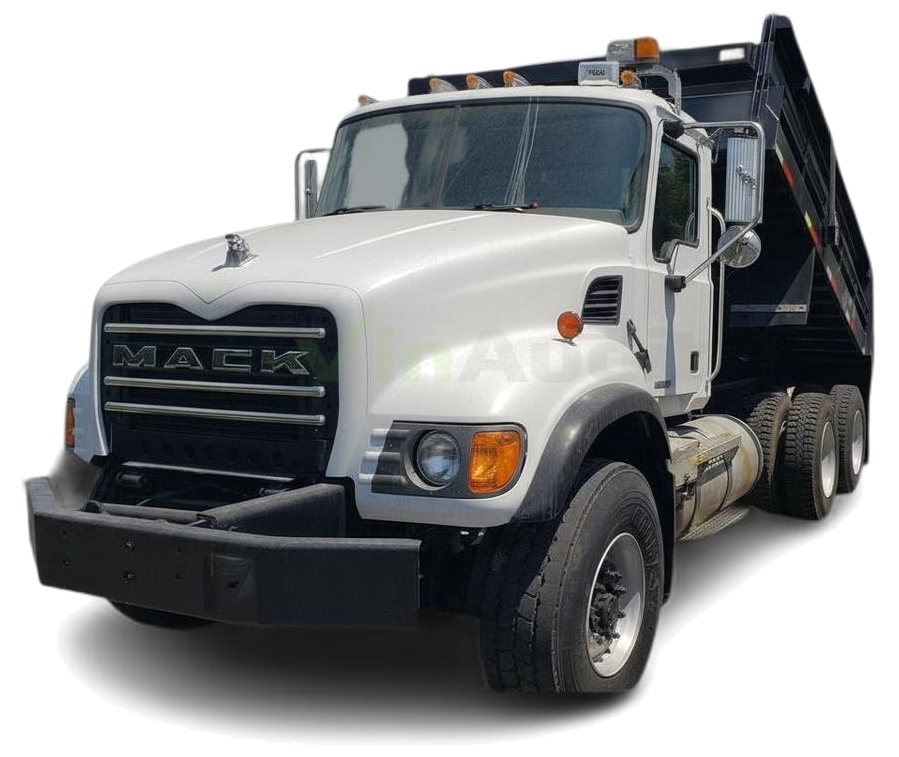
The Good
The 2006 Mack CV713 Granite offers exceptional durability and raw power, appealing to practicality with its legendary reliability. Its robust chassis and potent engines handle demanding tasks with ease. Emotionally, the commanding presence and iconic bulldog mascot evoke a sense of pride and a proven heritage of performance.
The Bad
Potential weaknesses for the 2006 Mack CV713 Granite include aging electronics, which can become problematic in older trucks. Driveline wear and tear are common concerns given its workhorse nature. Also, comfort and modern amenities are basic, which might be a drawback for long-haul drivers prioritizing creature comforts.
2006 Mack CV713 Granite: Quick Overview
The 2006 Mack CV713 Granite is a heavy-duty truck, and its specifications are geared towards vocational and heavy-haul applications, meaning traditional consumer metrics like 0-60 times are not applicable. Key specifications typically include:
- Engine Options: Mack engines were standard, primarily the Mack ASET (Advanced System, Efficient Technology) series. Common engines included:
- Mack ASET AI-427: A 10.8-liter inline 6-cylinder diesel engine.
- Mack ASET AI-460: A 12.0-liter inline 6-cylinder diesel engine.
- Other common options could include Cummins ISX series engines depending on customer specifications.
- Horsepower: Horsepower ratings typically ranged widely depending on the engine and application, generally from 300 hp to over 500 hp. For example:
- ASET AI-427: Often rated between 335 hp and 415 hp.
- ASET AI-460: Often rated between 415 hp and 505 hp.
- Cummins ISX: Could be configured for similar or higher output.
- Torque: Torque figures were substantial, crucial for heavy hauling, often in the range of 1200 lb-ft to over 1850 lb-ft.
- Fuel Economy: Fuel economy is highly variable and depends heavily on the load, terrain, driving style, and specific engine tune. For a truck of this class, expectations are generally in the range of 4-6 miles per gallon (MPG).
- Towing Capacity: As a Class 8 truck, the towing capacity is not a single figure but depends on the Gross Combination Weight Rating (GCWR) and configuration. The CV713 is designed for heavy-duty towing, often capable of handling GCWRs exceeding 80,000 lbs, and in specialized configurations, much higher.
- Transmission Options:
- Manual transmissions were standard and most common, with options like Eaton Fuller 10-speed, 13-speed, 15-speed, 18-speed, and 10-speed automated manual transmissions (AMTs).
- Some models could be equipped with automatic transmissions, though less common in traditional vocational applications.
- Axles: Typically featured heavy-duty tandem rear axles (e.g., Mack or Dana Spicer) with various differential ratios. Front axles varied based on application, often rated from 12,000 lbs to 20,000 lbs.
- Braking System: Air brakes with ABS were standard for safety and performance.
- Chassis and Suspension: Robust steel frames and heavy-duty suspension systems (e.g., Mack Walking Beam, Hendrickson suspensions) designed for extreme loads and durability.
- Cab Style: The CV713 features a conventional cab-over-engine (COE) design, often referred to as a "flat-top" or "set-back axle" depending on configuration. The cabin provides ample space for drivers and essential controls.
- Key Trim-Level Features: While not having distinct "trims" like passenger cars, features were highly customizable based on the intended vocational use. Common features included:
- Heavy-duty cooling systems.
- Robust electrical systems for auxiliary equipment.
- Various PTO (Power Take-Off) options.
- Available air conditioning, power steering, and tilt steering wheel.
- Basic instrumentation focused on engine performance and vehicle status.
- Optional driver amenities like upgraded seating and sleeper compartments for long-haul versions.
2006 Mack CV713 Granite Specifications
Vehicle Information
| Year | 2006 |
| Make | Mack |
| Model | CV713 Granite |
| Trim | - |
| Style | - |
| Type | Truck |
| Category | Heavy Truck |
Manufacturing Details
| Made In | United States |
| Manufacturing City | MACUNGIE |
Dimensions
| Doors | - |
| Curb Weight | - |
| Gross Vehicle Weight Rating | 330001 pounds |
| Overall Height | - |
| Overall Length | - |
| Overall Width | - |
| Wheelbase Length | - |
| Standard Seating | - |
Engine & Performance
| Engine | 12L I6 |
| Engine Size | 12L |
| Engine Cylinders | 6 |
| Transmission | - |
| Transmission Type | - |
| Transmission Speeds | - |
| Drivetrain | - |
Additional Features
| Anti-Brake System | - |
| Steering Type | - |
Pricing
| Manufacturer Suggested Retail Price (MSRP) | - |
| Invoice Price | - |
| Delivery Charges | - |
Vehicle History Report
Specifications
History
Events
History Check
Check
Check
Check
Check
Listings
Recalls
Check
Analysis
What Problems Does the 2006 Mack CV713 Granite Have?
Frequently Reported Problems:
- Electrical System Issues: While robust, electrical components can degrade over time. Owners may report issues with dashboard lights, sensor malfunctions (like ABS or engine sensors), and wiring harness corrosion, especially in environments with high moisture or salt exposure. The complexity of integrated systems can lead to diagnostic challenges.
- Engine and Drivetrain Wear: The ASET engines are generally solid, but standard wear and tear on high-mileage vehicles can lead to issues such as turbocharger problems, injector failures, or EGR (Exhaust Gas Recirculation) system malfunctions. Clutch wear is also common in manual transmission models, particularly with heavy loads and frequent stop-and-go driving.
- Transmission Problems: While durable, manual transmissions like the Eaton Fuller can require clutch replacements. Some owners might report occasional gear grinding or difficulty shifting if synchronizers or linkages wear out over many years of service.
- Air Brake System Maintenance: Air brake systems, while effective, require regular maintenance. Leaks in air lines, worn brake chambers, or issues with the air dryer can occur, necessitating diligent upkeep.
- Cooling System: Overheating can be an issue if radiators become clogged, coolant levels are not maintained, or water pumps/thermostats fail. This is particularly critical under heavy load conditions.
- Cab and Chassis Wear: While the chassis is built to last, corrosion can be a concern in regions with harsh winters and road salt. Cab components, interior trim, and seat wear are also typical for trucks with extensive service lives.
Recalls:
Recalls for heavy-duty trucks are often specific to certain production runs and component manufacturers. For a 2006 model year, recalls would have been issued by Mack Trucks or their component suppliers (e.g., for braking systems, electrical harnesses, or engine components). Owners would need to check the NHTSA (National Highway Traffic Safety Administration) website using the vehicle's VIN for any outstanding recalls. It is unlikely there would be a widespread, single recall issue affecting all 2006 CV713 Granites, but rather component-specific actions.
Long-Term Reliability Concerns:
The primary long-term concern is the cumulative effect of mileage and hours of operation. Components like bearings, seals, universal joints, and exhaust systems will eventually require attention. The resilience of the core Mack components means that with proper, regular maintenance, these trucks can achieve very high mileage (hundreds of thousands to over a million miles). The key is proactive maintenance and addressing minor issues before they become major failures. The robustness of the frame and powertrain means that the fundamental durability remains high, even as auxiliary systems and wear items require replacement over time.
How long will the 2006 Mack CV713 Granite last?
What Technology & Safety Features are Included?
Built-in Tech and Entertainment:
Tech features are basic. Expect a functional AM/FM radio, possibly with a CD player as an option. Auxiliary inputs for music players are unlikely to be standard. Diagnostics are primarily focused on engine performance and vehicle status through a comprehensive dashboard with analog gauges and warning lights. Cabin climate control is typically via manual HVAC systems. Advanced infotainment systems, touchscreens, or integrated navigation are not standard features for this model year and type of truck. Optional upgrades might have included premium sound systems or more robust communication radios for commercial use.
Driver-Assistance Features:
Driver-assistance features in 2006 commercial trucks are extremely limited compared to today's standards. Features such as cruise control would have been a common, though not necessarily universal, option. Advanced systems like lane departure warning, adaptive cruise control, or automatic emergency braking were virtually non-existent in this segment at the time. The primary focus of design was on the driver's ability to control a large, powerful vehicle safely.
Safety Features:
Safety is primarily addressed through the truck's robust construction and essential safety systems.
- Braking System: Standard features include a powerful air brake system, which provides superior stopping power for heavy loads. Anti-lock Braking System (ABS) was often available or standard, crucial for maintaining control during emergency braking, especially on varied surfaces.
- Visibility: The conventional cab design offers good forward visibility. Large mirrors are essential for monitoring blind spots.
- Structural Integrity: The heavy-duty frame and cab structure are designed to withstand significant forces, providing a substantial safety cell for the occupants in the event of a collision.
- Seatbelts: Standard three-point seatbelts for the driver and passenger.
- Lighting: Robust exterior lighting systems for visibility in all conditions.
Optional Features:
Depending on the specific configuration and customer order, optional features could include:
- Heated mirrors.
- Enhanced lighting packages.
- Additional auxiliary power outlets.
- Different seat materials and adjustments for driver comfort.
- Limited sleeper cab options for long-haul versions.
- Remote start or keyless entry (less common).
Crash-Test Ratings:
Commercial heavy-duty trucks like the 2006 Mack CV713 Granite are not subjected to the same crash-test rating procedures (like NHTSA's NCAP) as passenger vehicles. Instead, their safety is evaluated based on design integrity, compliance with federal motor vehicle safety standards (FMVSS) for commercial vehicles, and specific testing conducted by the manufacturer. Their inherent mass, robust chassis, and engineered crumple zones are the primary safety measures. Regulations and industry standards ensure a high level of protection for such vehicles.
What Colors Options are Available?
2006 Mack CV713 Granite Prices and Market Value
2006 Mack CV713 Granite Cost of Ownership
2006 Mack CV713 Granite Fuel Efficiency
2006 Mack CV713 Granite Warranty
Basic
Powertrain
Rust
2006 Mack CV713 Granite Insurance
reasonable repair costs.
How Does the 2006 Mack CV713 Granite Compare to Other Truck?
Performance: Mack's ASET engines and robust drivetrains typically offered competitive power and torque for heavy hauling and vocational tasks, on par with offerings from Peterbilt and Kenworth. Freightliner often provided a broad range of engine choices, including Detroit Diesel and Cummins, allowing for tailored performance.
Features: In 2006, feature sets across these brands were comparable – functional, durable cabins with essential gauges and controls. Mack's reputation for driver comfort was strong, though brands like Peterbilt and Kenworth also offered well-appointed interiors and available sleeper options. Freightliner often presented a more value-oriented approach, sometimes with simpler interiors but robust functionality.
Reliability: Mack has a legendary reputation for ruggedness and durability, often considered a benchmark alongside Kenworth and Peterbilt. The Granite series was built to withstand tough conditions. Freightliner, while also reliable, sometimes faced perceptions of being less over-engineered than its more traditional rivals, though this varied by model and specific component choices. For sheer toughness, Mack, Kenworth, and Peterbilt are often considered top-tier.
Price: New prices were competitive across the board for comparable configurations. On the used market, all these trucks from 2006 will have seen significant depreciation. Mack, Peterbilt, and Kenworth often hold their value slightly better due to brand cachet and perceived durability, while Freightliner might be slightly more affordable.
Alternatives:
- Similar: 2006 Kenworth T800/W900 and 2006 Peterbilt 379/387 are direct competitors offering similar levels of build quality, durability, and brand loyalty, often with more customization options available. They are excellent alternatives if seeking a similarly robust and reliable truck.
- Alternative: 2006 Freightliner Coronado/Century might offer a slightly different approach, potentially with more readily available parts or different engine options (e.g., Detroit Diesel). They can be a strong choice if found at a better price point or with specific features preferred by the operator. For a more specialized vocational truck, one might also consider models from International or Western Star, which often cater to very specific heavy-duty applications.
Ultimately, the choice between these brands often comes down to specific engine/transmission combinations, maintenance history, and personal preference for cabin layout and brand heritage.
Final Verdict: Is the 2006 Mack CV713 Granite a Good Truck?

Jovan
Jovan specializes in interpreting vehicle records and making sense of VIN data. With over 10 years of experience in the automotive data industry, his work ensures that every report is clear, accurate, and useful for car buyers.