
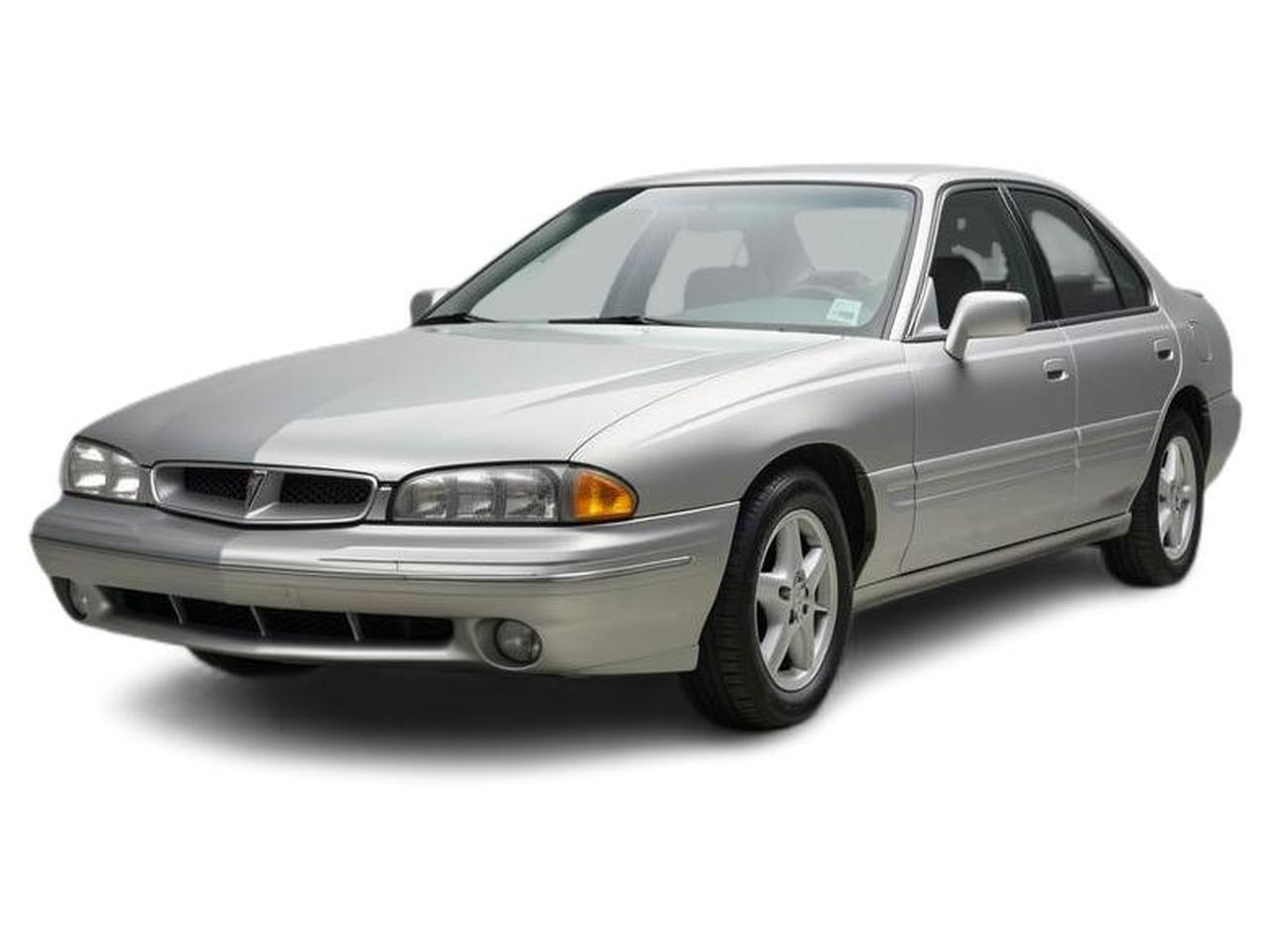
The 1998 Pontiac Bonneville is a full-size sedan with a history stretching back decades, evolving from a sporty coupe to a comfortable cruiser. Produced from 1957 to 2005, the 1998 model year falls within the G platform era, known for its spacious interior and powerful V6 engines. Key trims typically included the SE and the more performance-oriented SSEi. It stood out for its distinctive American styling, powerful engine options, and comfortable ride, appealing to those seeking a substantial and capable sedan.
The Good
The 1998 Bonneville offers a compelling blend of strong V6 performance, a smooth and comfortable ride, and distinctive American styling. Its spacious interior provides ample room for passengers and cargo, making it practical for families. Emotionally, its assertive presence and comfortable cruising ability offer a sense of secure and enjoyable travel, representing solid value for the money.
The Bad
Potential buyers of the 1998 Pontiac Bonneville should be aware of common issues such as transmission problems, particularly with the 4T60-E. Other concerns include potential intake manifold gasket leaks, electrical gremlins, and rust, especially in northern climates. Regular maintenance is crucial to mitigate these weaknesses.
1998 Pontiac Bonneville: Quick Overview
- Engine Options: The 1998 Pontiac Bonneville primarily offered two V6 engine options.
- 3.8L Series I V6: This naturally aspirated engine was standard on the SE trim.
- 3.8L Series II Supercharged V6: This more potent engine was exclusive to the SSEi trim.
- Horsepower:
- 3.8L Series I V6: Approximately 205 horsepower.
- 3.8L Series II Supercharged V6: Approximately 240 horsepower.
- Fuel Economy:
EPA estimates for the 1998 Bonneville were generally in the range of 18-19 MPG city and 27-29 MPG highway, depending on the engine and transmission. - 0-60 Times:
With the supercharged engine, 0-60 mph times were typically in the mid-to-high 7-second range. The naturally aspirated V6 would be a few seconds slower. - Towing Capacity: The Bonneville was not typically equipped or advertised for significant towing. Its focus was on passenger comfort and performance, not utility hauling.
- Trim-Level Features:
- SE (Standard): Included features like power windows, power locks, cruise control, air conditioning, a driver-side airbag, anti-lock brakes (ABS), and a standard 3.8L V6 engine. Cloth upholstery was common.
- SSE: This trim often added upgraded interior materials, a power driver's seat, a better sound system, and sometimes slightly different exterior trim. It usually came with the naturally aspirated 3.8L V6.
- SSEi (Sporty/Performance): This was the top-tier trim and included the 3.8L Series II Supercharged V6 engine, performance-tuned suspension, leather upholstery, heated front seats, a premium sound system, fog lights, and often a sunroof. It was designed to offer a sportier driving experience with more power.
1998 Pontiac Bonneville Specifications
Vehicle Information
| Year | 1998 |
| Make | Pontiac |
| Model | Bonneville |
| Trim | - |
| Style | - |
| Type | Sedan |
| Category | Compact Car |
Manufacturing Details
| Made In | United States |
| Manufacturing City | LANSING - NORTH PLANT |
Dimensions
| Doors | 4-Door |
| Curb Weight | - |
| Gross Vehicle Weight Rating | - |
| Overall Height | - |
| Overall Length | - |
| Overall Width | - |
| Wheelbase Length | - |
| Standard Seating | - |
Engine & Performance
| Engine | 3.8 L V-6 |
| Engine Size | 3.8L |
| Engine Cylinders | 6 |
| Transmission | - |
| Transmission Type | - |
| Transmission Speeds | - |
| Drivetrain | Front-Wheel Drive |
Additional Features
| Anti-Brake System | - |
| Steering Type | - |
Pricing
| Manufacturer Suggested Retail Price (MSRP) | - |
| Invoice Price | - |
| Delivery Charges | - |
Vehicle History Report
Vehicle
Specifications
Specifications
Ownership
History
History
All History
Events
Events
NMVTIS Title
History Check
History Check
Salvage/Rebuilt
Check
Check
Accident
Check
Check
Theft
Check
Check
Open Lien
Check
Check
Past Sale
Listings
Listings
Safety
Recalls
Recalls
Odometer
Check
Check
Market Price
Analysis
Analysis
What Problems Does the 1998 Pontiac Bonneville Have?
The 1998 Pontiac Bonneville, while generally considered a capable vehicle, is not without its common issues that owners often report. One of the most frequently cited problems revolves around the transmission, particularly the 4T60-E automatic transmission. These can develop issues with solenoids, torque converters, and overall longevity, sometimes leading to expensive repairs or replacements. Early signs can include slipping gears, delayed engagement, or harsh shifting.
Another prevalent concern is the intake manifold gasket. These gaskets are known to degrade over time, leading to coolant leaks and potential engine overheating. This issue can manifest as a sweet smell of coolant or visible puddles under the vehicle. Addressing this promptly is crucial to prevent more serious engine damage.
Electrical issues are also not uncommon in these vehicles. This can include problems with the power windows, power door locks, instrument cluster malfunctions, and issues with the Mass Airflow Sensor (MAF), which can affect engine performance and fuel economy. Owners have also reported problems with the fuel pump and the radiator.
Rust can be a significant long-term concern, especially for Bonnevilles driven in areas with harsh winters and road salt. The rocker panels, wheel wells, and the undercarriage are particularly susceptible. While there were no widespread recalls specifically targeting the 1998 Bonneville for major design flaws, owners should always check for any outstanding recalls through the NHTSA website. Overall, while many 1998 Bonnevilles have proven reliable with diligent maintenance, these common problems should be on any potential buyer's radar.
Another prevalent concern is the intake manifold gasket. These gaskets are known to degrade over time, leading to coolant leaks and potential engine overheating. This issue can manifest as a sweet smell of coolant or visible puddles under the vehicle. Addressing this promptly is crucial to prevent more serious engine damage.
Electrical issues are also not uncommon in these vehicles. This can include problems with the power windows, power door locks, instrument cluster malfunctions, and issues with the Mass Airflow Sensor (MAF), which can affect engine performance and fuel economy. Owners have also reported problems with the fuel pump and the radiator.
Rust can be a significant long-term concern, especially for Bonnevilles driven in areas with harsh winters and road salt. The rocker panels, wheel wells, and the undercarriage are particularly susceptible. While there were no widespread recalls specifically targeting the 1998 Bonneville for major design flaws, owners should always check for any outstanding recalls through the NHTSA website. Overall, while many 1998 Bonnevilles have proven reliable with diligent maintenance, these common problems should be on any potential buyer's radar.
How long will the 1998 Pontiac Bonneville last?
Based on owner data and typical maintenance, a well-maintained 1998 Pontiac Bonneville can reasonably achieve an average of 150,000 to 200,000 miles, with some examples exceeding 250,000 miles. The long-term durability is heavily influenced by proactive maintenance. Critical areas to monitor for long-term wear include the transmission (a known weak point requiring attention), suspension components, and the cooling system. Addressing potential intake manifold gasket leaks and rust early on significantly contributes to extending its service life. Without consistent care, especially regarding fluid changes and addressing minor issues promptly, the vehicle's lifespan can be considerably shortened.
What Technology & Safety Features are Included?
The 1998 Pontiac Bonneville offered a respectable array of technology, entertainment, and safety features for its era, aiming to provide a comfortable and secure driving experience. Standard technology included power-operated windows, power door locks, and cruise control. For entertainment, most models came equipped with an AM/FM stereo radio, often with an integrated cassette player. Optional upgrades could include a more advanced sound system with multiple speakers, and sometimes a CD player, which was a premium feature at the time.
Driver-assistance features were relatively basic by today's standards. Anti-lock brakes (ABS) were standard, providing improved stopping power and control during emergency braking situations. Traction control was often available as an option, particularly on higher trims like the SSEi, enhancing stability on slippery surfaces.
Safety was a key consideration, and the 1998 Bonneville was equipped with front airbags for the driver and front passenger. Side-impact airbags were not standard and were a rare option, if available at all, for this model year. The vehicle's construction was designed to absorb impact energy. In terms of crash-test ratings, the Bonneville generally performed adequately for its time. The National Highway Traffic Safety Administration (NHTSA) typically rated it as "Good" in frontal impacts. However, side-impact testing data for this specific year might be less comprehensive or show moderate protection compared to modern vehicles. It's important to note that crash test standards and methodologies have evolved significantly since 1998, so direct comparisons to current safety ratings should be made with caution. Overall, the 1998 Bonneville provided a secure environment for its occupants with the safety technologies available then.
Driver-assistance features were relatively basic by today's standards. Anti-lock brakes (ABS) were standard, providing improved stopping power and control during emergency braking situations. Traction control was often available as an option, particularly on higher trims like the SSEi, enhancing stability on slippery surfaces.
Safety was a key consideration, and the 1998 Bonneville was equipped with front airbags for the driver and front passenger. Side-impact airbags were not standard and were a rare option, if available at all, for this model year. The vehicle's construction was designed to absorb impact energy. In terms of crash-test ratings, the Bonneville generally performed adequately for its time. The National Highway Traffic Safety Administration (NHTSA) typically rated it as "Good" in frontal impacts. However, side-impact testing data for this specific year might be less comprehensive or show moderate protection compared to modern vehicles. It's important to note that crash test standards and methodologies have evolved significantly since 1998, so direct comparisons to current safety ratings should be made with caution. Overall, the 1998 Bonneville provided a secure environment for its occupants with the safety technologies available then.
What Colors Options are Available?
1998 Pontiac Bonneville Prices and Market Value
When new, the 1998 Pontiac Bonneville had an original MSRP that typically ranged from approximately $24,000 for the base SE model to over $30,000 for the well-equipped SSEi trim. As with most vehicles of this age, it experienced significant depreciation in its initial years. Today, the used market prices for a 1998 Bonneville are generally quite low, often ranging from $1,500 to $4,000, heavily dependent on condition, mileage, and trim level. Factors significantly affecting its resale value include the presence of maintenance records, the mechanical condition (especially the transmission and engine), the extent of rust damage, and overall cosmetic appeal. Lower mileage examples in excellent condition can command a premium, but overall, it is a budget-friendly option on the used market.
1998 Pontiac Bonneville Cost of Ownership
Owning a 1998 Pontiac Bonneville is generally economical, especially for budget-conscious buyers. Insurance costs are typically low due to its age and market value. Fuel costs will depend on driving habits and the specific engine, but generally, it offers fair fuel economy for its size. Maintenance costs are moderate; routine oil changes and fluid checks are standard. However, potential repairs, particularly to the transmission or intake manifold, can be significant and increase overall ownership costs. While parts are generally available, specialized labor could add up. With diligent maintenance and addressing known issues proactively, it remains a cost-effective vehicle to own long-term.
1998 Pontiac Bonneville Fuel Efficiency
Fuel Type
Gasoline
Fuel Capacity
-
City Mileage
-
Highway Mileage
-
1998 Pontiac Bonneville Safety Rating
NHTSA
1998 Pontiac Bonneville Recalls & Defects
Fuel System, Gasoline:delivery
Recall date
2004-02-24
Recall no.
04v090000
Source
NHTSA
Summary
ON Certain Passenger Vehicles Equipped With 3800 V6 (L36) Engines and Certain Delphi Fuel Pressure Regulators, THE Regulators Have A Much Higher Than Usual Rate OF Fuel Leaks. A Leak CAN Allow Fuel TO Enter THE Intake Manifold Through A Vacuum Line. IF THE Engine Does NOT Start When Cranked, THE Fuel From THE Leaking Regulator and A Mistimed Spark CAN Cause A Backfire.
Consequence
THE Backfire CAN Rupture THE Intake Manifold. THE Rupture OF THE Intake Manifold CAN Displace A Fuel Line, Pulling AN Injector OUT OF Place, and Causing A Fuel Leak and Possible Fire.
Remedy
Dealers Will Install NEW Fuel Pressure Regulators With Improved Diaphragms. THE Recall Will BE Conducted IN Phased Mailings. Phase 1 Began ON June 30, 2004, and Phase 2 Began ON September 30, 2004. Owners Should Contact Buick AT 1-866-608-8080, Oldsmobile AT 1-800-630-6537, or Pontiac AT 1-800-620-7668.
Notes
GM Recall NO. 03054b.see Campaign 03v-473 FOR Additional Units.customers CAN Also Contact THE National Highway Traffic Safety Administration's Auto Safety Hotline AT 1-888-dash-2-dot (1-888-327-4236).
Exterior Lighting
Recall date
2009-04-07
Recall no.
09e012000
Source
NHTSA
Summary
Sabersport IS Recalling 16,270 Combination Corner and Bumper Lamp Assemblies OF Various Part Numbers Sold FOR USE AS Aftermarket Equipment FOR Various Passenger Vehicles. These Headlamps Fail TO Conform TO THE Requirements OF Federal Motor Vehicle Safety Standard NO. 108, "lamps, Reflective Devices, and Associated Equipment." These Lamps DO NOT Contain THE Required Amber Side Reflectors.
Consequence
Decreased Lighting Visibility MAY Result IN A Vehicle Crash.
Remedy
Sabersport Will Notify Owners and Offer A Full Refund FOR THE Noncompliant Combination Lamps. THE Safety Recall Began ON MAY 11, 2009. Owners MAY Contact Sabersport AT 1-909-598-7589.
Notes
This Recall Only Pertains TO Aftermarket Replacement Equipment and HAS NO Relation TO ANY Original Equipment Installed ON Vehicles Produced BY THE Vehicle Manufacturer.in Order TO Determine IF Your Aftermarket Lamp Assembly IS Affected BY This Noncompliance, Please Review THE List OF Model Numbers Provided TO US BY Sabersport.the List CAN BE Found Under "document Search" Located AT THE Bottom OF Your Screen.owners MAY Also Contact THE National Highway Traffic Safety Administration's Vehicle Safety Hotline AT 1-888-327-4236 (Tty 1-800-424-9153), or GO TO <A Href=http://Www.safercar.gov>http://www.safercar.gov</a> .
1998 Pontiac Bonneville Insurance
Insurance for a 1998 Pontiac Bonneville is moderately priced, reflecting its status as a Sedan with strong safety ratings and
reasonable repair costs.
How Does the 1998 Pontiac Bonneville Compare to Other Sedan?
The 1998 Pontiac Bonneville competed in a segment dominated by large sedans like the Ford Crown Victoria/Grand Marquis, Buick LeSabre/Park Avenue, and Chevrolet Lumina/Impala. In terms of performance, the Bonneville SSEi, with its supercharged V6, offered brisk acceleration that often outpaced rivals like the naturally aspirated V8 Crown Victoria or the more comfort-oriented Buick models. The standard Bonneville SE provided adequate performance with its 3.8L V6, comparable to the base engines in its class.
Feature-wise, the Bonneville generally offered a competitive package, especially in the SSEi trim, with leather, premium sound, and sportier styling. Rivals like the Buick Park Avenue also focused on luxury and comfort, while the Crown Vic emphasized robust RWD handling and V8 power. The Lumina/Impala offered a more budget-friendly option within the GM family.
Reliability is where the Bonneville can be a mixed bag compared to some rivals. While the 3.8L V6 engine itself is generally robust, the 4T60-E transmission has a known reputation for issues, which can be more problematic than the generally more durable transmissions in the Ford Panther platform (Crown Vic/Grand Marquis). The Buicks, particularly those with the same 3.8L V6, often shared similar reliability traits.
Price-wise, the Bonneville was competitively positioned, offering strong value, especially in its higher trims, for the performance and features provided.
Alternatives:
Feature-wise, the Bonneville generally offered a competitive package, especially in the SSEi trim, with leather, premium sound, and sportier styling. Rivals like the Buick Park Avenue also focused on luxury and comfort, while the Crown Vic emphasized robust RWD handling and V8 power. The Lumina/Impala offered a more budget-friendly option within the GM family.
Reliability is where the Bonneville can be a mixed bag compared to some rivals. While the 3.8L V6 engine itself is generally robust, the 4T60-E transmission has a known reputation for issues, which can be more problematic than the generally more durable transmissions in the Ford Panther platform (Crown Vic/Grand Marquis). The Buicks, particularly those with the same 3.8L V6, often shared similar reliability traits.
Price-wise, the Bonneville was competitively positioned, offering strong value, especially in its higher trims, for the performance and features provided.
Alternatives:
- Buick LeSabre/Park Avenue: For buyers prioritizing comfort and a smoother ride over sportiness, these are excellent similar alternatives from GM, often sharing the same reliable 3.8L V6 engine and offering a more refined experience.
- Ford Crown Victoria/Mercury Grand Marquis: For those seeking legendary reliability, RWD driving dynamics, and a V8 option, these are superior choices, though typically less fuel-efficient and with a more utilitarian interior.
- Toyota Avalon: A strong contender for reliability and a comfortable, quiet ride. It may lack the Bonneville's aggressive styling and outright power but excels in long-term dependability and refinement.
Final Verdict: Is the 1998 Pontiac Bonneville a Good Sedan?
The 1998 Pontiac Bonneville is an ideal vehicle for budget-conscious buyers who appreciate American styling, comfortable cruising, and accessible performance, particularly in the SSEi trim. It's a solid choice for those seeking a spacious sedan for daily commutes or family use, provided they are aware of its potential weaknesses.
It is definitely worth buying as a used vehicle, but only under specific conditions. Prioritize models with comprehensive maintenance records, especially those demonstrating attention to the transmission and cooling system. An inspection by a trusted mechanic, focusing on the transmission and looking for signs of rust or intake gasket leaks, is highly recommended. The SE trim offers good value for basic transportation, while the SSEi is the pick for those wanting more power and features. It's not worth buying if you seek absolute long-term reliability without potential repair costs, or if you are uncomfortable with the possibility of transmission-related issues.
