
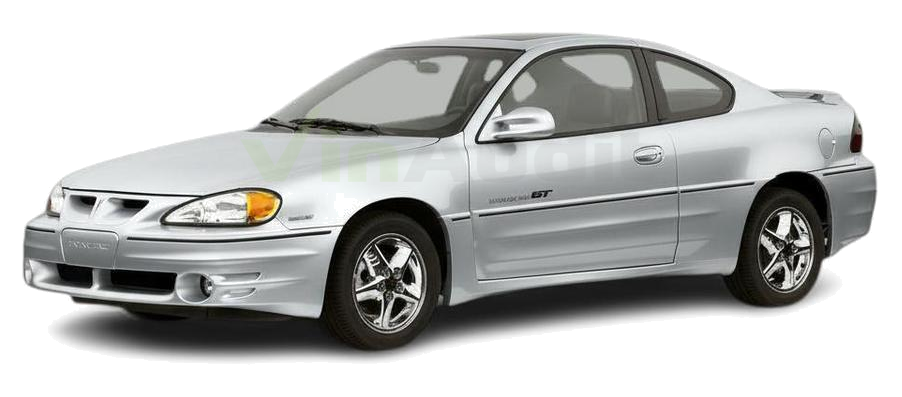
The Good
The 2001 Grand Am offered a balance of sporty performance, especially with the V6, and decent fuel economy. Its design was aggressive and appealing to younger buyers (emotional). It was also relatively affordable, making it a practical choice for budget-conscious individuals. Comfort was acceptable for its class and price point, especially on longer trips.
The Bad
The 2001 Grand Am is known for some reliability issues. Watch out for problems with the automatic transmission, particularly slipping or hard shifting. Electrical issues, such as malfunctioning sensors and problems with the power windows and locks, are also common. The plastic interior trim can also be prone to cracking and wear.
2001 Pontiac Grand Am: Quick Overview
- Engine Options:
- 2.2L Ecotec Inline-4: Standard on SE models.
- 3.4L V6: Available on SE, standard on GT and GT1 models.
- Horsepower:
- 2.2L I4: Approximately 140 horsepower.
- 3.4L V6: Approximately 175 horsepower.
- Fuel Economy (estimated):
- 2.2L I4: 23 mpg city / 32 mpg highway.
- 3.4L V6: 19 mpg city / 29 mpg highway.
- 0-60 Times (estimated):
- 2.2L I4: 9-10 seconds.
- 3.4L V6: 7-8 seconds.
- Towing Capacity: Not recommended for towing.
- Trim-Level Features:
- SE: Base model, typically included air conditioning, power windows and locks, and a basic stereo system.
- GT: Added features like alloy wheels, fog lights, sportier suspension, and upgraded interior trim. Often included a rear spoiler.
- GT1: Similar to GT, often with additional comfort or convenience features and sometimes leather upholstery.
- Note: Feature availability could vary slightly depending on optional packages.
2001 Pontiac Grand Am Specifications
Vehicle Information
| Year | 2001 |
| Make | Pontiac |
| Model | Grand Am |
| Trim | - |
| Style | - |
| Type | Sedan |
| Category | Compact Car |
Manufacturing Details
| Made In | United States |
| Manufacturing City | ORION |
Dimensions
| Doors | 4-Door |
| Curb Weight | - |
| Gross Vehicle Weight Rating | - |
| Overall Height | - |
| Overall Length | - |
| Overall Width | - |
| Wheelbase Length | - |
| Standard Seating | - |
Engine & Performance
| Engine | L61 |
| Engine Size | 2.2L |
| Engine Cylinders | 4 |
| Transmission | - |
| Transmission Type | - |
| Transmission Speeds | - |
| Drivetrain | Front-Wheel Drive |
Additional Features
| Anti-Brake System | - |
| Steering Type | - |
Pricing
| Manufacturer Suggested Retail Price (MSRP) | - |
| Invoice Price | - |
| Delivery Charges | - |
Vehicle History Report
Specifications
History
Events
History Check
Check
Check
Check
Check
Listings
Recalls
Check
Analysis
What Problems Does the 2001 Pontiac Grand Am Have?
Intake manifold leaks are another recurring problem with the 3.4L V6 engine, leading to coolant loss and potential engine damage. The plastic coolant elbows are particularly prone to cracking. The interior is also susceptible to wear and tear, with cracking dashboards and peeling door panels being common complaints. Rust can also be an issue, particularly in areas with harsh winters.
While specific recalls may exist, it is important to check the NHTSA website for the most up-to-date information based on the VIN. Overall, long-term reliability is a concern, and regular maintenance is crucial to keeping a 2001 Grand Am running. Later model years of the fifth generation (2003-2005) may have addressed some of the earlier issues, but careful inspection is still recommended.
How long will the 2001 Pontiac Grand Am last?
What Technology & Safety Features are Included?
Safety features included dual front airbags. Side airbags were not generally available. OnStar was an optional feature. Crash-test ratings from the NHTSA and IIHS can be researched online using the specific model year. Keep in mind that safety standards have significantly improved since 2001, so compared to modern vehicles, the Grand Am offers less crash protection.
Generally, it lacked many of the advanced tech and safety features found in newer cars like rearview cameras, stability control, or advanced infotainment systems. Focus was on offering basic features at an affordable price point. Its primary appeal wasn't technologically advanced, but rather a blend of sporty styling and affordability. Availability of some options would vary by trim level and packages.
What Colors Options are Available?
Exterior Colors
Interior Colors
2001 Pontiac Grand Am Prices and Market Value
2001 Pontiac Grand Am Cost of Ownership
2001 Pontiac Grand Am Fuel Efficiency
2001 Pontiac Grand Am Safety Rating
NHTSA
2001 Pontiac Grand Am Recalls & Defects
Electrical System:ignition
Power Train:manual Transmission
Exterior Lighting:hazard Flashing Warning Lights:switch
Equipment:other:owners/Service/Other Manual
Exterior Lighting
Fuel System, Other:storage:tank Assembly:pressure Relief Devices
Exterior Lighting
2001 Pontiac Grand Am Insurance
reasonable repair costs.
How Does the 2001 Pontiac Grand Am Compare to Other Sedan?
In terms of features, the Grand Am was generally comparable to its rivals at its price point. However, the Toyota and Honda were known for their better build quality and longevity. For those seeking reliability and longevity, a Toyota Corolla or Honda Civic from the same era would be a better alternative, albeit with less sporty styling. If affordability is the primary concern and you're willing to accept potential repairs, the Grand Am might be considered, but a well-maintained Corolla or Civic offers much better long-term value. Newer vehicles will offer significantly more safety features and improved technology.
Ranks #2078 Sedan
| 1 | 2023 Toyota Camry | (5.0★) |
| 2 | 2023 Honda Accord | (0.0★) |
| 3 | 2023 Lexus ES | (0.0★) |
| 4 | 2024 Subaru Legacy | (5.0★) |
| 5 | 2022 Mazda MX-30 | (5.0★) |
| 6 | 2024 BMW M3 | (0.0★) |
| 7 | 2023 Ford Mustang | (5.0★) |
| 8 | 2023 Mercedes-Benz AMG GT | (0.0★) |
| 9 | 2023 Audi A3 | (0.0★) |
| 10 | 2023 Chevrolet Camaro | (5.0★) |
| 11 | 2023 Hyundai Elantra Hybrid | (0.0★) |
| 12 | 2023 Nissan Altima | (4.0★) |
| 2078 | 2001 Pontiac Grand Am | (0.0★) |
Final Verdict: Is the 2001 Pontiac Grand Am a Good Sedan?

Eugene S
Eugene is an automotive enthusiast with over 15 years of experience in the used car market. As a writer at VINCheck.info, he brings deep industry insight and a passion for cars, helping readers make smart, informed decisions. Eugene has written hundreds of used car reviews and is known for breaking down complex automotive topics into clear, actionable advice. Over the years, he has driven and worked on a wide range of vehicles—starting with tuning street cars in his early days and eventually focusing on performance upgrades and reliability improvements. Today, he specializes in evaluating used vehicles through the lens of real-world ownership and enthusiast needs. A longtime fan of Porsche, Eugene especially appreciates vehicles that blend durability with driving enjoyment.