
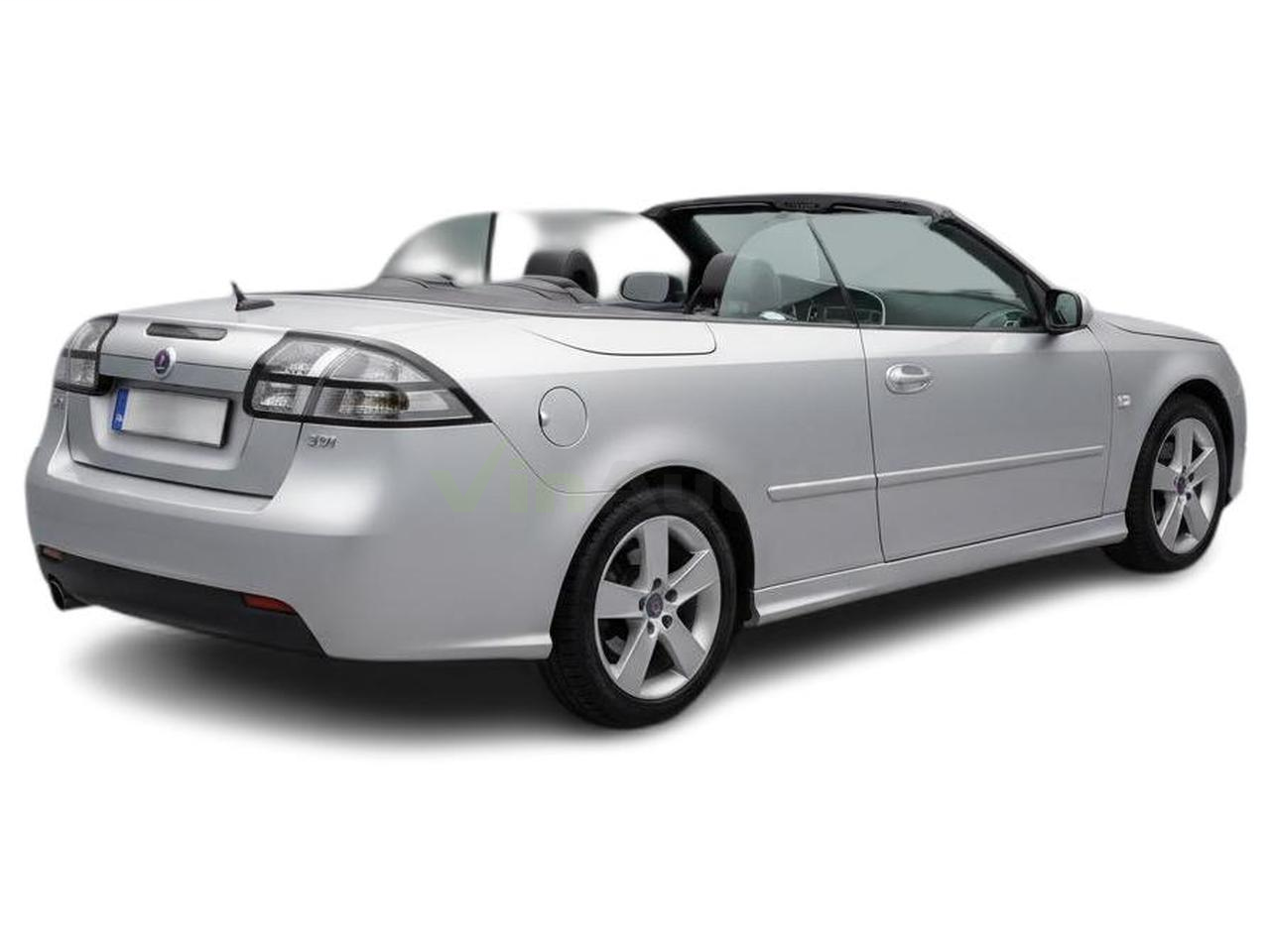
The Good
The 2008 Saab 9-3 offers engaging turbocharged performance and confident handling, appealing to emotional drivers. Its distinctive, understated design provides unique sophistication. Practical buyers appreciate its robust safety features, ergonomic comfort, and reasonable fuel efficiency for its class, making it a strong value proposition on the used market for a European luxury car.
The Bad
Potential buyers should watch out for known electrical issues like instrument cluster (DIM) and Saab Information Display (SID) pixel failures. Common mechanical weaknesses include power steering pump leaks, aging suspension components, and occasional ignition coil pack issues. Parts availability can also be a long-term concern due to the brand's demise.
2008 Saab 9-3: Quick Overview
- Engine Options:
- 2.0T: 2.0-liter turbocharged inline-4 cylinder
- Aero: 2.8-liter turbocharged V6
- Turbo X: 2.8-liter turbocharged V6 with XWD (all-wheel drive) - Horsepower:
- 2.0T: 210 hp
- Aero (FWD): 255 hp
- Aero (XWD) / Turbo X: 280 hp - Fuel Economy (EPA estimated MPG):
- 2.0T Automatic: 19 city / 27 highway
- 2.0T Manual: 19 city / 29 highway
- Aero V6 Automatic (FWD): 15 city / 24 highway
- Aero V6 Automatic (XWD): 16 city / 24 highway
- Turbo X: Similar to Aero XWD - 0-60 mph Times (approximate):
- 2.0T: 6.7 - 7.5 seconds
- Aero V6: 5.7 - 6.5 seconds
- Turbo X: 5.4 - 5.7 seconds - Towing Capacity:
- Generally not officially rated for significant towing in the U.S. market. Light loads, typically under 1,000-1,500 lbs, may be possible with proper equipment, but consult owner's manual. - Trim-Level Features:
- 2.0T (Base): Included 16-inch alloy wheels, dual-zone automatic climate control, power windows and locks, heated power mirrors, CD audio system with auxiliary input, front bucket seats, leatherette upholstery, cruise control, and Stability Control.
- Aero: Built upon the 2.0T, adding 17-inch or 18-inch alloy wheels, sport-tuned suspension, distinctive exterior styling (body kit, rear spoiler), power driver's seat, leather sport seats, premium audio system, and unique interior trim. The V6 engine was standard, with optional XWD for 280 hp.
- Turbo X (Limited Edition): Exclusively featured Saab's XWD system, a 280 hp V6, 18-inch matte black alloy wheels, larger brakes, sport exhaust, unique "Jet Black" exterior paint, and special carbon-fiber-effect interior trim and sport steering wheel.
2008 Saab 9-3 Specifications
Vehicle Information
| Year | 2008 |
| Make | Saab |
| Model | 9-3 |
| Trim | - |
| Style | - |
| Type | Convertible |
| Category | Subcompact Car |
Manufacturing Details
| Made In | Sweden |
| Manufacturing City | TROLLHATTAN |
Dimensions
| Doors | 2-Door |
| Curb Weight | 3700 pounds |
| Gross Vehicle Weight Rating | - |
| Overall Height | 56.60 inches |
| Overall Length | 182.90 inches |
| Overall Width | 69.30 inches |
| Wheelbase Length | 105.30 inches |
| Standard Seating | 4 |
Engine & Performance
| Engine | 2L I4 |
| Engine Size | 2L |
| Engine Cylinders | 4 |
| Transmission | 5-Speed Automatic |
| Transmission Type | Automatic |
| Transmission Speeds | 5-Speed |
| Drivetrain | Front-Wheel Drive |
Additional Features
| Anti-Brake System | 4-Wheel ABS |
| Steering Type | Rack & Pinion |
Pricing
| Manufacturer Suggested Retail Price (MSRP) | $39,590 |
| Invoice Price | $37,729 |
| Delivery Charges | $745 |
Vehicle History Report
Specifications
History
Events
History Check
Check
Check
Check
Check
Listings
Recalls
Check
Analysis
What Problems Does the 2008 Saab 9-3 Have?
While generally robust, the turbocharged engines can develop issues if maintenance is neglected. Turbocharger failures, often preceded by unusual noises or smoke, can occur, particularly if oil changes are skipped or the engine isn't allowed to cool down after spirited driving. The 2.0T engine's PCV (Positive Crankcase Ventilation) system can become clogged, potentially leading to oil sludge if not serviced. Water pump leaks are also known to occur.
Regarding recalls, it's imperative for any potential owner to check the NHTSA website for VIN-specific recalls, as general recalls (e.g., Takata airbags) could apply. While the 2008 model year benefited from some refinements, these common issues persist across the second-generation 9-3s. Long-term reliability is decent with diligent maintenance, but the defunct status of Saab means parts availability can be an increasing concern, potentially leading to higher repair costs and the need for specialist mechanics.
How long will the 2008 Saab 9-3 last?
However, long-term durability is heavily influenced by addressing known weaknesses. Over time, expect electrical gremlins to become more prevalent (e.g., instrument panel displays). Rubber components in the suspension and engine bay (bushings, hoses) will degrade, requiring replacement. Power steering systems are also common points of failure with age. While the car can last, owners must be prepared for the increasing likelihood of needing specialist repairs and potentially harder-to-source parts, making proactive maintenance critical for extended service.
What Technology & Safety Features are Included?
Built-in Tech & Entertainment: Standard features included a CD/MP3 audio system with an auxiliary input for external devices, dual-zone automatic climate control, power windows, power door locks, and heated power mirrors. The Saab Information Display (SID) provided essential trip computer data, outside temperature, and other vehicle status messages. Optional upgrades included a premium Harman Kardon sound system for enhanced audio quality and an integrated DVD-based navigation system, which was advanced for its time but now considered dated. Bluetooth hands-free phone connectivity was also an available option.
Driver-Assistance Features: Driver-assistance technology was less comprehensive than modern vehicles but adequate for its era. Standard cruise control was present. Rear parking sensors were an available option to assist with maneuvering. It did not feature advanced systems like adaptive cruise control, lane-keeping assist, or blind-spot monitoring, which became common in later years.
Safety Features: Saab's reputation for safety was upheld in the 9-3. It came equipped with a comprehensive airbag system, including front, seat-mounted side, and full-length side curtain airbags. Saab Active Head Restraints (SAHR) were standard to help mitigate whiplash injuries in rear-end collisions. Electronic Stability Program (ESP), Traction Control System (TCS), Anti-lock Braking System (ABS) with Electronic Brake-force Distribution (EBD), and Brake Assist (BA) provided critical active safety.
Crash-Test Ratings: The 2008 Saab 9-3 generally performed well in independent crash tests.
- IIHS (Insurance Institute for Highway Safety):
- Moderate Overlap Front: Good
- Side Impact: Good
- Roof Strength: Good (applies to 2007-2011 models)
- Rear Crash Protection/Head Restraints: Good - NHTSA (National Highway Traffic Safety Administration):
- Frontal Driver: 5 stars
- Frontal Passenger: 5 stars
- Side Driver: 5 stars
- Side Rear Passenger: 5 stars
- Rollover: 4 stars
What Colors Options are Available?
2008 Saab 9-3 Prices and Market Value
Today, current used market prices vary significantly based on condition, mileage, and trim. Expect to find examples from as low as $2,000 (high mileage, fair condition) up to $8,000 - $12,000+ for well-maintained Aero or Turbo X models, particularly convertibles. Saabs experienced rapid depreciation due to brand uncertainty and eventual bankruptcy. This severe depreciation makes them attractive used buys, offering significant features for the price. Factors affecting current resale value include maintenance records, unique trim levels (Aero, Turbo X), and the vehicle's overall mechanical and cosmetic condition. The dwindling parts supply also negatively impacts market value compared to more mainstream brands.
2008 Saab 9-3 Cost of Ownership
Maintenance and repair costs can be substantial. While routine servicing might be manageable, specific mechanical or electrical repairs often necessitate specialist knowledge and can be expensive due to harder-to-find parts and labor rates for niche vehicles. Due to Saab's defunct status, parts sourcing can be a challenge. Therefore, it is not an economical car to own unless you possess strong DIY skills or have access to a reliable, affordable Saab specialist.
2008 Saab 9-3 Fuel Efficiency
2008 Saab 9-3 Safety Rating
NHTSA
IIHS
2008 Saab 9-3 Recalls & Defects
Fuel System, Gasoline:delivery:fuel Pump
Seat Belts:front:retractor
AIR Bags:frontal:driver Side:inflator Module
2008 Saab 9-3 Warranty
Basic
Powertrain
Rust
2008 Saab 9-3 Insurance
reasonable repair costs.
How Does the 2008 Saab 9-3 Compare to Other Convertible?
Performance: The 9-3 offers solid turbocharged performance, especially the Aero and Turbo X V6 models, providing engaging FWD or XWD dynamics. However, it generally doesn't match the precision, steering feel, or balanced RWD handling of the BMW 3-Series. The Audi A4, especially with Quattro AWD, provides a more refined, composed ride and confident grip, often with comparable straight-line speed. The Mercedes C-Class typically emphasizes comfort over outright sportiness, and the Volvo S60 offers a more relaxed, safety-focused drive.
Features: The Saab 9-3 boasted a unique, driver-centric interior design, strong safety credentials, and ergonomic seats. While it had good tech for its time (e.g., premium audio, nav option), it often lacked the sheer breadth of luxury options or cutting-edge infotainment found in its German competitors. The Volvo S60 offered a similar Scandinavian design ethos and strong safety, though often with less sporty ambition.
Reliability: This is a mixed bag for the 9-3. With diligent maintenance, it can be reliable, but known issues like electrical gremlins, power steering leaks, and certain suspension wear points are common. German rivals also have their own complex issues, but their parts supply and specialist networks are far more robust. The Volvo S60 is often perceived as having strong, if not stronger, long-term reliability than the Saab.
Price (Used): Here, the Saab 9-3 excels in value. Due to its brand's fate, it depreciated significantly faster than its rivals. Consequently, used 9-3s are often considerably more affordable than comparable BMW 3-Series, Audi A4, or Mercedes C-Class models, offering more luxury and performance for the money.
Alternatives:
- BMW 328i/335i (E90): For driving enthusiasts prioritizing ultimate dynamics and a more premium badge.
- Audi A4 2.0T Quattro (B7/B8): For those seeking refined all-wheel-drive performance, quality interiors, and a strong European feel.
- Volvo S60: For buyers who appreciate Scandinavian safety, comfort, and a distinctive but less performance-oriented European sedan, often with better long-term parts availability.
Final Verdict: Is the 2008 Saab 9-3 a Good Convertible?
Is it worth buying? Yes, but exclusively as a used vehicle and under very specific conditions. Seek out examples with comprehensive service records, ideally lower mileage (under 120k), and always get a pre-purchase inspection from a Saab specialist. Opting for desirable trims like the Aero or the rare Turbo X offers the best performance and potential future collector value. Be prepared for potentially higher maintenance and repair costs, especially related to finding specialized parts due to Saab's defunct status. Avoid vehicles with known electrical gremlins or significant deferred maintenance unless you're a skilled DIY mechanic. It's a rewarding car for the right owner, but not a "set it and forget it" daily driver.

Jovan
Jovan specializes in interpreting vehicle records and making sense of VIN data. With over 10 years of experience in the automotive data industry, his work ensures that every report is clear, accurate, and useful for car buyers.