The 2014 Kenworth 310 is a robust and versatile medium-duty truck, often utilized for vocational applications such as construction, refuse, and delivery. It belongs to a lineage of dependable Kenworth vehicles, known for their build quality and driver-focused design. While specific trims for the 310 are less defined than passenger vehicles, its popularity stems from its robust chassis, customizable configurations, and the reputable Kenworth engineering. Pricing for these vehicles can vary significantly based on configuration and used market conditions.
The Good
The 2014 Kenworth 310 offers exceptional durability and a powerful work ethic, appealing to those who value hard-earned reliability. Its ergonomic cabin prioritizes driver comfort on long hauls, while its robust engineering ensures consistent performance, making it a sound, long-term investment.
The Bad
Potential buyers of a 2014 Kenworth 310 should be aware of the possibility of wear and tear on older components, particularly in high-utilization vehicles. Maintenance records are crucial. Some owners have reported minor electrical gremlins or specific component failures depending on how rigorously the truck has been maintained.
2014 Kenworth 310: Quick Overview
- Engine Options: The 2014 Kenworth 310 typically features PACCAR PX-7 diesel engines, known for their durability and performance in vocational applications. Other Cummins ISB and ISC options were also available, depending on the specific configuration and original order. These engines are designed for heavy-duty use and torque delivery rather than outright speed.
- Horsepower: Horsepower ratings for the PACCAR PX-7 engines generally ranged from approximately 200 to 325 horsepower. Cummins engines could offer a similar or slightly wider range, often excelling in torque output, which is critical for vocational tasks.
- Fuel Economy: Fuel economy for vocational trucks like the Kenworth 310 is highly dependent on the engine, transmission, axle ratios, and the nature of the work performed (e.g., city driving, highway, towing heavy loads, idling time). Realistic figures might range from 5 to 10 miles per gallon.
- 0-60 Times: 0-60 mph acceleration is not a primary metric for trucks of this class. These vehicles are engineered for power and load-carrying ability, not rapid acceleration. Performance is measured in terms of pulling power and load capacity, not speed.
- Towing Capacity: Towing and payload capacities are highly variable and depend entirely on the specific chassis configuration, axle ratings, suspension, and vocational body fitted to the truck. These vehicles are designed to handle substantial loads, often in the tens of thousands of pounds for towing and payload combined. Specific Gross Combination Weight Ratings (GCWR) and Gross Vehicle Weight Ratings (GVWR) would be detailed on individual vehicle build sheets.
- Trim-Level Features: The Kenworth 310 does not typically have traditional "trim levels" like passenger cars. Instead, features are dictated by the vocational application and optional equipment ordered at the factory. Common features and options include:
- Various cab configurations (e.g., day cab, extended cab)
- Different transmission options (e.g., Allison automatic, manual transmissions)
- Air brakes and anti-lock braking systems (ABS)
- Power steering and power windows (often standard on later models)
- Various PTO (Power Take-Off) options for auxiliary equipment
- Specialized bodies (e.g., dump beds, service bodies, refuse bodies)
- Suspension upgrades for specific load requirements
- Driver comfort features like air conditioning and upgraded seating.
2014 Kenworth 310 Specifications
Vehicle Information
| Year | 2014 |
| Make | Kenworth |
| Model | 310 |
| Trim | - |
| Style | - |
| Type | Truck |
| Category | Tractor |
Manufacturing Details
| Made In | United States |
| Manufacturing City | CHILLICOTHE |
Dimensions
| Doors | - |
| Curb Weight | - |
| Gross Vehicle Weight Rating | 57000 pounds |
| Overall Height | - |
| Overall Length | - |
| Overall Width | - |
| Wheelbase Length | - |
| Standard Seating | - |
Engine & Performance
| Engine | 12.9L L6 DIESEL |
| Engine Size | 12.9L |
| Engine Cylinders | 6 |
| Transmission | - |
| Transmission Type | - |
| Transmission Speeds | - |
| Drivetrain | 6x4 |
Additional Features
| Anti-Brake System | - |
| Steering Type | - |
Pricing
| Manufacturer Suggested Retail Price (MSRP) | - |
| Invoice Price | - |
| Delivery Charges | - |
Vehicle History Report
Vehicle
Specifications
Specifications
Ownership
History
History
All History
Events
Events
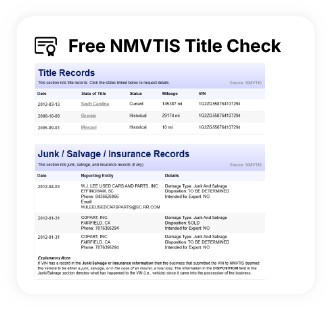
NMVTIS Title
History Check
History Check
Salvage/Rebuilt
Check
Check
Accident
Check
Check
Theft
Check
Check
Open Lien
Check
Check
Past Sale
Listings
Listings
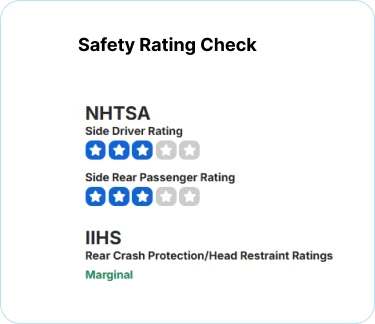
Safety
Recalls
Recalls
Odometer
Check
Check
Market Price
Analysis
Analysis
What Problems Does the 2014 Kenworth 310 Have?
For a 2014 Kenworth 310, which is a vocational truck, frequently reported problems and long-term reliability concerns are often tied to the rigorous demands of its intended use rather than inherent design flaws common to passenger vehicles. Given its age, potential issues can arise from components that experience significant wear and tear over time.
Common areas to watch out for in medium-duty vocational trucks of this vintage include the drivetrain, particularly the transmission and clutch if manual. Automatic transmissions, like Allison units often paired with these trucks, are generally robust but can develop issues with age and fluid degradation. Engine components, such as turbochargers, fuel injectors, and EGR systems, are critical. Regular maintenance and high-quality oil changes are paramount to preventing premature failure. Some owners have reported issues related to exhaust systems and after-treatment devices on diesel engines, especially if not properly maintained or if the truck is used for a lot of short-haul city driving where regeneration cycles are less frequent.
Electrical gremlins can also surface in older trucks. This might include issues with sensors, wiring harnesses, or control modules. The complexity of modern engine management systems means that even minor electrical faults can sometimes be challenging to diagnose and repair.
Suspension components, such as leaf springs, shocks, and bushings, can wear out over time, especially if the truck frequently carries heavy loads or operates on rough terrain. Braking systems, including air brakes, require regular inspection and maintenance to ensure optimal performance and safety.
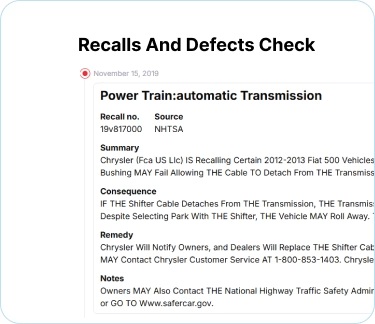
Recalls for Kenworth trucks are issued by the NHTSA and would be specific to the model year and VIN. It is essential for any potential buyer to check the NHTSA website for any outstanding recalls for a specific 2014 Kenworth 310. Typically, recalls involve safety-critical components like braking systems, steering, or potential fire hazards.
Regarding long-term reliability, a 2014 Kenworth 310, if well-maintained, can continue to provide service for many years and hundreds of thousands of miles. However, owners should be prepared for the reality that as a heavy-duty vocational vehicle, component replacement and significant maintenance are part of the ownership lifecycle. The key to long-term reliability lies in proactive maintenance, addressing minor issues before they become major problems, and using qualified technicians for repairs. There are no widespread, model-year-specific catastrophic failures commonly reported for the 2014 Kenworth 310, but rather a cumulative effect of wear and tear on heavy-duty components.
How long will the 2014 Kenworth 310 last?
The average mileage for a 2014 Kenworth 310 can vary dramatically based on its application. Vocational trucks used for local delivery or construction might see between 20,000 to 50,000 miles per year, while those in regional haul could accumulate over 100,000 miles annually. With diligent maintenance, including regular oil changes, fluid checks, and prompt attention to any emerging issues, these trucks are built for longevity and can easily reach 500,000 to 1,000,000 miles or more of service.
Long-term durability is a hallmark of Kenworth. The chassis, cab structure, and core powertrain components are engineered for heavy-duty use. However, weaknesses over time are typically related to wear and tear on auxiliary systems and components that are subjected to constant stress: transmission, clutch (if manual), suspension parts, braking system components, and potentially exhaust or emission systems. Electrical systems can also become a point of concern as wiring ages. Consistent, high-quality maintenance is the most significant factor in ensuring the 2014 Kenworth 310's continued reliability and extending its service life.
What Technology & Safety Features are Included?
The 2014 Kenworth 310, being a vocational medium-duty truck, prioritizes functionality and driver utility over advanced infotainment and cutting-edge driver-assistance systems commonly found in light-duty vehicles.
Built-in Tech & Entertainment: Standard technology typically revolved around essential operational functions. This would likely include a basic AM/FM radio, possibly with an auxiliary input for connecting personal devices. Higher-end options might have included a CD player or a simple digital display for radio information. Navigation systems were not standard and would have been a dealer-installed or aftermarket option. The focus was on practicality, not entertainment.
Driver-Assistance Features: Driver-assistance features were limited in 2014 for this class of vehicle. Features like cruise control were common. Advanced systems such as lane departure warning, adaptive cruise control, or blind-spot monitoring were generally not available or were exceptionally rare, high-cost options only on the most specialized configurations. The primary focus was on the driver's direct control and situational awareness.

Safety Features: Safety was approached through robust engineering and essential active safety systems. Standard safety features would have included:
- Air Brakes: These provide superior stopping power compared to hydraulic brakes, especially under heavy load.

- Anti-lock Braking System (ABS): Essential for maintaining steering control during emergency braking situations, preventing wheel lock-up.
- Seat Belts: Standard safety restraints.
- Heavy-Duty Construction: The robust chassis and cab structure are inherently designed to offer a significant degree of protection in the event of a collision.
What Colors Options are Available?
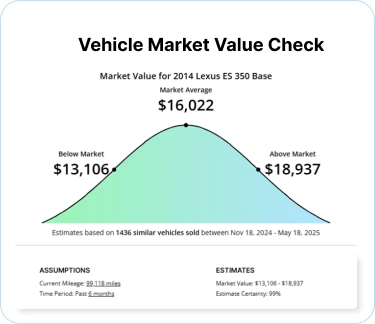
2014 Kenworth 310 Prices and Market Value
The original MSRP for a 2014 Kenworth 310 could have ranged significantly, generally starting from the $60,000 to $70,000 mark and extending upwards of $100,000 or more depending on the specific configuration, engine, transmission, and vocational body installed. These are not consumer-oriented vehicles, so pricing was heavily dependent on fleet orders and specialized upfitting.
In the current used market, a 2014 Kenworth 310's price is highly variable, typically falling between $20,000 and $60,000. Factors dramatically influencing this range include mileage, overall condition, maintenance history, the type of vocational body (e.g., a simple flatbed vs. a specialized refuse or dump body), engine hours, and overall market demand for specific configurations.
Depreciation for vocational trucks is less about time and more about usage and obsolescence of specific equipment. While they depreciate from their new price, well-maintained Kenworths hold their value better than many other commercial vehicles due to their reputation for durability. Factors affecting resale value are paramount: rigorous maintenance records, low hours for the engine and PTO, minimal rust or structural damage, and the desirability of the specific vocational application for which it is equipped. A truck that has been meticulously maintained and used for less demanding tasks will command a significantly higher resale price.
2014 Kenworth 310 Cost of Ownership
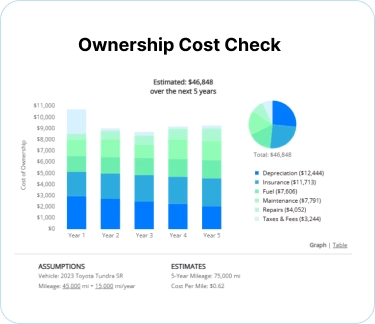
Owning a 2014 Kenworth 310 is generally considered costly, especially when compared to light-duty vehicles. Insurance premiums will be higher due to its commercial classification, value, and potential for significant claims. Fuel costs are substantial; while diesel efficiency varies, expect to pay considerably more for fuel than for a gasoline vehicle, especially when operating under load. Maintenance and repair are where significant costs can arise. While Kenworths are durable, parts for heavy-duty trucks are expensive, and specialized mechanics are often required. Routine maintenance intervals must be strictly adhered to. Overall, while economical for its intended heavy-duty purpose, it is a costly vehicle to own from a day-to-day operational and maintenance perspective.
2014 Kenworth 310 Fuel Efficiency
Fuel Type
Diesel
Fuel Capacity
-
City Mileage
-
Highway Mileage
-
2014 Kenworth 310 Warranty
Basic
Original warranty
0 months / No data
Estimated remaining
Expired
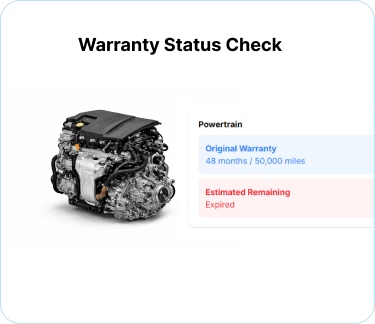
Powertrain
Original warranty
0 months / No data
Estimated remaining
Expired
Rust
Original warranty
0 months / No data
Estimated remaining
Expired
2014 Kenworth 310 Insurance
Insurance for a 2014 Kenworth 310 is moderately priced, reflecting its status as a Truck with strong safety ratings and
reasonable repair costs.
How Does the 2014 Kenworth 310 Compare to Other Truck?
The 2014 Kenworth 310 operates in the competitive medium-duty vocational truck segment. Its key rivals include trucks from manufacturers like Peterbilt (often sharing platforms and powertrains with Kenworth), Freightliner, International (Navistar), and Hino.
Performance: Kenworth, along with its sibling Peterbilt, generally offers robust PACCAR engines known for their torque and durability, providing strong performance for vocational tasks. Freightliner and International also offer powerful engine options, often from Cummins or their own proprietary lines, which are competitive. Hino trucks, particularly in this class, might offer a slightly different balance, sometimes focusing on fuel efficiency alongside adequate power, though perhaps not always matching the sheer brute force of a Kenworth for the most demanding applications.
Features: In terms of features, the 2014 Kenworth 310, like its contemporaries, was more focused on utility than luxury. Driver comfort and ergonomics were usually strong points for Kenworth, emphasizing a functional cabin. Competitors like Freightliner and International also offer well-designed cabins. Advanced technology and driver-assistance features were relatively scarce across the board in this segment in 2014, with most manufacturers offering basic functionality. Kenworth often stands out for its customizable chassis and body integration options, catering precisely to specific vocational needs.
Reliability: Kenworth has a strong reputation for build quality and long-term reliability, which is a significant advantage. Peterbilt shares this reputation. Freightliner and International also produce reliable trucks, but Kenworth often has a slight edge in perceived durability and robustness, especially in challenging environments. Hino is known for reliability, often with simpler designs that can translate to fewer complex issues.
Price: New pricing would have been comparable across these premium vocational brands. Used pricing is highly dependent on specific configurations. A 2014 Kenworth 310 will likely be priced in the mid-to-upper range of the used market compared to similar vocational trucks, reflecting its brand prestige and build quality.
Recommendations:
- Similar Alternatives: A 2014 Peterbilt 320 or 330 would be a very similar alternative, offering comparable performance, reliability, and build quality due to shared PACCAR components and design philosophy. A 2014 Freightliner M2 series truck is also a strong contender, offering a broad range of configurations and a good balance of features and reliability, often at a slightly more competitive price point on the used market.
- Potentially Better Alternatives (depending on needs): If the primary focus is on a potentially lower acquisition cost or different powertrain options, a 2014 International 4300 or 4400 series truck could be considered. For specific applications where extreme durability is less critical and fuel efficiency is a higher priority, a 2014 Hino 195 or 268 might be a viable option, often with more modern emission systems. However, for the ultimate in vocational robustness and longevity, Kenworth and Peterbilt remain benchmarks.
Final Verdict: Is the 2014 Kenworth 310 a Good Truck?
The 2014 Kenworth 310 is ideally suited for businesses and owner-operators requiring a dependable, robust medium-duty vocational truck for applications like construction, utility work, refuse collection, or specialized delivery. It is a worthwhile purchase for those prioritizing long-term durability, strong performance under load, and a comfortable driver environment over the latest technological gadgets.
Given its model year, buying new is highly unlikely; therefore, it is most advisable to purchase this truck used. When buying used, thorough inspection is critical. Prioritize vehicles with comprehensive maintenance records, lower engine hours, and minimal signs of abuse or neglect. Specific trims are less relevant than the vocational body and overall condition. If you are seeking a workhorse that can withstand demanding tasks and provide reliable service for many years with proper care, the 2014 Kenworth 310, especially with a well-maintained powertrain and chassis, represents a solid investment. It's a truck built for work, not for show, and excels when its capabilities are matched to its intended purpose.