The 2003 Isuzu Rodeo is a mid-size SUV produced from 1988 to 2004. It offered a rugged body-on-frame construction, making it a capable off-roader and a practical choice for families. Key trims often included the S, LS, and the more off-road-oriented LSE. Initially, pricing ranged from the mid-$20,000s to over $30,000. The Rodeo stood out for its go-anywhere attitude and relatively affordable price point, appealing to those seeking adventure without breaking the bank.

The Good
The 2003 Isuzu Rodeo boasts strong off-road capability and a durable, body-on-frame construction for practical utility. Its straightforward design appeals to those seeking ruggedness, while its value proposition offers an emotional connection for budget-conscious adventurers. Comfort is decent for its class, and reliability is generally good with proper maintenance.
The Bad
Potential buyers should watch out for transmission issues, particularly in automatic models, and rust, especially on the frame and body panels in certain climates. Fuel economy is not a strong suit for the Rodeo. Interior materials can also feel dated and less refined compared to some rivals.
2003 Isuzu Rodeo: Quick Overview
- Engine Options:
The 2003 Isuzu Rodeo offered two primary engine options:- 2.8L 4-cylinder Turbo Diesel (less common in the US)
- 3.2L V6 (standard on most trims)
- 2.8L 4-cylinder Turbo Diesel (less common in the US)
- Horsepower:
- 3.2L V6: Approximately 205 horsepower
- Fuel Economy:
The Rodeo is not known for its fuel efficiency. Expect figures in the range of:- City: 14-16 MPG
- Highway: 17-19 MPG
- 0-60 Times:
Around 9-10 seconds for V6 models, depending on configuration. - Towing Capacity:
Typically rated up to 5,000 lbs when properly equipped, making it suitable for small to medium-sized trailers. - Trim-Level Features:
Key trims and their typical features:- S: Base model, usually with standard features like power windows and locks, air conditioning.
- LS: Mid-range trim, adding features like alloy wheels, upgraded audio system, cruise control, and potentially a sunroof.
- LSE: Top-tier trim, often including leather upholstery, heated seats, automatic climate control, and more advanced exterior styling cues. Some LSE models may have featured more robust off-road enhancements.
- S: Base model, usually with standard features like power windows and locks, air conditioning.
2003 Isuzu Rodeo Specifications
Vehicle Information
| Year | 2003 |
| Make | Isuzu |
| Model | Rodeo |
| Trim | - |
| Style | - |
| Type | Wagon |
| Category | Minivan Medium Truck |
Manufacturing Details
| Made In | United States |
| Manufacturing City | - |
Dimensions
| Doors | - |
| Curb Weight | - |
| Gross Vehicle Weight Rating | - |
| Overall Height | - |
| Overall Length | - |
| Overall Width | - |
| Wheelbase Length | - |
| Standard Seating | - |
Engine & Performance
| Engine | 3.2 L V-6 |
| Engine Size | 3.2L |
| Engine Cylinders | 6 |
| Transmission | - |
| Transmission Type | - |
| Transmission Speeds | - |
| Drivetrain | Four-Wheel Drive |
Additional Features
| Anti-Brake System | - |
| Steering Type | - |
Pricing
| Manufacturer Suggested Retail Price (MSRP) | - |
| Invoice Price | - |
| Delivery Charges | - |
Vehicle History Report
Vehicle
Specifications
Specifications
Ownership
History
History
All History
Events
Events
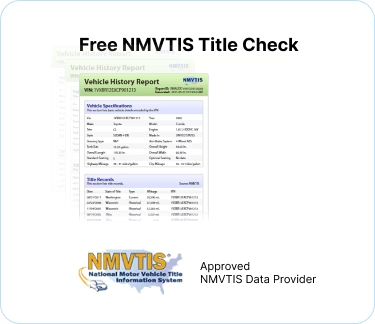
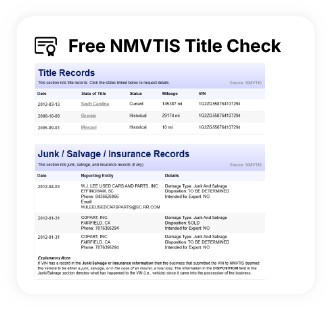
NMVTIS Title
History Check
History Check
Salvage/Rebuilt
Check
Check
Accident
Check
Check
Theft
Check
Check
Open Lien
Check
Check
Past Sale
Listings
Listings
Safety
Recalls
Recalls
Odometer
Check
Check
Market Price
Analysis
Analysis
What Problems Does the 2003 Isuzu Rodeo Have?
The 2003 Isuzu Rodeo, like many vehicles of its era, has some commonly reported issues that owners should be aware of. One of the most significant concerns revolves around the automatic transmission. Premature failure or slipping gears have been reported, particularly on models with higher mileage. Regular fluid changes and proper maintenance can help mitigate this, but it remains a potential weak point.
Another area to watch is frame and body rust. Given the Rodeo's body-on-frame construction, rust can become a serious structural issue, especially in regions with harsh winters or coastal environments where salt is used on roads. Inspecting the frame rails, suspension mounting points, and rocker panels thoroughly is crucial before purchasing a used Rodeo.
The engine, particularly the 3.2L V6, is generally considered robust, but issues such as oil leaks (valve cover gaskets, oil pan gasket) and the occasional failure of the radiator or water pump can occur. Overheating can lead to more severe engine damage, so monitoring the cooling system is important.
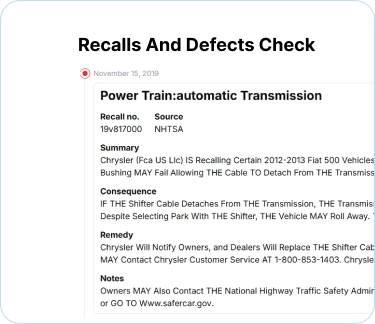
While specific recalls for the 2003 model year might be less prominent than for other years, it's always advisable to check the National Highway Traffic Safety Administration (NHTSA) website for any outstanding recalls. Long-term reliability can be decent if the vehicle has been diligently maintained. However, the potential for transmission problems and rust means that buying a 2003 Rodeo requires a thorough inspection by a mechanic familiar with these vehicles.
Another area to watch is frame and body rust. Given the Rodeo's body-on-frame construction, rust can become a serious structural issue, especially in regions with harsh winters or coastal environments where salt is used on roads. Inspecting the frame rails, suspension mounting points, and rocker panels thoroughly is crucial before purchasing a used Rodeo.
The engine, particularly the 3.2L V6, is generally considered robust, but issues such as oil leaks (valve cover gaskets, oil pan gasket) and the occasional failure of the radiator or water pump can occur. Overheating can lead to more severe engine damage, so monitoring the cooling system is important.
While specific recalls for the 2003 model year might be less prominent than for other years, it's always advisable to check the National Highway Traffic Safety Administration (NHTSA) website for any outstanding recalls. Long-term reliability can be decent if the vehicle has been diligently maintained. However, the potential for transmission problems and rust means that buying a 2003 Rodeo requires a thorough inspection by a mechanic familiar with these vehicles.
How long will the 2003 Isuzu Rodeo last?
Based on owner data and maintenance habits, a well-maintained 2003 Isuzu Rodeo can realistically reach an average mileage of 150,000 to 200,000 miles, and potentially more if cared for diligently. Some owners have reported exceeding 250,000 miles. The long-term durability of the chassis and the 3.2L V6 engine is generally good, provided regular oil changes and coolant system maintenance are performed. However, the known weaknesses, particularly concerning the automatic transmission and susceptibility to rust, can limit its lifespan if not addressed proactively. Owners who prioritize preventative maintenance, especially transmission fluid services and underbody rust protection, will likely experience greater longevity from their Rodeo.
What Technology & Safety Features are Included?
The 2003 Isuzu Rodeo's technology and safety features were typical for its time, focusing more on utility than cutting-edge electronics.
Tech and Entertainment: Standard fare generally included a radio with a CD player. Higher trims, like the LS and LSE, might have offered an upgraded audio system with more speakers. Features like power windows, power door locks, and cruise control were common on mid to higher trims. Navigation systems were not a standard offering and were rare as dealer-installed options. The interior design prioritized functionality over a flashy digital interface.
Driver-Assistance Features: Driver-assistance features were quite limited in 2003. The primary safety technology offered was four-wheel anti-lock brakes (ABS), which was standard on most models. Traction control was not widely available or standard. Parking assistance or rearview cameras were non-existent in this era for the Rodeo.
Safety Features: Standard safety equipment included front airbags for the driver and front passenger. Side-impact airbags were generally not a standard feature and were rarely an option. Seatbelt pretensioners were also standard. The Rodeo's body-on-frame construction offered a degree of inherent structural integrity, but its performance in modern crash tests would likely fall short of current standards.
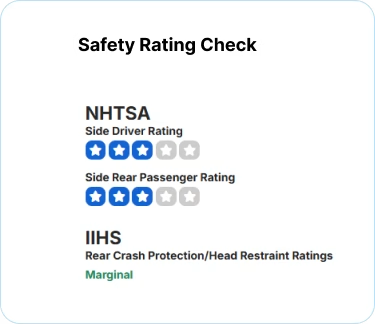
Crash-Test Ratings: According to the Insurance Institute for Highway Safety (IIHS), the Isuzu Rodeo received "Acceptable" ratings in frontal offset crash tests for some model years, but it's important to note that specific ratings can vary, and data for the 2003 model might be less readily available. The National Highway Traffic Safety Administration (NHTSA) also conducted tests, with results generally indicating moderate protection in frontal impacts. Side-impact protection was a weaker point. It's crucial for potential buyers to understand that crash safety standards have significantly advanced since 2003.
Tech and Entertainment: Standard fare generally included a radio with a CD player. Higher trims, like the LS and LSE, might have offered an upgraded audio system with more speakers. Features like power windows, power door locks, and cruise control were common on mid to higher trims. Navigation systems were not a standard offering and were rare as dealer-installed options. The interior design prioritized functionality over a flashy digital interface.
Driver-Assistance Features: Driver-assistance features were quite limited in 2003. The primary safety technology offered was four-wheel anti-lock brakes (ABS), which was standard on most models. Traction control was not widely available or standard. Parking assistance or rearview cameras were non-existent in this era for the Rodeo.
Safety Features: Standard safety equipment included front airbags for the driver and front passenger. Side-impact airbags were generally not a standard feature and were rarely an option. Seatbelt pretensioners were also standard. The Rodeo's body-on-frame construction offered a degree of inherent structural integrity, but its performance in modern crash tests would likely fall short of current standards.
Crash-Test Ratings: According to the Insurance Institute for Highway Safety (IIHS), the Isuzu Rodeo received "Acceptable" ratings in frontal offset crash tests for some model years, but it's important to note that specific ratings can vary, and data for the 2003 model might be less readily available. The National Highway Traffic Safety Administration (NHTSA) also conducted tests, with results generally indicating moderate protection in frontal impacts. Side-impact protection was a weaker point. It's crucial for potential buyers to understand that crash safety standards have significantly advanced since 2003.
What Colors Options are Available?
2003 Isuzu Rodeo Prices and Market Value
When new, the 2003 Isuzu Rodeo typically ranged from approximately $24,000 for base models to over $30,000 for well-equipped LS or LSE trims. As a vehicle from the early 2000s, the Rodeo has undergone significant depreciation. Current used market prices vary widely based on condition, mileage, trim level, and location, but generally fall between $2,000 and $7,000.
Factors significantly affecting its resale value include:
- Condition: Rust, mechanical issues (especially transmission), and interior wear will dramatically reduce value.
- Mileage: Higher mileage vehicles will naturally command lower prices.
- Maintenance Records: A documented history of regular maintenance can boost resale value.
- Trim Level: Higher trims like the LSE with desirable features will fetch more.
- Drivetrain: Four-wheel-drive models often hold their value better, especially in regions where off-road capability is valued.
2003 Isuzu Rodeo Cost of Ownership
The 2003 Isuzu Rodeo is generally considered moderately costly to own, primarily due to its fuel consumption and potential repair costs. Fuel costs will be higher than average for its class due to its relatively poor MPG. Insurance rates are typically reasonable, comparable to other SUVs of its age and type. Maintenance requires diligence; regular fluid changes (especially transmission fluid) and rust checks are crucial and add to ongoing costs. Repair costs can be significant if major issues like transmission failure or significant rust repair are needed, as parts might be less readily available than for more common vehicles. Overall, it is not an economical vehicle to own.
2003 Isuzu Rodeo Fuel Efficiency
Fuel Type
Gasoline
Fuel Capacity
-
City Mileage
-
Highway Mileage
-
2003 Isuzu Rodeo Safety Rating
NHTSA
2003 Isuzu Rodeo Insurance
Insurance for a 2003 Isuzu Rodeo is moderately priced, reflecting its status as a Wagon with strong safety ratings and
reasonable repair costs.
How Does the 2003 Isuzu Rodeo Compare to Other Wagon?
The 2003 Isuzu Rodeo competed in the mid-size SUV segment against popular rivals like the Toyota 4Runner, Honda CR-V (though smaller, it was a key competitor in SUV sales), Ford Explorer, and Jeep Grand Cherokee.
Performance: The Rodeo's 3.2L V6 offered respectable power, comparable to the V6 options in the Explorer and Grand Cherokee. Its body-on-frame construction gave it an edge in true off-road capability over unibody competitors like the CR-V. The Toyota 4Runner was often considered a benchmark for reliable V6 performance and off-road prowess, often matching or exceeding the Rodeo.
Features: In 2003, the Rodeo's feature set was basic by today's standards. Rivals like the Ford Explorer often offered more modern infotainment and safety options. The Toyota 4Runner typically provided a good balance of ruggedness and creature comforts, often with a more refined interior than the Rodeo. The Honda CR-V, though smaller, was known for its practicality and fuel efficiency, often beating the Rodeo in those areas.
Reliability: This is where the Rodeo faced its biggest challenges compared to rivals. The Toyota 4Runner is legendary for its bulletproof reliability. The Honda CR-V also boasts excellent long-term reliability. The Rodeo, while having a robust engine, was more prone to transmission issues and rust than its Japanese counterparts. The Ford Explorer and Jeep Grand Cherokee had their own sets of reliability concerns, but the 4Runner and CR-V generally outperformed them.
Price: The Rodeo was often positioned as a more affordable option compared to the Toyota 4Runner when new, offering good value for its off-road capabilities. Used prices for the Rodeo are generally lower than for comparable 4Runners, reflecting its reliability reputation.
Recommendations:
Performance: The Rodeo's 3.2L V6 offered respectable power, comparable to the V6 options in the Explorer and Grand Cherokee. Its body-on-frame construction gave it an edge in true off-road capability over unibody competitors like the CR-V. The Toyota 4Runner was often considered a benchmark for reliable V6 performance and off-road prowess, often matching or exceeding the Rodeo.
Features: In 2003, the Rodeo's feature set was basic by today's standards. Rivals like the Ford Explorer often offered more modern infotainment and safety options. The Toyota 4Runner typically provided a good balance of ruggedness and creature comforts, often with a more refined interior than the Rodeo. The Honda CR-V, though smaller, was known for its practicality and fuel efficiency, often beating the Rodeo in those areas.
Reliability: This is where the Rodeo faced its biggest challenges compared to rivals. The Toyota 4Runner is legendary for its bulletproof reliability. The Honda CR-V also boasts excellent long-term reliability. The Rodeo, while having a robust engine, was more prone to transmission issues and rust than its Japanese counterparts. The Ford Explorer and Jeep Grand Cherokee had their own sets of reliability concerns, but the 4Runner and CR-V generally outperformed them.
Price: The Rodeo was often positioned as a more affordable option compared to the Toyota 4Runner when new, offering good value for its off-road capabilities. Used prices for the Rodeo are generally lower than for comparable 4Runners, reflecting its reliability reputation.
Recommendations:
- Better Alternatives: If reliability and long-term value are paramount, the Toyota 4Runner (especially 3rd and 4th generation) is a superior choice. For a more car-like experience with excellent reliability and fuel efficiency, the Honda CR-V (2nd generation) is a strong contender.
- Similar Alternatives: If you're looking for a more traditional body-on-frame SUV with some off-road capability and are comfortable with potentially higher maintenance, the Ford Explorer or Jeep Grand Cherokee of similar vintage could be considered, though they also have their own distinct reliability quirks.
Final Verdict: Is the 2003 Isuzu Rodeo a Good Wagon?
The 2003 Isuzu Rodeo is ideally suited for the budget-conscious buyer who prioritizes off-road capability and ruggedness over cutting-edge technology and fuel efficiency. It's a decent option for those who need a capable vehicle for light to moderate off-roading, towing smaller loads, or simply appreciate the classic SUV feel.
Whether it's worth buying depends heavily on its condition and price. Buying a 2003 Rodeo is almost exclusively a used vehicle proposition. It is worth considering if you find a well-maintained example with low mileage (relative to its age), a clean bill of health from a mechanic (especially concerning the transmission and frame rust), and at a significantly lower price point than its more reliable competitors like the Toyota 4Runner. Specific trims like the LS or LSE offer more desirable features. However, potential buyers should be prepared for higher fuel costs and the possibility of more frequent repairs compared to more modern or reputably reliable SUVs.