
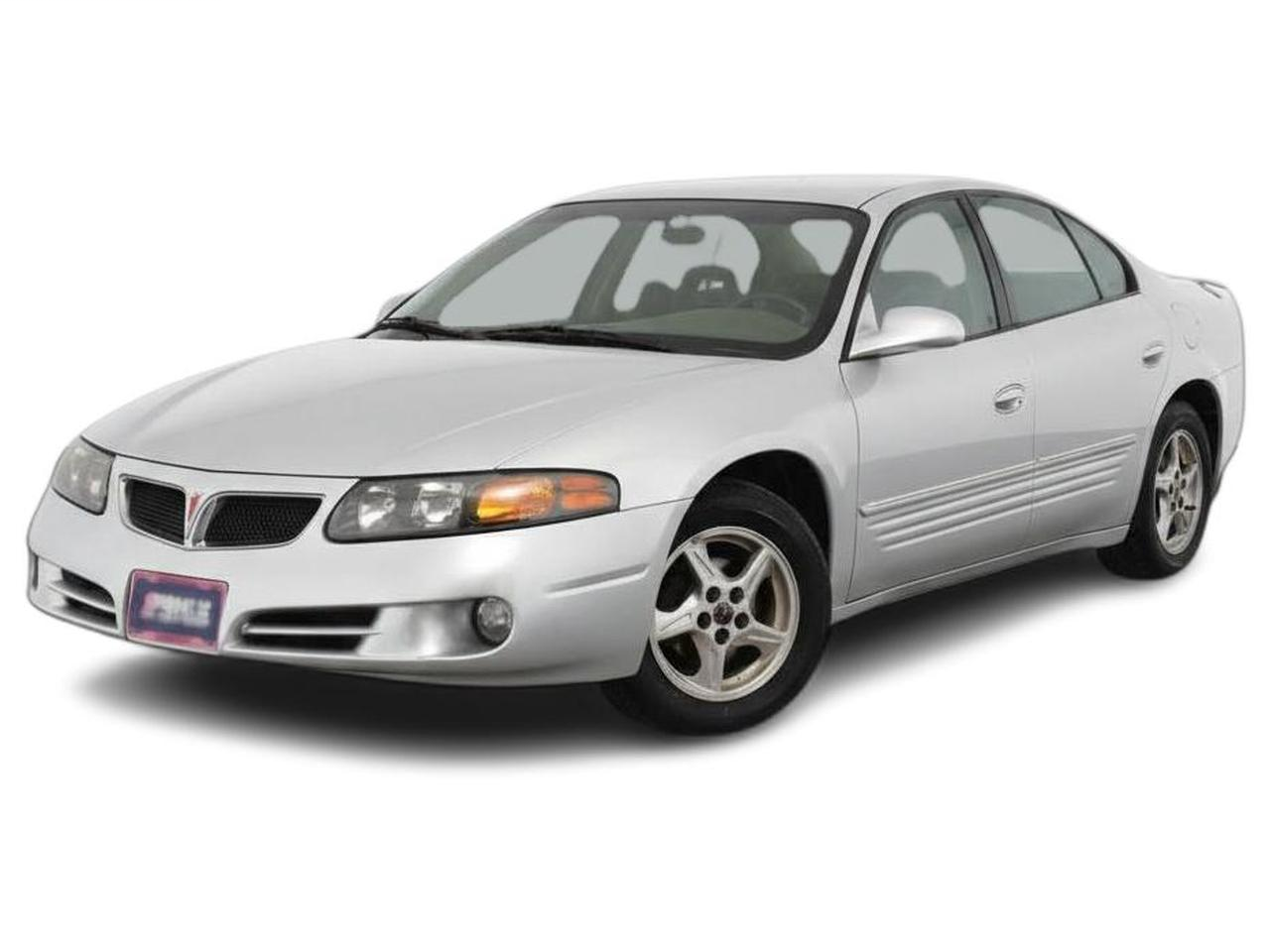
The Good
The 2002 Bonneville offers a strong V6 performance for spirited driving, a comfortable and quiet cabin for long trips, and a bold design that stands out. Its value proposition as a used car is excellent, providing spaciousness and a smooth ride at an affordable price, satisfying both the desire for a capable cruiser and the need for practicality.
The Bad
Potential buyers should be aware of common issues such as intake manifold leaks, transmission problems, and electrical gremlins. Suspension components and brake wear can also be areas requiring attention. Interior material quality may show age, and rust can be a concern in certain climates.
2002 Pontiac Bonneville: Quick Overview
- Engine Options: The 2002 Pontiac Bonneville was primarily offered with two V6 engine options:
- 3.8L Series I V6
- 3.8L Series II Supercharged V6 (SSEi trim)
- Horsepower:
- 3.8L Series I V6: Approximately 205 horsepower
- 3.8L Series II Supercharged V6: Approximately 235-240 horsepower
- Fuel Economy: EPA estimates for the 2002 Bonneville were generally around:
- City: 18-19 MPG
- Highway: 27-28 MPG
- 0-60 Times: Varies by engine and drivetrain, but typically:
- Naturally Aspirated V6: Around 8-9 seconds
- Supercharged V6: Around 7-7.5 seconds
- Towing Capacity: The Bonneville was not designed for significant towing. Official towing capacities are generally not specified for this model, as it was not equipped with a factory tow package. It would be suitable for very light loads if at all.
- Trim-Level Features:
- SE: Standard features often included power windows and locks, air conditioning, cruise control, a basic AM/FM stereo with CD player, cloth upholstery, and 15-inch wheels.
- SSE: Built upon the SE, the SSE typically added alloy wheels, upgraded interior trim, a more premium sound system, and sometimes more advanced driver controls or comfort features.
- SSEi: The top-tier trim, the SSEi, came standard with the supercharged 3.8L V6 engine, leather seating, heated front seats, dual-zone climate control, a heads-up display (HUD), a more sophisticated suspension system, and 16-inch or 17-inch alloy wheels. Optional features could include a sunroof, Bose sound system, and traction control.
2002 Pontiac Bonneville Specifications
Vehicle Information
| Year | 2002 |
| Make | Pontiac |
| Model | Bonneville |
| Trim | - |
| Style | - |
| Type | Sedan |
| Category | Compact Car |
Manufacturing Details
| Made In | United States |
| Manufacturing City | HAMTRAMCK |
Dimensions
| Doors | 4-Door |
| Curb Weight | - |
| Gross Vehicle Weight Rating | - |
| Overall Height | - |
| Overall Length | - |
| Overall Width | - |
| Wheelbase Length | - |
| Standard Seating | - |
Engine & Performance
| Engine | L67 |
| Engine Size | 3.8L |
| Engine Cylinders | 6 |
| Transmission | - |
| Transmission Type | - |
| Transmission Speeds | - |
| Drivetrain | Front-Wheel Drive |
Additional Features
| Anti-Brake System | - |
| Steering Type | - |
Pricing
| Manufacturer Suggested Retail Price (MSRP) | - |
| Invoice Price | - |
| Delivery Charges | - |
Vehicle History Report
Specifications
History
Events
History Check
Check
Check
Check
Check
Listings
Recalls
Check
Analysis
What Problems Does the 2002 Pontiac Bonneville Have?
Another area of concern is the transmission. Some owners have reported premature failure or rough shifting, particularly with the 4-speed automatic transmission. While not universal, it's a significant repair cost when it occurs. Fluid changes and proper maintenance can help, but it remains a known weak point for some vehicles.
Electrical issues are also not uncommon. This can manifest in various ways, including problems with power windows, door locks, interior lights, and even the instrument cluster. These can be frustrating and sometimes difficult to diagnose.
Suspension components like ball joints, control arm bushings, and strut mounts can wear out over time, leading to clunking noises, poor handling, and uneven tire wear. This is a common wear-and-tear item for many vehicles of this age and mileage.
The supercharger on the SSEi models, while providing a performance boost, can also be a source of potential problems if not properly maintained. Bearing failures or other internal issues can arise, leading to a loss of power.
Regarding recalls, it's always advisable to check the NHTSA website for any specific recalls related to a particular VIN. However, common recall areas for vehicles of this era could involve airbags, fuel system components, or braking systems. While there aren't widespread, model-year-specific reliability crises for the 2002 Bonneville that are drastically different from surrounding years, consistent maintenance and addressing the aforementioned common issues proactively are key to long-term ownership. Reliability can be considered average for its class and age, with potential for costly repairs if neglected.
How long will the 2002 Pontiac Bonneville last?
Weaknesses that tend to manifest over time include wear on suspension components, potential for electrical gremlins, and the aforementioned intake manifold gasket leaks and transmission concerns. The supercharger in the SSEi models, while adding performance, can also be a point of failure if not maintained. Addressing these proactively can significantly extend the vehicle's lifespan and maintain its ride comfort and performance. Neglecting these areas will significantly shorten its service life and increase repair costs.
What Technology & Safety Features are Included?
In terms of technology, the SSEi trim stood out with its available Heads-Up Display (HUD), which projected key information like speed and turn signals onto the windshield, allowing the driver to keep their eyes on the road. Dual-zone automatic climate control was also a feature often found on higher trims, providing individualized comfort for the driver and front passenger.
Driver-assistance features were more basic by today's standards. Traction control was available, particularly on the SSEi, to help maintain grip during acceleration and in slippery conditions. Anti-lock braking system (ABS) was also a common feature, enhancing braking control and preventing wheel lock-up during emergency stops.
Safety was a priority, with standard features including front airbags and available side-impact airbags. The Bonneville was built on a robust chassis designed for absorbing impact. According to the National Highway Traffic Safety Administration (NHTSA), crash test ratings for models around this era (though specific ratings for the 2002 model might vary slightly depending on the exact test configuration) generally showed good performance in frontal and side-impact tests, often earning 4 out of 5 stars in relevant categories. However, it is always recommended to check the NHTSA database for specific crash test results for the 2002 model year for the most accurate information. Overall, the Bonneville provided a comfortable and reasonably safe environment for its occupants, with a few advanced features for its segment.
What Colors Options are Available?
2002 Pontiac Bonneville Prices and Market Value
Factors affecting resale value include the prevalence of common issues like intake manifold leaks and transmission problems; a well-maintained vehicle with documented service records will command a higher price. Rust, especially in northern climates, and the overall condition of the interior and exterior also play a crucial role. The supercharged SSEi often retains slightly more value due to its performance appeal, but the mechanical complexity can also be a deterrent for some buyers.
2002 Pontiac Bonneville Cost of Ownership
2002 Pontiac Bonneville Fuel Efficiency
2002 Pontiac Bonneville Safety Rating
NHTSA
2002 Pontiac Bonneville Recalls & Defects
AIR Bags:frontal
Fuel System, Gasoline:storage:tank Assembly
2002 Pontiac Bonneville Insurance
reasonable repair costs.
How Does the 2002 Pontiac Bonneville Compare to Other Sedan?
In terms of performance, the Bonneville, especially the SSEi with its supercharged V6, offered a more engaging driving experience and quicker acceleration than many of its competitors, particularly the more comfort-oriented Avalon or the V8-powered Crown Victoria/Grand Marquis, which prioritized a softer ride.
When it comes to features, the Bonneville offered a good balance for its price point. Higher trims, like the SSEi, provided amenities such as leather seating and a heads-up display, rivaling or exceeding what some competitors offered. However, the Avalon often had a reputation for more refined interior materials and advanced Japanese-engineered technology.
Reliability is where the Bonneville faced challenges compared to some rivals. While it had its strengths, the known issues with intake manifold gaskets and transmissions were more prevalent than reliability concerns reported for models like the Toyota Avalon, which consistently ranked high in dependability. The Ford Crown Victoria and Mercury Grand Marquis, known for their robust powertrains, often boasted better long-term reliability, albeit with a more utilitarian feel.
In terms of price, the Bonneville was generally competitively priced when new and offered excellent value on the used market. It often undercut the Toyota Avalon significantly.
Alternatives:
- Toyota Avalon: For buyers prioritizing ultimate reliability, a smoother and quieter ride, and a more upscale interior, the Avalon is a strong alternative, though likely at a higher used price.
- Buick LeSabre: Similar in spirit to the Bonneville (both GM products), the LeSabre offered a very comfortable ride and a spacious interior, often at a slightly lower price point and with a focus on comfort over sportiness. Reliability is generally considered comparable, with its own set of common issues.
- Ford Crown Victoria / Mercury Grand Marquis: If robust build quality, proven V8 power, and legendary durability are paramount, these Panther platform siblings are excellent choices. They offer a more truck-like, but incredibly dependable, driving experience.
Final Verdict: Is the 2002 Pontiac Bonneville a Good Sedan?
It's best purchased used, as its depreciation has made it a strong value proposition. Buyers should focus on the SE or SSE trims if seeking a more straightforward ownership experience, as the supercharged SSEi, while offering more performance, can introduce more complex and potentially costly repairs. Thorough pre-purchase inspection is crucial, paying close attention to common issues like intake manifold leaks and transmission health. For individuals prioritizing a comfortable cruiser over absolute long-term reliability without potential repair costs, the Bonneville can be a rewarding purchase.

Jovan
Jovan specializes in interpreting vehicle records and making sense of VIN data. With over 10 years of experience in the automotive data industry, his work ensures that every report is clear, accurate, and useful for car buyers.