
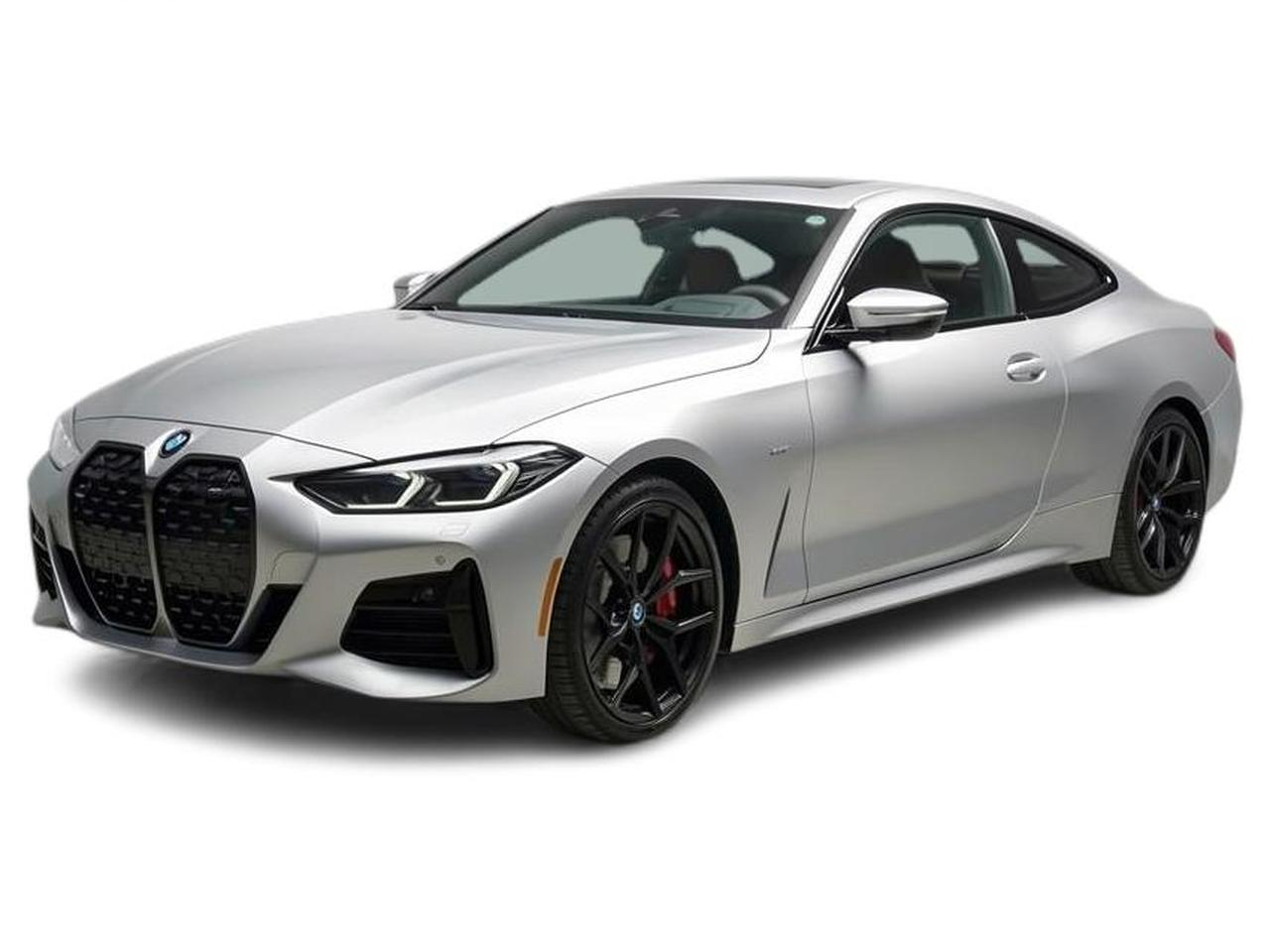
The Good
The 2025 BMW 4 Series excels with exhilarating performance and sharp handling (emotional), alongside a refined and comfortable interior (practical/emotional). Its sleek design garners attention (emotional), while available fuel-efficient options and strong build quality offer practical appeal and long-term value.
The Bad
Potential weaknesses for the 2025 BMW 4 Series include its relatively firm ride on sportier trims, the polarizing large grille design, and a higher price point compared to some rivals. Infotainment system complexity can also be a learning curve for some users.
2025 BMW 4 Series: Quick Overview
- Engine Options:
- 430i: 2.0L turbocharged inline-4
- M440i: 3.0L turbocharged inline-6 with mild-hybrid system
- M4: 3.0L twin-turbocharged inline-6
- Horsepower:
- 430i: Approximately 255 hp
- M440i: Approximately 385 hp
- M4: Starting around 473 hp (RWD) to 543 hp (CS/C Competition xDrive)
- Fuel Economy (EPA Estimated MPG - Combined):
- 430i Coupe/Gran Coupe: Around 28-30 MPG
- M440i Coupe/Gran Coupe: Around 25-27 MPG
- M4: Around 18-20 MPG
- 0-60 Times (Approximate):
- 430i: 5.5 - 5.8 seconds
- M440i: 4.4 - 4.7 seconds
- M4: 3.4 - 4.1 seconds
- Towing Capacity: Not applicable for this vehicle class.
- Key Trim-Level Features:
- 430i: Standard features include SensaTec upholstery, 12.3-inch digital instrument cluster, 14.9-inch infotainment touchscreen, LED headlights, BMW ConnectedDrive Services, 18-inch alloy wheels, automatic climate control.
- M440i: Adds M Sport suspension, M Sport brakes, M Sport steering wheel, xDrive all-wheel drive (standard on Gran Coupe), sport seats, Harman Kardon surround sound system, power moonroof, additional styling elements.
- M4: Builds upon M440i with a more potent engine, adaptive M suspension, M differential, M carbon bucket seats (optional), M Drive Professional, performance tires, aggressive M aerodynamic body kit, choice of RWD or xDrive AWD.
2025 BMW 4 Series Specifications
Vehicle Information
| Year | 2025 |
| Make | BMW |
| Model | 4 Series |
| Trim | - |
| Style | 430i Convertible RWD 8AT 2.0L I4 |
| Type | Convertible |
| Category | passenger |
Manufacturing Details
| Made In | Germany |
| Manufacturing City | DINGOLFING |
Dimensions
| Doors | 2-Door |
| Curb Weight | 3600 pounds |
| Gross Vehicle Weight Rating | - |
| Overall Height | 54.8 inches |
| Overall Length | 182.5 inches |
| Overall Width | 74.3 inches |
| Wheelbase Length | 111 inches |
| Standard Seating | 4 |
Engine & Performance
| Engine | 2L I4 |
| Engine Size | 2L |
| Engine Cylinders | 4 |
| Transmission | 8-Speed Automatic |
| Transmission Type | Automatic |
| Transmission Speeds | 8-Speed |
| Drivetrain | Rear-Wheel Drive |
Additional Features
| Anti-Brake System | 4-Wheel ABS |
| Steering Type | Rack & Pinion |
Pricing
| Manufacturer Suggested Retail Price (MSRP) | $52,000 |
| Invoice Price | $49,000 |
| Delivery Charges | $995 |
Vehicle History Report
Specifications
History
Events
History Check
Check
Check
Check
Check
Listings
Recalls
Check
Analysis
What Problems Does the 2025 BMW 4 Series Have?
- Electrical Gremlins: Some owners have reported minor electrical glitches, such as issues with the infotainment system freezing, connectivity problems with Apple CarPlay or Android Auto, or minor sensor malfunctions. These are often software-related and can usually be resolved with updates.
- Ride Quality: While praised for handling, some drivers, especially those opting for larger wheels or the M Sport suspension, have found the ride to be on the firmer side, which could be perceived as a weakness for those prioritizing pure comfort over sporty dynamics.
- Brake Wear: As with many performance-oriented vehicles, aggressive driving can lead to accelerated brake pad and rotor wear, necessitating more frequent replacements.
- Infotainment System Complexity: While feature-rich, BMW's iDrive system can have a steep learning curve. Some users find the sheer number of menus and customization options overwhelming initially.
How long will the 2025 BMW 4 Series last?
What Technology & Safety Features are Included?
Driver-assistance features are comprehensive and include standard equipment like forward-collision warning with automatic emergency braking, lane-departure warning, and blind-spot monitoring. Optional driver-assistance packages can add features such as adaptive cruise control with stop-and-go functionality, lane-keeping assist, parking assistant plus (which can include surround-view cameras and a dashcam function), and a head-up display.
Safety is paramount, with a robust chassis construction and multiple airbags as standard. While official crash-test ratings from organizations like the NHTSA and IIHS are typically released after the model has been on the market for a while, BMW vehicles generally perform very well, often earning top marks due to their advanced safety structures and active safety systems. The availability of advanced features like adaptive LED headlights, automatic high beams, and parking sensors further enhance safety and convenience. Optional premium audio systems, such as the Harman Kardon surround sound, elevate the entertainment experience. Remote services through the My BMW App are also a key tech feature, allowing for remote vehicle access and status checks.
What Colors Options are Available?
2025 BMW 4 Series Prices and Market Value
2025 BMW 4 Series Cost of Ownership
2025 BMW 4 Series Fuel Efficiency
2025 BMW 4 Series Warranty
Basic
Powertrain
Rust
2025 BMW 4 Series Insurance
reasonable repair costs.
How Does the 2025 BMW 4 Series Compare to Other Convertible?
Performance: BMW typically leads in driving dynamics, offering a more engaging and sporty experience than most rivals. The 4 Series boasts sharp steering, composed handling, and powerful engine options, especially in M4 guise. The Audi S5 offers strong performance, while the Mercedes-AMG C43 (if available as a coupe/convertible) also delivers potent power. The Lexus RC, while comfortable, generally trails in pure driving engagement.
Features: BMW is always at the forefront of technology and luxury. The 4 Series offers a cutting-edge infotainment system, advanced driver aids, and a premium interior. Audi and Mercedes also provide sophisticated tech and luxurious cabins. Lexus tends to be more conservative with its tech interface but excels in build quality and often offers more standard features at lower price points.
Reliability: Historically, Lexus has a strong reputation for superior reliability. Audi and BMW have improved significantly over the years, generally offering good reliability with proper maintenance, though they can be more complex and costly to repair than Lexus. The 4 Series, while generally reliable, may have more electrical gremlins or complex systems that can occasionally require attention compared to a Lexus RC.
Price: The BMW 4 Series is typically priced competitively within the premium segment. The Audi A5/S5 are often similarly priced, while Mercedes-Benz can sometimes be a bit more expensive, especially in higher trims. The Lexus RC might offer a better value proposition in terms of initial cost for its features.
Alternatives:
- For ultimate reliability and comfort: Lexus RC is a strong contender, offering a smooth ride and excellent build quality, though less sporty.
- For a balance of sportiness and luxury: The Audi A5/S5 are excellent choices, offering a blend of performance, sophisticated design, and technology, with a slightly more understated style than BMW.
- For pure luxury and comfort: While the C-Class coupe is a rival, if considering a sedan, the Mercedes-Benz C-Class Sedan offers a luxurious and technologically advanced experience, though with a different body style.
Final Verdict: Is the 2025 BMW 4 Series a Good Convertible?
Buying new offers the latest technology and full warranty, making it attractive for those who want peace of mind and access to all current features. However, the steep initial depreciation means a lightly used 4 Series (1-3 years old) can offer excellent value, providing a near-new experience at a significantly lower price point. The 430i is a great balance of performance and efficiency for daily driving, while the M440i and M4 cater to those seeking maximum power and track-ready capabilities. For most buyers prioritizing a premium sporty car, the 4 Series is a strong contender, especially when considering slightly used models to mitigate initial depreciation.

Drew B
Drew is a seasoned automotive expert and contributor to VinCheck.info. With nearly 15 years of experience as a former Porsche technician, he brings a wealth of hands-on knowledge to his writing. Born in North Carolina, a region renowned for its deep-rooted NASCAR culture, Drew developed a passion for cars early in life, often building and working on vehicles from a young age. At VINCheck, Drew leverages his extensive technical background to provide in-depth analyses of various vehicles. His articles often focus on engine performance, reliability, and maintenance insights, offering readers practical information grounded in real-world experience. Some of his notable contributions include reviews on the Mazda CX-5's longevity and detailed examinations of engine options for models like the 2011 Toyota Camry and Tacoma