
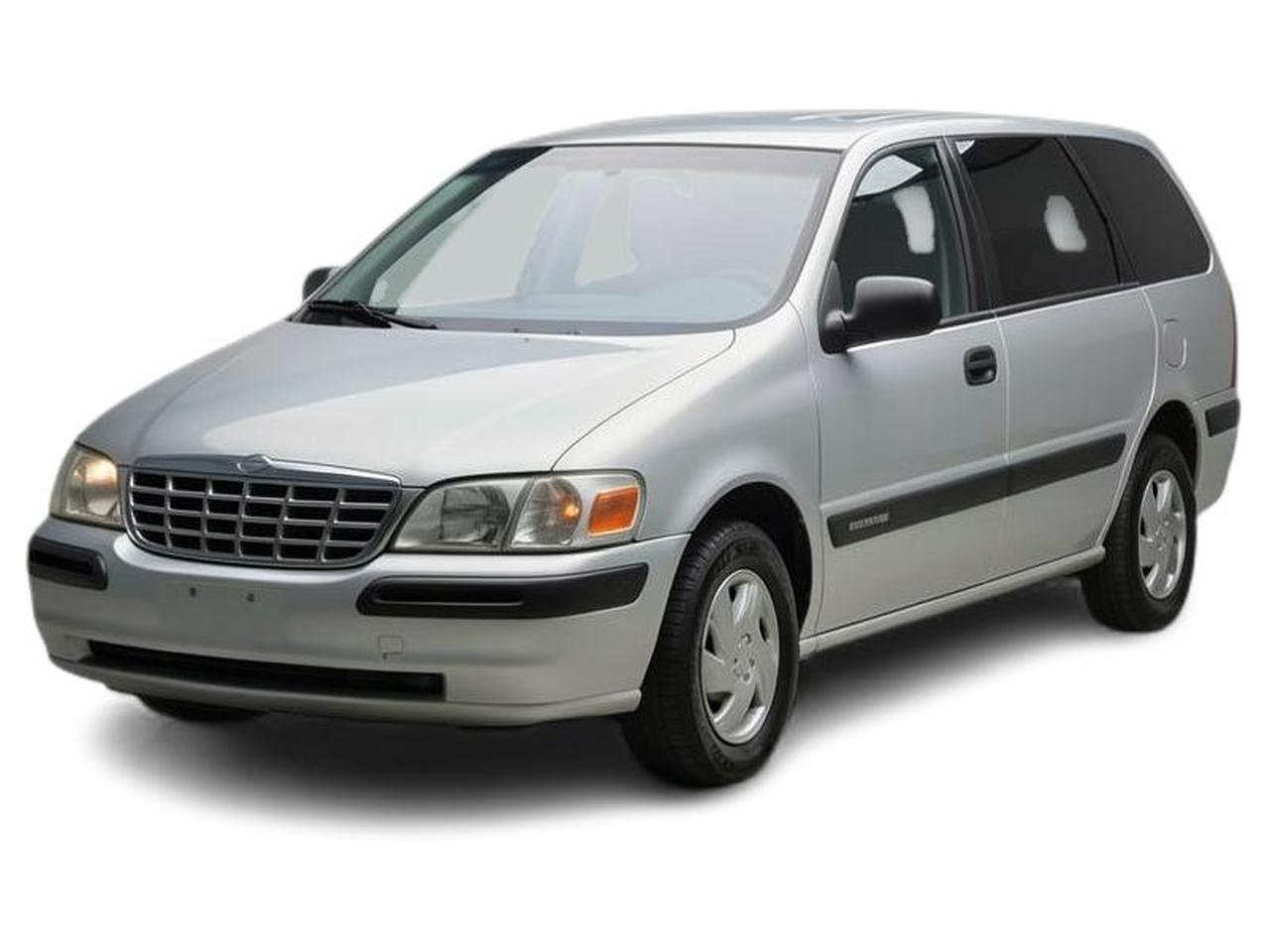
The 1997 Chevrolet Venture entered the burgeoning minivan market as part of GM's latest front-wheel-drive minivan platform, shared with the Pontiac Trans Sport and Oldsmobile Silhouette. This mid-size minivan was produced from 1997 to 2005. Key trims included the base, LS, and LT. While initially priced competitively in the mid-$20,000s, its popularity stemmed from offering a practical and family-friendly alternative with a spacious interior and flexible seating arrangements.
The Good
The 1997 Venture offers a comfortable ride and a practical, spacious interior for families. Its accessible pricing and decent fuel economy appeal to budget-conscious buyers, while the flexible seating provides versatile cargo and passenger configurations for everyday needs.
The Bad
Owners often report issues with the transmission, particularly with premature failure. Electrical gremlins, including problems with the power windows and door locks, are also common. Rust, especially in colder climates, can affect the body panels and undercarriage.
1997 Chevrolet Venture: Quick Overview
- Engine Options: The 1997 Chevrolet Venture was primarily equipped with a 3.4-liter V6 engine.
- Horsepower: This 3.4L V6 produced approximately 180 horsepower at 4,800 RPM.
- Torque: It delivered around 205 lb-ft of torque at 3,200 RPM.
- Transmission: A 4-speed automatic transmission was standard.
- Fuel Economy: Estimated fuel economy for the 1997 Venture was around 17 MPG city and 23 MPG highway.
- 0-60 Times: Acceleration to 60 mph typically ranged from 9.5 to 10.5 seconds, depending on configuration and load.
- Towing Capacity: When properly equipped with a towing package, the Venture could tow up to 3,500 pounds.
- Trim-Level Features (LS): The LS trim often included amenities such as power windows and door locks, air conditioning, cruise control, a tilt steering wheel, and an AM/FM stereo with a cassette player. It also typically featured second-row captain's chairs for enhanced passenger comfort.
- Trim-Level Features (LT): The higher LT trim often added features like alloy wheels, a CD player, upgraded interior trim, roof rails, and potentially a power driver's seat. Some LT models might have also offered optional features like a rear-seat entertainment system or a premium audio system.
- Body Style: The Venture was offered as a standard-length minivan and an extended-length version, providing more cargo space.
1997 Chevrolet Venture Specifications
Vehicle Information
| Year | 1997 |
| Make | Chevrolet |
| Model | Venture |
| Trim | - |
| Style | 4-Door |
| Type | Van |
| Category | Minivan |
Manufacturing Details
| Made In | United States |
| Manufacturing City | FLINT |
Dimensions
| Doors | 4-Door |
| Curb Weight | 3792 pounds |
| Gross Vehicle Weight Rating | 5357 pounds |
| Overall Height | 68.10 inches |
| Overall Length | 200.90 inches |
| Overall Width | 72.00 inches |
| Wheelbase Length | 120.00 inches |
| Standard Seating | 7 |
Engine & Performance
| Engine | 3.4L V6 |
| Engine Size | 3.4L |
| Engine Cylinders | 6 |
| Transmission | 4-Speed Automatic |
| Transmission Type | Automatic |
| Transmission Speeds | 4-Speed |
| Drivetrain | Front-Wheel Drive |
Additional Features
| Anti-Brake System | 4-Wheel ABS |
| Steering Type | Rack & Pinion |
Pricing
| Manufacturer Suggested Retail Price (MSRP) | $19,925 |
| Invoice Price | $20,543 |
| Delivery Charges | - |
Vehicle History Report
Vehicle
Specifications
Specifications
Ownership
History
History
All History
Events
Events
NMVTIS Title
History Check
History Check
Salvage/Rebuilt
Check
Check
Accident
Check
Check
Theft
Check
Check
Open Lien
Check
Check
Past Sale
Listings
Listings
Safety
Recalls
Recalls
Odometer
Check
Check
Market Price
Analysis
Analysis
What Problems Does the 1997 Chevrolet Venture Have?
The 1997 Chevrolet Venture, like many minivans of its era, is known for certain recurring issues that can impact long-term reliability. A primary concern is the transmission. The 4-speed automatic transmission used in the Venture has been frequently cited for premature failure, often requiring costly repairs or replacement. This is a significant issue to investigate before purchasing a used model.
Another common complaint revolves around electrical systems. Owners have reported issues with power windows and door locks failing, malfunctioning interior lights, and problems with the instrument cluster. These electrical gremlins can be frustrating and expensive to diagnose and fix.
Rust is another considerable long-term concern, especially for vehicles driven in areas where salt is used on roads during winter. The body panels, particularly around the wheel wells and rocker panels, are susceptible to corrosion. The exhaust system can also be affected by rust.
While specific recalls for the 1997 model year might be limited, it's always advisable to check the NHTSA website for any outstanding recalls that may apply. General long-term reliability concerns for this generation of GM minivans often center on the powertrain and electrical components. Regular and thorough maintenance is crucial to mitigate some of these issues, but some owners have still experienced significant problems even with diligent care. The engine itself is generally considered fairly robust, but its longevity can be compromised by the associated transmission issues and poor cooling system maintenance.
Another common complaint revolves around electrical systems. Owners have reported issues with power windows and door locks failing, malfunctioning interior lights, and problems with the instrument cluster. These electrical gremlins can be frustrating and expensive to diagnose and fix.
Rust is another considerable long-term concern, especially for vehicles driven in areas where salt is used on roads during winter. The body panels, particularly around the wheel wells and rocker panels, are susceptible to corrosion. The exhaust system can also be affected by rust.
While specific recalls for the 1997 model year might be limited, it's always advisable to check the NHTSA website for any outstanding recalls that may apply. General long-term reliability concerns for this generation of GM minivans often center on the powertrain and electrical components. Regular and thorough maintenance is crucial to mitigate some of these issues, but some owners have still experienced significant problems even with diligent care. The engine itself is generally considered fairly robust, but its longevity can be compromised by the associated transmission issues and poor cooling system maintenance.
How long will the 1997 Chevrolet Venture last?
Based on owner data and common service intervals, a well-maintained 1997 Chevrolet Venture can typically reach between 150,000 to 200,000 miles. However, this is heavily dependent on proactive maintenance, particularly concerning the transmission. Vehicles that have not had their transmission fluid regularly serviced are at a much higher risk of premature failure, often cutting their service life significantly short. Weaknesses over time primarily manifest in the transmission and electrical systems. Rust can also become a major factor in the vehicle's structural integrity and overall longevity, especially in corrosive environments. Early attention to these potential issues is key to maximizing the Venture's lifespan.
What Technology & Safety Features are Included?
The 1997 Chevrolet Venture was designed with family utility in mind, and its technology and safety features reflect the standards of its era. Standard entertainment typically included an AM/FM stereo with a cassette player. Higher trims, particularly the LT, often offered an optional CD player, which was a desirable upgrade at the time. Some models may have also featured an optional rear-seat entertainment system, a luxury for keeping passengers occupied on long journeys.
In terms of driver-assistance features, the 1997 Venture was quite basic. Cruise control and a tilt steering wheel were common amenities designed to enhance driver comfort on longer trips. Antilock brakes (ABS) were typically available or standard on higher trims, providing an important safety enhancement for braking control.
Safety was addressed with standard front airbags for the driver and passenger. Side-impact door beams were also incorporated to enhance occupant protection in the event of a side collision. For child passengers, lower anchors and tethers for children (LATCH) systems were not yet standard across all vehicles in 1997, so car seat installation might have relied on the seat belt system.
Crash-test ratings for the 1997 Chevrolet Venture are not readily available through modern standardized tests like those conducted by the IIHS or NHTSA today. However, vehicles of this era generally performed moderately in frontal and side impact tests. It's important to note that safety standards and testing methodologies have evolved significantly since 1997, so comparing these results to contemporary vehicles would be misleading. The focus for safety in the Venture was on airbags, seat belts, and structural integrity for its time.
In terms of driver-assistance features, the 1997 Venture was quite basic. Cruise control and a tilt steering wheel were common amenities designed to enhance driver comfort on longer trips. Antilock brakes (ABS) were typically available or standard on higher trims, providing an important safety enhancement for braking control.
Safety was addressed with standard front airbags for the driver and passenger. Side-impact door beams were also incorporated to enhance occupant protection in the event of a side collision. For child passengers, lower anchors and tethers for children (LATCH) systems were not yet standard across all vehicles in 1997, so car seat installation might have relied on the seat belt system.
Crash-test ratings for the 1997 Chevrolet Venture are not readily available through modern standardized tests like those conducted by the IIHS or NHTSA today. However, vehicles of this era generally performed moderately in frontal and side impact tests. It's important to note that safety standards and testing methodologies have evolved significantly since 1997, so comparing these results to contemporary vehicles would be misleading. The focus for safety in the Venture was on airbags, seat belts, and structural integrity for its time.
What Colors Options are Available?
1997 Chevrolet Venture Prices and Market Value
When new, the 1997 Chevrolet Venture typically ranged from approximately $21,000 for a base model to around $27,000 for a well-equipped LT trim. Like most minivans, the Venture experienced significant depreciation in its early years. Today, used prices for a 1997 Chevrolet Venture are generally quite low, often falling between $1,000 and $4,000, depending heavily on condition, mileage, and trim level. Factors significantly affecting resale value include the notorious transmission issues, overall mechanical condition, body rust, and maintenance history. A well-maintained example with fewer miles and no major issues will command a higher price, but the overall market for these older minivans is limited.
1997 Chevrolet Venture Cost of Ownership
The 1997 Chevrolet Venture is generally economical to own in terms of insurance premiums, which are typically low for older vehicles with a lower replacement value. Fuel costs are moderate, with its V6 engine offering decent, though not stellar, efficiency. Maintenance costs can be variable; routine services like oil changes are inexpensive, but potential repairs for known issues like the transmission can be substantial, making ownership potentially costly if significant problems arise. Overall, while initial purchase and routine costs are low, unexpected major repairs can offset its economical appeal.
1997 Chevrolet Venture Fuel Efficiency
Fuel Type
Gasoline
Fuel Capacity
25.00 gallons
City Mileage
18 miles/gallon
Highway Mileage
25 miles/gallon
1997 Chevrolet Venture Safety Rating
NHTSA
IIHS
1997 Chevrolet Venture Recalls & Defects
Seats:front Assembly:recliner
Recall date
1998-06-26
Recall no.
98v145000
Source
NHTSA
Summary
Vehicle Description: Passenger Mini Vans Equipped With Bucket Seats or A Split Bench Seat IN THE Second (Middle) or Third (Back) Row. THE Seat Latch Mechanisms ON Bucket Seats and ON THE 40% Portion OF THE Split Bench Seat IN THE Second and Third Rows DO NOT Have Protective Covers.
Consequence
When Activating THE Release Mechanism TO Roll A Bucket Seat Forward, A Customer's Finger(S) Could BE Severely Injured or Severed IN They ARE NOT Kept Clear OF THE Mechanism.
Remedy
Dealers Will Install Protective Covers ON THE Outboard Latch Mechanisms ON All Left and Right Hand Rear Bucket Seats IN THE Second and Third Row, and TO Both Inboard and Outboard Latch Mechanisms ON THE Center Rear Bucket Seat and THE 40% Portion OF THE Split Bench Seat.
Notes
Owner Notification Began During August 1998.owners WHO Take Their Vehicles TO AN Authorized Dealer ON AN Agreed Upon Service Date and DO NOT Receive THE Free Remedy Within A Reasonable Time Should Contact Chevrolet AT 1-800-222-1022 or Oldsmobile AT 1-800-442-6537. Also Contact THE National Highway Traffic Safety Administration's Auto Safety Hotline AT 1-888-dash-2-dot (1-888-327-4326).
Visibility:windshield Wiper/Washer:linkages
Recall date
1998-04-07
Recall no.
98v072000
Source
NHTSA
Summary
Vehicle Description: Passenger Mini Vans Equipped With Traction Control Systems. THE Windshield Wiper Linkage ARM CAN Contact A Brake Line Which IS Connected TO THE Traction Control System Modulator Valve. This Contact CAN Chafe THE Brake Line Resulting IN A Brake Fluid Leak.
Consequence
Brake Fluid Leakage CAN Cause Reduced Brake Effectiveness and Increased Stopping Distances.
Remedy
Dealers Will Install A Brake Line Clip TO Ensure Proper Clearance. Also THE Brake Lines Will BE Inspected TO ANY Damage Caused BY This Condition and Will Replace ANY Damaged Lines.
Notes
Owner Notification IS Expected TO Begin During April 1998. Owners WHO Take Their Vehicles TO AN Authorized Dealer ON AN Agreed Upon Service Date and DO NOT Receive THE Free Remedy Within A Reasonable Time Should Contact Chevrolet AT 1-800-222-1020, Pontiac AT 1-800-762-2737, or Oldsmobile AT 1-800-442-6537.also Contact THE National Highway Traffic Safety Administration's Auto Safety Hotline AT 1-888-dash-2-dot (1-888-327-4236).
Latches/Locks/Linkages:doors:latch
Recall date
2001-08-21
Recall no.
01v264000
Source
NHTSA
Summary
Vehicle Description: 1997-2001 Chevrolet Venture, Pontiac Montana/Transport, and Oldsmobile Silhouette Mini Vans Equipped With Passenger Side Power Sliding Doors That Were Serviced IN Campaign 01013 (01v-067) From April TO August 2001. Also 2001 Chevrolet Venture, Pontiac Montana, and Oldsmobile Silhouette Mini Vans Equipped With Passenger Side Power Sliding Doors Assembled IN January Through April 2001. These Vehicles Have Inadequate Front Welds. IF A Front Weld Fails, THE Actuator CAN JAM IN THE Unlatched Position And, When THE Sliding Door Closes, IT Will NOT BE Latched.
Consequence
IF This Happens, THE Power Sliding Door CAN Open While THE Vehicle IS IN Motion, Particularly When THE Vehicle Ascends A Hill, Makes A Turn, or Travels Over A Rough Road Surface. AN Unrestrained Occupant Could Fall OUT OF THE Van and BE Injured.
Remedy
Dealers Will Inspect And, IF Required, Install A NEW Power Sliding Door Unlatch Actuator Assembly. Owner Notification Began ON October 22, 2001. Owners WHO Take Their Vehicles TO AN Authorized Dealer ON AN Agreed Upon Service Date and DO NOT Receive THE Free Remedy Within A Reasonable Time Should Contact Chevrolet AT 1-800-222-1020, Pontiac AT 1-800-762-2737, or Oldsmobile AT 1-800-442-6537.
Notes
Also Contact THE National Highway Traffic Safety Administration's Auto Safety Hotline AT 1-888-Dash-2-dot (1-888-327-4236).
Latches/Locks/Linkages:doors:latch
Recall date
2001-03-08
Recall no.
01v067000
Source
NHTSA
Summary
Vehicle Description: Minivans Equipped With Passenger Side Power Sliding Doors. THE Door Closes BUT MAY NOT BE Latched. IF This Happens, THE Power Sliding Door CAN Open While THE Vehicle IS IN Motion, Particularly When THE Vehicle Ascends A Hill, Makes A Turn, or Travels Over A Rough Road Surface.
Consequence
AN Unrestrained Occupant Could Fall OUT OF THE Van and BE Injured.
Remedy
Dealers Will Install A NEW Un-Latch Actuator Assembly TO THE Power Sliding Door. This Recall HAS Been Continued Under Safety Recall 01v-264. Owners WHO Take Their Vehicles TO AN Authorized Dealer ON AN Agreed Upon Service Date and DO NOT Receive THE Free Remedy Within A Reasonable Time Should Contact Chevrolet AT 1-800-222-1020, Pontiac AT 1-800-762-2737, or Oldsmobile AT 1-800-442-6537.
Notes
Also Contact THE National Highway Traffic Safety Administration's Auto Safety Hotline AT 1-888-Dash-2-dot (1-888-327-4236).
Steering:rack and Pinion
Recall date
2002-11-04
Recall no.
02v286000
Source
NHTSA
Summary
Certain Passenger Vehicles and Mini Vans Have Lower Pinion Bearings IN THE Power Rack and Pinion Assembly IN Which THE Retainer Tabs Were NOT Crimped Properly. These and Some Other Retainers Used IN Vehicles Assembled Between January 1, 1996 and October 31, 1997, Could Fail and Permit THE Ball Bearings TO Escape.
Consequence
IF This Occurs, THE Pinion Shaft CAN BE Forced Upward During Left Turns and Back Down AS THE Steering Wheel IS Moved Back and TO THE Right. IF THE Pinion Shaft Moves Further, THE Driver Will Need TO Exert More Effort TO Turn THE Steering Wheel, Similar TO A Vehicle Without Power Assisted Steering. IF THE Pinion Shaft Moves Even Further, THE Driver Will Require Much Higher Effort TO Turn Left and MAY NOT BE Able TO Turn THE Wheel AS Much AS Intended. With THE Maximum Pinion Shaft Movement, Which Requires Internal Gear Component Damage, THE Driver CAN Encounter High Resistance TO Turning Left, Followed BY Unintended Power Assist TO THE Right. IN ANY OF These Conditions, A Crash Could Occur.
Remedy
Dealers Will Install A NEW Lower Pinion Bearing Unless Inspect OF THE Existing Bearing Indicates That Replacement OF THE Gear Assembly IS Necessary. Owner Notification Began January 24, 2003. Owners WHO Take Their Vehicles TO AN Authorized Dealer ON AN Agreed Upon Service Date and DO NOT Receive THE Free Remedy Within A Reasonable Time Should Contact Chevrolet AT 1-800-222-1020, Pontiac AT 1-800-762-2737, or Oldsmobile AT 1-800-442-6537.
Notes
GM Recall NO. 02049.also, Customers CAN Contact THE National Highway Traffic Safety Administration's Auto Safety Hotline AT 1-888-Dash-2-dot (1-888-327-4236).
Latches/Locks/Linkages:doors:latch
Recall date
2004-12-22
Recall no.
04v597000
Source
NHTSA
Summary
ON Certain Minivans Equipped With Second-Row Bucket Seats or Captain's Chairs and A Power Sliding Door ON THE Passenger Side OF THE Vehicle, A Passenger Using THE Interior Handle TO Open THE Power Sliding Door Could BE Injured.
Consequence
IF A Passenger Uses THE Interior Handle TO Open THE Power Sliding Door and Holds Onto THE Handle While IT IS Being Opened BY THE Motor, THE Passenger's ARM MAY BE Pushed Into THE Seat Back or Armrest and A Wrist or Lower ARM Injury MAY Result.
Remedy
Dealers Will Replace THE Power Sliding Door Interior Handle ON THE Passenger-Side. IF THE Vehicle IS Equipped With A Power or Manual Sliding Door ON THE Driver-Side, THE Interior Handle Will Also BE Replaced FOR Appearance Reasons. Note: Before THE Vehicle IS Serviced, GM Advises Owners TO NOT USE THE Interior Door Handle TO Open THE Door. THE Driver CAN Open and Close THE Door From Switches AT THE Driver's Position or BY Using THE Remote KEY Fob. THE Driver Should Tell Passengers TO USE THE Switch Located IN Front OF THE Door TO Open or Close IT. THE Driver Should USE THE Override Switch TO Prevent Operation OF THE Power Door BY Children or BY Others WHO ARE NOT Familiar With ITS Use. THE Owner Notification Letter Mailing Will BE Conducted IN Phases With THE First Phase Beginning ON MAY 31, 2005. THE Second Phase Mailing Began ON July 18, 2005. THE Recall Began ON MAY 31, 2005. Phase 2 Began ON July 18, 2005. Phase 3 (Final Phase) Began ON August 24, 2005, TO All Remaining Customers. Owners Should Contact Chevrolet AT 1-800-630-2438; Pontiac AT 1-800-620-7668; or Oldsmobile AT 1-800-630-6537.
Notes
GM Recall NO. 04110.customers CAN Also Contact THE National Highway Traffic Safety Administration's Auto Safety Hotline AT 1-888-Dash-2-dot (1-888-327-4236).
Fuel System, Other:storage:tank Assembly:pressure Relief Devices
Recall date
2007-03-12
Recall no.
07e021000
Source
NHTSA
Summary
Certain Delphi Fuel Pressure Regulators, P/Nos. Fp10020-11b1, Fp10026-11b1, and Fp10027-11b1, Sold After January 9, 2007, AS Aftermarket Equipment FOR Various Passenger Vehicles Listed Above. THE Universal Pressure Regulators (Upr) Were Produced Without AN O'ring and Retainer.
Consequence
Fuel MAY Leak, Possibly Resulting IN A Fire.
Remedy
Delphi Will Notify Owners and Replace THE UPR Free OF Charge. THE Recall Began ON April 23, 2007. Owners CAN Contact Delphi AT 877-411-8770.
Notes
This Recall Only Pertains TO Aftermarket Delphi Fuel Pressure Regulators and HAS NO Relation TO ANY Original Equipment Installed BY General Motors.customers MAY Contact THE National Highway Traffic Safety Administration's Vehicle Safety Hotline AT 1-888-327-4236 (Tty: 1-800-424-9153); or GO TO Http://Www.safercar.gov.
Exterior Lighting:headlights
Recall date
2008-08-11
Recall no.
08e050000
Source
NHTSA
Summary
K2 Motor IS Recalling 1,921 Aftermarket Headlamps OF Various Models Sold FOR USE ON THE Above Listed Vehicles. These Headlamps ARE Missing THE Amber Side Reflex Reflector Which Fails TO Conform With THE Requirements OF Federal Motor Vehicle Safety Standard NO. 108, "lamps, Reflective Devices, and Associated Equipment."
Consequence
Without THE Amber Side Reflex Reflectors, THE Lighting Visibility MAY BE Affected, Possibly Resulting IN A Vehicle Crash.
Remedy
K2 Motor Will Notify Owners and Offer A Full Refund. THE Recall Began ON Decemeber 17, 2008. Owners MAY Contact K2 Motor AT 1-909-839-2992.
Notes
This Recall Only Pertains TO Aftermarket Replacement Equipment and HAS NO Relation TO ANY Original Equipment Installed ON Vehicles Manufactured BY Honda, Ford, or Chrysler Llc. Customers MAY Contact THE National Highway Traffic Safety Administration's Vehicle Safety Hotline AT 1-888-327-4236 (Tty: 1-800-424-9153); or GO TO Http://Www.safercar.gov.
Steering
Recall date
2009-02-17
Recall no.
09e005000
Source
NHTSA
Summary
Dorman IS Recalling 979 Steering Knuckles, Dorman P/Nos. 697-902 and 697-903, Sold Under Dorman's "OE Solutions<sup>tm</Sup>" Brand Name, and Napa P/nos. 7-8502 and 7-8503 Which Were Sold FOR Replacement USE ON THE Various Vehicles Listed Above. A Potential Material or Design Defect Could Result IN THE Steering Knuckle Breaking IN THE HUB Area.
Consequence
A Broken Steering Knuckle Could Result IN Loss OF Steering Control and A Possible Crash Without Warning.
Remedy
Dorman Will Notify Owners and Replace THE Defective Steering Knuckles Free OF Charge and Reimburse THE Repair Facility or Owner FOR Labor. THE Recall Began ON February 23, 2009. Owners MAY Contact Dorman's Toll-Free Hotline AT 1-800-523-2492 and Press 5.
Notes
This Recall Only Pertains TO Aftermarket Dorman Steering Knuckles and HAS NO Relation TO ANY Original Equipment Installed ON Vehicles Manufactured BY General Motors Corporation.owners MAY Also Contact THE National Highway Traffic Safety Administration's Vehicle Safety Hotline AT 1-888-327-4236 (Tty 1-800-424-9153), or GO TO <A Href=http://Www.safercar.gov>http://www.safercar.gov</a> .
1997 Chevrolet Venture Warranty
Basic
Original warranty
0 months / No data
Estimated remaining
Expired
Powertrain
Original warranty
0 months / No data
Estimated remaining
Expired
Rust
Original warranty
0 months / No data
Estimated remaining
Expired
1997 Chevrolet Venture Insurance
Insurance for a 1997 Chevrolet Venture is moderately priced, reflecting its status as a Van with strong safety ratings and
reasonable repair costs.
How Does the 1997 Chevrolet Venture Compare to Other Van?
The 1997 Chevrolet Venture competed in a crowded minivan segment against rivals like the Honda Odyssey, Toyota Sienna, Ford Windstar, and Chrysler Town & Country/Dodge Grand Caravan. In terms of performance, the Venture's 3.4L V6 offered adequate power, comparable to most competitors, though perhaps not as refined as some. Its handling was generally comfortable for its class, prioritizing ride quality over sportiness.
Features in the Venture were competitive for its time, offering flexible seating, available rear-seat entertainment, and decent amenities on higher trims. However, rivals like the Honda Odyssey and Toyota Sienna often set benchmarks for interior quality, innovative features, and superior reliability. The Ford Windstar offered a different V6 engine and often a smoother ride, but also had its own set of mechanical concerns.
Reliability is where the Venture often fell short compared to its Japanese competitors. The frequently reported transmission issues and electrical gremlins significantly impacted its long-term dependability ratings, whereas the Odyssey and Sienna were renowned for their bulletproof powertrains and overall durability. The Chrysler/Dodge minivans offered strong value and versatile interiors but also faced their own set of reliability challenges.
Price-wise, the Venture was typically positioned competitively, often slightly more affordable than the Japanese rivals when new, and considerably cheaper on the used market today. However, the lower purchase price can be offset by higher repair costs down the line.
Recommendations:
If reliability is a top priority, the 1997 Honda Odyssey or 1997 Toyota Sienna are significantly better alternatives, despite potentially higher used prices. They offer superior long-term durability and fewer common mechanical failures. If a similar price point is essential and reliability concerns can be managed with careful inspection and potential preemptive maintenance, the 1997 Chevrolet Venture can serve as a budget-friendly people-mover, but potential buyers should be acutely aware of the transmission risks.
Features in the Venture were competitive for its time, offering flexible seating, available rear-seat entertainment, and decent amenities on higher trims. However, rivals like the Honda Odyssey and Toyota Sienna often set benchmarks for interior quality, innovative features, and superior reliability. The Ford Windstar offered a different V6 engine and often a smoother ride, but also had its own set of mechanical concerns.
Reliability is where the Venture often fell short compared to its Japanese competitors. The frequently reported transmission issues and electrical gremlins significantly impacted its long-term dependability ratings, whereas the Odyssey and Sienna were renowned for their bulletproof powertrains and overall durability. The Chrysler/Dodge minivans offered strong value and versatile interiors but also faced their own set of reliability challenges.
Price-wise, the Venture was typically positioned competitively, often slightly more affordable than the Japanese rivals when new, and considerably cheaper on the used market today. However, the lower purchase price can be offset by higher repair costs down the line.
Recommendations:
If reliability is a top priority, the 1997 Honda Odyssey or 1997 Toyota Sienna are significantly better alternatives, despite potentially higher used prices. They offer superior long-term durability and fewer common mechanical failures. If a similar price point is essential and reliability concerns can be managed with careful inspection and potential preemptive maintenance, the 1997 Chevrolet Venture can serve as a budget-friendly people-mover, but potential buyers should be acutely aware of the transmission risks.
Final Verdict: Is the 1997 Chevrolet Venture a Good Van?
The 1997 Chevrolet Venture is best suited for budget-conscious buyers needing a spacious and practical minivan for occasional use or as a secondary vehicle, where absolute long-term reliability isn't the primary concern. It's worth buying only if found in excellent condition with a meticulously documented maintenance history, especially regarding the transmission. New models are obviously not available. For used purchases, thorough pre-purchase inspections by a trusted mechanic are non-negotiable, focusing heavily on the powertrain and electrical systems. Higher trims like the LT offer more amenities, but the core mechanicals remain the same. If purchasing, be prepared for potential repair costs, particularly for the transmission, which can negate its initial affordability.
