
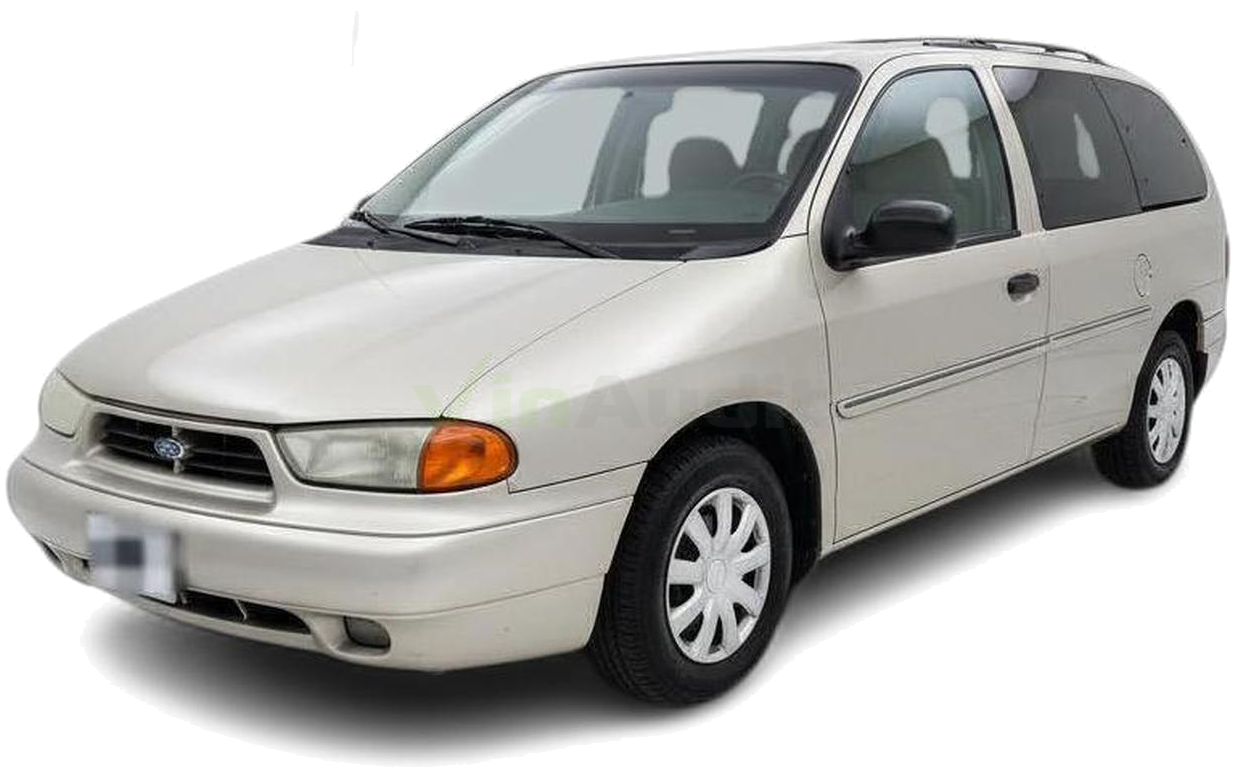
The 1998 Ford Windstar, part of the first generation of Ford's minivan lineup introduced in 1995, offered a spacious and versatile family hauler. Available as a passenger or cargo van, key trims included the base, GL, and GLS. Its popularity stemmed from its comfortable ride, generous interior space, and a relatively car-like driving experience for its class. It aimed to compete directly with established minivans.
The Good
The 1998 Windstar boasted a smooth, comfortable ride, a spacious cabin for family adventures, and decent practicality. Its value proposition was strong, offering a lot of interior room for the money, appealing to budget-conscious families seeking a capable people mover.
The Bad
Owners of the 1998 Ford Windstar should be aware of potential issues with transmission problems, particularly concerning overheating and shifting issues. Rust can also be a concern, especially in the rocker panels and wheel wells. Some reported electrical gremlins also warrant attention.
1998 Ford Windstar: Quick Overview
- Engine Options: The 1998 Ford Windstar primarily came with two engine options:
- 3.0L Vulcan V6
- 3.8L Essex V6
- Horsepower:
- 3.0L V6: Approximately 150 horsepower
- 3.8L V6: Approximately 200 horsepower
- Fuel Economy:
- EPA estimates for the 1998 Windstar typically ranged from around 15-17 MPG city and 20-23 MPG highway, depending on the engine and drivetrain configuration.
- 0-60 Times:
- Detailed 0-60 mph times are not widely published for this specific model year, but generally, minivans of this era with the larger V6 engine could achieve it in the mid-to-high 9-second range.
- Towing Capacity:
- When properly equipped with the optional towing package, the 1998 Ford Windstar could tow up to approximately 2,000 lbs. This was sufficient for small utility trailers or recreational equipment.
- Trim-Level Features:
- Base: Typically included standard safety features, power steering, and basic amenities.
- GL: Added features like air conditioning, power windows and locks, a better sound system, and cruise control.
- GLS: The top trim usually offered premium features such as upgraded upholstery, alloy wheels, a rear-seat entertainment system (optional), automatic climate control, and a power driver's seat.
All trims benefited from a flexible seating arrangement and ample cargo space.
- Base: Typically included standard safety features, power steering, and basic amenities.
1998 Ford Windstar Specifications
Vehicle Information
| Year | 1998 |
| Make | Ford |
| Model | Windstar |
| Trim | - |
| Style | - |
| Type | Van |
| Category | Cargo Van |
Manufacturing Details
| Made In | Canada |
| Manufacturing City | OAKVILLE |
Dimensions
| Doors | 3-Door |
| Curb Weight | 3546 pounds |
| Gross Vehicle Weight Rating | 5380 pounds |
| Overall Height | 68.50 inches |
| Overall Length | 201.20 inches |
| Overall Width | 75.80 inches |
| Wheelbase Length | 120.70 inches |
| Standard Seating | 2 |
Engine & Performance
| Engine | 3L V6 |
| Engine Size | 3L |
| Engine Cylinders | 6 |
| Transmission | 4-Speed Automatic |
| Transmission Type | Automatic |
| Transmission Speeds | 4-Speed |
| Drivetrain | Front-Wheel Drive |
Additional Features
| Anti-Brake System | 4-Wheel ABS |
| Steering Type | Rack & Pinion |
Pricing
| Manufacturer Suggested Retail Price (MSRP) | $18,210 |
| Invoice Price | $16,560 |
| Delivery Charges | - |
Vehicle History Report
Vehicle
Specifications
Specifications
Ownership
History
History
All History
Events
Events
NMVTIS Title
History Check
History Check
Salvage/Rebuilt
Check
Check
Accident
Check
Check
Theft
Check
Check
Open Lien
Check
Check
Past Sale
Listings
Listings
Safety
Recalls
Recalls
Odometer
Check
Check
Market Price
Analysis
Analysis
What Problems Does the 1998 Ford Windstar Have?
The 1998 Ford Windstar, like many vehicles from this era, is not without its reported issues. A prevalent concern among owners centers on the transmission. Specifically, the automatic transmission can be prone to overheating, leading to a loss of power, rough shifting, or complete failure. Some owners have reported a need for transmission fluid flushes or even rebuilds, particularly as mileage increases. This can be a significant and costly repair.
Another area of concern is the cooling system. Radiator leaks and thermostat issues have been noted, which can contribute to engine overheating and potentially more severe engine damage if not addressed promptly. The intake manifold gaskets are also a known weak point, leading to coolant leaks and potential engine misfires.
Body and structural issues are also occasionally reported. Rust can be a significant problem, especially in areas with harsh winters where salt is used on roads. Common rust areas include the rocker panels, wheel wells, and the undercarriage. This can compromise the vehicle's structural integrity over time and lead to expensive repairs.
Electrical issues are another common complaint, though they can be more sporadic. Owners have reported problems with the power door locks, window regulators, and the instrument cluster occasionally malfunctioning. The powertrain control module (PCM) has also been cited as a failure point in some instances.
While there haven't been widespread, universally recognized model-year specific recalls that dramatically alter the 1998 Windstar's reliability profile compared to its immediate peers, individual vehicles may have had specific recalls addressed. It's always advisable to check a vehicle's VIN for any outstanding recalls.
Overall, long-term reliability can be a mixed bag. With diligent maintenance, especially focusing on transmission fluid changes and keeping the cooling system in good order, some Windstars have achieved respectable mileage. However, the potential for expensive transmission repairs and rust issues means buyers should be prepared for potential ongoing maintenance costs.
Another area of concern is the cooling system. Radiator leaks and thermostat issues have been noted, which can contribute to engine overheating and potentially more severe engine damage if not addressed promptly. The intake manifold gaskets are also a known weak point, leading to coolant leaks and potential engine misfires.
Body and structural issues are also occasionally reported. Rust can be a significant problem, especially in areas with harsh winters where salt is used on roads. Common rust areas include the rocker panels, wheel wells, and the undercarriage. This can compromise the vehicle's structural integrity over time and lead to expensive repairs.
Electrical issues are another common complaint, though they can be more sporadic. Owners have reported problems with the power door locks, window regulators, and the instrument cluster occasionally malfunctioning. The powertrain control module (PCM) has also been cited as a failure point in some instances.
While there haven't been widespread, universally recognized model-year specific recalls that dramatically alter the 1998 Windstar's reliability profile compared to its immediate peers, individual vehicles may have had specific recalls addressed. It's always advisable to check a vehicle's VIN for any outstanding recalls.
Overall, long-term reliability can be a mixed bag. With diligent maintenance, especially focusing on transmission fluid changes and keeping the cooling system in good order, some Windstars have achieved respectable mileage. However, the potential for expensive transmission repairs and rust issues means buyers should be prepared for potential ongoing maintenance costs.
How long will the 1998 Ford Windstar last?
Based on owner data and maintenance records, the 1998 Ford Windstar can realistically be expected to serve for 150,000 to 200,000 miles if well-maintained. However, the key factor determining its longevity is the owner's commitment to proactive maintenance, particularly concerning the transmission and cooling system. Vehicles that have had regular fluid changes and timely repairs for minor issues tend to hold up better. Without this diligent care, weaknesses like transmission failure or significant rust can drastically shorten its useful service life, making it less durable over the long haul. Early attention to any warning signs is crucial for maximizing its lifespan.
What Technology & Safety Features are Included?
The 1998 Ford Windstar offered a functional, albeit basic, array of technology and safety features for its time. Standard equipment typically included power steering, anti-lock brakes (ABS), and airbags for the driver and front passenger. The design prioritized practicality and family transport, so advanced driver-assistance systems as we know them today were virtually nonexistent. Features like electronic traction control were sometimes optional on higher trims.
In terms of entertainment, base models usually came with a standard AM/FM radio. Higher trims, such as the GL and GLS, often featured improved stereo systems with cassette players and sometimes CD players. Optional features could include a premium sound system with more speakers for a richer audio experience. Some top-tier trims, particularly later in the model's run, might have offered an optional rear-seat entertainment system, often a VCR and a small screen, which was a significant feature for keeping younger passengers occupied on long journeys.
Comfort and convenience features were more prevalent. Power windows and door locks were standard on mid-to-upper trims, as was air conditioning. Cruise control was also a common inclusion. The modular seating system allowed for various configurations, enhancing cargo and passenger versatility.
Crash-test ratings for the 1998 Ford Windstar from organizations like the National Highway Traffic Safety Administration (NHTSA) and the Insurance Institute for Highway Safety (IIHS) provided a measure of its safety performance. The Windstar generally performed adequately for its class and era. NHTSA awarded it four out of five stars for frontal driver and passenger crash protection. Side impact ratings were also generally in the good to acceptable range, but it's important to note that testing protocols and safety expectations have evolved significantly since 1998. While it met the safety standards of its time, it would not compare to the safety technology found in modern vehicles.
In terms of entertainment, base models usually came with a standard AM/FM radio. Higher trims, such as the GL and GLS, often featured improved stereo systems with cassette players and sometimes CD players. Optional features could include a premium sound system with more speakers for a richer audio experience. Some top-tier trims, particularly later in the model's run, might have offered an optional rear-seat entertainment system, often a VCR and a small screen, which was a significant feature for keeping younger passengers occupied on long journeys.
Comfort and convenience features were more prevalent. Power windows and door locks were standard on mid-to-upper trims, as was air conditioning. Cruise control was also a common inclusion. The modular seating system allowed for various configurations, enhancing cargo and passenger versatility.
Crash-test ratings for the 1998 Ford Windstar from organizations like the National Highway Traffic Safety Administration (NHTSA) and the Insurance Institute for Highway Safety (IIHS) provided a measure of its safety performance. The Windstar generally performed adequately for its class and era. NHTSA awarded it four out of five stars for frontal driver and passenger crash protection. Side impact ratings were also generally in the good to acceptable range, but it's important to note that testing protocols and safety expectations have evolved significantly since 1998. While it met the safety standards of its time, it would not compare to the safety technology found in modern vehicles.
What Colors Options are Available?
1998 Ford Windstar Prices and Market Value
When new, the 1998 Ford Windstar carried a Manufacturer's Suggested Retail Price (MSRP) that typically ranged from approximately $20,000 for a base model to over $28,000 for a well-equipped GLS trim. Like most vehicles, the Windstar experienced significant depreciation in its early years. Today, used market prices for a 1998 Ford Windstar are generally quite low, often ranging from $1,000 to $4,000, heavily dependent on condition, mileage, and trim level. Factors severely affecting its resale value include known mechanical issues, particularly transmission problems, rust damage, and overall wear and tear. A well-maintained example with lower mileage might fetch a slightly higher price, but it remains a budget-friendly used vehicle.
1998 Ford Windstar Cost of Ownership
Owning a 1998 Ford Windstar can be economical in terms of initial purchase price and relatively affordable insurance premiums due to its age and market value. Fuel costs are moderate, with V6 engines consuming a fair amount of gasoline, typically in the 15-23 MPG range. However, long-term ownership costs can escalate due to potential repair expenses. Known issues like transmission problems and rust can lead to significant repair bills. Routine maintenance is standard for a vehicle of its age. Overall, while the upfront and insurance costs are low, the potential for costly repairs makes its long-term ownership potentially more expensive than initially perceived, especially if unexpected major issues arise.
1998 Ford Windstar Fuel Efficiency
Fuel Type
Gasoline
Fuel Capacity
20.00 gallons
City Mileage
17 miles/gallon
Highway Mileage
24 miles/gallon
1998 Ford Windstar Safety Rating
NHTSA
IIHS
1998 Ford Windstar Warranty
Basic
Original warranty
0 months / No data
Estimated remaining
Expired
Powertrain
Original warranty
0 months / No data
Estimated remaining
Expired
Rust
Original warranty
0 months / No data
Estimated remaining
Expired
1998 Ford Windstar Insurance
Insurance for a 1998 Ford Windstar is moderately priced, reflecting its status as a Van with strong safety ratings and
reasonable repair costs.
How Does the 1998 Ford Windstar Compare to Other Van?
The 1998 Ford Windstar competed in a crowded minivan segment dominated by rivals such as the Honda Odyssey, Toyota Sienna, and Chrysler minivans (Dodge Grand Caravan, Plymouth Voyager). In terms of performance, the Windstar's available 3.8L V6 offered decent power, often exceeding the base engines found in some competitors, providing a more robust feel when accelerating or carrying a full load. However, its handling was generally considered less refined and more truck-like compared to the more car-like dynamics of the Odyssey and Sienna.
Features were a strong point for American minivans, and the Windstar offered a good range for its price, especially in GL and GLS trims, often including power amenities and optional entertainment systems. The Japanese rivals, particularly Toyota and Honda, were often lauded for their build quality and interior ergonomics, though sometimes at a higher price point.
Reliability is where the Windstar often fell short compared to its Japanese counterparts. While the Odyssey and Sienna developed reputations for exceptional long-term reliability, the Windstar was more prone to issues, most notably transmission problems and corrosion. This is a significant factor that buyers considered and continues to be a concern for used examples.
Price-wise, the Windstar typically offered a competitive purchase price, often undercutting similar trims of the Honda Odyssey or Toyota Sienna when new, making it an attractive option for budget-conscious families. This value proposition extended to the used market, where Windstars are generally cheaper.
Alternatives:
For those prioritizing reliability above all else, the 1998 Toyota Sienna and 1998 Honda Odyssey are superior choices, despite potentially higher used prices. They offer more dependable powertrains and better overall build quality. If a balance of space, features, and reasonable reliability is desired, and transmission issues are addressed, a well-maintained Windstar can still serve its purpose. However, for a similar price point with potentially better long-term prospects, exploring other used American minivans like the Dodge Grand Caravan or Plymouth Voyager might also be considered, though they share some similar reliability concerns with the Windstar.
Features were a strong point for American minivans, and the Windstar offered a good range for its price, especially in GL and GLS trims, often including power amenities and optional entertainment systems. The Japanese rivals, particularly Toyota and Honda, were often lauded for their build quality and interior ergonomics, though sometimes at a higher price point.
Reliability is where the Windstar often fell short compared to its Japanese counterparts. While the Odyssey and Sienna developed reputations for exceptional long-term reliability, the Windstar was more prone to issues, most notably transmission problems and corrosion. This is a significant factor that buyers considered and continues to be a concern for used examples.
Price-wise, the Windstar typically offered a competitive purchase price, often undercutting similar trims of the Honda Odyssey or Toyota Sienna when new, making it an attractive option for budget-conscious families. This value proposition extended to the used market, where Windstars are generally cheaper.
Alternatives:
For those prioritizing reliability above all else, the 1998 Toyota Sienna and 1998 Honda Odyssey are superior choices, despite potentially higher used prices. They offer more dependable powertrains and better overall build quality. If a balance of space, features, and reasonable reliability is desired, and transmission issues are addressed, a well-maintained Windstar can still serve its purpose. However, for a similar price point with potentially better long-term prospects, exploring other used American minivans like the Dodge Grand Caravan or Plymouth Voyager might also be considered, though they share some similar reliability concerns with the Windstar.
Final Verdict: Is the 1998 Ford Windstar a Good Van?
The 1998 Ford Windstar is ideal for budget-conscious families seeking maximum interior space and practicality for the lowest possible price. It's best suited for buyers who understand its potential mechanical quirks and are prepared for proactive maintenance, especially concerning the transmission and cooling system. Purchasing a used Windstar can be worthwhile if it has a verifiable history of consistent maintenance, lower mileage, and minimal rust. Higher trims like the GLS offer more amenities. It is generally not recommended for those prioritizing long-term, worry-free reliability or expecting modern automotive technology. For its intended purpose as an affordable, spacious hauler, it can be a decent buy if acquired with caution and a clear understanding of its limitations.