
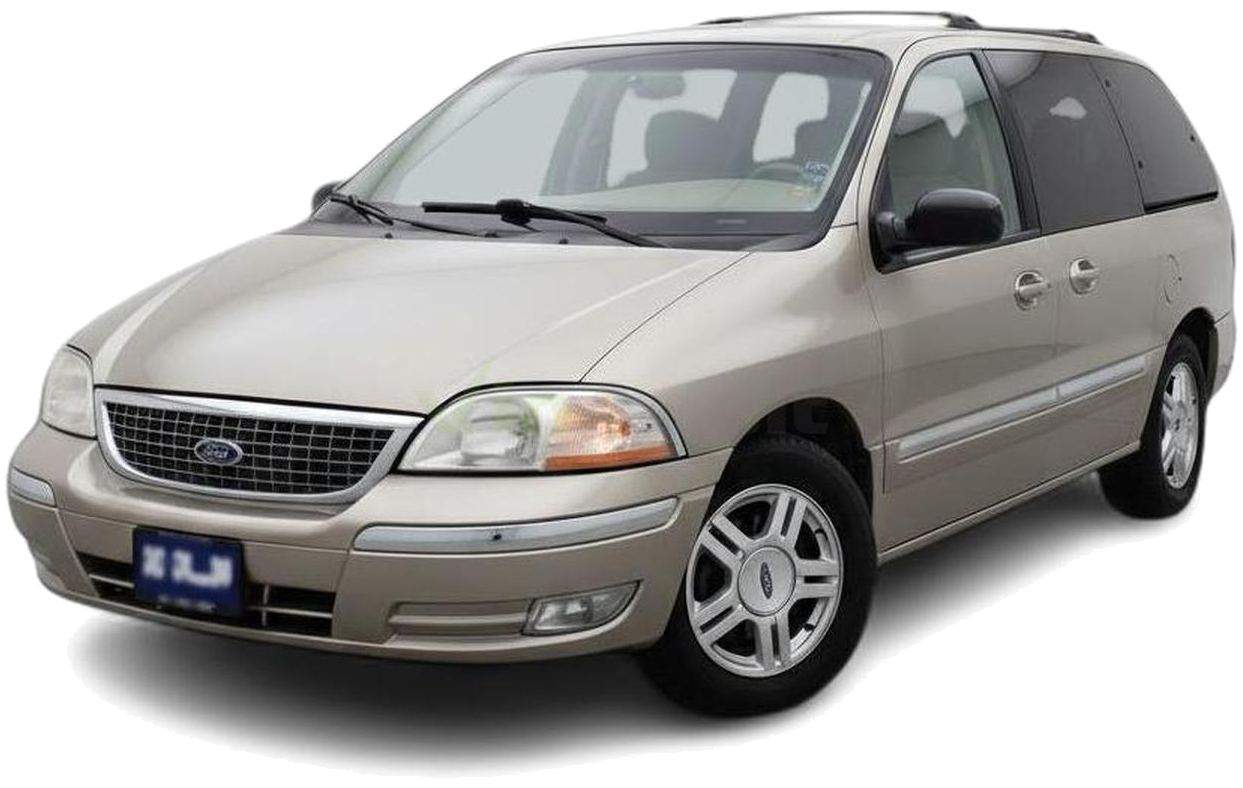
The Good
The 2001 Ford Windstar offered a comfortable, quiet ride, appealing to families for long trips. Its spacious interior and versatile seating configurations provided practical utility for both passengers and cargo. Emotionally, it promised reliability and safety for loved ones. Practically, it delivered a powerful V6 engine for confident highway merging and decent fuel efficiency for its class, combined with an attractive initial purchase price, making it a strong value proposition.
The Bad
Known weaknesses for the 2001 Ford Windstar primarily involve transmission issues, particularly around the 80,000-100,000 mile mark, which can be costly. Rear axle corrosion and potential cracking are also serious concerns, especially in colder climates. Rust on suspension components and engine accessory failures (e.g., alternator, power steering pump) are also frequently reported, requiring vigilant maintenance.
2001 Ford Windstar: Quick Overview
Key Specifications for the 2001 Ford Windstar:
- Engine Options: The 2001 Windstar was primarily offered with one engine: a 3.8-liter "Essex" V6 engine.
- Horsepower: The 3.8L V6 produced 200 horsepower at 5000 RPM and 230 lb-ft of torque at 3000 RPM. This provided adequate power for family hauling and highway cruising.
- Fuel Economy: EPA estimated fuel economy ratings for the 3.8L V6 were typically around 17 MPG in the city and 23 MPG on the highway. Actual mileage varied based on driving conditions and maintenance.
- 0-60 Times: While not a performance vehicle, 0-60 MPH times for the Windstar with the 3.8L V6 were generally in the 9-10 second range, which was competitive for a minivan of its era.
- Towing Capacity: When properly equipped with the optional towing package, the 2001 Ford Windstar had a respectable towing capacity of up to 3,500 pounds, making it suitable for light trailers or small boats.
- Trim-Level Features:
- LX: The base model, offering essentials like dual sliding doors, power windows, power locks, air conditioning, and an AM/FM stereo.
- SE: Added alloy wheels, sport-tuned suspension (slightly), cruise control, a tilt steering wheel, and often more advanced audio systems.
- SEL: Featured additional luxury and convenience items such as automatic climate control, a power driver's seat, upgraded interior trim, and sometimes a CD player.
- Limited: The top-tier trim, including leather upholstery, heated front seats, power-adjustable pedals, rear seat audio controls, and a more comprehensive array of power accessories and luxury appointments. Optional features across trims could include integrated child safety seats, a rear-seat entertainment system (VCR/DVD player), and traction control.
2001 Ford Windstar Specifications
Vehicle Information
| Year | 2001 |
| Make | Ford |
| Model | Windstar |
| Trim | - |
| Style | - |
| Type | Van |
| Category | Cargo Van |
Manufacturing Details
| Made In | Canada |
| Manufacturing City | OAKVILLE |
Dimensions
| Doors | 3-Door |
| Curb Weight | 3719 pounds |
| Gross Vehicle Weight Rating | 5540 pounds |
| Overall Height | 68.00 inches |
| Overall Length | 200.90 inches |
| Overall Width | 75.20 inches |
| Wheelbase Length | 120.70 inches |
| Standard Seating | 2 |
Engine & Performance
| Engine | 3.8L V6 |
| Engine Size | 3.8L |
| Engine Cylinders | 6 |
| Transmission | 4-Speed Automatic |
| Transmission Type | Automatic |
| Transmission Speeds | 4-Speed |
| Drivetrain | Front-Wheel Drive |
Additional Features
| Anti-Brake System | 4-Wheel ABS |
| Steering Type | Rack & Pinion |
Pricing
| Manufacturer Suggested Retail Price (MSRP) | $20,220 |
| Invoice Price | $18,646 |
| Delivery Charges | $655 |
Vehicle History Report
Specifications
History
Events
History Check
Check
Check
Check
Check
Listings
Recalls
Check
Analysis
What Problems Does the 2001 Ford Windstar Have?
Another critical safety and reliability concern for the 2001 Windstar, and indeed the entire second generation (1999-2003), is severe rear axle corrosion and potential fracture. Ford issued recalls (e.g., 09V-399, 11V-435) related to this, as significant rust can cause the axle to crack or completely separate, leading to a loss of vehicle control. This issue is particularly pronounced in states where road salt is used. Owners should inspect the rear axle thoroughly for rust.
Other frequently reported problems include:
- Power Steering Leaks/Failures: Components like the power steering pump or hoses are known to fail, leading to leaks and loss of power assist.
- Engine Accessory Failures: Alternators, water pumps, and idler pulleys tend to wear out prematurely.
- Suspension Components: Rust and wear on control arms, sway bar links, and bushings are common, affecting ride quality and alignment.
- Engine Gasket Leaks: Intake manifold gaskets or valve cover gaskets can develop leaks, leading to oil consumption or coolant issues.
- Brake System Issues: Premature wear of brake pads and rotors, and occasional ABS sensor failures.
How long will the 2001 Ford Windstar last?
What Technology & Safety Features are Included?
Driver-assistance features were quite rudimentary by today's standards. Standard features included power steering and power brakes. Traction control was an optional feature, particularly beneficial in adverse weather conditions. Anti-lock brakes (ABS) were standard on most, if not all, trims.
In terms of safety, the 2001 Windstar came standard with dual front airbags. Side-impact airbags were not commonly available in this class at that time. Other safety basics included child safety locks on the rear doors and a LATCH system (Lower Anchors and Tethers for Children) for securing child seats. Integrated child safety seats, which folded out from the second-row bench, were a popular and convenient optional feature.
Crash-test ratings from the National Highway Traffic Safety Administration (NHTSA) for the 2001 Windstar generally showed:
- Frontal Driver: 4 out of 5 stars
- Frontal Passenger: 4 out of 5 stars
- Side Driver: 3 out of 5 stars
- Side Rear Passenger: 5 out of 5 stars
- Rollover: 3 out of 5 stars (with 20% risk)
What Colors Options are Available?
2001 Ford Windstar Prices and Market Value
2001 Ford Windstar Cost of Ownership
2001 Ford Windstar Fuel Efficiency
2001 Ford Windstar Safety Rating
NHTSA
IIHS
2001 Ford Windstar Recalls & Defects
Suspension:rear:axle:non-Powered Axle Assembly
Structure:frame and Members:underbody Shields
Power Train:axle Assembly
Suspension:front:control ARM
Suspension:rear:axle:non-Powered Axle Assembly
Suspension:rear:axle:non-Powered Axle Assembly
AIR Bags
AIR Bags:frontal:sensor/Control Module-Inactive
Vehicle Speed Control:accelerator Pedal
Visibility:windshield Wiper/Washer:motor
Equipment:appliance:air Conditioner
Seat Belts:front:buckle Assembly
Trailer Hitches
Seats:mid/Rear Assembly
Fuel System, Gasoline
Vehicle Speed Control
2001 Ford Windstar Warranty
Basic
Powertrain
Rust
2001 Ford Windstar Insurance
reasonable repair costs.
How Does the 2001 Ford Windstar Compare to Other Van?
Performance and Features:
The Windstar's 3.8L V6 offered competitive horsepower (200 hp) and a comfortable, if somewhat softer, ride compared to the sportier feel of some rivals. Its spacious interior and dual sliding doors were on par with competitors. However, rivals like the Honda Odyssey often boasted more refined engines and transmissions, along with innovative features such as the Stow & Go seating in Chrysler minivans (though this was introduced slightly later). The Windstar's interior ergonomics and material quality were generally considered acceptable but not class-leading.
Reliability:
This is where the Windstar significantly lagged behind its Japanese competitors, particularly the Honda Odyssey and Toyota Sienna, which consistently ranked higher in long-term reliability surveys. The Windstar's notorious transmission problems and the severe rear axle corrosion recalls were major drawbacks that contributed to its lower reliability perception and higher potential for costly repairs compared to its more robust rivals. Chrysler minivans also had their share of transmission woes, but the Windstar's rear axle issue was unique and concerning.
Price:
New, the Windstar was competitively priced, often slightly undercutting its Japanese counterparts. On the used market today, its lower reliability often translates to significantly lower resale values compared to a comparable Odyssey or Sienna from the same year, making it cheaper to acquire but potentially more expensive to maintain.
Alternatives:
For those seeking a more reliable long-term minivan from this era, a Honda Odyssey (second generation, 1999-2004) or a Toyota Sienna (first generation, 1998-2003) would be better alternatives. Both generally offer superior build quality, fewer systemic issues, and better long-term durability, though they may command a slightly higher used price. If budget is the absolute primary concern and a buyer is prepared for potential repairs or has mechanical skills, the Windstar could be considered, but with caution. The Dodge Grand Caravan/Chrysler Town & Country (third generation, 1996-2000, or fourth generation, 2001-2007) are similar alternatives in terms of price and potential for issues, often suffering from their own transmission problems.
Final Verdict: Is the 2001 Ford Windstar a Good Van?

Drew B
Drew is a seasoned automotive expert and contributor to VinCheck.info. With nearly 15 years of experience as a former Porsche technician, he brings a wealth of hands-on knowledge to his writing. Born in North Carolina, a region renowned for its deep-rooted NASCAR culture, Drew developed a passion for cars early in life, often building and working on vehicles from a young age. At VINCheck, Drew leverages his extensive technical background to provide in-depth analyses of various vehicles. His articles often focus on engine performance, reliability, and maintenance insights, offering readers practical information grounded in real-world experience. Some of his notable contributions include reviews on the Mazda CX-5's longevity and detailed examinations of engine options for models like the 2011 Toyota Camry and Tacoma