
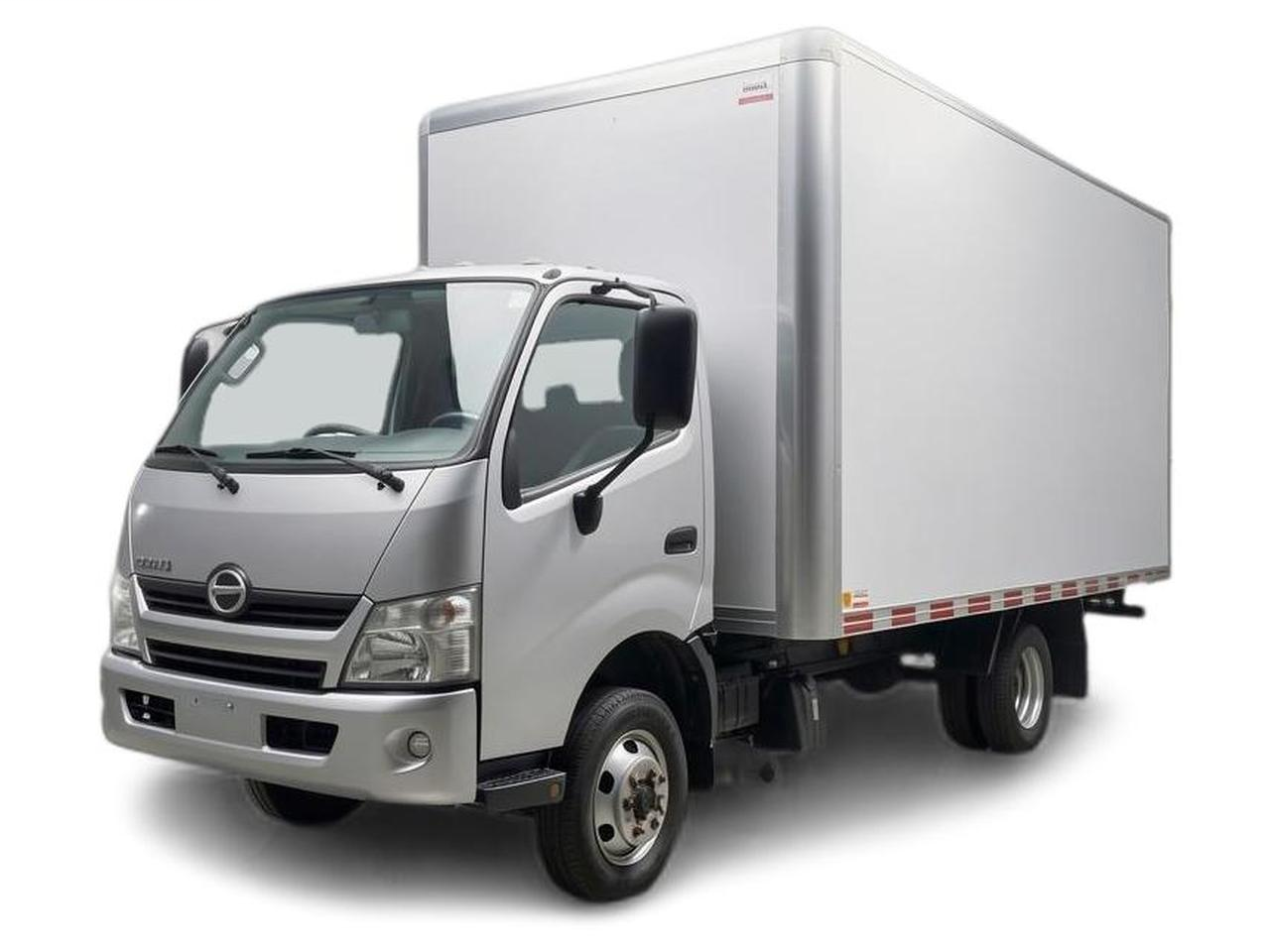
The Good
The 2017 Hino XJC720 / XFC720 boasts exceptional reliability, built to withstand demanding work. Its practical design maximizes cargo space, appealing to the logical needs of businesses, while its straightforward operation and durable construction offer peace of mind and long-term value.
The Bad
Potential owners should be aware of the 2017 Hino XJC720 / XFC720's somewhat utilitarian cabin, which may lack the modern amenities and refinement found in some competitors. Also, consider that specialized parts availability might be less common than for more mainstream brands, potentially impacting repair times and costs.
2017 Hino XJC720 / XFC720: Quick Overview
- Engine Options: The 2017 Hino XJC720 / XFC720 typically came equipped with Hino's robust diesel engines, designed for commercial duty. Specific engine displacements varied but generally focused on efficiency and torque for hauling. Common options included inline 4-cylinder turbocharged diesel engines.
- Horsepower: Horsepower figures for these diesel engines usually ranged from approximately 130 to 170 horsepower, emphasizing torque delivery for carrying loads rather than outright speed.
- Fuel Economy: Fuel economy is a critical factor for commercial vehicles. While precise MPG figures vary based on load, route, and driving style, the Hino XJC720 / XFC720 was designed to offer competitive fuel efficiency within its segment, often in the range of 18-22 MPG combined for typical urban and highway use.
- 0-60 Times: 0-60 mph times are not a primary concern or readily available metric for this type of commercial vehicle, as performance is optimized for load-carrying and operational efficiency rather than rapid acceleration.
- Towing Capacity: Towing capacity varies significantly based on the specific configuration, chassis, and engine. As a light-duty commercial vehicle, it is designed for hauling substantial payloads within its cargo area, and towing capabilities would be moderate, suitable for trailers commonly used in delivery or service operations.
- Trim-Level Features: Trims were generally differentiated by body style (panel van, chassis cab) and wheelbase options. Standard features focused on functionality and durability, including durable interior materials, basic climate control, power steering, and AM/FM radio. Optional features might have included enhanced audio systems, air conditioning, and different seating configurations. The primary focus was on configurable cargo space and ease of access, with variations in GVWR (Gross Vehicle Weight Rating) to suit different load requirements.
2017 Hino XJC720 / XFC720 Specifications
Vehicle Information
| Year | 2017 |
| Make | Hino |
| Model | XJC720 / XFC720 |
| Trim | - |
| Style | Tilt CAB Truck RWD 6AT 5.1L I4 |
| Type | Pickup Truck |
| Category | commercial |
Manufacturing Details
| Made In | Japan |
| Manufacturing City | HAMURA |
Dimensions
| Doors | 4-Door |
| Curb Weight | - |
| Gross Vehicle Weight Rating | - |
| Overall Height | - |
| Overall Length | - |
| Overall Width | - |
| Wheelbase Length | - |
| Standard Seating | - |
Engine & Performance
| Engine | 5.1L I4 |
| Engine Size | 5.1L |
| Engine Cylinders | 4 |
| Transmission | 6-Speed Automatic |
| Transmission Type | Automatic |
| Transmission Speeds | 6-Speed |
| Drivetrain | Rear-Wheel Drive |
Additional Features
| Anti-Brake System | - |
| Steering Type | - |
Pricing
| Manufacturer Suggested Retail Price (MSRP) | - |
| Invoice Price | - |
| Delivery Charges | - |
Vehicle History Report
Specifications
History
Events
History Check
Check
Check
Check
Check
Listings
Recalls
Check
Analysis
What Problems Does the 2017 Hino XJC720 / XFC720 Have?
Recalls for the 2017 model year are generally limited and specific, often pertaining to minor safety-related components or software updates that were addressed by dealerships. It is always advisable to check the National Highway Traffic Safety Administration (NHTSA) database for any open recalls associated with the specific VIN.
Long-term reliability is largely dependent on the operational environment and maintenance schedule. Vehicles used in stop-and-go urban delivery cycles might experience more wear on brakes and suspension components than those used for highway hauling. Proper adherence to the manufacturer's recommended maintenance intervals, including oil changes, filter replacements, and coolant flushes, is crucial for preserving the longevity of the engine and drivetrain. For diesel engines, ensuring the use of high-quality fuel and maintaining the fuel system is paramount. Overall, the Hino XJC720 / XFC720 is built for durability, and with diligent care, it can serve reliably for many years and miles.
How long will the 2017 Hino XJC720 / XFC720 last?
What Technology & Safety Features are Included?
Driver-assistance features are minimal to non-existent in the traditional sense. You won't find adaptive cruise control, lane departure warning, or blind-spot monitoring. The focus is on the fundamentals of safe operation. Safety features typically include essential items like airbags for the driver and front passenger, anti-lock braking system (ABS), and sturdy construction designed to protect occupants in the event of a collision. Seatbelt reminders are standard. Visibility is generally good due to the van's upright design and large windows.
Crash-test ratings for commercial vans like the Hino XJC720 / XFC720 are often not as extensively documented or publicly available as those for passenger vehicles from organizations like the NHTSA or IIHS. However, Hino commercial vehicles are engineered to meet stringent safety standards for their intended use. Their robust chassis and body structure are designed to withstand significant forces. Optional features might have included a backup camera for improved maneuverability in tight spaces, particularly useful for a van of this size. The overall approach to technology and safety in the 2017 Hino XJC720 / XFC720 is pragmatic, emphasizing reliability and core safety functions essential for commercial operations.
What Colors Options are Available?
2017 Hino XJC720 / XFC720 Prices and Market Value
2017 Hino XJC720 / XFC720 Cost of Ownership
2017 Hino XJC720 / XFC720 Fuel Efficiency
2017 Hino XJC720 / XFC720 Insurance
reasonable repair costs.
How Does the 2017 Hino XJC720 / XFC720 Compare to Other Pickup Truck?
Regarding features, the Hino XJC720 / XFC720 leans towards utilitarian simplicity. Competitors like the Sprinter and Transit generally offer more advanced technology, including better infotainment systems, more driver-assistance features, and greater interior comfort and customization options. The Hino's cabin is functional but can feel basic in comparison.
In terms of reliability, Hino has a strong reputation for building durable commercial vehicles, and the XJC720 / XFC720 is no exception. It often stands toe-to-toe with or surpasses the reliability of some competitors, especially when considering long-term, heavy-duty use. The Sprinter is also known for its durability, though maintenance can be more expensive.
Price is where the Hino XJC720 / XFC720 can be very attractive. It often presents a more budget-friendly option when purchased new or used compared to the premium pricing of a Mercedes-Benz Sprinter or even a similarly equipped Ford Transit.
Alternatives: If a highly refined interior and extensive tech features are paramount, the Ford Transit or Ram ProMaster might be better choices, offering a more car-like driving experience and a wider array of options. For ultimate hauling capability and durability, the Mercedes-Benz Sprinter is a benchmark, though at a higher cost. However, for businesses prioritizing rock-solid mechanical reliability, straightforward operation, and a more accessible price point, the 2017 Hino XJC720 / XFC720 remains a compelling option, often proving more cost-effective in the long run through reduced maintenance and a longer lifespan.
Final Verdict: Is the 2017 Hino XJC720 / XFC720 a Good Pickup Truck?
It is absolutely worth buying for the right user. Its value proposition shines brightest in the used market, where its initial depreciation has already occurred, making it a more accessible and economical choice. Buyers should focus on models with well-documented maintenance histories, as this is the key to unlocking its full potential for years to come. Specific trims offering longer wheelbases or higher GVWRs would be preferable for those needing maximum cargo capacity. For fleet operators or individual business owners seeking a dependable, no-nonsense commercial vehicle that won't break the bank, the 2017 Hino XJC720 / XFC720 is a sound investment.

Simon A
Simon is a contributor to VinCheck, where he provides articles and reviews on various automotive topics. His work focuses on delivering accurate and up-to-date information about used cars, helping readers make informed decisions.