
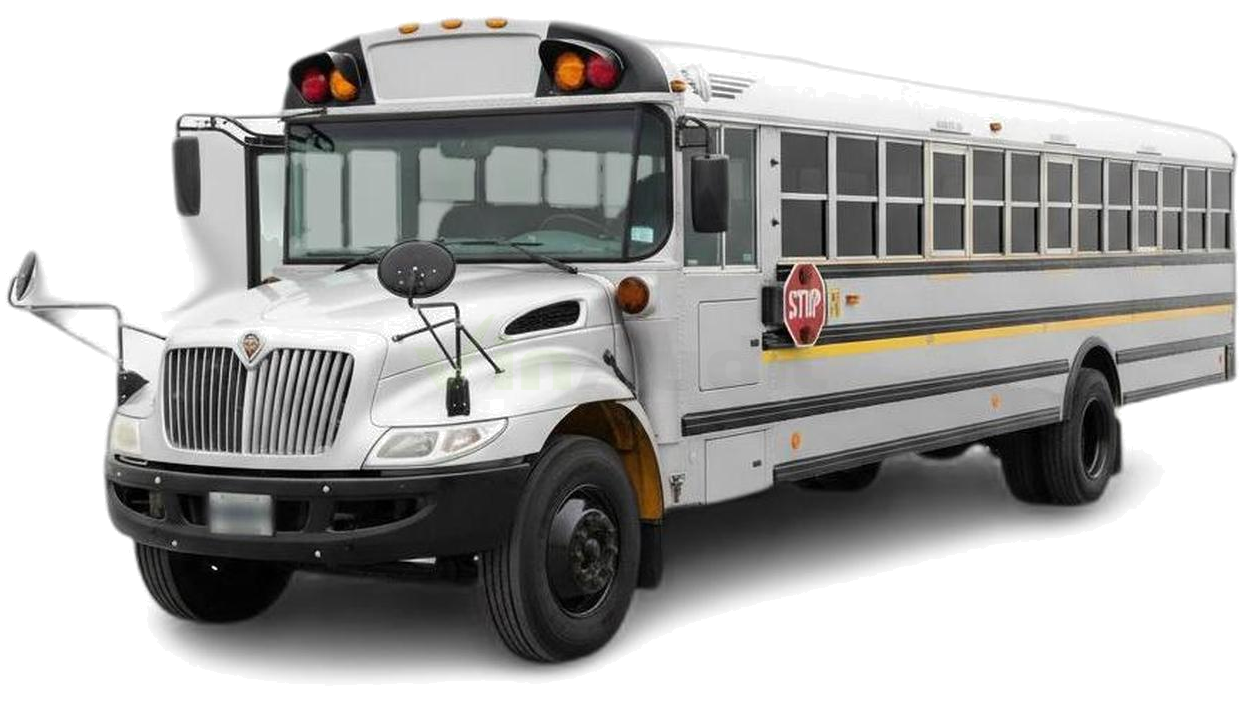
The Good
The 2010 International 3000 offers exceptional reliability and a workhorse performance, built to withstand demanding tasks. Its sturdy design provides a solid foundation for specialized bodies, appealing to practical buyers seeking durability. For those who value peace of mind, its proven track record offers emotional reassurance.
The Bad
Potential weaknesses for the 2010 International 3000 can include the complexity and cost of specialized repairs due to its commercial nature. Owners should watch out for wear and tear on heavy-duty components, potential electrical gremlins in complex upfitted systems, and rust on older chassis.
2010 International 3000: Quick Overview
- Engine Options: The 2010 International 3000 series was offered with a variety of robust diesel engines. Common options included Navistar's proprietary DT 466 and MaxxForce engines. These were typically inline-6 configurations designed for commercial duty. Specific displacements varied, but common ranges were around 7.6 liters (466 cubic inches) for the DT 466.
- Horsepower: Horsepower ratings varied significantly depending on the specific engine and its application, but generally ranged from approximately 200 horsepower up to 300+ horsepower for more powerful configurations. For instance, a DT 466 could be found with outputs around 215-230 hp, while larger MaxxForce engines might offer more.
- Fuel Economy: Fuel economy for commercial vehicles like the International 3000 is highly dependent on the specific configuration, engine, transmission, load, and driving conditions. It is not typically measured in MPG like passenger cars. Expect significantly lower figures than a typical car, likely in the single digits to low teens MPG when heavily loaded or in stop-and-go city driving.
- 0-60 Times: 0-60 mph acceleration is not a relevant metric for this type of vehicle. Its design prioritizes torque, hauling capacity, and durability over rapid acceleration.
- Towing Capacity: Towing capacity is not a standard specification for the 3000 series as it is built as a chassis for various vocational bodies. However, the chassis itself is designed to handle substantial Gross Vehicle Weight Ratings (GVWR), which dictates the combined weight of the vehicle and its payload, including any trailer it might pull when configured as a tow truck or specialized hauler. GVWRs could easily exceed 25,000 lbs and go much higher depending on the chassis configuration.
- Trim-Level Features: The concept of "trim levels" as found in consumer vehicles does not directly apply to the International 3000 series. Instead, it was offered as a chassis cab or chassis cowl, allowing for extensive customization. Key features were based on the intended application:
- Chassis: Heavy-duty frames designed for various body types (e.g., dump bodies, box trucks, school bus bodies, service bodies, flatbeds).
- Cab Options: Typically offered in conventional cab configurations with varying cab lengths (standard, extended).
- Drivetrain: Various transmission options, including robust automatic and manual transmissions suitable for commercial use (e.g., Allison automatics, Eaton manuals).
- Suspension: Heavy-duty suspension systems designed to carry significant loads.
- Braking Systems: Advanced braking systems, often air brakes on heavier configurations, for safe stopping power.
- Optional features: Air conditioning, power windows/locks (on more premium cab versions), upgraded infotainment (basic radios), auxiliary power outlets, and specialized vocational equipment specific to the body installed.
2010 International 3000 Specifications
Vehicle Information
| Year | 2010 |
| Make | International |
| Model | 3000 |
| Trim | - |
| Style | - |
| Type | Truck |
| Category | Busfont Eng. |
Manufacturing Details
| Made In | United States |
| Manufacturing City | CONWAY |
Dimensions
| Doors | - |
| Curb Weight | - |
| Gross Vehicle Weight Rating | 33000 pounds |
| Overall Height | - |
| Overall Length | - |
| Overall Width | - |
| Wheelbase Length | - |
| Standard Seating | - |
Engine & Performance
| Engine | 7.6L I6 |
| Engine Size | 7.6L |
| Engine Cylinders | 6 |
| Transmission | - |
| Transmission Type | - |
| Transmission Speeds | - |
| Drivetrain | Rear-Wheel Drive |
Additional Features
| Anti-Brake System | - |
| Steering Type | - |
Pricing
| Manufacturer Suggested Retail Price (MSRP) | - |
| Invoice Price | - |
| Delivery Charges | - |
Vehicle History Report
Specifications
History
Events
History Check
Check
Check
Check
Check
Listings
Recalls
Check
Analysis
What Problems Does the 2010 International 3000 Have?
Another area that can require attention is the fuel injection system. Components like injectors and the fuel pump are under significant stress in diesel engines and can be sources of problems, especially with the use of lower-quality fuel or inadequate fuel filtration. Electrical gremlins are also not uncommon in commercial vehicles, particularly with the added complexity of auxiliary systems and upfitted equipment. Wiring harnesses can degrade over time, and various sensors can fail, leading to diagnostic challenges and intermittent issues.
Regarding specific model year concerns for the 2010 International 3000, it's important to note that major recalls are often tied to specific engine families or chassis components rather than the entire 3000 series as a broad category. For instance, certain MaxxForce engines used in International vehicles around this period faced scrutiny for reliability, though this is a broad generalization and specific issues would need to be investigated for the exact engine within a 3000 series chassis. Long-term reliability heavily depends on the rigorous maintenance schedule followed by the original owner, as these vehicles are designed for heavy-duty use. Neglected maintenance can drastically shorten the lifespan of critical components such as the transmission, drivetrain, and engine cooling system. Owners should always check for recalls specific to the VIN and the installed engine and transmission.
How long will the 2010 International 3000 last?
What Technology & Safety Features are Included?
Driver-assistance features are virtually non-existent in the traditional sense. Systems like ABS (Anti-lock Braking System) are standard on many configurations for safety and control, especially with air brakes. However, advanced features like lane departure warnings, adaptive cruise control, or backup cameras are not factory-installed options for this model year and platform. If present, these would be specialized upfits for specific applications (e.g., school buses might have backup cameras for safety).
Safety features are primarily focused on structural integrity and essential braking systems. The robust construction of the chassis and cab is designed to withstand significant loads and impacts. Air brakes, common on heavier variants, offer superior stopping power compared to hydraulic systems. Seatbelts are, of course, standard.
Regarding crash-test ratings, commercial vehicles like the International 3000 are not subjected to the same consumer-focused crash tests (like NHTSA or IIHS ratings) as passenger cars and light trucks. Their safety is assessed based on different regulatory standards pertaining to commercial vehicle design and operation. The focus is on preventing accidents through reliable braking and steering, and on occupant protection through sturdy cab construction. Optional features would be highly application-specific, such as specialized lighting, power take-off (PTO) systems, or robust body-building components, rather than comfort or tech amenities.
What Colors Options are Available?
2010 International 3000 Prices and Market Value
2010 International 3000 Cost of Ownership
2010 International 3000 Fuel Efficiency
2010 International 3000 Warranty
Basic
Powertrain
Rust
2010 International 3000 Insurance
reasonable repair costs.
How Does the 2010 International 3000 Compare to Other Truck?
Performance: International's DT 466 engine was highly regarded for its robust performance and longevity, often considered a strong point. Freightliner's M2 chassis also offered reliable Cummins and Detroit Diesel engine options, providing comparable or superior power and torque depending on the configuration. Ford's Super Duty platforms, while strong, were generally positioned for lighter commercial duty compared to the full-size International 3000.
Features: In terms of features, the 3000 series, like its peers, was basic. Driver comfort and amenities were secondary to functionality. All these brands offered similar levels of cab comfort and rudimentary entertainment systems. Advanced technology was minimal across the board in 2010.
Reliability: International's reputation for reliability, particularly with the DT 466 engine, was a strong selling point. However, International's MaxxForce engines from this era sometimes faced reliability criticisms. Freightliner, with its Cummins/Detroit engine options, often held a slight edge in perceived long-term powertrain reliability for some users. Ford's heavy-duty trucks are known for their durability, but their chassis might not be as heavy-duty as specialized International or Freightliner chassis for extreme vocational applications.
Price: Pricing across these platforms was competitive and highly dependent on the specific vocational body and customization. When new, they occupied a similar price bracket. On the used market, a 2010 International 3000 with a DT 466 engine often holds its value well due to its reputation, potentially being more sought after than some comparable models from rivals with less desirable powertrains.
Alternatives: For similar heavy-duty vocational applications, a used Freightliner M2 chassis with a Cummins ISB or ISL engine is a very strong alternative, often praised for its balanced performance and reliability. Ford F-650/F-750 models are also relevant, especially if a slightly lighter-duty or more readily available platform is desired, though they might not offer the same extreme durability as the International or Freightliner for the most demanding tasks. If extreme durability and a proven engine are top priorities, a 2010 International 3000 with a DT 466 engine remains a solid contender.
Final Verdict: Is the 2010 International 3000 a Good Truck?

Drew B
Drew is a seasoned automotive expert and contributor to VinCheck.info. With nearly 15 years of experience as a former Porsche technician, he brings a wealth of hands-on knowledge to his writing. Born in North Carolina, a region renowned for its deep-rooted NASCAR culture, Drew developed a passion for cars early in life, often building and working on vehicles from a young age. At VINCheck, Drew leverages his extensive technical background to provide in-depth analyses of various vehicles. His articles often focus on engine performance, reliability, and maintenance insights, offering readers practical information grounded in real-world experience. Some of his notable contributions include reviews on the Mazda CX-5's longevity and detailed examinations of engine options for models like the 2011 Toyota Camry and Tacoma