
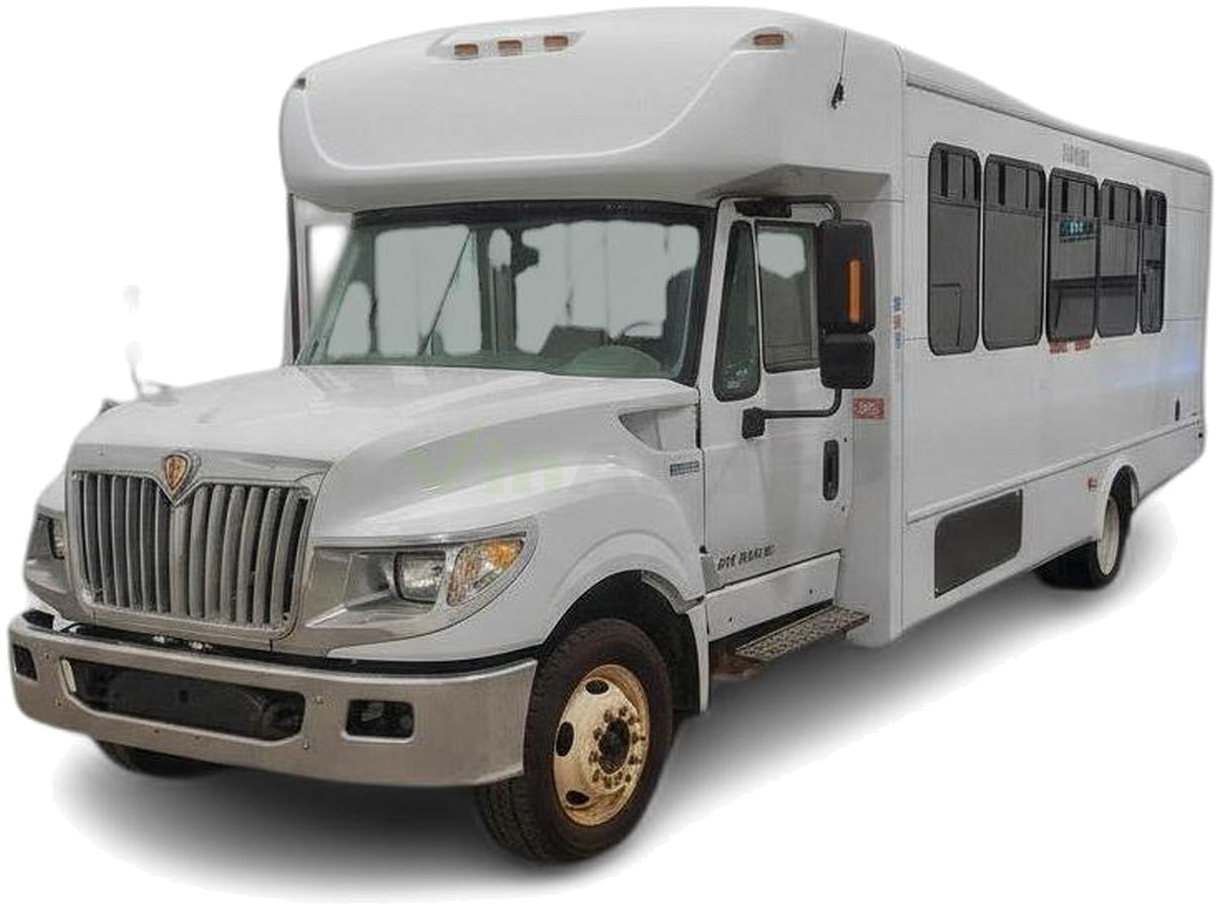
The Good
The 2014 International 3000 boasts a durable frame and powerful diesel engines for consistent performance under heavy loads. Its robust build offers exceptional reliability and longevity, appealing to practical buyers seeking minimal downtime. For emotional buyers, it represents safety and trust, especially in school transport. Good long-term value stems from its serviceable design and strong commercial market presence.
The Bad
Potential weaknesses for the 2014 International 3000 include issues with its MaxxForce diesel engines' emission control systems (EGR, DPF), which can lead to costly repairs and downtime. Electrical system complexities and the potential for chassis rust in older, high-mileage units also require diligent inspection.
2014 International 3000: Quick Overview
The 2014 International 3000 chassis is a dedicated platform designed for school bus and commercial applications, thus its "specs" differ significantly from passenger vehicles.
- Engine Options: Primarily offered with International's own MaxxForce diesel engines, specifically the MaxxForce 7 (V8 diesel) and MaxxForce DT (inline-6 diesel).
- Horsepower:
- MaxxForce 7: Typically ranged from 220 to 245 horsepower.
- MaxxForce DT: Offered in various outputs, from approximately 215 to 285 horsepower.
- Fuel Economy: Not rated by EPA like passenger vehicles. Actual economy varies greatly with load, route, and driving style, but typically ranges from 6-10 miles per gallon (MPG) for a fully loaded school bus.
- 0-60 Times: Not applicable. These vehicles are engineered for torque, durability, and safe transport of passengers, not rapid acceleration.
- Towing Capacity: The 3000 series is itself the platform for a complete vehicle with a high Gross Vehicle Weight Rating (GVWR), rather than designed for separate towing. GVWRs commonly range from 26,000 lbs to over 33,000 lbs, accommodating various bus body lengths and passenger capacities.
- Trim-Level Features: The concept of "trims" is less relevant; features are configurations and options for the chassis:
- Transmissions: Typically paired with robust Allison automatic transmissions (e.g., 2500, 3000 series), known for their reliability in commercial applications.
- Brake System: Full air brake system with ABS (Anti-lock Braking System) is standard.
- Suspension: Heavy-duty leaf spring suspension front and rear, with optional air-ride rear suspension for enhanced passenger comfort.
- Wheelbase: Multiple wheelbase options available to support different bus body lengths and passenger capacities.
- Driver Amenities: Air-ride driver's seat, tilt/telescoping steering wheel, power/heated mirrors, cruise control, and basic climate control systems are common options.
- Electrical System: Heavy-duty 12-volt system with ample power for lights, accessories, and body builder requirements.
- Safety: Beyond ABS, electronic stability control (ESC) was an available option for enhanced handling and control.
2014 International 3000 Specifications
Vehicle Information
| Year | 2014 |
| Make | International |
| Model | 3000 |
| Trim | - |
| Style | - |
| Type | Bus |
| Category | Bus |
Manufacturing Details
| Made In | United States |
| Manufacturing City | SPRINGFIELD |
Dimensions
| Doors | - |
| Curb Weight | - |
| Gross Vehicle Weight Rating | - |
| Overall Height | - |
| Overall Length | - |
| Overall Width | - |
| Wheelbase Length | - |
| Standard Seating | - |
Engine & Performance
| Engine | 7.6L I6 |
| Engine Size | 7.6L |
| Engine Cylinders | 8 |
| Transmission | - |
| Transmission Type | - |
| Transmission Speeds | - |
| Drivetrain | Type D (rear engine) |
Additional Features
| Anti-Brake System | - |
| Steering Type | - |
Pricing
| Manufacturer Suggested Retail Price (MSRP) | - |
| Invoice Price | - |
| Delivery Charges | - |
Vehicle History Report
Specifications
History
Events
History Check
Check
Check
Check
Check
Listings
Recalls
Check
Analysis
What Problems Does the 2014 International 3000 Have?
The most significant concerns revolve around the MaxxForce engines, specifically the MaxxForce 7 and MaxxForce DT, which were International's attempt to meet stricter emission standards without using Selective Catalytic Reduction (SCR) technology (DEF fluid) in certain configurations during this period.
- MaxxForce 7 Engine Issues: This V8 diesel engine is notorious for problems related to its Exhaust Gas Recirculation (EGR) system and Diesel Particulate Filter (DPF). Common failures include EGR coolers and valves, leading to coolant consumption and engine derates. Turbocharger issues and frequent DPF regenerations or clogs were also prevalent, often resulting in expensive repairs and vehicle downtime. These issues stemmed from the engine's design, which ran hotter to mitigate soot, stressing components.
- MaxxForce DT Engine Issues: While generally considered more robust than the MaxxForce 7, the DT engine from this era also experienced DPF and emission system-related problems, albeit often less severely. All modern diesels, including the MaxxForce DT, are susceptible to issues with clogged DPFs, faulty sensors (e.g., NOx, O2), and problems with the regeneration process, particularly in stop-and-go driving conditions common for school buses.
- SCR System (if equipped): If a specific 2014 model utilized SCR (depending on the engine and production date, as International transitioned to SCR), issues with the Diesel Exhaust Fluid (DEF) system, including DEF pump failures, sensor malfunctions, or DEF quality problems, could arise.
- Electrical System: Like many complex commercial vehicles, the 3000 series can experience intermittent electrical gremlins, often traced to wiring harness issues, corroded connections, or module failures. These can be challenging to diagnose.
- Recalls: While specific recalls for the "2014 International 3000 chassis" might be less numerous than for complete bus models, potential recalls affecting underlying components (e.g., engine parts, brake components) could apply across the International truck and bus platform. Owners should check NHTSA's database for recalls by VIN or component.
- Long-Term Concerns: Beyond engine issues, long-term concerns include wear and tear on suspension components, potential for rust on the chassis frame (especially in salt-belt regions), and eventual wear on transmission components, although Allison transmissions are known for their durability.
How long will the 2014 International 3000 last?
What Technology & Safety Features are Included?
- Built-in Tech: The primary "tech" is robust, fleet-oriented. This includes a clear, ergonomic instrument cluster providing essential vehicle information (speed, RPM, oil pressure, coolant temperature, fuel, DEF level if applicable, air pressure gauges). Onboard diagnostics (OBD-II for light duty, but commercial uses J1939/J1708 protocols) are standard for troubleshooting. Multiplexed electrical systems allow for simplified wiring and diagnostics, though they can be complex to repair.
- Entertainment: Basic entertainment typically consists of an AM/FM radio, sometimes with a CD player. Advanced infotainment screens, smartphone integration, or premium sound systems are generally not offered or are aftermarket additions for specific applications.
- Driver-Assistance Features: Driver-assistance technology was more rudimentary in 2014 for this class of vehicle. Standard features include an Anti-lock Braking System (ABS) for improved stopping performance. Optional features that were becoming more common included:
- Traction Control: To prevent wheelspin in slippery conditions.
- Electronic Stability Control (ESC): An advanced system designed to help the driver maintain control of the vehicle during extreme steering maneuvers.
- Cruise Control: For driver convenience on highways.
- Rearview Cameras: Increasingly common as an optional safety feature, especially for large vehicles, to aid in backing up.
- Safety Features: The 3000 series chassis is engineered to meet stringent Federal Motor Vehicle Safety Standards (FMVSS) for school buses. Core safety features include:
- Full Air Brake System: Highly effective and reliable for heavy vehicles.
- Robust Frame Construction: Designed for structural integrity and passenger protection.
- Large Mirrors: Extensive mirror systems (flat and convex) for excellent visibility around the vehicle.
- Emergency Exits: (These are typically integrated by the body builder, like IC Bus, but the chassis supports their function).
- Warning Lights and Stop Arms: (Also body builder-installed, critical for school bus safety).
- Crash-Test Ratings: Independent crash-test ratings, such as those from NHTSA or IIHS for passenger vehicles, are not applicable or performed for commercial bus chassis. Instead, these vehicles are certified to comply with various FMVSS regulations that dictate structural strength, occupant protection, and braking performance for their specific use case.
What Colors Options are Available?
2014 International 3000 Prices and Market Value
2014 International 3000 Cost of Ownership
2014 International 3000 Fuel Efficiency
2014 International 3000 Warranty
Basic
Powertrain
Rust
2014 International 3000 Insurance
reasonable repair costs.
How Does the 2014 International 3000 Compare to Other Bus?
- Performance: All three are designed for similar heavy-duty performance, prioritizing torque and durability over speed. The International 3000 with its MaxxForce 7 or DT engines offers adequate power for school bus applications. However, rivals often offered Cummins ISB/ISL engines, which generally had a stronger reputation for consistent power delivery and emissions compliance during this era.
- Features: Core features like air brakes, Allison transmissions, and basic driver ergonomics are comparable across the class, dictated by industry standards and regulations. Differences are often subtle, such as dashboard layouts, seat comfort options, and integration points for body builders. All offered similar optional driver aids like cruise control and air-ride seats.
- Reliability: This is where the International 3000, particularly with the MaxxForce 7 engine, faced its biggest challenge. The MaxxForce engines from this era, with their unique (non-SCR) emissions strategy, were known for higher rates of issues with EGR coolers, DPFs, and turbochargers, leading to increased downtime and repair costs. By contrast, the Thomas C2 and Blue Bird Vision, often equipped with Cummins ISB/ISL engines, generally had a reputation for superior reliability, especially concerning their emission systems, which typically utilized SCR technology (DEF fluid) more successfully.
- Price: New, all three were competitively priced. In the used market, a 2014 International 3000 (especially with a MaxxForce 7) might be found at a lower acquisition cost than a comparable Thomas C2 or Blue Bird Vision with a Cummins engine. This price difference reflects the market's perception of the International's engine reliability and potential future repair expenses.
Recommended Alternatives:
For a similar heavy-duty conventional school bus chassis from the 2014 era, the Thomas Built Buses Saf-T-Liner C2 or a Blue Bird Vision, particularly if equipped with a Cummins ISB or ISL engine, would generally be considered superior alternatives in terms of long-term reliability and lower emission system-related repair costs. While potentially costing more upfront in the used market, their operational dependability could lead to lower overall ownership expenses.
Final Verdict: Is the 2014 International 3000 a Good Bus?
As a used vehicle, it can be worth buying, but with significant caution. It is critical to obtain a comprehensive service history, especially detailing all work on the engine and its emission systems. A pre-purchase inspection by a reputable diesel mechanic specializing in MaxxForce engines is non-negotiable. Prioritize models with the MaxxForce DT engine over the MaxxForce 7, or ensure the MaxxForce 7 has had major emission components addressed or replaced. Buyers must budget for ongoing specialized diesel maintenance and potential costly emission system repairs. Under these conditions, a well-vetted 2014 International 3000 offers a solid, if potentially high-maintenance, platform for heavy-duty applications.

Eugene S
Eugene is an automotive enthusiast with over 15 years of experience in the used car market. As a writer at VINCheck.info, he brings deep industry insight and a passion for cars, helping readers make smart, informed decisions. Eugene has written hundreds of used car reviews and is known for breaking down complex automotive topics into clear, actionable advice. Over the years, he has driven and worked on a wide range of vehicles—starting with tuning street cars in his early days and eventually focusing on performance upgrades and reliability improvements. Today, he specializes in evaluating used vehicles through the lens of real-world ownership and enthusiast needs. A longtime fan of Porsche, Eugene especially appreciates vehicles that blend durability with driving enjoyment.